
Composite Sandwich Panel Production Line Manufacturer
Sinowa is a well-known manufacturer and technical service provider of high-end composite sandwich panel production line, learn more about composite sandwich panel production line manufacturer, please contact Sinowa's technical engineer, tell us what you need, we will contact you as soon as possible!
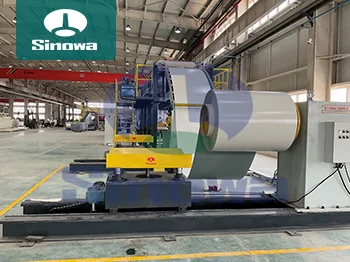
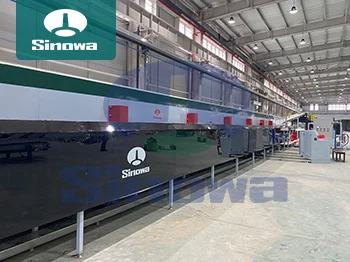
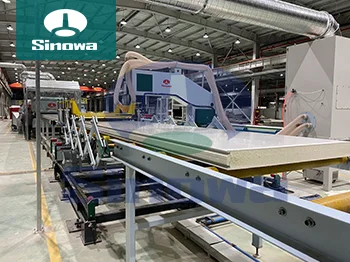
Sinowa is committed to the development and manufacturing of high-end and high-efficiency composite sandwich panel production line. Our composite sandwich panel production line are leading the way in efficiency, automatic control, human-computer interaction, environmental protection and energy consumption. Using system integration and bus control technology, it realizes the automatic integrated linkage control of the entire composite sandwich panel production line, and can achieve remote interactive communication, which has the world-class level and a comprehensive leading high-performance composite sandwich panel production line in the market.
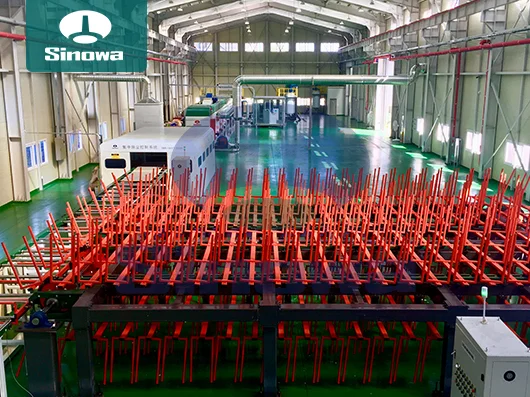
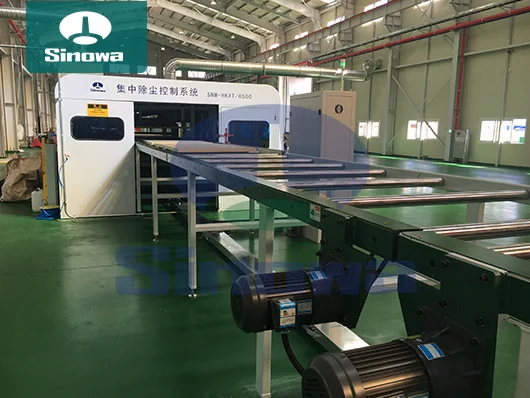
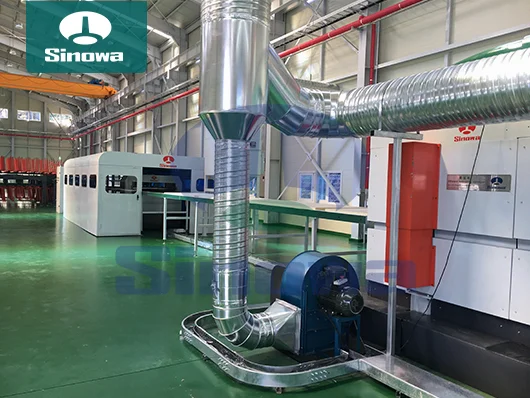
For more than ten years, relying on our innovative manufacturing concept and excellence in quality, reliable and trustworthy service to customers, we cooperate with customers all over the world, exported products to Canada, South Korea, Israel, Australia, the Middle East and other more than 20 countries and regions. contributed to building energy conservation and low-carbon production and have won widespread praise.
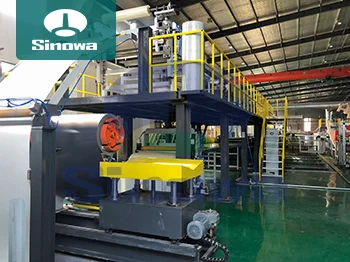
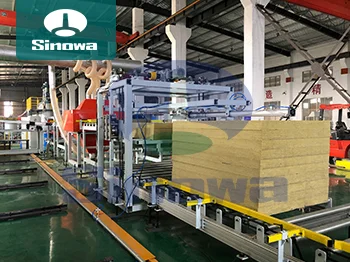
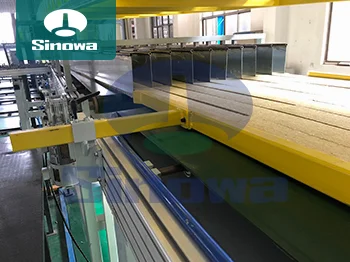
Sinowa has invested outstanding efforts in composite sandwich panel production line, this is why our products are more efficiency, quality, automatic control technology, environmental protection, energy consumption indicators and the appearance and safety protection are comprehensively leading, some subversive design changes in many major technical points, these major innovations make our products excellent in price/performance and user experience.
In the evolving landscape of modern industrial manufacturing, the demand for high-performance building and industrial materials continues to expand steadily, which drives the continuous upgrading and iteration of composite sandwich panel production equipment. Manufacturers dedicated to composite sandwich panel production lines occupy a pivotal position in the industrial supply chain, as they focus on the research, development, production and optimization of integrated production equipment that can efficiently manufacture multi-functional sandwich panels. These manufacturers keep improving production line structures and technological configurations according to the changing market demands for panel materials, structural specifications and application scenarios, aiming to provide reliable, efficient and flexible production solutions for downstream processing enterprises in the construction, cold storage, transportation and industrial enclosure industries. The core value of these manufacturers lies in their in-depth understanding of composite material lamination principles and industrial production logic, enabling them to design production lines that balance production efficiency, product uniformity and operational stability to meet the diversified production needs of different scale enterprises.
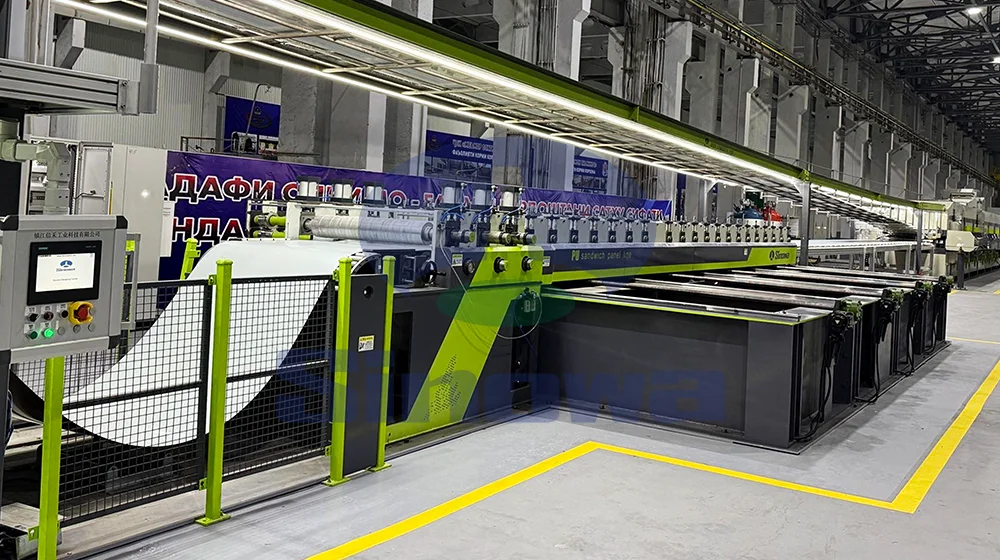
A qualified composite sandwich panel production line manufacturer must possess systematic technical accumulation in equipment structure design and material processing technology. The production line developed and produced by professional manufacturers covers the complete technological process from raw material feeding to finished product discharging, involving multiple functional units that cooperate closely with each other. At the initial stage of production, the raw material feeding module undertakes the orderly conveying of upper and lower surface base materials as well as core insulation materials. This module is designed with stable transmission structures to avoid material deviation and stacking during the conveying process, which lays a solid foundation for subsequent composite processing. Different types of base materials, including metal sheets and non-metal decorative plates, as well as diversified core materials such as rock wool, polyurethane foam and glass wool, require targeted feeding structure adjustments, reflecting the professional customization capability of manufacturers in adaptive equipment design.
The gluing and coating unit serves as an indispensable core component of the entire production line, and manufacturers invest heavily in the optimization of gluing control systems to ensure the bonding quality between different materials. Advanced production lines adopt precise gluing distribution structures, which can evenly apply adhesives on the surface of base materials according to the set technological parameters. By virtue of intelligent flow control components, the equipment realizes stable adjustment of glue dosage, effectively avoiding quality defects such as excessive glue overflow or insufficient local bonding caused by uneven gluing. In the actual production process, the matching between adhesive properties and material substrates directly affects the durability and structural strength of finished panels. Therefore, professional manufacturers will conduct repeated compatibility tests during equipment research and development, optimize the gluing temperature and pressure parameters, and ensure that the adhesive can fully exert its bonding activity between heterogeneous materials.
The pressing and composite molding process determines the structural compactness and flatness of composite sandwich panels, which is also the key technological link that manufacturers continuously polish and upgrade. Most mainstream production lines adopt integrated hot pressing structures, completing the tight lamination of base plates and core materials through coordinated control of temperature and pressure. The internal mold cavity of the pressing equipment adopts segmented temperature control design, including preheating area, constant temperature curing area and slow cooling area. The preheating area gently raises the material temperature to eliminate the internal stress of raw materials and prevent structural deformation during high-pressure compounding; the constant temperature curing area maintains a stable temperature environment to promote the cross-linking reaction of adhesives and realize firm bonding between layers; the slow cooling area gradually reduces the material temperature to fix the composite structure and improve the overall flatness of the panels. Manufacturers reasonably set the pressing roller spacing and pressure distribution according to different panel thickness specifications, realizing flexible production of panels with multiple thickness ranges without frequent disassembly and replacement of parts.
In addition to the core composite structures, professional manufacturers also pay attention to the rational layout of auxiliary processing units to improve the integration degree of the production line. The trimming and cutting unit is equipped with high-precision cutting components, which can accurately cut continuous composite plates into fixed-size finished products according to preset dimensional parameters. The cutting system maintains stable operating speed synchronization with the front-end composite equipment to ensure no pause in the production process and improve continuous production capacity. Meanwhile, the edge trimming mechanism can smoothly polish the plate edges to remove burrs and uneven residues generated during cutting, optimizing the appearance quality of finished panels. Some optimized production lines are also equipped with automatic stacking and discharging structures, which can neatly arrange the cut finished products through mechanical transmission components, reducing manual handling links and lowering the labor cost of downstream production enterprises.
Intelligent control system is an important symbol to measure the technical maturity of composite sandwich panel production lines, and excellent manufacturers take intelligent and automated operation as the core optimization direction of equipment. The whole production line is equipped with an integrated control system with intuitive operation interfaces, which can centrally manage and adjust operating parameters such as feeding speed, gluing amount, pressing temperature and cutting size. The system has built-in data storage and parameter memory functions, which can save the production parameters of different types of panels. When switching production specifications, operators can quickly call the preset parameters to complete equipment debugging, greatly shortening the mold changing and adjustment cycle. Moreover, the intelligent monitoring module can track the operating status of each component in real time. Once abnormal conditions such as material blockage and parameter deviation occur, the system will trigger prompt feedback to help staff eliminate hidden dangers in time and reduce equipment failure downtime.
In terms of mechanical performance optimization, manufacturers fully consider the long-term operation stability and maintenance convenience of the production line. The main frame of the equipment is made of high-rigidity structural materials, which can resist vibration and structural deformation generated during long-term high-load operation and maintain the running accuracy of each processing unit. The transmission parts are equipped with wear-resistant and anti-corrosion protective structures to adapt to complex production environments with temperature changes and dust accumulation. In addition, the equipment adopts modular structural design, and each functional unit is relatively independent and easy to disassemble and assemble. During daily maintenance, staff can quickly locate and replace worn parts without disassembling the whole machine, which simplifies the maintenance process and reduces the later use cost of the equipment for customers.
When designing production line solutions, manufacturers need to fully consider the differentiated production demands of customers from different industries. For construction thermal insulation panels with large market demand, the production line is optimized for continuous high-speed operation, with emphasis on improving production efficiency and ensuring consistent batch quality; for special-purpose panels used in cold storage and refrigeration engineering, the equipment adjusts the pressing pressure and gluing process to enhance the air tightness and thermal insulation stability of the panels; for lightweight panels used in transportation vehicles such as carriages, the production line optimizes the material compression ratio to reduce the overall weight of finished products while ensuring structural strength. This customized design capability enables manufacturers to break through the limitations of single equipment function and provide targeted production solutions for diversified application scenarios.
The technological research and development strength of manufacturers is the core driving force for the iterative upgrading of composite sandwich panel production lines. With the continuous improvement of industrial environmental protection standards and material performance requirements, manufacturers continue to carry out technological innovations in energy conservation, emission reduction and production optimization. In terms of energy consumption control, the equipment adopts circulating heat preservation structures to reduce heat loss during the heating process, effectively lowering the overall energy consumption of unit production. In terms of environmental protection optimization, the closed glue supply system reduces the volatilization of adhesive components, and the dust collection structure is equipped at the cutting and trimming links to collect processing waste, realizing clean production. At the same time, manufacturers keep track of the research and development progress of new composite materials, carry out adaptive transformation of equipment structures, and ensure that the production line can be compatible with new environmentally friendly and high-strength composite materials.
In the international and domestic industrial market, the service capability of composite sandwich panel production line manufacturers has become an important factor affecting customer cooperation choices. Professional manufacturers build a complete service system covering pre-sales consultation, scheme customization, equipment installation, operation training and after-sales maintenance. In the pre-sales stage, technical personnel conduct demand communication according to the customer's production site area, output requirements and product types, and rationally plan the equipment layout and process flow to ensure the matching degree between the production line and the customer's production conditions. During the equipment delivery and installation stage, the professional debugging team completes equipment assembly, line connection and parameter calibration to ensure that the production line can reach the standard operating state in a short time. In terms of after-sales service, manufacturers provide long-term technical guidance and spare parts supply services, helping customers solve operational difficulties in the production process and ensuring the long-term stable operation of the equipment.
Facing the future development trend of the composite material industry, composite sandwich panel production line manufacturers will continue to focus on intelligent upgrading, green production and flexible customization. With the popularization of industrial digital technology, the production line will realize more precise automatic parameter adjustment and remote operation monitoring, further reducing the dependence on manual operation. In terms of green manufacturing, manufacturers will optimize the adhesive circulation system and waste recycling structure to improve the utilization rate of raw materials and reduce production waste. In addition, the flexible production capacity of the equipment will be further enhanced, realizing seamless switching between multi-specification and multi-type panel production, so as to adapt to the increasingly personalized market demand. As an important link in the composite material industry chain, manufacturers will always take technological innovation as the core, continuously polish equipment performance, and provide more efficient, stable and environmentally friendly production equipment for the global composite sandwich panel processing industry, promoting the high-quality development of the entire industrial chain.
« Composite Sandwich Panel Production Line Manufacturer » Update Date: 2026/5/8
- PUR Sandwich Panel Machine From China
- Low Price Glass Wool Line
- Foam Core Sandwich Panel Line Price
- PIR Insulated Panel Production Line On Sales
- Soundproofing Sandwich Panel Production Line Supplier
- PIR Wall Panel Production Line Design
- High Efficiency Color Steel Sandwich Panel Production Line
- PIR Sandwich Panel Production Line Supplier
- High-quality Foam Core Sandwich Panel Line
- Polyurethane Sandwich Panel Manufacturing Line Design
- Fully Automatic PU Sandwich Panel Production Line Design
- Low Price Insulated Sandwhich Panel Production Line
- High-tech Polyurethane Insulation Panel Production Line
- Color Steel Sandwich Panel Production Line For Sale
- PU Sandwich Panel Production Line For House
- Automatic Sandwich Panel Production Line From China
- Isolation Sandwich Panel Production Line For Sale
- Insulated Sandwhich Panel Production Line Price
- Cheap Sandwich Roof Wall Panel Making Machine
- High Efficiency Isolation Sandwich Panel Production Line
- Links:
- Sandwich Panel Continuous Production Line
- Automatic and Continuous Sandwich Panel Production Line
- Cheap and Low Price Sandwich Panel Production Line
- China Sandwich Panel Production Line Factory
- Color Steel Sandwich Panel Production Line For Cold Storage
- Continuous Composite Foam Sandwich Panel Production Line
- Continuous Production Line For Rockwool and Mineral Wool Sandwich Panels
- Continuous PU Phenolic Insulation Panel Production Line
- Continuous PU PIR Sandwich Panel Production Line
- Continuous PUF PUR Sandwich Panel Production Line
- Continuous Sandwich Panel Production Line For Roof and Wall
- Customized and Design Sandwich Panel Production Line
- Decorative Sandwich Panel Production Line For Glass Wool Boards
- High Quality Sandwich Panel Production Line For Sale
- Polyurethane(PU) Sandwich Panel Production Line
- Sandwich Panel Production Line Manufacturer and Supplier