
Fully Automatic PU Sandwich Panel Machine Factory
Sinowa is a well-known manufacturer and technical service provider of high-end fully automatic pu sandwich panel machine, learn more about fully automatic pu sandwich panel machine factory, please contact Sinowa's technical engineer, tell us what you need, we will contact you as soon as possible!
Sinowa is committed to the development and manufacturing of high-end and high-efficiency fully automatic pu sandwich panel machine. Our fully automatic pu sandwich panel machine are leading the way in efficiency, automatic control, human-computer interaction, environmental protection and energy consumption. Using system integration and bus control technology, it realizes the automatic integrated linkage control of the entire fully automatic pu sandwich panel machine, and can achieve remote interactive communication, which has the world-class level and a comprehensive leading high-performance fully automatic pu sandwich panel machine in the market.
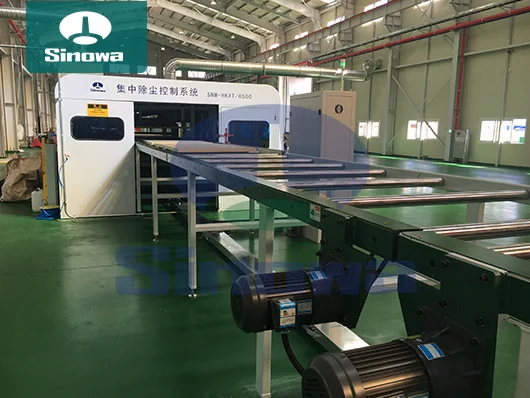
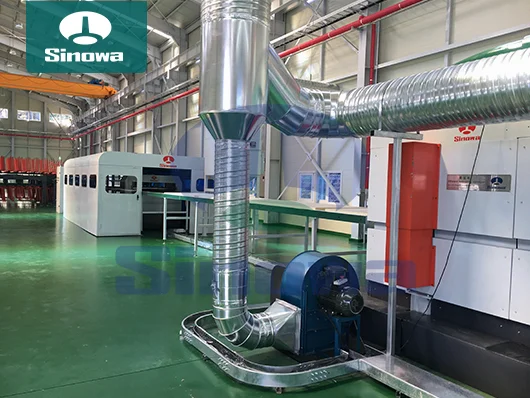
For more than ten years, relying on our innovative manufacturing concept and excellence in quality, reliable and trustworthy service to customers, we cooperate with customers all over the world, exported products to Canada, South Korea, Israel, Australia, the Middle East and other more than 20 countries and regions. contributed to building energy conservation and low-carbon production and have won widespread praise.
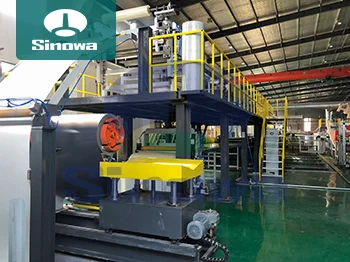
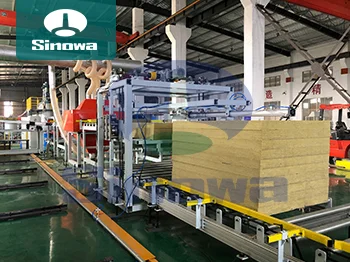
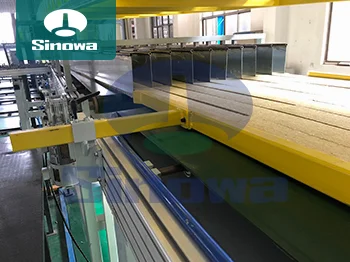
Sinowa has invested outstanding efforts in fully automatic pu sandwich panel machine, this is why our products are more efficiency, quality, automatic control technology, environmental protection, energy consumption indicators and the appearance and safety protection are comprehensively leading, some subversive design changes in many major technical points, these major innovations make our products excellent in price/performance and user experience.
In the rapidly evolving global construction and industrial insulation industry, the demand for high-efficiency, energy-saving, and durable building materials continues to surge, driving the continuous upgrading of panel manufacturing equipment. PU sandwich panels have emerged as one of the most versatile building materials due to their excellent thermal insulation performance, mechanical stability, and structural simplicity, widely applied in industrial workshops, cold storage facilities, clean rooms, and modern architectural enclosure systems. A fully automatic PU sandwich panel machine factory serves as the core production base for such functional panels, integrating mechanical transmission, automatic feeding, chemical foaming, constant temperature curing, and precise cutting to realize uninterrupted streamlined production. This article elaborates on the operational logic, structural composition, production workflow, technical advantages, production management norms, and industrial development value of fully automatic PU sandwich panel machine factories, revealing the industrial charm of intelligent manufacturing in the field of building material production.
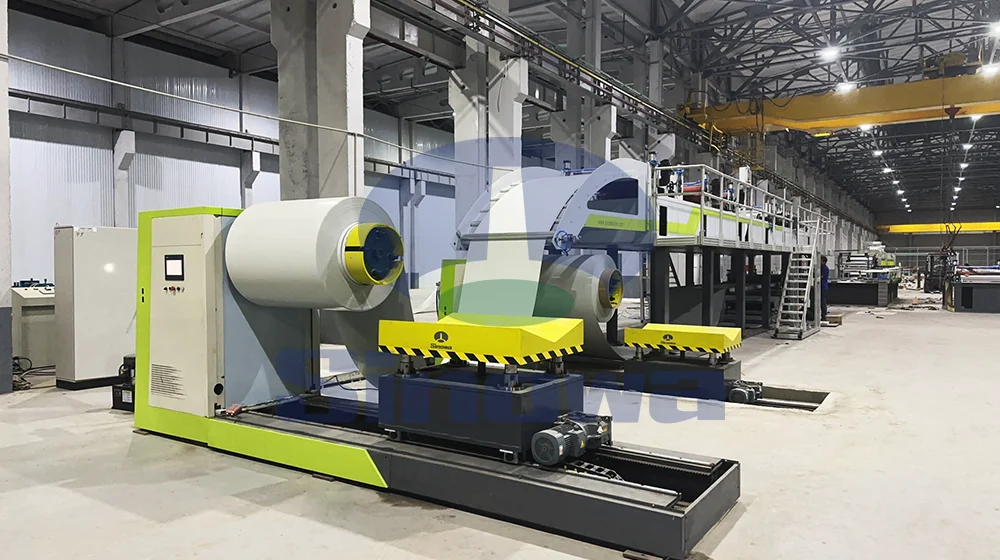
The overall construction and layout of a fully automatic PU sandwich panel machine factory are scientifically planned around the continuous operation of the production line, focusing on spatial rationality, production fluidity, and operational safety. The factory area is functionally divided into raw material storage zone, core production processing zone, finished product stacking zone, auxiliary maintenance zone, and environmental treatment zone, with each area connected by automated conveying equipment to minimize manual intervention and material transportation loss. The raw material storage zone maintains a stable indoor temperature and dry environment to prevent chemical raw materials from moisture deterioration and metal sheet substrates from oxidation and corrosion. Metal substrates including color steel plates, galvanized steel plates, and aluminum alloy plates are neatly placed on automated storage racks, with intelligent handling devices realizing automatic material retrieval and feeding according to production scheduling. Chemical raw materials used for PU foaming are stored in sealed dedicated containers, with independent pipeline systems to ensure safe transportation and proportional mixing, avoiding raw material waste and potential safety hazards caused by manual handling.
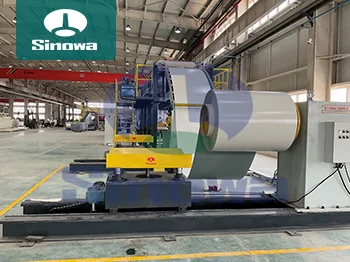
The core production processing zone occupies the largest proportion of the factory space, housing the complete set of fully automatic PU sandwich panel molding equipment. This integrated production line consists of multiple interconnected functional units, each completing independent processing procedures while maintaining synchronous operation through intelligent control systems. The front-end feeding unit is responsible for the automatic unwinding and leveling of metal surface plates. Coiled metal materials are fixed on hydraulic unwinding frames, and after starting the equipment, the coils are slowly released under mechanical traction, passing through multi-group leveling rollers to eliminate surface wrinkles and internal stress generated during coiling. Precision correction devices are installed in the feeding process to dynamically adjust the horizontal and vertical positions of the plates, ensuring no deviation in the feeding track and laying a foundation for the uniform size and neat edges of finished panels.
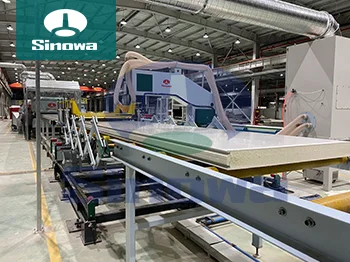
Following the feeding and leveling process is the surface pretreatment unit of the metal plates. Although most metal substrates have surface protective coatings, the production line is equipped with dust removal and surface smoothing structures to remove floating dust, fine impurities, and subtle burrs on the plate surface. This pretreatment process enhances the bonding tightness between the metal substrate and the PU foam layer, effectively avoiding delamination and peeling during long-term use of the sandwich panels. After pretreatment, the upper and lower metal plates enter the composite molding area synchronously, and the high-pressure foaming system begins to quantitatively inject the mixed PU raw materials into the gap between the two layers of plates. The foaming system adopts dynamic proportional mixing technology to accurately regulate the mixing ratio of various chemical components, ensuring that the foaming reaction proceeds stably at a constant speed. The mixed liquid materials quickly expand and foam in the closed mold cavity, gradually filling the entire gap between the plates and forming a dense and uniform foam insulation layer.
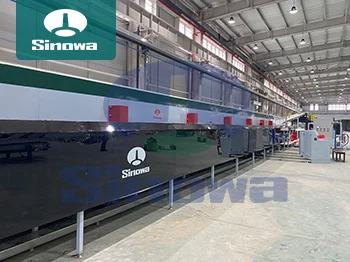
The constant temperature curing unit is an indispensable key link in the production process, determining the structural stability and physical properties of PU sandwich panels. The curing area is equipped with a fully enclosed thermal insulation channel, where the internal temperature is stably controlled within a reasonable range through circulating heating equipment. After foaming, the semi-finished panels slowly advance with the conveying track, completing molecular cross-linking and solidification reactions in the constant temperature environment. Moderate curing temperature and sufficient curing time enable the PU foam layer to form an independent and stable porous structure, giving the panels excellent thermal insulation, sound insulation, and shock resistance. During the curing process, the intelligent monitoring system collects real-time data such as internal temperature, conveying speed, and panel pressure of the curing channel. Once abnormal parameter fluctuations are detected, the system will automatically perform fine adjustments to maintain the consistency of the production environment and avoid performance differences between batches of products.
After completing curing and shaping, the panels enter the cutting and trimming unit for precise sizing and edge finishing. The fully automatic cutting system adopts servo drive technology, which can flexibly set the cutting length according to production orders and realize fixed-length cutting without stopping the machine. High-precision cutting tools are made of wear-resistant alloy materials, ensuring smooth and burr-free cutting sections while maintaining long-term cutting accuracy. The edge trimming mechanism polishes and shapes the four edges of the panels to eliminate irregular edges generated during the composite molding process. For panels requiring special connection structures such as male and female grooves, the automated grooving device will complete one-time molding of the connecting grooves at the edge of the panels, making the subsequent on-site assembly and splicing of finished panels more convenient and tight.
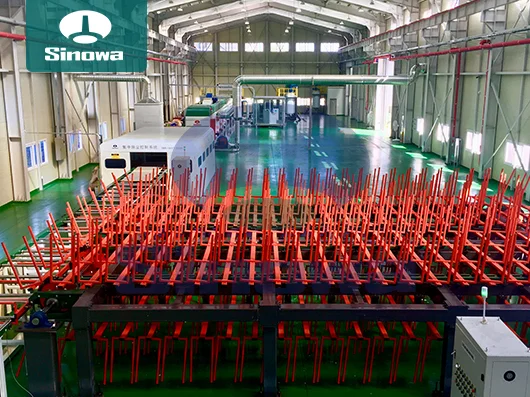
The final stage of the production line includes surface inspection, automatic stacking, and packaging processes. The intelligent detection device installed at the end of the production line conducts comprehensive non-destructive inspection on the finished panels, focusing on detecting surface flatness, foam compactness, bonding uniformity, and dimensional tolerance. Panels that meet the production standards are automatically transported to the stacking area by the conveying system, where hydraulic stacking equipment uses vacuum suction cups to neatly stack the finished panels. The stacking height and arrangement mode are automatically controlled by the system to prevent extrusion deformation between panels. The packaged panels are wrapped with protective films and fixed with strapping bands to avoid surface scratches and structural damage during transportation and storage. Unqualified products screened out during the inspection process are independently transported to the reprocessing area by a dedicated conveying channel for manual sorting and secondary processing, so as to improve the qualified rate of products and reduce production waste.
The intelligent control system runs through the entire production process of the fully automatic PU sandwich panel machine factory, which is the core to realize unmanned and streamlined production. The centralized control panel integrates parameter setting, equipment monitoring, data recording, and fault alarm functions. Production personnel can complete the adjustment of production speed, raw material ratio, curing temperature, and cutting size through a simple human-computer interaction interface. The system is equipped with an automatic memory function, which can store the production parameters of different specifications of panels, realizing one-click switching of production schemes and greatly shortening the debugging time between production batches. In addition, the intelligent monitoring module can track the operating status of each mechanical component in real time. When abnormal conditions such as motor overload, pipeline blockage, and temperature deviation occur, the system will send prompt signals and perform emergency protection actions such as automatic shutdown to reduce equipment failure loss and ensure production safety.
Compared with semi-automatic and manual production equipment, fully automatic PU sandwich panel production lines have prominent technical advantages in production efficiency and product quality. In terms of production efficiency, the integrated assembly line design eliminates intermediate manual handling and waiting links, realizing continuous feeding, foaming, curing, and cutting. The uninterrupted production mode greatly improves the daily output of panels and shortens the production cycle of customer orders. In terms of product quality, the automated production system realizes precise control of all production parameters, avoiding product performance differences caused by human operational errors. The uniformly foamed porous structure makes the thermal insulation coefficient of the panels stable, and the tight composite structure between the metal plate and the foam layer enhances the compressive resistance and wind resistance of the panels. Meanwhile, the automated production process reduces the contact frequency between personnel and mechanical equipment, lowering the risk of industrial accidents and optimizing the on-site production environment.
The daily production management of the fully automatic PU sandwich panel machine factory follows standardized and refined management concepts to ensure stable and long-term operation of the production line. In terms of equipment maintenance, the factory formulates a regular maintenance plan, with professional maintenance personnel conducting daily inspection, cleaning, and lubrication of transmission parts, cutting tools, and conveying pipelines. Regular disassembly and maintenance of high-pressure foaming pumps and heating circulation systems are carried out to eliminate potential equipment failures. For wearing parts with high consumption, a reasonable spare parts reserve mechanism is established to realize rapid replacement and reduce production downtime. In terms of raw material management, the factory strictly controls the incoming quality of metal plates and chemical raw materials, conducting sampling inspections on raw material composition and performance to ensure that raw materials meet production processing standards. Scientific inventory management is adopted to dynamically adjust raw material procurement quantities according to production plans, avoiding excessive inventory occupation of factory space and capital.
Environmental protection and energy conservation are important development concepts in the operation of modern fully automatic PU sandwich panel machine factories. During the production process, the factory is equipped with closed waste gas collection and purification devices to treat trace volatile gases generated by PU foaming, ensuring that the gas emission meets environmental protection standards. The waste materials such as leftover plates and foam scraps generated during cutting and trimming are centrally recycled and stored, and processed by professional recycling equipment to realize resource reuse. The heating system adopts energy-saving circulation heating technology, which reduces energy consumption by recycling waste heat generated during the curing process. All production equipment is equipped with noise reduction structures to control the operating noise within a reasonable range, improving the working comfort of on-site staff and reducing the impact on the surrounding environment.
PU sandwich panels produced by fully automatic production lines have extensive application scenarios and strong market adaptability. In the industrial construction field, these panels are used for the enclosure walls and roof structures of large industrial factories and logistics warehouses, relying on their light weight and high strength to reduce the load-bearing pressure of building structures and shorten the construction cycle. In the cold storage and fresh-keeping industry, the excellent low-temperature thermal insulation performance of PU foam materials can effectively reduce internal and external heat exchange, maintain the constant low-temperature environment inside the cold storage, and reduce energy consumption for refrigeration. In the medical and electronic manufacturing industries, the smooth surface and easy-to-clean characteristics of the panels meet the cleanliness requirements of clean rooms, while the sound insulation performance can reduce the interference of external noise on the production environment. In addition, the panels can also be applied to temporary construction facilities, agricultural breeding greenhouses, and mobile integrated buildings, providing reliable material support for diversified construction needs.
With the continuous progress of industrial manufacturing technology and the improvement of global environmental protection standards, fully automatic PU sandwich panel machine factories are constantly evolving towards higher intelligence, greener production, and more diversified customization. At the technical level, the factory will introduce more advanced sensing and artificial intelligence algorithms to realize intelligent identification of raw materials, automatic optimization of production parameters, and predictive maintenance of equipment, further reducing manual intervention costs and improving production intelligence. In terms of product optimization, the production line will be upgraded to adapt to more types of surface substrates and composite materials, developing high-temperature resistant, fireproof, and corrosion-resistant customized panels to meet the special needs of different industries. In terms of environmental protection upgrading, the factory will continuously optimize the waste gas and waste residue treatment process, adopt more environmentally friendly foaming raw materials, and build a low-carbon and green production system.
In conclusion, the fully automatic PU sandwich panel machine factory is an important carrier for the standardized and large-scale production of high-performance building insulation panels. Through scientific factory layout, complete automated production lines, intelligent control systems, and standardized production management, the factory realizes efficient, stable, and environmentally friendly manufacturing of PU sandwich panels. The excellent mechanical properties and functional characteristics of the produced panels make them widely used in multiple industrial and civil construction fields. With the continuous development of the construction industry towards energy conservation, environmental protection, and modularization, fully automatic PU sandwich panel production factories will continuously carry out technological innovation and industrial upgrading, continuously optimize production processes and product quality, and provide more high-quality, reliable, and cost-effective building materials for the global market. In the future, such intelligent manufacturing factories will play a more important role in promoting the upgrading of the building material industry and the development of green energy-saving buildings, creating greater economic and social value for the industrial chain.
« Fully Automatic PU Sandwich Panel Machine Factory » Update Date: 2026/5/8
- High Efficiency Sandwich Wall Panel Production Line
- High-end Decorative PU Sandwich Panel Production Line
- Polyurethane Sandwich Panel Line Price
- Top Insulation Sandwich Panel Machines
- High-quality Foam Sandwich Panel Machine
- High-end Isolation Sandwich Panel Production Line
- Polyurethane Sandwich Panel Machinery On Sales
- Insulation Sandwich Panel Machines Manufacturer
- Composite Panel Production Line Manufacturer
- High-quality Glass Wool Production Line
- High Efficiency Wall Sandwich Panel Production Line
- Polyurethane Sandwich Panel Line For Cold Storage
- Continuous PU Sandwich Panel Production Line On Sales
- Continuous Sandwich Panel Manufacturing Line For Cold Room
- Custom Decorative PU Sandwich Panel Production Line
- Glass Wool Sandwich Panel Machine Supplier
- PU Sandwich Panel Line For Sale
- High-quality Continuous Sandwich Panel Manufacturing Line
- Highly Intelligent Continuous Sandwich Panel Line
- Isolation PU Sandwich Panel Line Supplier
- Links:
- Sandwich Panel Continuous Production Line
- Automatic and Continuous Sandwich Panel Production Line
- Cheap and Low Price Sandwich Panel Production Line
- China Sandwich Panel Production Line Factory
- Color Steel Sandwich Panel Production Line For Cold Storage
- Continuous Composite Foam Sandwich Panel Production Line
- Continuous Production Line For Rockwool and Mineral Wool Sandwich Panels
- Continuous PU Phenolic Insulation Panel Production Line
- Continuous PU PIR Sandwich Panel Production Line
- Continuous PUF PUR Sandwich Panel Production Line
- Continuous Sandwich Panel Production Line For Roof and Wall
- Customized and Design Sandwich Panel Production Line
- Decorative Sandwich Panel Production Line For Glass Wool Boards
- High Quality Sandwich Panel Production Line For Sale
- Polyurethane(PU) Sandwich Panel Production Line
- Sandwich Panel Production Line Manufacturer and Supplier