
Polyurethane Sandwich Panel Production Line For Cold Storage
Sinowa is a well-known manufacturer and technical service provider of high-end polyurethane sandwich panel production line, learn more about polyurethane sandwich panel production line for cold storage, please contact Sinowa's technical engineer, tell us what you need, we will contact you as soon as possible!
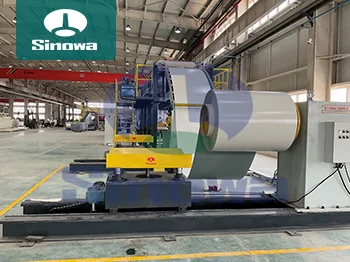
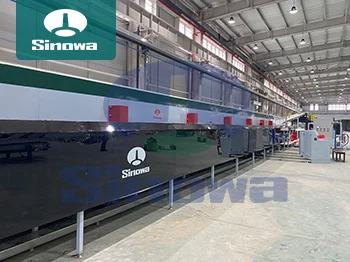
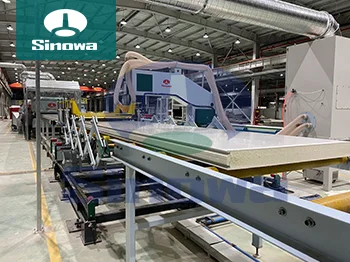
Sinowa is committed to the development and manufacturing of high-end and high-efficiency polyurethane sandwich panel production line. Our polyurethane sandwich panel production line are leading the way in efficiency, automatic control, human-computer interaction, environmental protection and energy consumption. Using system integration and bus control technology, it realizes the automatic integrated linkage control of the entire polyurethane sandwich panel production line, and can achieve remote interactive communication, which has the world-class level and a comprehensive leading high-performance polyurethane sandwich panel production line in the market.
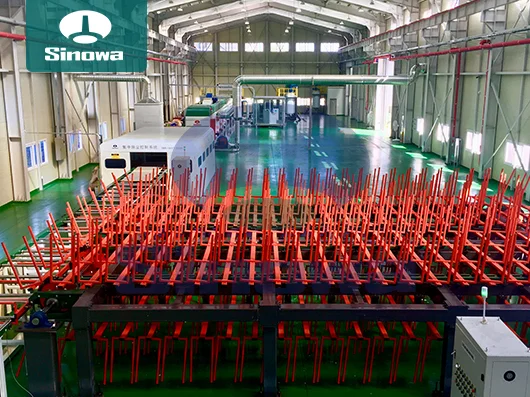
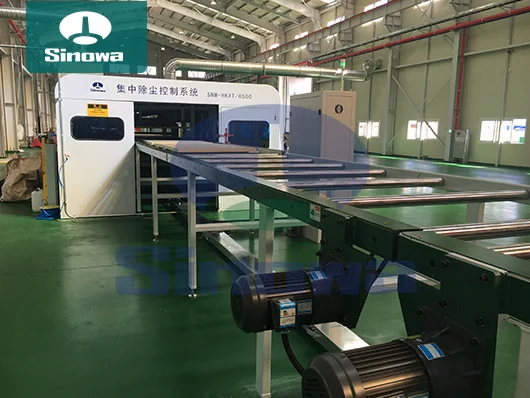
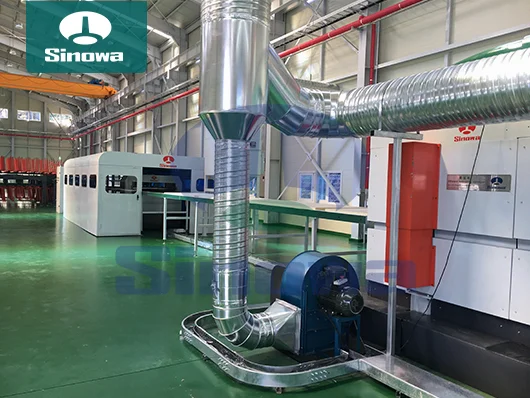
For more than ten years, relying on our innovative manufacturing concept and excellence in quality, reliable and trustworthy service to customers, we cooperate with customers all over the world, exported products to Canada, South Korea, Israel, Australia, the Middle East and other more than 20 countries and regions. contributed to building energy conservation and low-carbon production and have won widespread praise.
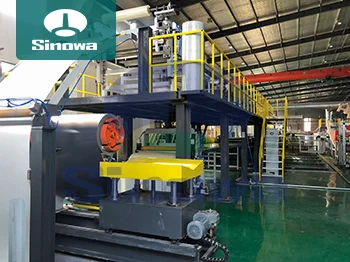
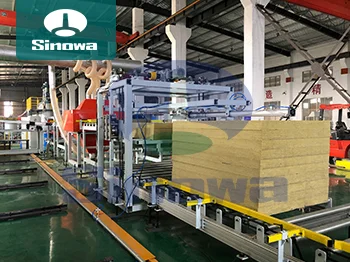
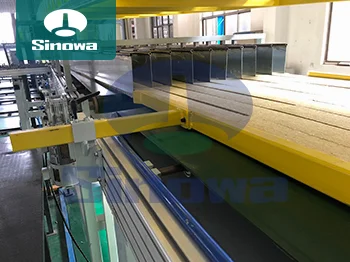
Sinowa has invested outstanding efforts in polyurethane sandwich panel production line, this is why our products are more efficiency, quality, automatic control technology, environmental protection, energy consumption indicators and the appearance and safety protection are comprehensively leading, some subversive design changes in many major technical points, these major innovations make our products excellent in price/performance and user experience.
Polyurethane sandwich panels have become an indispensable material in the construction of cold storage facilities, thanks to their exceptional thermal insulation performance, light weight, high structural strength, and excellent moisture resistance. These panels consist of two outer facing materials, usually metal sheets such as color steel or stainless steel, and a core made of rigid polyurethane foam, which is renowned for its low thermal conductivity and closed-cell structure. To meet the growing demand for high-quality polyurethane sandwich panels in the cold storage industry, the polyurethane sandwich panel production line has evolved into a highly automated, efficient, and precise system that integrates multiple processes to ensure consistent product quality and production efficiency. Unlike traditional manual or semi-automatic production methods, modern production lines can achieve continuous production, significantly reducing labor costs and minimizing human errors, while also adapting to the diverse specifications required by different cold storage projects.
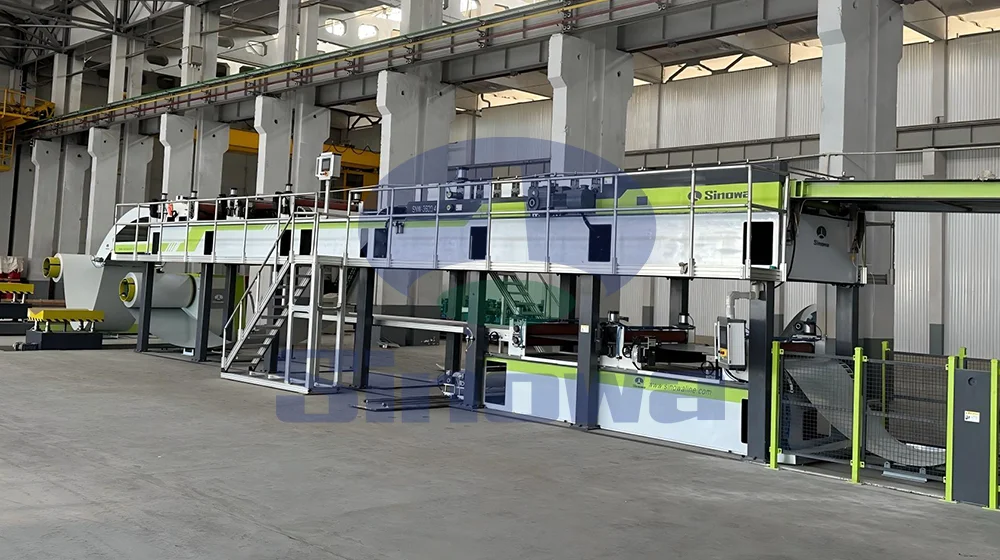
The core principle of the polyurethane sandwich panel production line for cold storage lies in the seamless combination of the outer facing materials and the polyurethane core through a series of continuous processes, including material preparation, forming, foaming, curing, cutting, and stacking. Each link in the production line is closely connected, and any deviation in one link may affect the overall quality of the final product, especially since cold storage panels require strict thermal insulation and structural stability to maintain the low-temperature environment inside the storage facility. The production line is designed to ensure that the polyurethane foam core is evenly distributed between the two facing materials, forming a strong bond that prevents delamination, and that the panel thickness, density, and thermal insulation performance meet the specific requirements of cold storage applications. The closed-cell structure of the polyurethane foam is crucial for cold storage panels, as it minimizes heat transfer and prevents moisture absorption, which could otherwise compromise the insulation effect and lead to condensation inside the cold storage.
A complete polyurethane sandwich panel production line for cold storage is composed of several key equipment modules, each with a specific function that contributes to the smooth operation of the entire production process. The first module is the uncoiling and leveling system, which is responsible for handling the outer facing materials. Typically, the facing materials come in the form of metal coils, which need to be uncoiled and leveled to eliminate any bending or deformation caused during transportation and storage. Modern production lines are often equipped with double uncoilers, which allow for non-stop coil changing, thereby improving production efficiency and reducing downtime. The uncoiling system is also equipped with an automatic centering device to ensure that the metal sheets are accurately positioned when entering the next process, preventing deviations that could affect the panel’s structure. Additionally, a leveling machine is used to remove internal stress from the metal coils, ensuring that the facing materials are flat and smooth, which is essential for achieving a uniform bond with the polyurethane core.
After uncoiling and leveling, the metal sheets undergo a surface treatment process to enhance their adhesion with the polyurethane foam. This process usually involves cleaning the surface of the metal sheets to remove oil stains, dust, and oxides, which could prevent the foam from bonding effectively. Some advanced production lines may also include a corona treatment system, which modifies the surface of the metal sheets to increase their surface energy, further improving the bonding strength between the facing material and the core. In some cases, a film laminating machine may be added to cover the surface of the metal sheets with a protective film, which prevents scratches and corrosion during the production and transportation process, while also enhancing the weather resistance of the final panels. The film laminating system is equipped with an automatic tension control device to ensure that the film is applied evenly, and a static elimination device to prevent dust adsorption, ensuring the surface quality of the panels.
The next critical module is the forming system, which shapes the metal sheets into the desired profile. Cold storage panels often require specific profiles, such as corrugated or ribbed surfaces, to enhance their structural strength and improve the sealing performance when installed. The forming machine uses multiple rolling processes, typically with 20 to 30 rollers, to gradually shape the flat metal sheets into the required profile. The forming system is equipped with a servo drive system, which allows for precise control of the forming process, ensuring that the profile dimensions are accurate and consistent. A quick mold changing system is also a common feature in modern production lines, enabling manufacturers to replace different molds in a short period of time to produce panels of different specifications, meeting the diverse needs of cold storage projects. An online detection device is often integrated into the forming system to monitor the molding accuracy in real time, detecting any deviations and adjusting the equipment parameters immediately to avoid product defects.
The foaming system is the heart of the polyurethane sandwich panel production line, as it is responsible for producing the rigid polyurethane foam core that provides the panels with their thermal insulation properties. The foaming process involves mixing two main components, isocyanates and polyols, in precise proportions, along with additives such as catalysts, blowing agents, and flame retardants. These additives play important roles: catalysts accelerate the foaming reaction, blowing agents help form the closed-cell structure of the foam, and flame retardants improve the fire resistance of the panels, which is a critical safety requirement for cold storage facilities. The foaming system is equipped with a high-pressure foaming machine, which uses metering pumps to accurately control the ratio of the two main components, with a mixing accuracy of ±1.5%. This precision is essential to ensure that the polyurethane foam has a uniform density and consistent thermal insulation performance.
The mixed raw materials are evenly poured onto the bottom facing material, which is then conveyed together with the top facing material into the double-track laminating conveyor. The double-track laminating conveyor is equipped with upper and lower heating pressure plates and circulating steel strips, forming an adjustable height forming channel. The temperature inside the forming channel is precisely controlled by a temperature control system, which ensures that the polyurethane foam undergoes the foaming and curing process under optimal conditions. The temperature control system adjusts the temperature of each section of the conveyor according to the foaming characteristics of the raw materials, ensuring that the foam expands evenly and cures fully. The curing process is crucial, as insufficient curing can lead to poor bonding between the foam and the facing materials, while over-curing can cause the foam to become brittle and reduce its thermal insulation performance. The length of the curing zone is usually between 30 and 50 meters, providing sufficient time for the foam to cure completely before entering the next process.
After curing, the continuous sandwich panel is sent to the cutting system, which cuts the panel into the required length according to the customer’s specifications. The cutting system is typically equipped with a flying saw cutting machine, which is controlled by a servo system to ensure high cutting accuracy, with an error of no more than ±1 mm. The flying saw can cut the panel while it is moving, ensuring continuous production without stopping the line. Some production lines may also include an edge trimming machine to trim the edges of the panel, ensuring that the edges are smooth and straight, which facilitates the installation of the panels in cold storage facilities. The cutting system is also equipped with safety devices to prevent accidents during the cutting process, ensuring the safety of the operators.
The final module of the production line is the stacking and packaging system, which handles the finished panels. After cutting, the panels are conveyed to the stacking area, where an automatic stacker crane, equipped with a robotic arm or vacuum suction cup, stacks the panels neatly according to the specified quantity and size. The stacking system is designed to handle the panels gently to avoid damage, ensuring that the finished products are in good condition. Some production lines may also include a packaging system, which wraps the stacked panels with plastic film or other packaging materials to protect them from moisture, dust, and damage during transportation. The packaging system can be adjusted according to the size and quantity of the panels, ensuring that the packaging is secure and cost-effective.
Quality control is an integral part of the polyurethane sandwich panel production line for cold storage, as the performance of the panels directly affects the efficiency and safety of the cold storage facility. Throughout the production process, various quality inspection measures are implemented to ensure that the final product meets the required standards. In the material preparation stage, the raw materials are inspected for quality, including the purity of the isocyanates and polyols, the performance of the additives, and the quality of the metal facing materials. Any substandard raw materials are rejected to prevent them from affecting the product quality. During the foaming process, the density and viscosity of the foam are monitored in real time, and the temperature and pressure of the forming channel are adjusted to ensure that the foam has a uniform closed-cell structure. The thickness of the panel is also measured continuously, with any deviations corrected immediately by adjusting the equipment parameters.
After the panels are cut, random samples are taken for further testing, including thermal conductivity, compressive strength, tensile strength, and bonding strength. The thermal conductivity test is particularly important for cold storage panels, as it determines the insulation performance of the panel. The panels must meet the required thermal conductivity standards to ensure that the cold storage facility can maintain the desired low temperature with minimal energy consumption. The compressive and tensile strength tests ensure that the panels can withstand the weight of the cold storage structure and any external forces, while the bonding strength test ensures that the facing materials and the foam core do not delaminate during use. Additionally, the panels are inspected for surface quality, including the flatness of the facing materials, the absence of scratches or defects, and the uniformity of the protective film (if applied).
The polyurethane sandwich panel production line for cold storage offers numerous advantages over traditional production methods. One of the most significant advantages is its high degree of automation, which reduces the need for manual labor and minimizes human errors. The continuous production process ensures that the production efficiency is significantly improved, with production speeds ranging from 5 to 15 meters per minute, depending on the configuration of the line. This high efficiency allows manufacturers to meet large-scale orders in a short period of time, reducing production cycles and improving customer satisfaction. Another advantage is the consistent product quality, as the automated system ensures that each panel has the same thickness, density, and thermal insulation performance, eliminating the inconsistencies associated with manual production.
Versatility is another key advantage of modern production lines. They can produce panels of different thicknesses, lengths, and profiles, adapting to the diverse needs of cold storage projects. For example, cold storage facilities that require extremely low temperatures may need thicker panels with a higher density foam core, while smaller cold storage units may use thinner panels. The quick mold changing system allows manufacturers to switch between different panel specifications quickly, without significant downtime. Additionally, the production line can be adjusted to use different facing materials, such as color steel, stainless steel, or aluminum, depending on the specific requirements of the cold storage facility, such as corrosion resistance or hygiene standards.
Energy efficiency is also a notable benefit of the polyurethane sandwich panel production line. The polyurethane foam core produced by the line has excellent thermal insulation performance, with a thermal conductivity as low as 0.022-0.027 W/(m·K), which is much lower than other insulation materials such as rock wool or glass wool. This means that cold storage facilities built with these panels require less energy to maintain the desired low temperature, reducing energy consumption and operating costs. Additionally, the production line itself is designed to be energy-efficient, with advanced temperature control systems and energy-saving motors that reduce power consumption during operation.
Proper maintenance of the production line is essential to ensure its long-term stable operation and consistent product quality. Daily maintenance tasks include cleaning the production line, especially the transmission and sliding parts, to remove dirt, dust, and debris that could affect the equipment’s performance. Regular lubrication of the equipment’s moving parts, such as the rollers, transmission shafts, and bearings, is also necessary to reduce wear and extend the service life of the equipment. The metering pumps and foaming machine should be calibrated regularly to ensure that the raw material ratio is accurate, and the cutting system should be inspected to maintain its cutting accuracy. Additionally, the operators should be trained to understand the equipment’s structure and operating principles, enabling them to detect and handle minor faults in a timely manner, preventing major breakdowns that could disrupt production.
In addition to maintenance, operators also need to follow strict operating procedures to ensure the safety and efficiency of the production line. Before starting the line, operators should inspect all equipment modules to ensure that they are in good working condition, and check the raw materials to ensure that they meet the quality standards. During operation, operators should monitor the production process in real time, paying attention to the temperature, pressure, and speed of the equipment, and making adjustments as needed. Any abnormalities, such as foam overflow, uneven panel thickness, or equipment malfunctions, should be reported and handled immediately to avoid product defects and production delays. After the production is completed, operators should clean the equipment and store the raw materials properly, ensuring that the production line is ready for the next batch of production.
The application of polyurethane sandwich panels produced by these lines in cold storage facilities has become increasingly widespread, as they offer a combination of performance and cost-effectiveness that is difficult to match by other materials. Cold storage facilities are used in a variety of industries, including food processing, pharmaceuticals, agriculture, and logistics, to store perishable goods, vaccines, and other temperature-sensitive products. The thermal insulation performance of the polyurethane sandwich panels ensures that the cold storage facility can maintain a stable low temperature, extending the shelf life of the stored products and reducing spoilage. The light weight of the panels also reduces the load on the cold storage structure, allowing for more flexible design and lower construction costs. Additionally, the panels are easy to install, with a tongue-and-groove connection system that ensures a tight seal, minimizing heat leakage and improving the overall insulation effect of the cold storage.
As the demand for cold storage facilities continues to grow, driven by the expansion of the food cold chain and the increasing need for temperature-controlled storage in various industries, the polyurethane sandwich panel production line is expected to undergo further technological advancements. Future production lines may incorporate more advanced automation technologies, such as artificial intelligence and machine learning, to optimize the production process and improve quality control. For example, AI-powered systems could monitor the production process in real time, predict potential faults, and adjust equipment parameters automatically, reducing the need for human intervention. Additionally, there may be a greater focus on environmental sustainability, with the development of more eco-friendly raw materials and production processes that reduce energy consumption and carbon emissions.
In conclusion, the polyurethane sandwich panel production line for cold storage is a highly sophisticated and efficient system that plays a crucial role in the cold storage industry. By integrating multiple processes into a continuous, automated operation, the production line ensures the consistent quality and high efficiency of polyurethane sandwich panels, which are essential for maintaining the low-temperature environment required by cold storage facilities. The key equipment modules, including the uncoiling and leveling system, forming system, foaming system, cutting system, and stacking system, work together seamlessly to produce panels that meet the strict performance requirements of cold storage applications. With proper maintenance and operation, the production line can operate stably for a long time, providing manufacturers with a reliable and cost-effective solution to meet the growing demand for high-quality cold storage panels. As technology continues to advance, the production line will likely become even more efficient, versatile, and sustainable, further supporting the development of the cold storage industry.
« Polyurethane Sandwich Panel Production Line For Cold Storage » Update Date: 2026/4/17
- PU Board Production Line Design
- PIR Sandwich Panel Production Line From China
- Customized PUF Panel Machine
- Automatic Sandwich Panel Production Line
- PIR Sandwich Panel Line For Clean Room
- High Efficiency PU Insulation Panel Production Line
- High-end Fully Automatic Sandwich Panel Making Machine
- High Efficiency PIR Insulated Panel Production Line
- PIR Sandwich Panel Production Line Design
- Polyurethane Sandwich Panel Production Line
- PIR Sandwich Panel Machine For Building
- Low Price PUR Sandwich Panel Line
- Fully Automatic PU Sandwich Panel Production Line Supplier
- High Efficiency Polyurethane Sandwich Panel Manufacturing Line
- PIR Sandwich Panel Production Line Manufacturer
- Low Price Soundproofing Sandwich Panel Production Line
- Glass Wool Equipment Design
- PIR Insulated Panel Production Line Supplier
- PU Sandwich Panel Production Line
- Polyurethane Foam Production Line On Sales
- Links:
- Sandwich Panel Continuous Production Line
- Automatic and Continuous Sandwich Panel Production Line
- Cheap and Low Price Sandwich Panel Production Line
- China Sandwich Panel Production Line Factory
- Color Steel Sandwich Panel Production Line For Cold Storage
- Continuous Composite Foam Sandwich Panel Production Line
- Continuous Production Line For Rockwool and Mineral Wool Sandwich Panels
- Continuous PU Phenolic Insulation Panel Production Line
- Continuous PU PIR Sandwich Panel Production Line
- Continuous PUF PUR Sandwich Panel Production Line
- Continuous Sandwich Panel Production Line For Roof and Wall
- Customized and Design Sandwich Panel Production Line
- Decorative Sandwich Panel Production Line For Glass Wool Boards
- High Quality Sandwich Panel Production Line For Sale
- Polyurethane(PU) Sandwich Panel Production Line
- Sandwich Panel Production Line Manufacturer and Supplier