
Sandwich Panel Manufacturing Line Design
Sinowa is a well-known manufacturer and technical service provider of high-end sandwich panel manufacturing line, learn more about sandwich panel manufacturing line design, please contact Sinowa's technical engineer, tell us what you need, we will contact you as soon as possible!
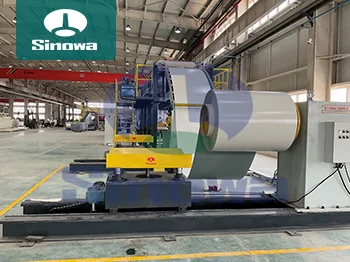
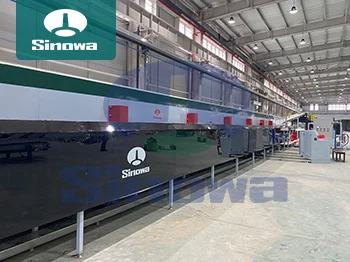
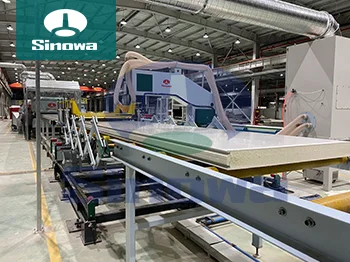
Sinowa is committed to the development and manufacturing of high-end and high-efficiency sandwich panel manufacturing line. Our sandwich panel manufacturing line are leading the way in efficiency, automatic control, human-computer interaction, environmental protection and energy consumption. Using system integration and bus control technology, it realizes the automatic integrated linkage control of the entire sandwich panel manufacturing line, and can achieve remote interactive communication, which has the world-class level and a comprehensive leading high-performance sandwich panel manufacturing line in the market.
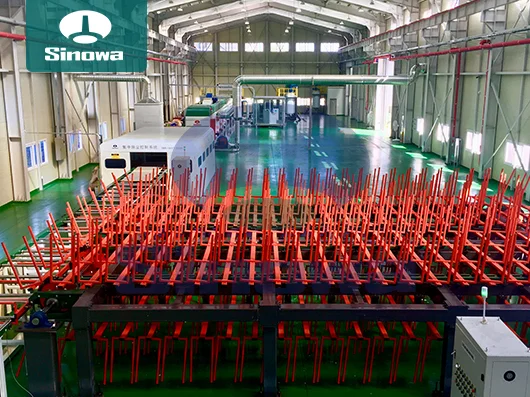
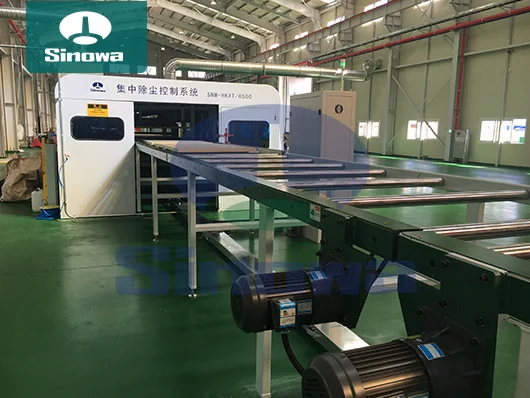
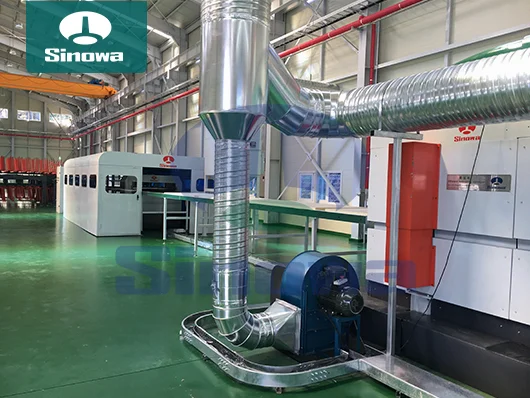
For more than ten years, relying on our innovative manufacturing concept and excellence in quality, reliable and trustworthy service to customers, we cooperate with customers all over the world, exported products to Canada, South Korea, Israel, Australia, the Middle East and other more than 20 countries and regions. contributed to building energy conservation and low-carbon production and have won widespread praise.
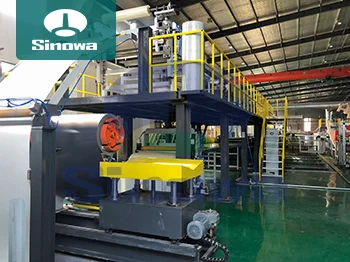
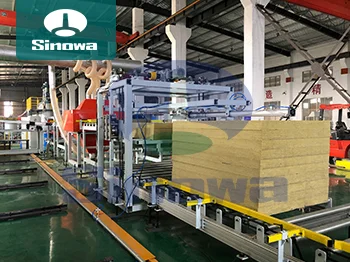
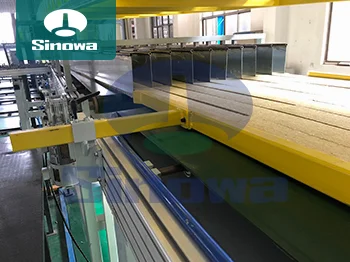
Sinowa has invested outstanding efforts in sandwich panel manufacturing line, this is why our products are more efficiency, quality, automatic control technology, environmental protection, energy consumption indicators and the appearance and safety protection are comprehensively leading, some subversive design changes in many major technical points, these major innovations make our products excellent in price/performance and user experience.
Sandwich panel manufacturing line design is a systematic and streamlined engineering solution tailored for the automated mass production of composite sandwich panels, which integrates mechanical transmission, material processing, chemical foaming, constant-temperature curing, and intelligent control technologies. The core design concept focuses on achieving continuous, stable, and high-precision production while ensuring the structural consistency, surface flatness, and comprehensive performance of finished panels. A well-designed production line abandons fragmented manual operation modes and adopts a fully linked modular structure, where each functional unit operates in synchronous coordination to complete the whole production process from raw material pretreatment, composite molding, curing shaping to fixed-length cutting and finished product stacking. The design fully considers the matching degree of different raw material characteristics and production processes, reserving flexible adjustment space for diversified panel specifications and core material types. It also optimizes mechanical stability and operational logic to reduce production fluctuations, material waste, and equipment failure rates, laying a reliable technical foundation for large-scale, high-efficiency, and standardized sandwich panel production for construction, industrial enclosure, and thermal insulation scenarios.
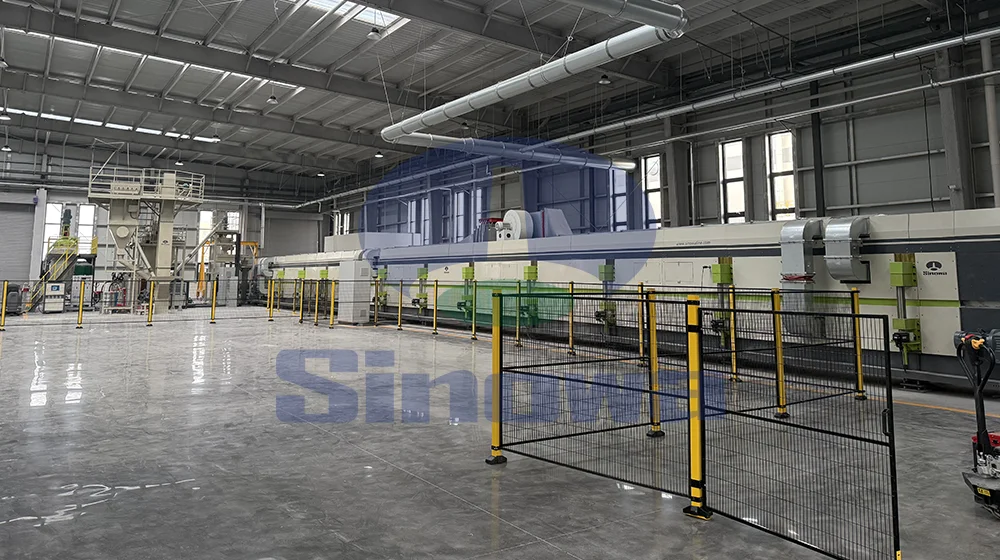
The overall structural layout design of a sandwich panel manufacturing line follows a linear material flow principle, arranging all functional modules in a sequential forward structure to avoid cross-operation and repeated material handling, which effectively improves production continuity and space utilization. The entire line is divided into multiple tightly connected functional units, including surface material unwinding and pretreatment module, core material metering and conveying module, continuous composite molding module, constant-temperature heating curing module, precision fixed-length cutting module, surface finishing module, and automatic stacking module. Each module is equipped with independent transmission and adjustment systems, and the overall operating speed is unified through a central intelligent control system to realize synchronous operation of the whole line. In terms of spatial layout, the design balances equipment occupation space and operational maintenance convenience, reserving sufficient operation channels and maintenance gaps for key equipment components. Meanwhile, vibration suppression structures are installed at high-speed operation nodes to eliminate mechanical jitter during continuous production, ensuring consistent processing accuracy. The modular layout design not only simplifies the overall production logic but also facilitates subsequent equipment debugging, partial upgrading, and daily maintenance, greatly improving the service stability and scalability of the entire manufacturing system.
Raw material pretreatment and feeding system design is the primary link that determines the initial production quality of sandwich panels, focusing on stable material supply and standardized surface treatment of raw materials. The surface layer of sandwich panels mostly adopts coiled metal materials, and the unwinding unit is designed with automatic deviation correction and tension control structures to ensure uniform and linear feeding of coiled materials without wrinkling, offsetting or stretching deformation. After unwinding, the metal sheets pass through a multi-group leveling and cleaning device to remove surface dust, oil stains and irregular deformations, providing a clean and flat bonding base for subsequent composite processing. For core materials including foam materials and inorganic thermal insulation materials, the feeding system adopts quantitative metering and uniform conveying structures. The foaming raw material metering device realizes precise proportioning of multi-component materials through high-precision transmission components, while the solid core material conveying equipment ensures synchronous feeding speed matching with surface plates. The whole feeding system is designed with linkage protection functions, which can automatically alarm and suspend operation in case of material shortage, blockage or feeding deviation, effectively avoiding defective products caused by abnormal material supply and ensuring the consistency of raw material state in each production cycle.
Composite molding system design is the core part of the sandwich panel manufacturing line, directly determining the bonding firmness, structural uniformity and overall flatness of finished panels. This system integrates automatic gluing, core material laying, and continuous pressing functions to complete the integral composite forming of surface layer and core material in one continuous process. The gluing module adopts oscillating uniform coating technology, which can evenly distribute adhesive materials on the inner surface of metal sheets according to set thickness and coverage, avoiding local glue shortage or excessive glue accumulation that affects bonding performance. After gluing, the core materials are accurately laid between the upper and lower surface plates through automatic positioning equipment, with precise deviation correction to ensure the overall alignment of the three-layer structure. The continuous pressing unit uses multi-group roller pressing structures with adjustable pressure and spacing, which can adapt to different panel thickness specifications. The pressing speed and pressure are dynamically matched with the feeding speed to ensure tight fitting between layers without damaging the structural characteristics of core materials. The overall molding process abandons intermittent pressing modes, realizing uninterrupted continuous composite molding, which not only greatly improves production efficiency but also eliminates structural differences caused by segmented processing, ensuring uniform overall stress and stable structural performance of each panel.
Constant-temperature curing and shaping system design is key to stabilizing the composite structure and final performance of sandwich panels, focusing on precise temperature control and gradual shaping logic. After composite molding, the preliminary bonded semi-finished panels enter the closed curing channel for continuous heating and thermal insulation treatment, which promotes the full reaction and curing of adhesives and foaming materials to form stable bonding strength. The curing system adopts segmented temperature control design, setting gradient temperature zones according to the reaction characteristics of composite materials, realizing low-temperature pre-reaction, medium-temperature curing and high-temperature shaping in sequence. This gradient heating mode avoids local overheating that causes core material deformation or surface layer discoloration, and prevents insufficient curing caused by uneven temperature distribution. The internal circulation hot air structure is adopted inside the curing channel to ensure uniform temperature coverage in all areas, eliminating temperature dead zones. Meanwhile, the system is equipped with real-time temperature monitoring and automatic adjustment functions, which can fine-tune heating parameters according to production speed and material types to maintain stable curing conditions. Through scientific curing and shaping design, the bonding strength between layers is fully guaranteed, and the internal stress of composite panels is effectively eliminated, preventing later warping, cracking and delamination problems of finished products.
Precision cutting and surface finishing system design undertakes the task of final sizing and quality optimization of sandwich panels, focusing on dimensional accuracy and surface appearance quality control. After completing curing and shaping, the continuous panel materials are transported to the fixed-length cutting unit, which adopts high-speed precision cutting equipment with automatic positioning and counting functions. The system can freely set cutting length according to production requirements, and realizes error-free fixed-length cutting through intelligent positioning calibration, ensuring consistent dimensional accuracy of each finished panel. The cutting tool is designed with wear-resistant and anti-deformation structures to maintain smooth and burr-free cutting sections without damaging the edge structure of panels. The surface finishing link includes edge trimming, surface smoothing and defect inspection functions. The automatic trimming device polishes and flattens the panel edges to eliminate burrs and uneven edges generated during cutting. The surface smoothing equipment fine-tunes tiny uneven areas on the panel surface to improve overall flatness. In addition, the system is equipped with online visual inspection components to automatically identify surface scratches, depressions and bonding defects, realizing real-time screening of unqualified products and effectively improving the overall yield of finished panels.
Intelligent control and linkage system design runs through the entire sandwich panel manufacturing line, serving as the core guarantee for automated, stable and efficient operation of the whole equipment. The entire production line adopts a centralized intelligent control system, which uniformly manages and adjusts the operating parameters of all functional modules including feeding, molding, curing, cutting and finishing. The system supports real-time synchronization of production speed, realizing automatic linkage of front and rear processes, and avoiding production stagnation or material accumulation caused by inconsistent operating speed of each unit. It is equipped with human-computer interaction terminals, which can intuitively display real-time operating status, production data and equipment parameter information, and support manual parameter adjustment and automatic program switching according to different product specifications. Meanwhile, the control system has complete fault self-diagnosis and protection functions, which can quickly identify equipment operation abnormalities such as material blockage, parameter deviation and equipment overload, and automatically trigger alarm and emergency stop mechanisms to avoid equipment damage and batch defective products. The intelligent linkage design simplifies manual operation procedures, reduces human error interference, and realizes standardized and intelligent whole-process production control.
Finished product conveying and automatic stacking system design is the final link of the production line, focusing on efficient finished product output, orderly stacking and production rhythm coordination. After finishing cutting and surface finishing, qualified sandwich panels are stably transported to the finished product platform through the variable-speed conveying device, which can adjust the conveying speed synchronously with the front-end production rhythm to ensure smooth connection of the whole production process. The automatic stacking equipment adopts mechanical grabbing and positioning structures, which can accurately grab single panels and complete orderly stacking according to set layers and spacing. The stacking system is designed with anti-collision and anti-pressure protection functions to avoid surface scratches, edge damage and panel deformation during the grabbing and stacking process. It also supports automatic counting and sorting, realizing classified stacking of panels with different specifications, which facilitates subsequent packaging, transportation and storage. In addition, the system is equipped with buffer storage structures to cope with short-term production speed fluctuations, ensuring continuous operation of the front-end production line without frequent shutdowns. The optimized finished product processing design effectively improves the automation level of the whole line, reduces manual auxiliary operations, and realizes seamless docking between production and finished product storage, further improving the overall production efficiency and operational intelligence of the sandwich panel manufacturing line.
« Sandwich Panel Manufacturing Line Design » Update Date: 2026/8/26
Tags: Continuous Sandwich Panel Manufacturing Line , Sandwich Panel Manufacturing Line , Polyurethane Sandwich Panel Manufacturing Line ,
- Sandwich Panel Foam Making Machine On Sales
- PU Panel Machine On Sales
- High-tech Glass Wool Line
- Isolation Sandwich Panel Production Line Supplier
- High-end PU Foam Production Line
- PU Insulated Panel Production Line Price
- Glass Wool Sandwich Panel Production Line On Sales
- Insulated Sandwhich Panel Production Line In China
- PUF Panel Machine Factory
- Polyurethane Sandwich Panel Machine For Wall
- Custom Glass Wool Panel Production Line
- PUF Panel Making Machine On Sales
- Fully Automatic PU Sandwich Panel Machine Manufacturer
- PU Sandwich Panel Machine From China
- Low Price Color Steel Sandwich Panel Production Line
- PUR Sandwich Panel Machine On Sales
- Glass Wool Equipment Manufacturer
- PUR Sandwich Panel Production Line For Sale
- Automatic Sandwich Panel Production Line Design
- Customized Continuous PU Sandwich Panel Line
- Links:
- Sandwich Panel Continuous Production Line
- Automatic and Continuous Sandwich Panel Production Line
- Cheap and Low Price Sandwich Panel Production Line
- China Sandwich Panel Production Line Factory
- Color Steel Sandwich Panel Production Line For Cold Storage
- Continuous Composite Foam Sandwich Panel Production Line
- Continuous Production Line For Rockwool and Mineral Wool Sandwich Panels
- Continuous PU Phenolic Insulation Panel Production Line
- Continuous PU PIR Sandwich Panel Production Line
- Continuous PUF PUR Sandwich Panel Production Line
- Continuous Sandwich Panel Production Line For Roof and Wall
- Customized and Design Sandwich Panel Production Line
- Decorative Sandwich Panel Production Line For Glass Wool Boards
- High Quality Sandwich Panel Production Line For Sale
- Polyurethane(PU) Sandwich Panel Production Line
- Sandwich Panel Production Line Manufacturer and Supplier