
Continuous PU Sandwich Panel Line For Wall
Sinowa is a well-known manufacturer and technical service provider of high-end continuous pu sandwich panel line, learn more about continuous pu sandwich panel line for wall, please contact Sinowa's technical engineer, tell us what you need, we will contact you as soon as possible!
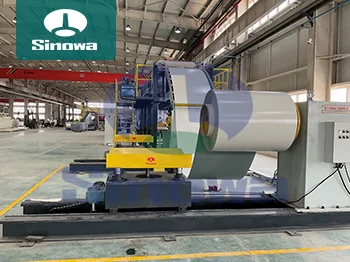
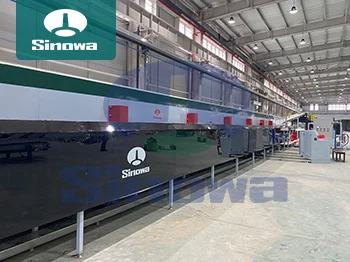
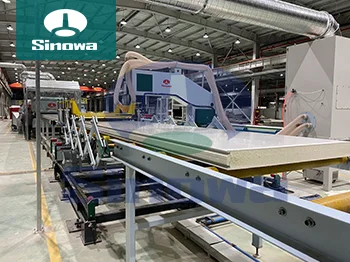
Sinowa is committed to the development and manufacturing of high-end and high-efficiency continuous pu sandwich panel line. Our continuous pu sandwich panel line are leading the way in efficiency, automatic control, human-computer interaction, environmental protection and energy consumption. Using system integration and bus control technology, it realizes the automatic integrated linkage control of the entire continuous pu sandwich panel line, and can achieve remote interactive communication, which has the world-class level and a comprehensive leading high-performance continuous pu sandwich panel line in the market.
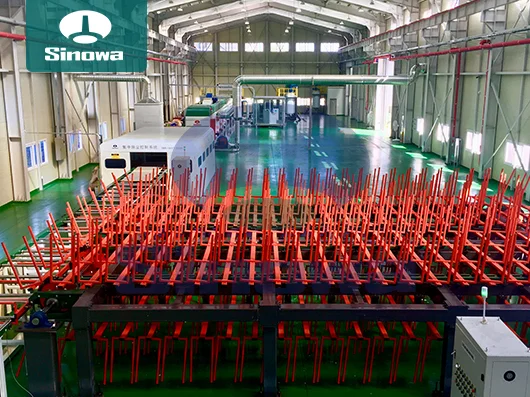
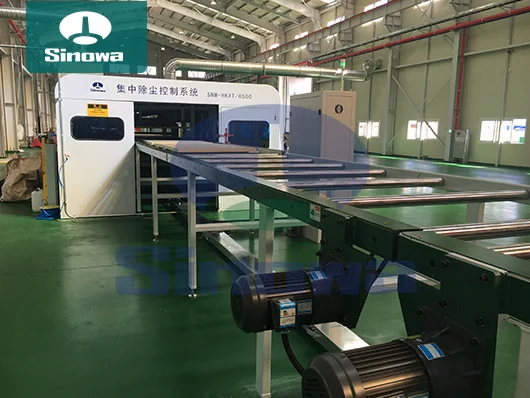
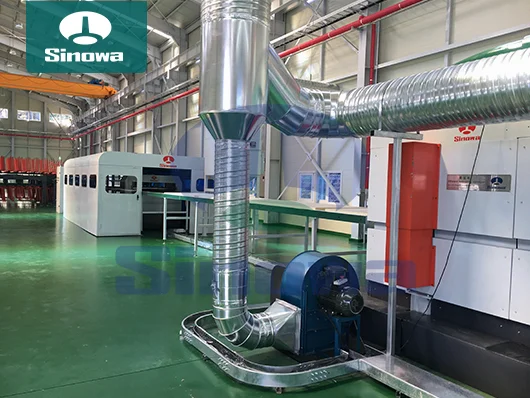
For more than ten years, relying on our innovative manufacturing concept and excellence in quality, reliable and trustworthy service to customers, we cooperate with customers all over the world, exported products to Canada, South Korea, Israel, Australia, the Middle East and other more than 20 countries and regions. contributed to building energy conservation and low-carbon production and have won widespread praise.
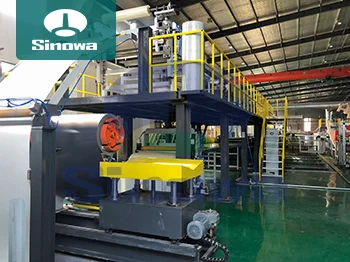
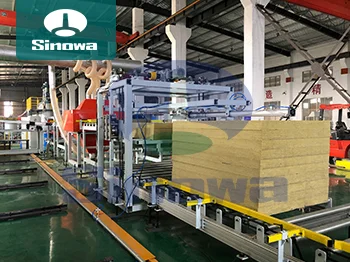
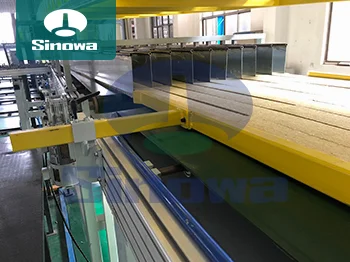
Sinowa has invested outstanding efforts in continuous pu sandwich panel line, this is why our products are more efficiency, quality, automatic control technology, environmental protection, energy consumption indicators and the appearance and safety protection are comprehensively leading, some subversive design changes in many major technical points, these major innovations make our products excellent in price/performance and user experience.
The continuous production line for polyurethane (PU) sandwich wall panels represents a sophisticated integration of advanced engineering, material science, and automated technology, designed to manufacture high-performance composite panels widely used in modern construction. This production system operates in a seamless, uninterrupted workflow that ensures consistent quality, efficiency, and adaptability to diverse construction needs. Unlike discontinuous production methods, continuous lines minimize material waste, reduce labor intervention, and enable the mass production of panels with uniform structural integrity and performance characteristics. The core principle of such lines lies in the precise combination of two outer facings with a rigid PU foam core, bonded through a controlled process that optimizes adhesion and dimensional stability. As the construction industry increasingly prioritizes energy efficiency, durability, and rapid installation, the continuous PU sandwich panel line has become an indispensable asset, catering to the growing demand for high-quality wall solutions across industrial, commercial, and specialized sectors.
The structure of a continuous PU sandwich panel line for walls is a modular assembly of interconnected units, each performing a specific function in the production cycle, while maintaining synchronized operation to ensure a smooth workflow. The line typically begins with the uncoiling and leveling unit, where the outer facing materials—commonly metal sheets, aluminum, or other structural substrates—are fed into the system. These facing materials are first unrolled from large coils, then passed through leveling machines to eliminate wrinkles, deformations, or unevenness, ensuring a flat and consistent base for subsequent processes. Precision cutting mechanisms may also be integrated at this stage to adjust the width of the facings according to the desired panel specifications. Following leveling, the facings are guided through a pre-treatment module, which cleans and conditions the surface to enhance the bonding strength between the facing and the PU core. This pre-treatment process is critical, as it removes contaminants such as oil, dust, or oxide layers that could compromise adhesion, thereby ensuring long-term structural stability of the final panel.
The next core component of the production line is the foam mixing and pouring unit, which is responsible for creating the rigid PU foam core and distributing it evenly between the two outer facings. This unit consists of high-pressure mixing heads that combine polyol and isocyanate— the primary components of PU foam—along with additives such as blowing agents, catalysts, and flame retardants. The mixing process is highly controlled to ensure the correct ratio of ingredients, as even minor deviations can affect the foam’s density, thermal insulation, and mechanical properties. The blowing agent facilitates the expansion of the mixture into a cellular structure, while catalysts regulate the curing speed to align with the line’s production pace. Once mixed, the foam is poured onto the lower facing material as it moves continuously through the line, and the upper facing is immediately applied on top, forming a sandwich structure. The entire assembly then enters a lamination and pressing unit, where controlled pressure and temperature are applied to promote uniform foam expansion, ensure full adhesion between layers, and shape the panel to the desired thickness and profile. This unit may incorporate conveyor belts, roller presses, or vacuum systems to maintain consistent pressure across the panel’s surface, preventing voids or uneven core distribution.
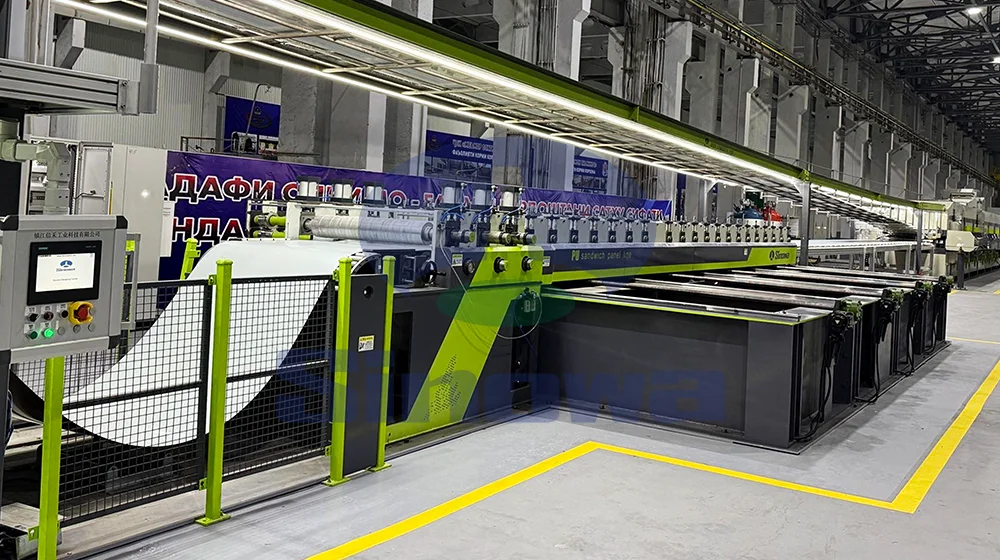
Subsequent stages of the production line include curing, trimming, and quality inspection. The curing unit provides a controlled environment—regulated for temperature and humidity—to allow the PU foam to fully set and achieve its optimal mechanical properties. The duration of curing is tailored to the foam formulation and production speed, ensuring that the panel is stable enough for further processing without deformation. After curing, the continuous panel is fed into a precision trimming unit, where automated saws or cutting tools trim the edges to the required length and width, removing any excess material and ensuring dimensional accuracy. Advanced lines may also include profiling tools to create interlocking edges, such as tongue-and-groove or snap-lock designs, which facilitate easy installation and enhance the panel’s thermal and acoustic performance by minimizing gaps. The final stage involves quality inspection, where sensors and visual checks assess parameters such as core density, bonding strength, thickness uniformity, and surface quality. Defective panels are automatically diverted from the line, ensuring that only products meeting the required standards proceed to packaging or shipment. The modular design of these lines allows for easy integration of additional units, such as surface coating or printing modules, to customize the panel’s aesthetic or functional properties.
The performance of continuous PU sandwich panel lines is defined by a combination of efficiency, precision, and adaptability, which directly translates to the quality of the final wall panels. One of the key performance attributes is production efficiency, as these lines can operate continuously for extended periods, significantly increasing output compared to discontinuous systems. The automation level of the line plays a crucial role in this efficiency—advanced systems incorporate centralized control panels with human-machine interface (HMI) technology, allowing operators to monitor and adjust parameters such as foam mixing ratio, pressure, temperature, and line speed in real time. This automation reduces human error, minimizes downtime, and ensures consistent product quality across large production runs. Additionally, the energy efficiency of the line is a notable performance factor; modern designs incorporate energy-saving technologies such as heat recovery systems in the curing unit, low-power motors, and optimized insulation for temperature-controlled zones, reducing overall energy consumption and environmental impact.
Precision is another critical performance characteristic of continuous PU sandwich panel lines. The ability to maintain tight tolerances for panel thickness, core density, and dimensional accuracy ensures that the final products are compatible with standard construction practices and can be installed seamlessly. The foam mixing and pouring unit, in particular, requires high precision to deliver a consistent foam density—typically ranging from 40 to 48 kg/m³—which directly influences the panel’s thermal insulation, compressive strength, and durability. Lines equipped with advanced flow meters and pressure sensors can adjust the foam output in real time, preventing variations in core density that could compromise performance. Bonding strength is also a key performance metric, as the integrity of the bond between the outer facings and the PU core determines the panel’s structural stability and resistance to environmental stress. Continuous lines ensure strong adhesion through controlled pre-treatment of facings, optimal curing conditions, and uniform pressure application, resulting in bonding strength values that meet or exceed industry requirements.
Adaptability is a vital performance feature that allows continuous PU sandwich panel lines to cater to diverse customer needs and market demands. These lines can be configured to produce panels with varying thicknesses—typically from 50 mm to 200 mm—by adjusting the lamination and pressing unit, making them suitable for applications ranging from thin interior partitions to thick external walls requiring high thermal insulation. The ability to switch between different facing materials, such as color-coated steel, aluminum, stainless steel, or even non-metallic substrates like fiberglass or PVC, further enhances adaptability. Additionally, the foam formulation can be modified to produce panels with specialized properties, such as enhanced fire resistance, moisture resistance, or acoustic insulation, by adjusting the type and ratio of additives. Some advanced lines can also switch between producing PU and polyisocyanurate (PIR) foam cores, with PIR offering superior fire resistance and thermal stability compared to traditional PU. This versatility allows manufacturers to serve a wide range of applications without investing in multiple production lines.
Continuous PU sandwich panel lines for walls can be classified based on several criteria, including the type of core material, the nature of the outer facings, and the production capacity. One common classification is based on the foam core type, with lines dedicated to PU, PIR, or hybrid foam production. PU core lines are the most widely used, as PU foam offers excellent thermal insulation, lightweight properties, and good mechanical strength. PIR core lines, on the other hand, are specialized for applications requiring higher fire resistance, as PIR foam has a higher limiting oxygen index and lower smoke emission compared to PU. Hybrid lines are designed to produce panels with composite cores, such as PU edge-banded rock wool or glass wool cores, combining the thermal insulation of PU with the non-combustible properties of mineral wool for enhanced fire safety. These hybrid lines require additional modules for feeding and integrating the mineral wool core, as well as specialized foam pouring systems to ensure proper bonding between the different core materials.
Another classification is based on the outer facing material, which dictates the panel’s durability, corrosion resistance, and aesthetic appearance. Lines producing metal-faced panels are the most common, with facings made from galvanized steel, color-coated steel, aluminum, or stainless steel. Galvanized steel facings provide excellent corrosion resistance, making them suitable for outdoor applications, while color-coated steel offers a wide range of aesthetic options with durable coatings such as polyester, polyvinylidene fluoride (PVDF), or silicone-modified polyester (SMP). Aluminum facings are lightweight and corrosion-resistant, ideal for applications where weight is a critical factor, such as modular buildings or mobile structures. Stainless steel facings are used in specialized environments requiring high hygiene standards, such as food processing facilities or cleanrooms, due to their easy-to-clean surface and resistance to chemical corrosion. Non-metallic facing lines produce panels with facings made from fiberglass, PVC, or cement-based materials, catering to applications where electrical insulation, chemical resistance, or specific aesthetic requirements are prioritized.
Production capacity is also a key factor in classifying continuous PU sandwich panel lines, with lines ranging from small-scale to large-scale operations. Small-scale lines are typically compact, with lower production speeds (up to 5 meters per minute) and smaller width capacities, suitable for local manufacturers or specialized applications with low volume requirements. These lines may have semi-automated components to reduce initial investment costs. Medium-scale lines offer higher production speeds (5 to 15 meters per minute) and greater width capacities, catering to regional markets and medium-volume production needs. Large-scale lines are designed for mass production, with speeds exceeding 15 meters per minute, wide width capacities, and fully automated systems for maximum efficiency. These lines are often used by large manufacturers supplying national or international markets, with the ability to produce thousands of square meters of panels per day. The modular design of most lines allows for capacity expansion, enabling manufacturers to upgrade their systems as demand grows.
The applications of continuous PU sandwich wall panels—manufactured by these advanced lines—span a wide range of construction sectors, driven by their exceptional combination of thermal insulation, structural strength, lightweight properties, and rapid installation. Industrial buildings are one of the primary application areas, including warehouses, factories, and manufacturing facilities. In these environments, the panels’ thermal insulation properties help maintain stable indoor temperatures, reducing energy consumption for heating and cooling, while their lightweight nature reduces the overall load on the building’s foundation and structure. The durability and impact resistance of metal-faced panels make them suitable for industrial settings where heavy machinery, forklifts, or harsh operating conditions are common. Additionally, the rapid installation of PU sandwich panels accelerates construction timelines, minimizing downtime for industrial operations and reducing labor costs.
Cold storage and refrigeration facilities represent another critical application for continuous PU sandwich wall panels. The low thermal conductivity of PU foam—typically between 0.019 and 0.024 W/(m·K)—makes it an ideal insulation material for environments requiring strict temperature control, such as cold storage warehouses, food processing plants, pharmaceutical storage facilities, and refrigerated transport vehicles. The panels’ moisture resistance prevents condensation and mold growth, which is essential for preserving the quality of perishable goods and pharmaceutical products. The airtight and watertight joints of interlocking panels further enhance insulation performance, minimizing temperature fluctuations and reducing energy consumption. In addition, the fire resistance properties of specialized panels (such as PIR or hybrid cores) ensure compliance with safety regulations for cold storage facilities, which are often at risk of fire due to electrical systems or refrigeration equipment.
Commercial buildings, including shopping malls, office buildings, hotels, and retail stores, also benefit from the use of continuous PU sandwich wall panels. The panels’ aesthetic versatility—available in a wide range of colors, textures, and profiles—allows architects to create visually appealing facades and interior partitions. The acoustic insulation properties of the PU core help reduce noise transmission between rooms or from external sources, creating a more comfortable indoor environment for employees, customers, or guests. For office buildings and hotels, the energy efficiency of the panels contributes to lower utility costs and a reduced carbon footprint, aligning with green building initiatives. The rapid installation of the panels also helps meet tight construction schedules for commercial projects, which often have strict deadlines to begin operations and generate revenue.
Modular and prefabricated buildings have emerged as a fast-growing application area for continuous PU sandwich wall panels, driven by the industry’s shift toward off-site construction. Modular buildings—such as mobile homes, temporary offices, construction site cabins, and emergency shelters—require lightweight, durable, and easy-to-install wall materials, which PU sandwich panels provide. The panels can be prefabricated to precise dimensions in the factory, ensuring quick assembly on-site with minimal tools and labor. This off-site production method reduces construction waste, shortens project timelines, and improves quality control compared to traditional on-site construction. In emergency situations, such as natural disasters, modular buildings made with PU sandwich panels can be rapidly deployed to provide safe and insulated shelter, as the panels offer protection against harsh weather conditions and maintain stable indoor temperatures.
Specialized applications for continuous PU sandwich wall panels include cleanrooms, laboratories, and healthcare facilities. These environments require high levels of hygiene, airtightness, and contamination control, which the panels can provide. Stainless steel or non-porous facings are easy to clean and disinfect, preventing the accumulation of bacteria or pollutants. The airtight joints of the panels minimize air leakage, helping to maintain controlled air pressure and filtration systems essential for cleanrooms and laboratories. In healthcare facilities, such as hospitals and clinics, the panels’ acoustic insulation reduces noise in patient areas, while their fire resistance enhances safety for patients and staff. Additionally, the thermal insulation properties help maintain comfortable temperatures in sensitive areas such as operating rooms or diagnostic labs.
The versatility of continuous PU sandwich wall panels also extends to agricultural buildings, such as greenhouses, livestock barns, and storage facilities. Greenhouses benefit from the panels’ thermal insulation to maintain optimal growing temperatures for plants, reducing the need for heating in cold climates and cooling in hot weather. Livestock barns require durable, easy-to-clean wall materials that can withstand exposure to manure, chemicals, and harsh weather, making metal-faced PU panels an ideal choice. The panels also provide thermal comfort for livestock, improving their health and productivity. Agricultural storage facilities use the panels to protect crops, feed, and equipment from moisture, pests, and temperature fluctuations, ensuring longer shelf life and reducing waste.
In conclusion, the continuous PU sandwich panel line for walls is a sophisticated production system that plays a pivotal role in modern construction by manufacturing high-performance, versatile wall panels. Its modular structure, precise performance capabilities, and diverse configurations enable the production of panels tailored to a wide range of applications, from industrial warehouses and cold storage facilities to commercial buildings and modular shelters. The inherent properties of the panels—superior thermal insulation, lightweight strength, durability, and rapid installation—address the key challenges of modern construction, including energy efficiency, sustainability, and cost-effectiveness. As the construction industry continues to evolve toward greener, more efficient, and modular practices, the continuous PU sandwich panel line is poised to remain a cornerstone technology, driving innovation and meeting the growing demand for high-quality wall solutions across global markets. The ongoing advancement of automation, material science, and energy-saving technologies in these lines will further enhance their performance and versatility, expanding their applications and solidifying their position as an essential component of modern construction ecosystems.
« Continuous PU Sandwich Panel Line For Wall » Update Date: 2026/1/24
- Composite Sandwich Panel Production Line On Sales
- Cheap Sandwich Wall Panel Production Line
- Customized Sandwich Panel Production Line
- Foam Sandwich Panel Production Line Factory
- Foam Sandwich Panel Machine From China
- Soundproofing Sandwich Panel Production Line
- Customize Sandwich Panel Foam Production Line
- Customized PU Sandwich Panel Machine
- High-tech Wall Sandwich Panel Production Line
- Composite Panel Production Line For Sale
- Cheap Sandwich Panel Machine
- Continuous PU Sandwich Panel Line Price
- High-quality Glass Wool Line
- Decorative PU Sandwich Panel Production Line Supplier
- Cheap Glass Wool Panel Production Line
- PU Sandwich Panel Production Line Factory
- Cheap PU Sandwich Machine
- Glass Wool Sandwich Panel Production Line For Sale
- Isolation PU Sandwich Panel Line From China
- Glass Wool Equipment For Sale
- Links:
- Sandwich Panel Continuous Production Line
- Automatic and Continuous Sandwich Panel Production Line
- Cheap and Low Price Sandwich Panel Production Line
- China Sandwich Panel Production Line Factory
- Color Steel Sandwich Panel Production Line For Cold Storage
- Continuous Composite Foam Sandwich Panel Production Line
- Continuous Production Line For Rockwool and Mineral Wool Sandwich Panels
- Continuous PU Phenolic Insulation Panel Production Line
- Continuous PU PIR Sandwich Panel Production Line
- Continuous PUF PUR Sandwich Panel Production Line
- Continuous Sandwich Panel Production Line For Roof and Wall
- Customized and Design Sandwich Panel Production Line
- Decorative Sandwich Panel Production Line For Glass Wool Boards
- High Quality Sandwich Panel Production Line For Sale
- Polyurethane(PU) Sandwich Panel Production Line
- Sandwich Panel Production Line Manufacturer and Supplier