
Continuous PU Sandwich Panel Production Line Design
Sinowa is a well-known manufacturer and technical service provider of high-end continuous pu sandwich panel production line, learn more about continuous pu sandwich panel production line design, please contact Sinowa's technical engineer, tell us what you need, we will contact you as soon as possible!
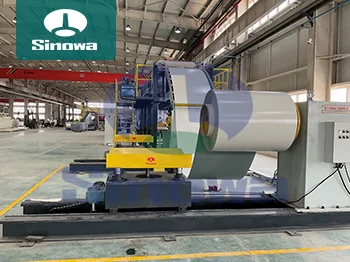
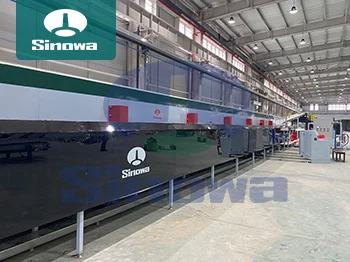
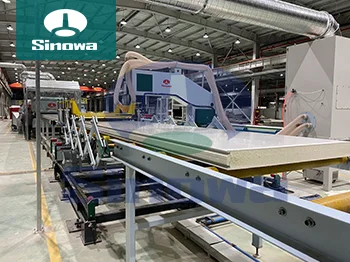
Sinowa is committed to the development and manufacturing of high-end and high-efficiency continuous pu sandwich panel production line. Our continuous pu sandwich panel production line are leading the way in efficiency, automatic control, human-computer interaction, environmental protection and energy consumption. Using system integration and bus control technology, it realizes the automatic integrated linkage control of the entire continuous pu sandwich panel production line, and can achieve remote interactive communication, which has the world-class level and a comprehensive leading high-performance continuous pu sandwich panel production line in the market.
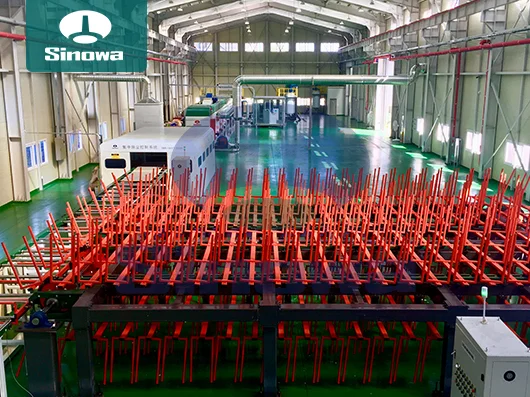
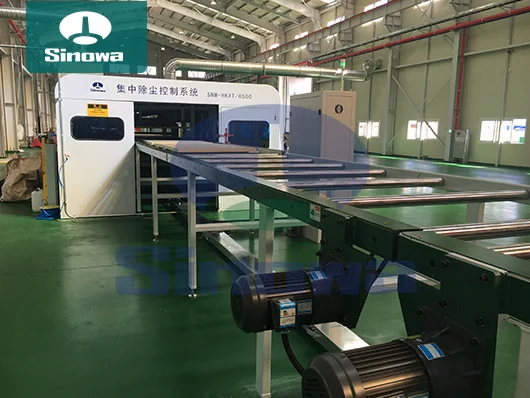
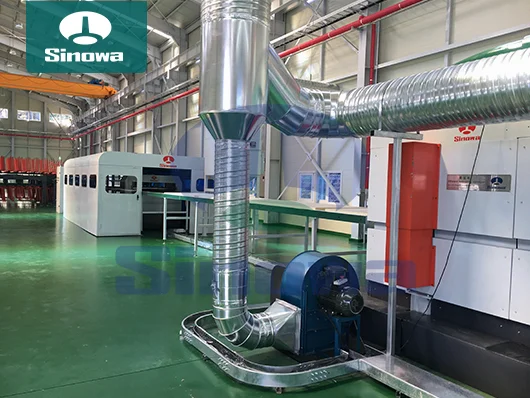
For more than ten years, relying on our innovative manufacturing concept and excellence in quality, reliable and trustworthy service to customers, we cooperate with customers all over the world, exported products to Canada, South Korea, Israel, Australia, the Middle East and other more than 20 countries and regions. contributed to building energy conservation and low-carbon production and have won widespread praise.
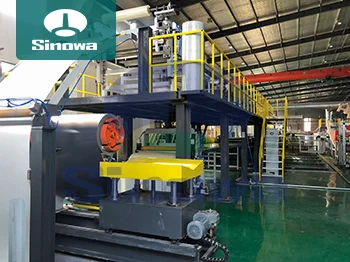
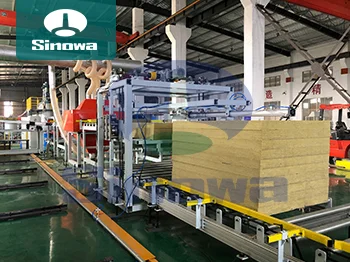
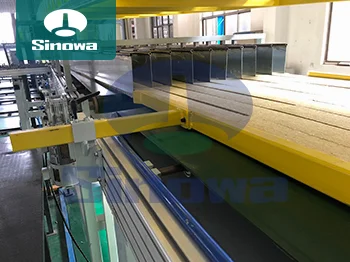
Sinowa has invested outstanding efforts in continuous pu sandwich panel production line, this is why our products are more efficiency, quality, automatic control technology, environmental protection, energy consumption indicators and the appearance and safety protection are comprehensively leading, some subversive design changes in many major technical points, these major innovations make our products excellent in price/performance and user experience.
The continuous PU sandwich panel production line represents a highly integrated and automated manufacturing system tailored for the mass production of polyurethane composite sandwich panels, which are widely applied in architectural insulation, industrial plant construction, cold chain facilities, and modular building projects. Unlike traditional intermittent production equipment that relies on segmented manual intervention and discontinuous processing, this continuous production design realizes one-stop integrated operations from raw material feeding, surface material pretreatment, precise PU raw material mixing and pouring, continuous laminating and curing, to fixed-length cutting and finished product stacking. The core design concept focuses on balancing production efficiency, product structural stability, and performance consistency, solving the common drawbacks of traditional production modes such as uneven foam density, inconsistent panel thickness, low yield, and high labor cost. Through modular functional layout and synchronous linkage control of each processing unit, the production line achieves uninterrupted continuous operation, ensuring that each batch of finished panels maintains uniform thermal insulation performance, mechanical strength, and surface flatness while greatly improving overall production capacity and production standardization level.
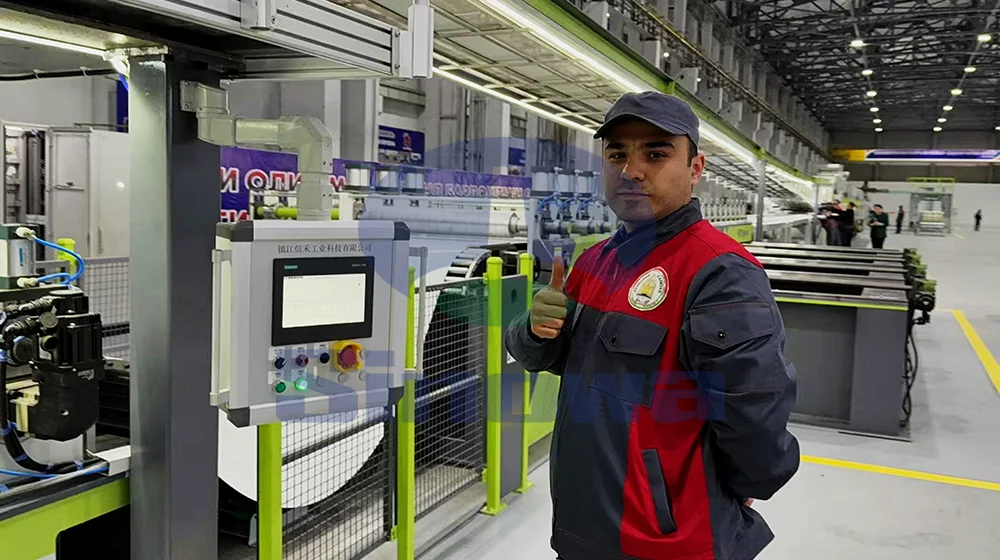
The overall structural design of the continuous PU sandwich panel production line adopts a linear modular layout, which arranges all functional processing units in a sequential production route to ensure smooth material transmission and streamlined processing procedures. This layout design abandons the scattered station arrangement of traditional intermittent equipment, effectively reducing material handling time and production dead zones in the processing process. The entire production system is divided into multiple interlinked functional modules, including surface material unwinding and feeding module, surface pretreatment and roll forming module, PU raw material metering and high-pressure mixing module, double-belt laminating and constant-temperature curing module, fixed-length cutting and edge trimming module, finished product cooling and conveying module, and automatic stacking module. Each independent module is designed with adaptive linkage parameters, realizing synchronous speed matching and coordinated operation. In terms of mechanical structure, the main frame adopts high-rigidity integral welding structure, which can effectively resist vibration and deformation during long-term high-speed operation, maintaining stable processing accuracy. The transmission components are equipped with synchronous driving systems to ensure consistent running speed of upper and lower surface materials, avoiding panel offset and thickness deviation caused by asynchronous transmission in the composite forming process.
Surface material pretreatment and forming design is a key pre-process link that directly determines the surface quality and composite firmness of finished PU sandwich panels. The production line is equipped with an integrated unwinding and pretreatment unit, which can adapt to multiple types of surface base materials including color-coated steel coils, aluminum coils, and other metal decorative plates. The unwinding unit adopts automatic tension control design, which can dynamically adjust the feeding tension according to the material thickness and production speed, effectively preventing surface material wrinkling, stretching or deviation during continuous feeding. The subsequent pretreatment process includes automatic surface cleaning, oil stain removal, and flatness calibration, which removes surface impurities and burrs of base materials to optimize surface activity. This treatment significantly enhances the bonding force between the surface material and PU foam core layer, effectively avoiding delamination, peeling and other quality problems during long-term service of the panels. After pretreatment, the roll forming unit carries out continuous cold bending forming on the flat coiled materials through multi-group precision roller sets, processing the materials into the required plate shape and edge structure. The roller spacing and forming angle of the roll forming unit are adjustable, realizing flexible production of panels with different specifications and meeting the diverse shape requirements of different application scenarios.
The PU raw material metering, mixing and pouring system is the core functional module of the entire production line, which dominates the internal structure, thermal insulation performance and mechanical stability of sandwich panel core layers. Polyurethane foam is formed by the chemical reaction of multiple components of chemical raw materials, and the design of this unit focuses on precise proportioning, uniform mixing and stable pouring. The system is equipped with high-precision independent metering devices for each raw material component, which can realize micro-adjustment of feeding flow rate according to production speed and panel thickness requirements, ensuring accurate proportioning of raw materials in real time. Different from low-pressure mixing equipment with uneven mixing and residual bubbles, the production line adopts high-pressure impact mixing technology, which makes various raw materials fully collide and fuse in the mixing chamber to form a uniform and fine liquid mixture without dead-angle mixing. The pouring unit adopts continuous linear pouring and multi-point distributed feeding design, which can evenly distribute the mixed PU liquid between the upper and lower surface materials. This design avoids local material accumulation or insufficient filling, ensuring that the foam core layer forms a consistent and compact pore structure after foaming and curing, thus guaranteeing uniform thermal insulation and pressure resistance of the entire panel.
Double-belt laminating and constant-temperature curing system design is the key link to realize continuous composite forming and fixed molding of PU sandwich panels. The core of this unit is the synchronous circulating double-belt conveyor structure, which clamps and transports the surface materials and PU raw materials synchronously while providing stable forming pressure for foam foaming. The upper and lower belt bodies adopt high-precision flat structural design, and the gap between the belts can be precisely adjusted according to the preset panel thickness, realizing accurate control of finished panel thickness. During the operation process, the double belts maintain constant and uniform clamping pressure, which can effectively restrain the free expansion of PU foam, make the foam fully fill the composite space, and form a flat and regular panel structure. Equipped with an independent constant-temperature circulating heating system, the curing area can maintain a stable reaction temperature environment required for PU foam chemical foaming and solidification. The hot air circulation structure realizes uniform temperature distribution in the entire curing chamber, avoiding uneven foaming caused by local temperature difference. With the dual effect of constant pressure and constant temperature, the PU liquid completes a series of chemical processes including foaming expansion, gelation and solidification in the continuous advancing state, forming an integrated composite structure with tight bonding between the core layer and surface materials.
The post-processing unit design of the production line focuses on precise sizing, edge finishing and efficient conveying, realizing standardized finishing of finished panels. After continuous curing and forming, the integrated panel enters the fixed-length cutting module, which adopts servo-driven high-speed cutting equipment to achieve precise fixed-length cutting according to customized size parameters. The servo control system can realize real-time tracking and synchronous cutting with the production line operating speed, ensuring flat and smooth cutting sections without burrs or deformation, and effectively improving the dimensional accuracy of finished products. The edge trimming process is designed to automatically trim the redundant edges on both sides of the panel, correcting the slight deviation generated in the continuous forming process to ensure consistent width specifications of each panel. In addition, the post-processing section is equipped with a graded cooling conveying structure, which adopts natural air cooling and auxiliary air supply cooling modes to gradually reduce the temperature of the newly formed panels. This gradual cooling design avoids panel deformation, cracking or internal stress concentration caused by rapid temperature drop, and stabilizes the internal structural performance of the panels, laying a foundation for subsequent stacking and storage.
The automatic control and linkage system design runs through the entire continuous production line, which is the core guarantee for realizing high-efficiency, stable and intelligent production. The production line adopts a centralized integrated control system, which uniformly regulates the operating parameters of all functional modules including feeding speed, raw material proportioning, curing temperature, forming pressure and cutting size. The system has real-time data monitoring and automatic parameter adjustment functions, which can dynamically optimize the operating state of each unit according to the real-time production status. When slight parameter fluctuations occur during production, the control system can realize self-calibration and synchronous adjustment of each module to maintain the consistency of the production process. In terms of safety and stability design, the system is equipped with overload protection, deviation correction alarm and emergency stop linkage functions. Once abnormal conditions such as material blockage, equipment overload or parameter deviation occur, the system will trigger an automatic alarm and linkage shutdown to avoid equipment failure and product quality defects. The highly automated control design reduces manual operation intervention, lowers the error rate caused by manual operation, and greatly improves the overall production stability and intelligent level.
The overall optimization and adaptive design of the production line endows the continuous PU sandwich panel production equipment with strong production flexibility and long-term operational stability. In terms of structural optimization, each functional module adopts modular standardized design, which facilitates daily maintenance, component replacement and equipment upgrading in the later stage, reducing equipment maintenance cost and downtime loss. The production line is designed with flexible parameter adjustment functions, which can adapt to the production of panels with different thicknesses, densities and surface material types by adjusting process parameters, meeting the personalized production needs of different application fields. In terms of energy-saving optimization, the circulating heating system and variable-frequency speed regulation transmission structure effectively reduce energy consumption in the production process, realizing efficient and energy-saving production. Meanwhile, the closed foaming and forming design reduces the volatilization of raw materials and the generation of waste materials, improving the utilization rate of raw materials. This comprehensive optimized design not only ensures the high efficiency and stability of continuous production, but also improves the comprehensive production benefit and environmental protection performance of the equipment, making it suitable for large-scale and standardized industrial production of PU sandwich panels.
« Continuous PU Sandwich Panel Production Line Design » Update Date: 2026/8/24
- High-tech Sandwich Roof Wall Panel Making Machine
- PUF Sandwich Panel Production Line
- Custom PU Insulation Panel Production Line
- Continuous Sandwich Panel Production Line Price
- High Efficiency Sandwich Panel Making Equipment
- Insulation Sandwich Panel Machines
- PU Sandwich Panel Machine For Sale
- High-tech PUR Sandwich Panel Line
- Sandwich Panel Integrated Production Line Supplier
- Polyurethane Sandwich Panel Line For Cold Room
- Metal Sandwich Panel Production Line Manufacturer
- Continuous PU Sandwich Panel Line From China
- PIR Insulation Panel Production Line For Sale
- Custom Sandwich Roof Wall Panel Making Machine
- Corrugated Sandwich Panel Production Line Supplier
- Continuous Sandwich Panel Manufacturing Line For Building
- PIR Wall Panel Production Line Supplier
- High-quality Automatic Sandwich Panel Production Line
- High Efficiency Isolation PU Sandwich Panel Line
- Continuous Sandwich Panel Line For Cold Room
- Links:
- Sandwich Panel Continuous Production Line
- Automatic and Continuous Sandwich Panel Production Line
- Cheap and Low Price Sandwich Panel Production Line
- China Sandwich Panel Production Line Factory
- Color Steel Sandwich Panel Production Line For Cold Storage
- Continuous Composite Foam Sandwich Panel Production Line
- Continuous Production Line For Rockwool and Mineral Wool Sandwich Panels
- Continuous PU Phenolic Insulation Panel Production Line
- Continuous PU PIR Sandwich Panel Production Line
- Continuous PUF PUR Sandwich Panel Production Line
- Continuous Sandwich Panel Production Line For Roof and Wall
- Customized and Design Sandwich Panel Production Line
- Decorative Sandwich Panel Production Line For Glass Wool Boards
- High Quality Sandwich Panel Production Line For Sale
- Polyurethane(PU) Sandwich Panel Production Line
- Sandwich Panel Production Line Manufacturer and Supplier