
Continuous PU Sandwich Panel Production Line For Building
Sinowa is a well-known manufacturer and technical service provider of high-end continuous pu sandwich panel production line, learn more about continuous pu sandwich panel production line for building, please contact Sinowa's technical engineer, tell us what you need, we will contact you as soon as possible!
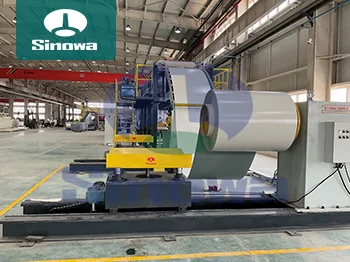
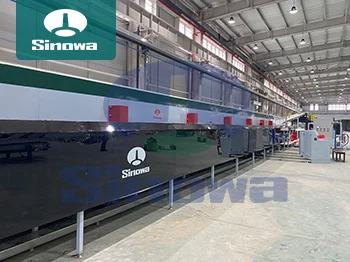
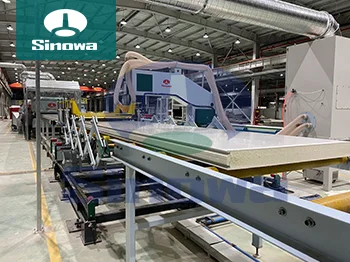
Sinowa is committed to the development and manufacturing of high-end and high-efficiency continuous pu sandwich panel production line. Our continuous pu sandwich panel production line are leading the way in efficiency, automatic control, human-computer interaction, environmental protection and energy consumption. Using system integration and bus control technology, it realizes the automatic integrated linkage control of the entire continuous pu sandwich panel production line, and can achieve remote interactive communication, which has the world-class level and a comprehensive leading high-performance continuous pu sandwich panel production line in the market.
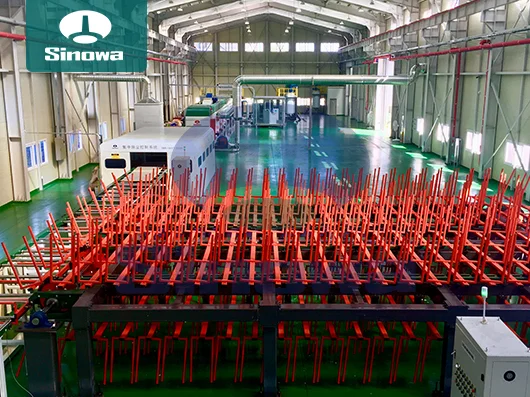
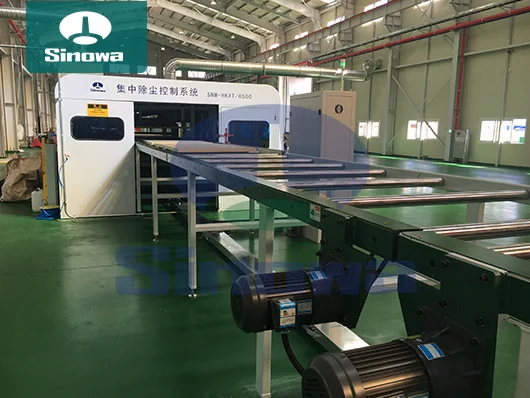
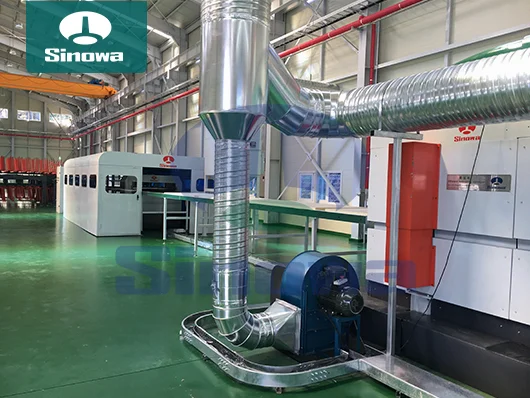
For more than ten years, relying on our innovative manufacturing concept and excellence in quality, reliable and trustworthy service to customers, we cooperate with customers all over the world, exported products to Canada, South Korea, Israel, Australia, the Middle East and other more than 20 countries and regions. contributed to building energy conservation and low-carbon production and have won widespread praise.
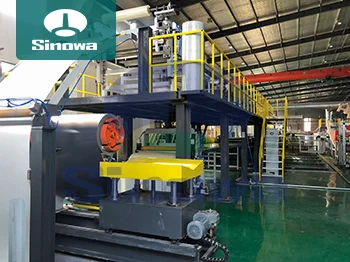
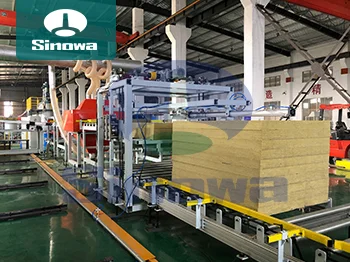
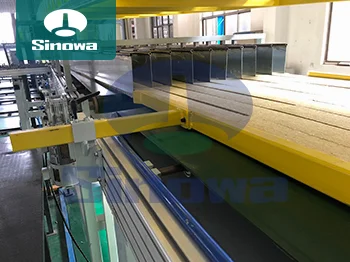
Sinowa has invested outstanding efforts in continuous pu sandwich panel production line, this is why our products are more efficiency, quality, automatic control technology, environmental protection, energy consumption indicators and the appearance and safety protection are comprehensively leading, some subversive design changes in many major technical points, these major innovations make our products excellent in price/performance and user experience.
In the modern construction industry, the demand for high-efficiency, energy-saving, and durable building enclosure materials continues to grow steadily, driving the continuous upgrading and optimization of industrial production equipment. The continuous PU sandwich panel production line has emerged as a core manufacturing system for building thermal insulation and composite wall materials, integrating raw material feeding, continuous molding, foaming compounding, fixed-size cutting, and finished product conveying into one automated production workflow. This production mode abandons the intermittent operation defects of traditional discontinuous production equipment, realizing uninterrupted and streamlined manufacturing of polyurethane sandwich panels, and perfectly matching the large-scale construction material procurement needs of industrial plants, public buildings, and special architectural spaces. The overall operational logic of the production line is based on the physical and chemical characteristics of polyurethane raw materials, combined with mechanical pressure molding and constant-temperature foaming technology, to tightly bond metal surface materials with high-density PU foam core materials, forming composite building panels with excellent comprehensive performance. Every functional unit in the production line is closely connected and coordinated, minimizing manual intervention in the production process and effectively ensuring the stability of product quality and the consistency of structural parameters.
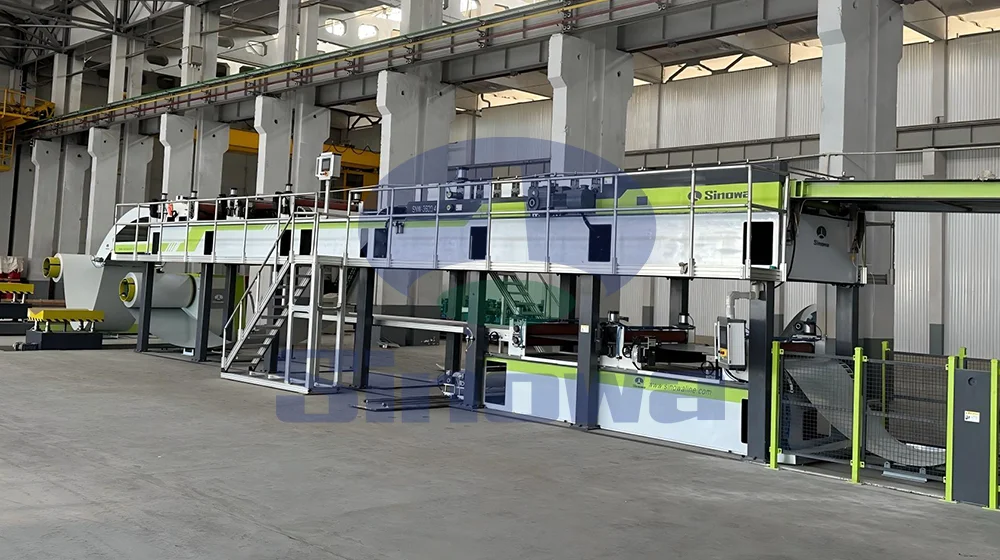
The internal structural configuration of the continuous PU sandwich panel production line follows the sequential logic of raw material processing to finished product output, and each functional section has clear division of labor and mutual linkage. The front-end area of the production line is mainly responsible for the unwinding and pre-treatment of surface base materials. Metal coiled materials commonly used for building panels are placed on the unwinding support mechanism, and the equipment uses a stable hydraulic transmission system to achieve slow and uniform material output. During the unwinding process, the surface of the coiled material will go through multiple leveling and correction processes. The precision correction device can eliminate the bending and deformation generated during the coiling and storage of metal materials, ensuring that the flatness of the base material meets the molding standards. In addition, the pre-treatment section is equipped with a surface cleaning and drying structure to remove dust, oil stains and other impurities attached to the metal surface. This processing step is crucial to enhance the bonding tightness between the surface material and the foam core layer, avoiding the problems of delamination and hollowing of the panels during long-term use in building projects.
After completing the pre-treatment of the surface material, the raw materials will be transported to the middle foaming and composite molding section, which is the core functional area of the entire production line and determines the thermal insulation strength and structural stability of the finished panels. The polyurethane foaming raw materials are transported to the high-pressure mixing device through an automatic feeding pipeline. Under the action of precise metering components, different liquid raw materials are mixed in an accurate proportion. The mixed raw materials are quickly sprayed between the upper and lower layers of surface materials through a circulating spraying system. In a closed constant-temperature molding cavity, the liquid polyurethane undergoes rapid chemical foaming reaction, and the volume expands uniformly to fill the gap between the two layers of surface materials. During the foaming process, the intelligent temperature control system maintains a constant reaction temperature in the cavity, which avoids excessive foaming caused by temperature fluctuation or insufficient curing of foam molecules. Meanwhile, the mechanical pressing structure applies uniform static pressure to the composite materials, so that the foam core layer forms a dense and uniform cellular structure, and the interface between the core layer and the surface material produces firm physical adhesion without additional adhesive additives.
Following the composite molding process, the semi-finished panels enter the curing and shaping section for structural stabilization treatment. Although polyurethane foam completes the preliminary curing reaction in the molding cavity, a period of constant-temperature standing is still required to optimize the internal molecular structure and enhance the overall rigidity of the panels. The curing section is equipped with an insulated closed channel, which can isolate the external ambient temperature interference and maintain a stable curing environment. During the transmission process, the semi-finished panels move at a slow and constant speed, and the residual stress generated during the pressing and foaming process is gradually released. This step effectively reduces the probability of panel warping and deformation in subsequent use, and improves the flatness and dimensional accuracy of the finished products. The length of the curing time can be adjusted according to the thickness of the panels and the formula of foaming raw materials, to ensure that each batch of panels reaches the optimal structural strength state and meets the long-term service requirements of building envelopes.
The fixed-size cutting and post-processing section is located at the rear end of the production line, realizing the standardized segmentation and fine processing of continuous long-strip panels. The high-precision tracking and cutting system can automatically identify the conveying speed of the panels and complete fixed-length cutting in a static-free state. The cutting tool adopts wear-resistant high-hardness materials, which can smoothly cut through metal surface layers and foam core layers without generating burrs and irregular notches on the cutting section. After cutting, the edge trimming device will polish and trim the edges of the panels to eliminate sharp corners and rough edges, making the assembly and docking of panels more convenient in building construction. In addition, this section is equipped with an automatic stacking mechanism, which can neatly stack the cut finished panels according to the preset stacking height. The whole stacking process is completed by mechanical arms, which reduces the damage rate of panel surfaces caused by manual handling and improves the neatness of finished product storage.
Compared with traditional intermittent production equipment, the continuous PU sandwich panel production line has prominent advantages in production efficiency and product performance consistency. The uninterrupted production mode eliminates the waiting time for mold opening and closing and raw material feeding in intermittent production, and the single-line daily production capacity can reach a high level, which can meet the large-scale material supply demands of large construction projects. In terms of product quality control, the production line adopts integrated automatic control logic, and all parameters such as raw material ratio, foaming temperature, pressing pressure, and conveying speed are regulated by intelligent control components. The system can realize real-time monitoring and fine adjustment of production parameters, effectively avoiding product quality differences caused by human operation errors. The finished PU sandwich panels produced by this equipment have uniform foam density, stable bonding performance, and consistent dimensional tolerance, which can adapt to various complex building construction environments.
The finished building panels manufactured by the continuous PU sandwich panel production line have multiple excellent physical properties, making them widely applicable in the construction field. First of all, the polyurethane foam core layer has extremely low thermal conductivity, which can effectively block the transfer of external heat flow. In high-temperature seasons, it isolates outdoor heat from entering the building interior, and in low-temperature environments, it reduces the loss of indoor heating energy, realizing long-term energy conservation for buildings. Secondly, the composite structure formed by metal surface layer and foam core layer has good mechanical bearing capacity and impact resistance. The panels can resist external wind pressure and minor mechanical impact without structural damage, and maintain stable use performance in harsh outdoor environments such as strong wind and rain. In addition, the internal closed-cell structure of polyurethane foam gives the panels good moisture resistance and water impermeability, which can prevent rainwater from penetrating into the wall body and avoid the mildew and corrosion of internal building structures caused by moisture accumulation.
In terms of architectural application scenarios, the products of the production line cover diversified building types, including large industrial workshops, cold storage buildings, temporary prefabricated buildings, commercial exhibition halls, and agricultural breeding greenhouses. For industrial factory buildings, the lightweight characteristics of PU sandwich panels can reduce the self-weight of the building enclosure structure, thereby lowering the bearing load of the building foundation and steel frame, and optimizing the overall construction cost. For cold storage and constant-temperature storage buildings, the excellent thermal insulation performance of the panels can maintain the internal temperature stability of the storage space, reduce the operating energy consumption of refrigeration equipment, and extend the storage cycle of stored goods. For prefabricated temporary buildings, the standardized size and convenient assembly performance of the panels can shorten the on-site construction cycle, and the panels can be disassembled and reused many times to improve the utilization rate of building materials.
In order to adapt to the diversified production demands of the construction market, the continuous PU sandwich panel production line has strong structural adjustability and functional scalability. The equipment can adjust the spacing of the pressing molds according to the production requirements, realizing the production of panels with different thickness specifications. Meanwhile, the spraying system can modify the spraying range and raw material flow to match the production requirements of wide-width panels. In terms of surface material selection, the production line is compatible with multiple metal coiled materials with different thicknesses and textures, and can produce panels with different surface anti-corrosion and wear resistance properties. In addition, the production line can be equipped with auxiliary functional components such as groove pressing and embossing devices. The processed panels have diverse surface textures and structural shapes, which can not only meet the basic enclosure and thermal insulation functions of buildings, but also optimize the exterior aesthetic effect of architectural spaces.
In terms of operational energy consumption and environmental protection performance, the continuous production line has obvious optimization advantages over traditional manufacturing equipment. The integrated closed production structure reduces the volatilization of chemical raw materials during the foaming process, and the internal circulation pipeline realizes the reasonable reuse of residual raw materials, cutting down the waste of production materials. The transmission components of the equipment adopt energy-saving transmission structures, which reduce mechanical friction loss and invalid energy consumption during long-term continuous operation. Moreover, the polyurethane raw materials used in production do not contain harmful chemical components, and the finished panels will not release toxic and harmful substances during long-term use. The waste materials generated in the production process can be recycled and reprocessed, which conforms to the sustainable development concept of green building materials and meets the environmental protection requirements of the modern construction industry.
With the continuous development of the construction industry towards industrialization and intelligence, the technical upgrading of continuous PU sandwich panel production lines is also accelerating. The new generation of production equipment introduces intelligent sensing and remote monitoring technology. Various sensors arranged inside the equipment can collect real-time data such as equipment operating temperature, transmission speed, and raw material consumption. The data is transmitted to the central control system for intelligent analysis, which can automatically identify potential equipment operation faults and send early warning prompts, reducing the downtime loss caused by equipment failure. At the same time, the modular structural design makes the daily maintenance and component replacement of the production line more convenient. The staff can quickly disassemble and maintain the faulty components without dismantling the overall mechanical structure, improving the operational stability and service life of the equipment.
In the future development of the building material manufacturing industry, continuous PU sandwich panel production lines will further develop in the direction of high intelligence, low energy consumption, and multi-functional integration. On the basis of maintaining efficient continuous production capacity, the equipment will optimize the foaming reaction formula and mechanical pressing structure to further improve the fire resistance, sound insulation and durability of finished panels. The intelligent control system will realize more precise parameter customization, which can develop personalized panel products according to the special environmental requirements of different construction scenarios. In addition, combined with the development trend of low-carbon buildings, the production line will continue to optimize the energy consumption structure, reduce carbon emissions in the production process, and provide more high-quality and environmentally friendly composite materials for the global construction industry. As an important supporting equipment for building enclosure materials, the continuous PU sandwich panel production line will always rely on technological innovation to adapt to the changing market demands and promote the high-quality development of the modern construction industry.
« Continuous PU Sandwich Panel Production Line For Building » Update Date: 2026/5/8
Tags: Discontinuous PU Sandwich Panel Production Line , Continuous PU Sandwich Panel Production Line ,
- Cheap Sandwich Panel Foam Making Machine
- Low Price Fully Automatic PU Sandwich Panel Production Line
- PIR Sandwich Panel Line Supplier
- High-tech Foam Core Sandwich Panel Line
- Custom Continuous PUF Panel Production Line
- Continuous Sandwich Panel Line For Clean Room
- High-end Continuous PU Sandwich Panel Line
- High-quality Sandwich Panel Foam Production Line
- Fully Automatic Sandwich Panel Making Machine Supplier
- High-end Polyurethane Sandwich Panel Manufacturing Line
- Color Steel Sandwich Panel Production Line In China
- Discontinuous PU Sandwich Panel Production Line Manufacturer
- Polyurethane Sandwich Panel Machinery For Building
- PU Sandwich Panel Machine On Sales
- Sandwich Panel Making Equipment Price
- Continuous PUF Panel Production Line Design
- Insulated Sandwhich Panel Production Line Manufacturer
- Continuous Sandwich Panel Production Line For Cold Room
- Soundproofing Sandwich Panel Production Line On Sales
- High Efficiency Sandwich Panel Integrated Production Line