
Low Price Fully Automatic PU Sandwich Panel Production Line
Sinowa is a well-known manufacturer and technical service provider of high-end fully automatic pu sandwich panel production line, learn more about low price fully automatic pu sandwich panel production line, please contact Sinowa's technical engineer, tell us what you need, we will contact you as soon as possible!
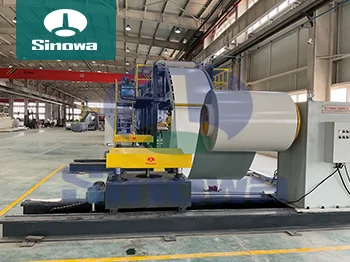
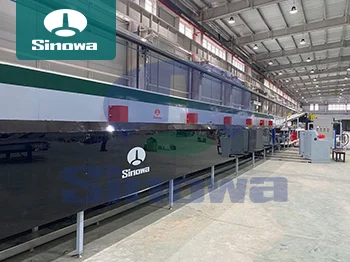
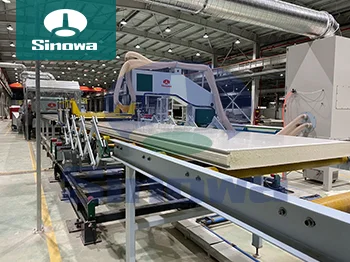
Sinowa is committed to the development and manufacturing of high-end and high-efficiency fully automatic pu sandwich panel production line. Our fully automatic pu sandwich panel production line are leading the way in efficiency, automatic control, human-computer interaction, environmental protection and energy consumption. Using system integration and bus control technology, it realizes the automatic integrated linkage control of the entire fully automatic pu sandwich panel production line, and can achieve remote interactive communication, which has the world-class level and a comprehensive leading high-performance fully automatic pu sandwich panel production line in the market.
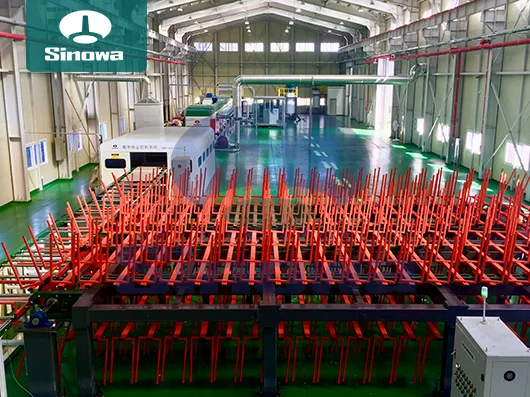
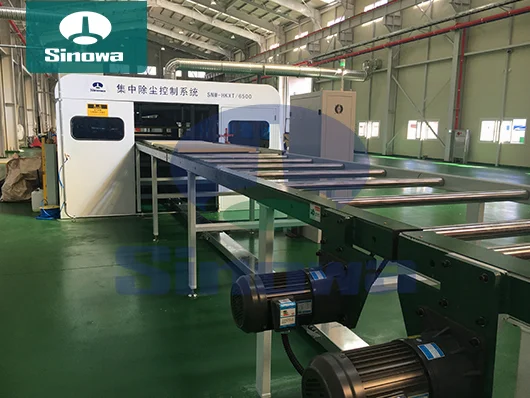
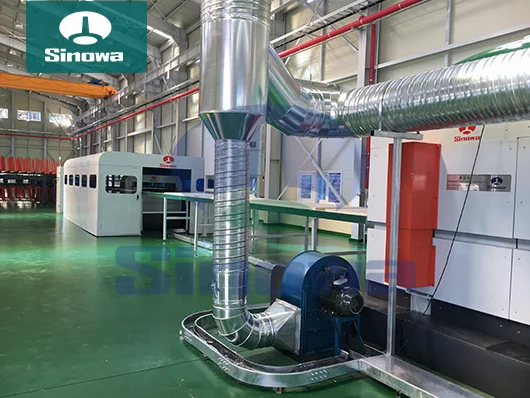
For more than ten years, relying on our innovative manufacturing concept and excellence in quality, reliable and trustworthy service to customers, we cooperate with customers all over the world, exported products to Canada, South Korea, Israel, Australia, the Middle East and other more than 20 countries and regions. contributed to building energy conservation and low-carbon production and have won widespread praise.
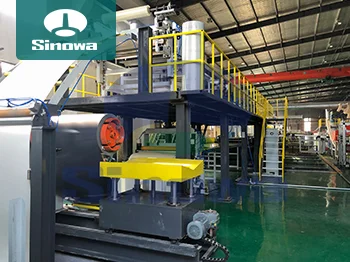
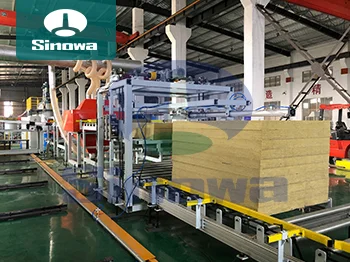
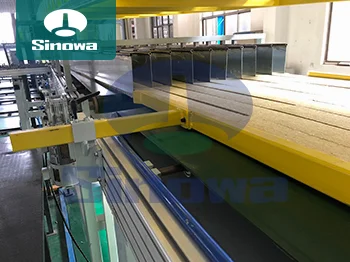
Sinowa has invested outstanding efforts in fully automatic pu sandwich panel production line, this is why our products are more efficiency, quality, automatic control technology, environmental protection, energy consumption indicators and the appearance and safety protection are comprehensively leading, some subversive design changes in many major technical points, these major innovations make our products excellent in price/performance and user experience.
Low Price Fully Automatic PU Sandwich Panel Production Line represents a practical manufacturing solution for businesses aiming to produce composite insulation panels without heavy capital investment. This integrated system covers all continuous production stages from raw material feeding to finished panel stacking, minimizing manual handling and streamlining the whole workflow. Many small and mid-sized manufacturing operations struggle with semi-automatic equipment that requires multiple operators and creates inconsistent product quality. This fully automatic design addresses those pain points by combining mechanical transmission, chemical metering, temperature control and digital monitoring into one unified framework. The equipment is built with modular structures, making each functional unit easy to inspect and replace, which helps cut down long-term operational expenses. Even with a budget-friendly configuration, the system retains core automation functions that reduce human error and stabilize daily output. It can process different surface materials and adjust panel dimensions according to changing market demands, giving operators enough flexibility to handle diverse order requirements. Instead of investing in large, heavy-duty industrial lines that exceed practical needs, new market entrants can select this cost-effective option to launch or expand panel production capacity while keeping operational overhead manageable. Every module is calibrated to maintain steady running conditions, so the finished panels show consistent thickness, bonding strength and surface finish across production batches.
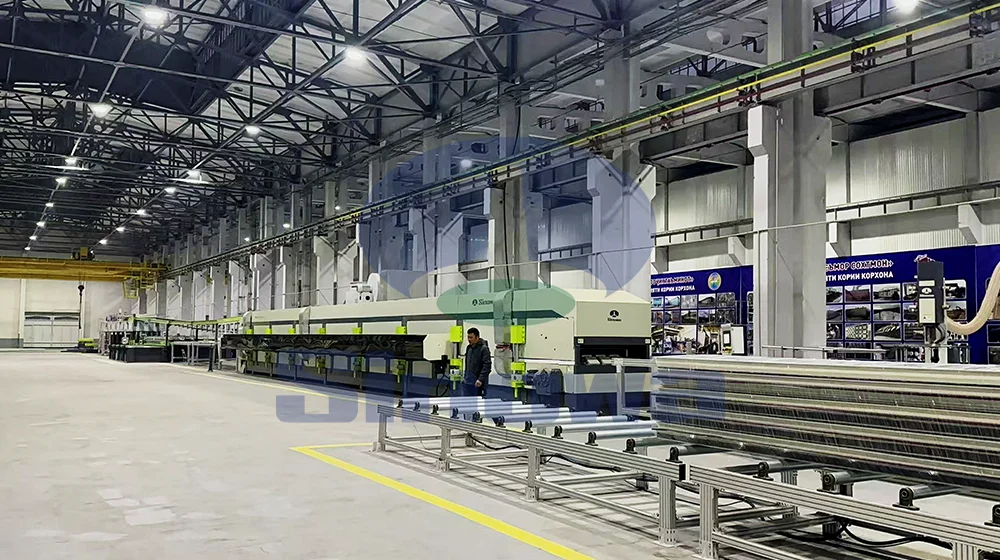
The operation of the low price fully automatic PU sandwich panel production line begins with the unwinding and pretreatment of surface substrate coils. The automatic uncoiler releases the sheet material smoothly, and built-in correction devices keep the material aligned to prevent offset during continuous movement. After unwinding, the material passes through roll forming stations that shape flat sheets into customized profiles for wall or roof panels. Surface cleaning and protective film attachment can be completed automatically in this section to preserve panel appearance and prevent scratches in later processing. Sensors track material tension and position constantly, sending real-time feedback to the central control unit to adjust speed and pressure. Once the upper and lower surface layers are formed and positioned, the high-pressure foaming unit mixes polyurethane raw materials precisely and injects the liquid mixture evenly between the two sheet layers. This injection process controls the flow rate and mixing ratio accurately to avoid uneven foaming or voids inside the panel core. All these steps proceed continuously without stopping the production line, which greatly improves throughput compared with intermittent manual casting processes. Operators only need to replenish raw materials periodically and monitor the control interface, rather than intervening directly in material forming or foaming operations.
The double belt laminating and curing section acts as the heart of the low price fully automatic PU sandwich panel production line, determining the structural integrity of finished PU sandwich panels. After polyurethane liquid is injected between the two surface sheets, the composite assembly enters the double belt conveyor system. This unit maintains stable pressure and controlled temperature to support the expansion and curing of PU foam. The liquid raw material expands gradually to fill the entire space between the surface layers and forms tight adhesion with inner surfaces of the sheets. Uniform pressure distribution ensures the foam core maintains consistent density across the full width and length of each panel, eliminating weak spots or uneven thickness. Temperature settings inside the curing tunnel can be fine-tuned through the control system to adapt to variations in raw material properties and production speed. The conveyor moves the composite panel forward at a synchronized speed, giving the foam sufficient time to complete chemical reactions before cutting. If abnormal pressure or temperature values are detected, the system triggers alerts to remind operators to check relevant parts promptly. This continuous curing method avoids defects often seen in batch production, such as incomplete bonding or surface deformation, and helps maintain reliable product performance at a reasonable equipment cost.
Fixed-length cutting and edge trimming modules bring semi-finished panels into standard finished dimensions within the low price fully automatic PU sandwich panel production line. After the curing phase, the continuous composite board moves to the cutting station, where servo-driven cutting tools separate panels at preset lengths according to parameters entered on the touch screen. Length measurement sensors record real-time feeding data to guarantee cutting accuracy and reduce material waste caused by dimensional errors. Edge trimming devices remove excess foam and uneven edges, creating neat, straight edges for easy installation of finished panels. Dust collection accessories work alongside the trimming unit to capture foam debris and metal particles, keeping the working area clean and reducing wear on moving parts. Once cutting and trimming finish, panels transfer to the cooling conveyor to release residual internal heat and stabilize physical shape before stacking. The whole cutting process runs automatically, and operators can modify target dimensions quickly without mechanical reconfiguration. This flexibility allows manufacturers to switch between different panel specifications to meet different project needs. The design prioritizes stable cutting performance rather than overly complex extra features, which is one key reason for the accessible overall investment of this production line.
Automatic stacking and conveying systems improve workflow efficiency for the low price fully automatic PU sandwich panel production line and reduce labor demand in the final production stage. After cooling and shaping, finished panels travel along the conveyor toward the stacking unit. Position sensors detect the arrival of each panel, and mechanical grabbers pick up panels gently to avoid surface damage. The stacking mechanism arranges panels neatly into piles, adjusting placement position automatically according to panel width and length. Once a stack reaches the preset quantity, the system signals operators to move finished goods away for storage or packaging. This automated handling removes the heavy manual lifting work that commonly causes scratches, dents and safety risks in traditional production environments. The conveyor speed matches the rhythm of upstream cutting and curing sections, preventing panel accumulation or idle time. All motion parameters of the stacker can be adjusted on the central control interface to accommodate different panel weights and surface materials. By automating this final handling phase, the production line reduces staffing requirements and lowers the risk of product damage during handling, further improving overall production economy for small-scale panel manufacturers.
The intelligent control system serves as the central nervous system of the low price fully automatic PU sandwich panel production line, coordinating every mechanical and chemical process across the whole line. It relies on programmable logic controllers paired with a user-friendly touch screen for parameter setup and status monitoring. Operators can input production speed, panel thickness, target length and foaming material ratios on the interface before starting continuous operation. A network of sensors collects real-time data including material temperature, conveyor speed, injection pressure and material consumption, displaying live data on the screen for easy observation. When any parameter deviates from the preset range, the system generates warning notifications and can slow or pause operation to prevent defective products from being made. The control program supports simple storage of multiple production recipes, allowing users to recall saved settings for different panel types quickly. The system does not require advanced programming knowledge for daily operation, so ordinary workers can master basic operation after short training. Simplified control architecture keeps the equipment cost low while retaining essential monitoring and protection functions, balancing automation level and budget requirements for new investors.
The finished panels made by the low price fully automatic PU sandwich panel production line have wide application scenarios across multiple construction and industrial sectors. The composite panels combine lightweight structure with excellent thermal insulation performance, making them suitable for wall cladding and roof enclosures of industrial workshops and large warehouses. Their stable thermal barrier properties also support temperature-controlled environments that require consistent interior conditions throughout operation. Modular panel design allows fast assembly on site, shortening construction schedules and lowering overall building costs for end users. The panels also offer sound insulation and moisture resistance, which fit temporary buildings, partition walls and various prefabricated building systems. Many buyers value these composite panels for their long service life and minimal maintenance after installation. Manufacturers operating this production line can supply panels to diverse market segments without maintaining multiple separate production systems. Because the equipment supports flexible adjustment of panel thickness and surface profiles, producers can respond quickly to shifting market preferences and customized project orders. The reliable quality of panels produced on this line helps manufacturers build stable client relationships and expand market share gradually.
Regular maintenance and proper operation routines extend the service life of the low price fully automatic PU sandwich panel production line and sustain consistent production results over time. Daily maintenance mainly includes cleaning residual PU foam and dust from rollers, nozzles and conveyor surfaces to prevent accumulated waste from interfering with movement or affecting product surface quality. Operators should check lubrication points of transmission parts and inspect sealing components of the foaming system at fixed intervals to avoid leakage of chemical raw materials. Fasteners on roll forming frames and cutting assemblies need periodic inspection to ensure structural stability during long continuous running. The control system also requires routine checks of sensors and connecting cables to maintain accurate signal transmission. Operators should follow standard operating procedures when starting and shutting down the line, and avoid adjusting core parameters without sufficient understanding of how changes affect foaming and curing. Timely replacement of wearing parts can prevent unexpected shutdowns and expensive emergency repairs. Although the equipment is designed for affordable initial purchase, consistent maintenance practice protects production continuity and maximizes return on investment. With careful daily management, this automatic production system can maintain stable output and good panel quality for long-term manufacturing activities.
« Low Price Fully Automatic PU Sandwich Panel Production Line » Update Date: 2026/10/16
Tags: Fully Automatic PU Sandwich Panel Production Line , fully automatic pu sandwich panel production line, fully automatic pu sandwich panel production line manufacturer, fully automatic pu sandwich panel production line supplier, fully automatic pu sandwich panel production line for sale, customized fully automatic pu sandwich panel production line, china fully automatic pu sandwich panel production line
- Sandwich Panel Line
- Cheap Continuous PU Sandwich Panel Production Line
- PIR Sandwich Panel Line From China
- High Efficiency Sandwich Wall Panel Production Line
- High-end Decorative PU Sandwich Panel Production Line
- Top Insulation Sandwich Panel Machines
- Polyurethane Sandwich Panel Line Price
- High-quality Foam Sandwich Panel Machine
- High-end Isolation Sandwich Panel Production Line
- Insulation Sandwich Panel Machines Manufacturer
- Polyurethane Sandwich Panel Machinery On Sales
- Composite Panel Production Line Manufacturer
- Polyurethane Sandwich Panel Line For Cold Storage
- High-quality Glass Wool Production Line
- High Efficiency Wall Sandwich Panel Production Line
- Continuous Sandwich Panel Manufacturing Line For Cold Room
- Continuous PU Sandwich Panel Production Line On Sales
- Custom Decorative PU Sandwich Panel Production Line
- Glass Wool Sandwich Panel Machine Supplier
- Highly Intelligent Continuous Sandwich Panel Line
- Links:
- Sandwich Panel Continuous Production Line
- Automatic and Continuous Sandwich Panel Production Line
- Cheap and Low Price Sandwich Panel Production Line
- China Sandwich Panel Production Line Factory
- Color Steel Sandwich Panel Production Line For Cold Storage
- Continuous Composite Foam Sandwich Panel Production Line
- Continuous Production Line For Rockwool and Mineral Wool Sandwich Panels
- Continuous PU Phenolic Insulation Panel Production Line
- Continuous PU PIR Sandwich Panel Production Line
- Continuous PUF PUR Sandwich Panel Production Line
- Continuous Sandwich Panel Production Line For Roof and Wall
- Customized and Design Sandwich Panel Production Line
- Decorative Sandwich Panel Production Line For Glass Wool Boards
- High Quality Sandwich Panel Production Line For Sale
- Polyurethane(PU) Sandwich Panel Production Line
- Sandwich Panel Production Line Manufacturer and Supplier
- Sandwich Panel Production Machinery and Equipment