
Fully Automatic Sandwich Panel Making Machine Supplier
Sinowa is a well-known manufacturer and technical service provider of high-end fully automatic sandwich panel making machine, learn more about fully automatic sandwich panel making machine supplier, please contact Sinowa's technical engineer, tell us what you need, we will contact you as soon as possible!
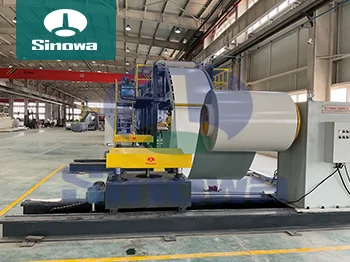
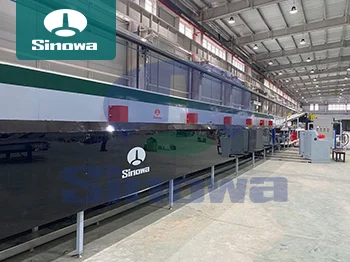
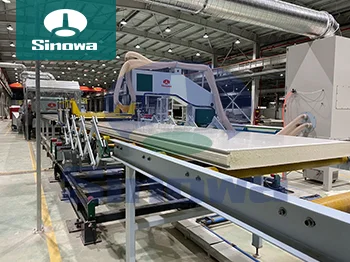
Sinowa is committed to the development and manufacturing of high-end and high-efficiency fully automatic sandwich panel making machine. Our fully automatic sandwich panel making machine are leading the way in efficiency, automatic control, human-computer interaction, environmental protection and energy consumption. Using system integration and bus control technology, it realizes the automatic integrated linkage control of the entire fully automatic sandwich panel making machine, and can achieve remote interactive communication, which has the world-class level and a comprehensive leading high-performance fully automatic sandwich panel making machine in the market.
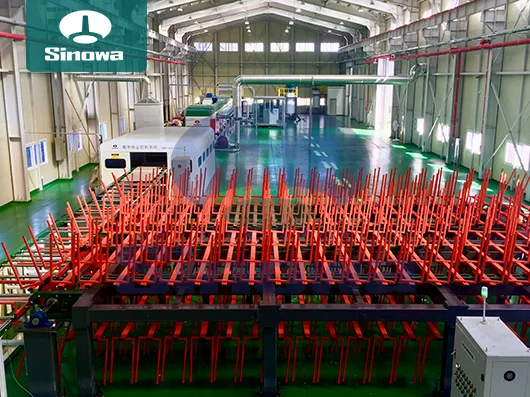
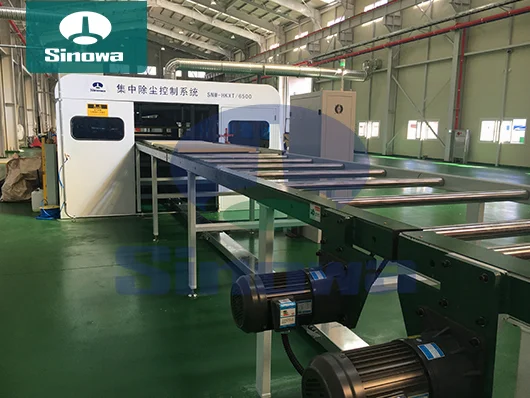
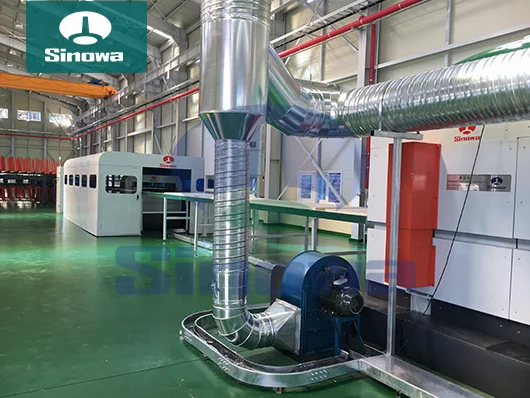
For more than ten years, relying on our innovative manufacturing concept and excellence in quality, reliable and trustworthy service to customers, we cooperate with customers all over the world, exported products to Canada, South Korea, Israel, Australia, the Middle East and other more than 20 countries and regions. contributed to building energy conservation and low-carbon production and have won widespread praise.
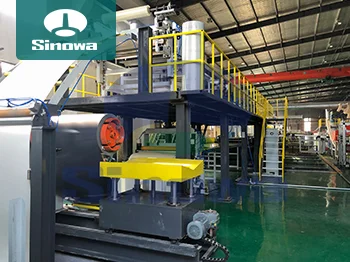
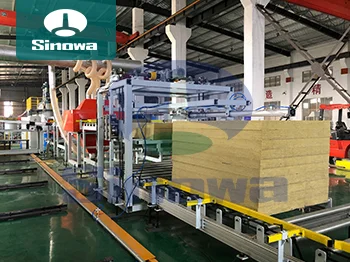
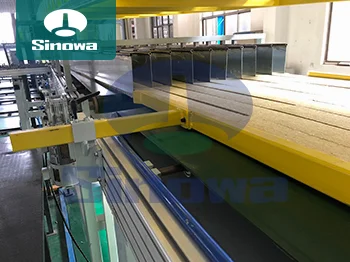
Sinowa has invested outstanding efforts in fully automatic sandwich panel making machine, this is why our products are more efficiency, quality, automatic control technology, environmental protection, energy consumption indicators and the appearance and safety protection are comprehensively leading, some subversive design changes in many major technical points, these major innovations make our products excellent in price/performance and user experience.
When exploring production solutions for modern building enclosure materials, many manufacturers turn to fully automatic sandwich panel making machines as a core asset for stable and continuous output. This type of integrated equipment is engineered to combine multiple separate processing stages into one streamlined production line, removing the need for frequent manual transfer of raw materials between individual workstations. Raw substrate rolls are loaded at the starting point of the line, where automated guiding and tension control systems keep metal sheets flat and aligned before entering the forming section. The forming rollers shape the outer skins into consistent profiles, adjusting curvature and edge dimensions steadily without constant operator intervention. Right after shaping, the system moves the skins toward the foaming or core material feeding station, where insulation core materials are placed or injected at a controlled rate to maintain uniform thickness across every finished panel. Sensors distributed along the track monitor material feed speed, pressure levels, and bonding status in real time, sending signals to the central control unit to fine-tune parameters if deviations appear. Workers only need to oversee the overall running status, replenish raw materials when stocks run low, and respond to rare system alerts instead of performing repetitive handling work. This shift away from heavy manual operation lowers the chance of surface scratches, uneven core filling, and inconsistent panel dimensions that often come with semi-automatic setups. Businesses investing in this machinery aim to match rising market demand for panels used in lightweight enclosure structures, where consistent product quality and fast delivery cycles become key competitive advantages in daily operations.
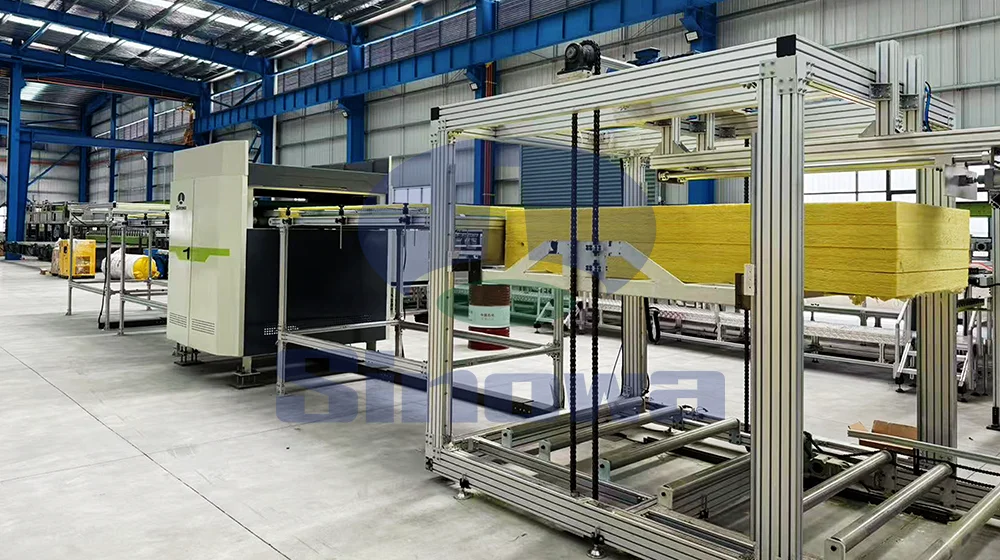
The internal coordination of every functional module defines the reliability of a fully automatic sandwich panel making machine, as each segment must synchronize speed and timing to avoid interruptions during long production runs. The uncoiling unit holds large rolls of metal facing material and applies steady braking force to prevent slack or sudden pulling that can warp the sheet surface. A continuous pre-treatment station follows, cleaning the metal surface and preparing it to form a strong bond with the insulation core, a step that directly impacts the long-term stability of the finished panel. After surface preparation, the profiling rollers reshape the sheet edges to create interlocking joints, allowing panels to fit tightly together during on-site installation later. The core material delivery mechanism then feeds insulation material between the upper and lower metal skins, with adjustable guides to support different core thicknesses according to production requirements. A continuous pressing zone applies balanced pressure from top and bottom, ensuring the core and skins adhere evenly while excess adhesive or foam material is gently guided away without damaging panel surfaces. Once bonding completes, the panel travels forward to the cutting unit, which uses programmable length settings to cut finished panels into precise sizes without stopping the upstream production flow. Even small mismatches in speed between the cutting station and forming station can create waste, so the control system maintains closed-loop synchronization across the entire length of the line at all times.
Adaptability stands out as a valuable feature of well-designed fully automatic sandwich panel making machines, letting production facilities switch between different panel specifications without extensive reconfiguration or long downtime. Operators can adjust settings through the central touchscreen interface to change panel width, core thickness, and forming profiles, supporting the production of panels suited for different application scenarios. Some production runs focus on panels with thinner cores intended for simple shelter structures, while others require thicker insulation cores for projects that prioritize thermal performance. The machine’s adjustable feeding and pressing systems accommodate these changes, altering pressure, feed speed, and core injection volume automatically once new parameters are confirmed. It can also work with a range of common core materials, as long as the feeding mechanism is calibrated to match the density and rigidity of the material being processed. The metal skin options are similarly flexible, supporting different surface coatings and substrate types as long as the uncoiling and forming modules are set to handle their tensile properties. This flexibility helps production plants respond to shifting order requirements without needing separate dedicated lines for each panel variant. Instead of maintaining multiple smaller semi-automatic lines that each only make one panel style, operators use a single automatic line to fulfill mixed batches of orders efficiently, reducing the total footprint of production equipment on the factory floor.
Consistent quality control embedded within fully automatic sandwich panel making machines reduces human error and stabilizes the physical performance of each batch of finished panels. Built-in inspection points check panel thickness, flatness, bonding integrity, and edge profile as panels move along the line, capturing irregularities before panels reach the final stacking stage. If a section fails to meet the preset production parameters, the system can mark the panel automatically, making it easy for staff to separate non-conforming pieces from qualified products. This real-time monitoring removes reliance on periodic manual sampling, which can miss scattered defects that only appear occasionally during extended production. Uniform bonding achieved through controlled pressure and material delivery also helps avoid hidden gaps between the metal skins and insulation core, gaps that would otherwise weaken the panel structure and reduce its insulating effect over time. Panels produced on these lines tend to have straighter edges and more consistent surface finish, simplifying cutting and assembly work when they arrive at construction sites. Buyers of finished sandwich panels increasingly prioritize uniformity, as inconsistent panels slow down installation work and create gaps that compromise the enclosure’s weather resistance. By minimizing variation from one panel to the next, the automatic machine supports manufacturers in building a steady reputation for reliable output and fewer post-delivery quality complaints.
Maintenance planning plays an essential role in keeping a fully automatic sandwich panel making machine running at its designed capacity over years of continuous use, and reputable suppliers provide clear guidance on routine care practices. Regular maintenance focuses on lubricating rotating roller shafts, checking tension sensors, cleaning adhesive residue from pressing surfaces, and inspecting cutting blades for wear. Many moving parts operate at steady speed for hours each day, and neglected wear can gradually cause alignment drift that leads to flawed panels or unexpected line stops. The machine’s control system often logs operational data and generates reminder notifications when maintenance thresholds are reached, helping maintenance teams schedule work during planned production breaks instead of reacting to sudden breakdowns. Suppliers also share recommendations for spare part stocking, identifying components that experience faster wear so factories can keep replacements on hand without waiting for long lead times. Proper maintenance not only extends the service life of the whole line but also preserves its accuracy, ensuring that panels produced years after commissioning still match the original dimensional tolerances. Facilities that skip scheduled upkeep commonly face rising waste rates and more frequent unplanned shutdowns, which disrupt order schedules and increase overall production costs over the long term.
Operational safety is integrated into the structural and control design of modern fully automatic sandwich panel making machines, protecting on-site staff while preserving uninterrupted production workflows. Physical safety guards cover rotating rollers, cutting mechanisms, and high-pressure bonding zones to prevent accidental contact with moving components. Emergency stop switches are positioned at multiple points along the full length of the production line, giving any nearby worker the ability to halt all movement immediately if an unsafe situation develops. Safety interlocks pause machine operation whenever access doors to internal modules are opened, preventing the line from running while staff perform inspections or minor cleaning inside guarded areas. The control system also limits access to critical parameter adjustments through permission settings, so only trained operators can modify speed, pressure, and cutting values. Training provided alongside the equipment covers safe loading of heavy raw material rolls, correct response to system alarms, and proper procedures for clearing minor jams without bypassing safety protections. Factories that follow these safety protocols reduce workplace incidents and create a more stable operating environment, as accidents and safety shutdowns can severely delay production plans. Safety features do not need to reduce productivity when operators understand their function and follow the recommended daily operating routines laid out by the equipment supplier.
After the equipment leaves the supplier’s facility, comprehensive technical support continues to add value for buyers of fully automatic sandwich panel making machines, extending well beyond the initial delivery of the production line. Support services include remote diagnostic assistance, where technical specialists connect to the machine’s control system to review operational logs, identify error sources, and guide local operators through correction steps. When remote support cannot resolve complex mechanical or electrical issues, on-site technical assistance can be arranged to inspect, adjust, or repair the equipment directly at the buyer’s factory. Training programs help operators and maintenance crews build deep familiarity with every module, teaching them to interpret alarm codes, calibrate sensors, and perform routine adjustments independently over time. Suppliers also share updated operational tips based on field experience with similar lines, helping users optimize line speed and material usage to cut waste and raise output efficiency. Good communication between the equipment user and supplier creates a long-term partnership, rather than a one-time transaction centered only on hardware delivery. Buyers recognize that even well-built machinery depends on timely support, and reliable service reduces the risk of prolonged downtime that threatens order fulfillment and customer trust in their own finished panel business.
Looking ahead, fully automatic sandwich panel making machines continue to evolve to match changing operational priorities for panel producers, with incremental improvements focused on material efficiency and operational ease. Newer generations of these lines refine material dosing controls to cut waste of core insulation and adhesive materials, helping factories lower raw material consumption for every square meter of finished panel. Control interfaces grow more intuitive, with visual dashboards that display live production speed, total output counts, waste percentages, and system status in clear formats for plant managers. Data collected during production can be stored and reviewed to identify bottlenecks, such as slow raw material replenishment cycles or recurring wear points that need adjusted maintenance schedules. As demand for sandwich panels keeps expanding across different enclosure construction applications, producers with dependable automatic lines gain greater ability to scale output gradually, adding extra production shifts or extending daily running hours as market orders grow. These machines remain a foundational investment for businesses that aim to move beyond limited batch production and build stable, high-volume manufacturing capabilities. The value of the equipment comes not just from its ability to form panels automatically, but from the consistent quality, operational flexibility, and long-term support structure that together help manufacturers sustain profitable and predictable production year after year.
« Fully Automatic Sandwich Panel Making Machine Supplier » Update Date: 2026/10/26
Tags: Fully Automatic Sandwich Panel Making Machine , fully automatic sandwich panel making machine, fully automatic sandwich panel making machine manufacturer, fully automatic sandwich panel making machine supplier, fully automatic sandwich panel making machine for sale, customized fully automatic sandwich panel making machine, china fully automatic sandwich panel making machine
- Sandwich Wall Panel Production Line Design
- Fully Automatic PU Sandwich Panel Line On Sales
- Polyurethane Sandwich Panel Production Line On Sales
- High Efficiency Sandwich Panel Manufacturing Line
- Polyurethane Sandwich Panel Machinery For Roof
- Polyurethane Sandwich Panel Machinery Manufacturer
- High-tech Glass Wool Sandwich Panel Line
- Sandwich Panel Making Machine Price
- PU Sandwich Panel Line For Cold Storage
- Sandwich Panel Foam Making Machine Factory
- Wall Sandwich Panel Production Line Supplier
- High Efficiency Decorative Sandwich Panel Line
- Sandwich Panel Foam Production Line Design
- High-end Continuous Sandwich Panel Production Line
- Isolation PU Sandwich Panel Line Design
- High Efficiency Sandwich Roof Panel Production Line
- Decorative PU Sandwich Panel Production Line On Sales
- Low Price Glass Wool Panel Production Line
- Sandwich Duct Panel Machine Design
- High Efficiency Fully Automatic PU Sandwich Panel Production Line
- Links:
- Sandwich Panel Continuous Production Line
- Automatic and Continuous Sandwich Panel Production Line
- Cheap and Low Price Sandwich Panel Production Line
- China Sandwich Panel Production Line Factory
- Color Steel Sandwich Panel Production Line For Cold Storage
- Continuous Composite Foam Sandwich Panel Production Line
- Continuous Production Line For Rockwool and Mineral Wool Sandwich Panels
- Continuous PU Phenolic Insulation Panel Production Line
- Continuous PU PIR Sandwich Panel Production Line
- Continuous PUF PUR Sandwich Panel Production Line
- Continuous Sandwich Panel Production Line For Roof and Wall
- Customized and Design Sandwich Panel Production Line
- Decorative Sandwich Panel Production Line For Glass Wool Boards
- High Quality Sandwich Panel Production Line For Sale
- Polyurethane(PU) Sandwich Panel Production Line
- Sandwich Panel Production Line Manufacturer and Supplier
- Sandwich Panel Production Machinery and Equipment