
Fully Automatic Sandwich Panel Making Machine
Sinowa is a fully automatic sandwich panel making machine supplier from china, customized high-quality & high efficiency fully automatic sandwich panel making machine at low price, the adoption of system integration technology and bus control technology accomplishes the full automatization of integrated and coordinated control of the fully automatic sandwich panel making machine with accessible remote interactive communication. Ranking the first-class level in the world, it is currently the fully automatic sandwich panel making machine in the market taking a comprehensive lead in high performance.
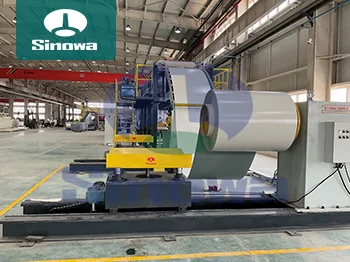
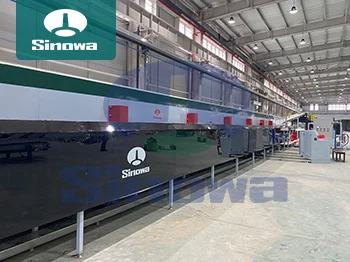
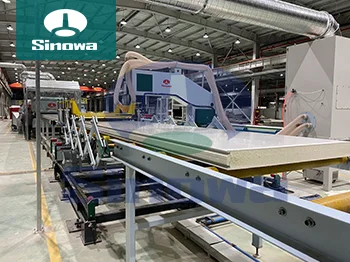
The high-tech fully automatic sandwich panel making machine can meet a variety of production needs of customers, the whole fully automatic sandwich panel making machine design concept of modularization enables all our components to be integrated and combined at will. Our high efficiency fully automatic sandwich panel making machine can easily automate the production of roof sandwich panel, wall sandwich panel, cold storage sandwich panel and other products by different combination and configuration selection and siple switching. The inner core layer can be polyrethane or rock wool, glass wool, an so on.


The high precision fully automatic sandwich panel making machine has high adaptability, which may produce various sandwich panel of the PU, PIR and rock wool systems. We may design various products according to the customer’s requirements, including various configurations, so as to meet their demands with flexible price system. Highly integrated and linked control system centralizes all control points at the main central center, achieving parameter linkage, fault self-diagnosis controlled by the whole line and shipping distance control. High-level automatic control system also saves the manpower and reduces the manpower loss for customers.


The precision servo hoisting mechanism employed by the main engine without hydraulic system makes the board thickness control flexible and the customer may conveniently change or adjust the board thickness. There will be not such troubles as hydraulic system adjustment, leakage, maintenance, etc.


High-level energy saving and protection design makes the whole fully automatic sandwich panel making machine possible to produce around the clock throughout the year and the customer will save huge budget. In addition, the isolated heat preservation room is constructed for warming the environment. The energy saving and protection design of our manufacturing line may guarantee that the customer’s production line may be freely heated and produce in the main time to save more costs for customers.


The high-power low-consumption design quickens the reaction of the cheap fully automatic sandwich panel making machine while energy consumption is kept low. With the brand-new, fully sealed inner insulation design, the energy consumption is controlled at the minimum level to achieve the design objective of less than an hour for the insulation system to be activated from the room temperature above 5℃ to the production process temperature. The energy consumption is only 40% that of those similar products.
A fully automatic sandwich panel making machine is an advanced piece of equipment designed for the mass production of sandwich panels, which are widely used in various industries due to their excellent combination of structural strength, thermal insulation, soundproofing, and lightweight properties. This automated equipment integrates multiple functional modules to achieve a seamless production process from raw material input to finished product output, eliminating the need for extensive manual intervention and significantly improving production efficiency and product consistency. Unlike semi-automatic or manual production methods, fully automatic sandwich panel making machines can operate continuously for long periods, ensuring stable output and uniform quality, which makes them essential equipment for manufacturers looking to meet large-scale market demands.
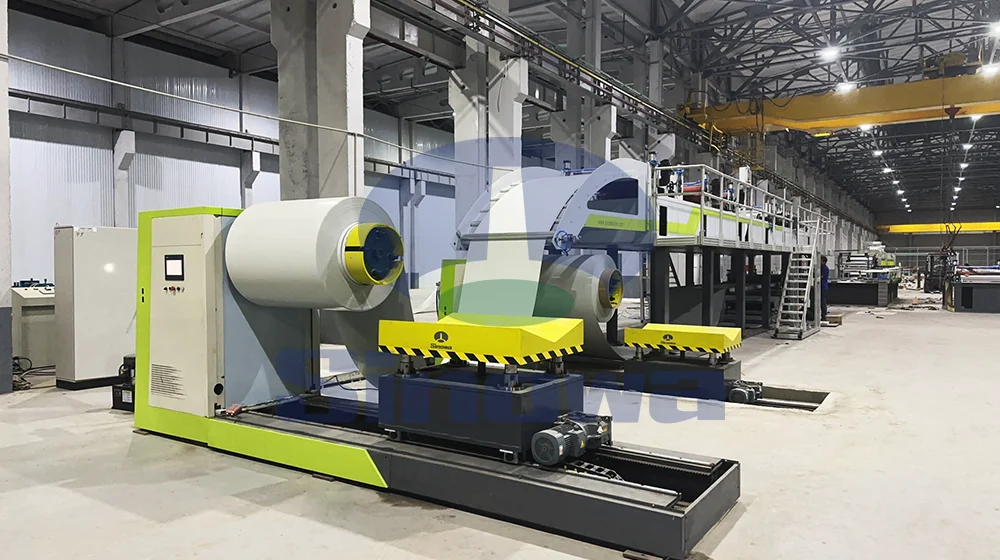
The structure of a fully automatic sandwich panel making machine is composed of several core functional modules that work in coordination to complete the entire production process. Each module is designed with precision to ensure smooth operation and reliable performance. The main structural components typically include an automatic feeding system, a panel pre-processing unit, a core material filling or foaming device, a composite forming system, an automatic cutting system, a finished product stacking device, and an intelligent control system. These modules are seamlessly connected, forming a complete production line that can handle all stages of sandwich panel manufacturing without manual transfer of materials between processes.
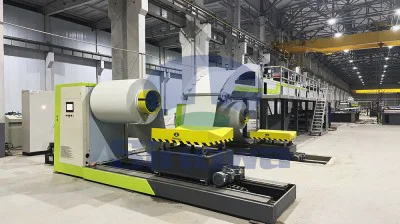
The automatic feeding system is the starting point of the production line, responsible for supplying the outer facing materials to the subsequent processes. The facing materials are usually metal coils, such as color steel plates, galvanized steel plates, or aluminum plates, which are widely used due to their good rigidity, corrosion resistance, and aesthetic appearance. The feeding system includes an automatic unwinding machine that can handle large coils of facing materials, with an automatic correction device to ensure that the coils are fed evenly and centered, avoiding deviations that could affect the quality of the final product. Some advanced feeding systems are equipped with dual stations, allowing for non-stop roll changing, which further improves production efficiency by eliminating downtime during material replacement. After unwinding, the facing materials pass through a leveling machine to eliminate internal stress and ensure a flat surface, which is crucial for the subsequent bonding process with the core material.
The panel pre-processing unit follows the feeding system, where the facing materials undergo cleaning and surface treatment to enhance their bonding performance with the core material. The cleaning process removes dust, oil, and other contaminants from the surface of the facing materials, ensuring that the adhesive or foaming material can form a strong bond. Some pre-processing units also include passivation or coating treatments, which further improve the corrosion resistance of the facing materials and extend the service life of the finished sandwich panels. This step is particularly important for sandwich panels used in harsh environments, such as coastal areas or industrial sites with high humidity.
The core material filling or foaming device is a key component that determines the insulation and soundproofing properties of the sandwich panels. Depending on the type of core material used, this device can be divided into two main types: filling devices for pre-formed core materials and in-situ foaming devices. For pre-formed core materials such as rock wool, glass wool, or EPS (expanded polystyrene) boards, the filling device uses precise conveying mechanisms to feed the core materials into the gap between the two facing materials. The device ensures that the core material is evenly distributed, with no gaps or unevenness, which is essential for maintaining the structural integrity and insulation performance of the panels. For in-situ foaming core materials such as polyurethane (PU) or PIR (polyisocyanurate), the device includes a high-pressure foaming machine that mixes two components (isocyanate and polyol) and sprays the mixture into the gap between the facing materials. The foaming process is controlled by a temperature control unit, which ensures that the foam expands evenly and fills the entire gap, forming a tight bond with the facing materials. The foaming device also features a self-cleaning mixing head to prevent material clogging and ensure consistent foaming quality.
The composite forming system is responsible for bonding the facing materials and the core material together to form a solid sandwich panel. This system typically includes a gluing machine, a pre-press machine, and a hot press machine. The gluing machine applies adhesive evenly to the surface of the facing materials or the core material, depending on the production process. The adhesive used is selected based on the type of facing and core materials, ensuring strong adhesion and durability. The pre-press machine then preliminarily fixes the position of the facing materials and the core material, preventing displacement during the hot pressing process. The hot press machine uses zone temperature control technology to apply controlled heat and pressure to the composite structure, ensuring that the adhesive cures fully and the core material (if foamed) bonds tightly with the facing materials. The temperature and pressure are precisely controlled to avoid overheating or under-pressing, which could affect the quality of the bond. Some advanced composite forming systems also include an online thickness gauge to monitor the thickness of the panels in real-time, ensuring that they meet the required specifications.
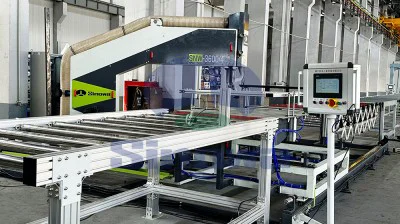
The automatic cutting system is used to cut the continuous composite panel into individual panels of the desired length. This system is equipped with high-precision cutting devices, such as servo-controlled flying saws or laser cutters, which ensure accurate cutting with minimal error. The cutting accuracy can reach ±0.5 mm, ensuring that the panels have uniform dimensions and can be easily installed in subsequent applications. The cutting process is fully automated, with the cutting length set through the control system, and the machine can automatically adjust the cutting speed to match the production line speed, ensuring a smooth and efficient cutting process. After cutting, the panels are conveyed to the finished product stacking device, which automatically stacks the panels in an orderly manner, reducing manual labor and preventing damage to the finished products.
The intelligent control system is the "brain" of the fully automatic sandwich panel making machine, integrating all the functional modules and ensuring their coordinated operation. The control system is usually based on PLC (Programmable Logic Controller) technology, with a touch screen interface that allows operators to set parameters, monitor the production process, and troubleshoot any issues. The system can automatically control the speed of the production line, the temperature and pressure of the hot press, the amount of adhesive or foaming material, and the cutting length, ensuring consistent production quality. Some advanced control systems also feature remote monitoring and fault diagnosis functions, allowing operators to monitor the machine's operation from a distance and quickly identify and resolve any malfunctions, minimizing downtime. The control system also includes safety interlocks to ensure the safety of operators, such as emergency stop buttons and protective covers for moving parts.
In addition to the core structural components, fully automatic sandwich panel making machines may also include auxiliary components such as dust collection systems, which remove dust and debris generated during the production process, ensuring a clean working environment and preventing damage to the machine. Some machines also feature energy-saving systems, such as heat recovery units, which reuse the heat generated during the hot pressing process, reducing energy consumption and operational costs.
The performance of a fully automatic sandwich panel making machine is reflected in its efficiency, precision, stability, and versatility. One of the key performance indicators is production efficiency, which is usually measured by the output per hour or per day. Fully automatic machines can achieve a production speed of 2-15 meters per minute, with a daily output of 5000-10000 square meters, depending on the type of panel and the machine configuration. This is 10-15 times higher than manual production methods, significantly reducing production time and labor costs. The precision of the machine is another important performance indicator, including the accuracy of the cutting length, the uniformity of the core material distribution, and the flatness of the finished panels. High-precision machines ensure that the panels meet strict dimensional requirements, reducing waste and improving the quality of the final product.
Stability is also a crucial performance factor, as the machine needs to operate continuously for long periods without breakdowns. Fully automatic sandwich panel making machines are designed with high-quality materials and components, such as high-strength steel frames, precision bearings, and reliable motors, ensuring stable operation even under heavy workloads. The control system also includes self-monitoring functions that can detect potential issues, such as material shortages or equipment malfunctions, and alert operators in a timely manner, preventing serious breakdowns and minimizing downtime. Versatility is another important performance feature, allowing the machine to produce different types of sandwich panels by adjusting parameters or changing certain components. For example, the same machine can produce panels with different core materials (rock wool, PU, EPS), different facing materials (color steel, aluminum), and different thicknesses and widths, meeting the diverse needs of different applications.
Fully automatic sandwich panel making machines can be classified into different types based on various criteria, such as the type of core material, the production process, and the type of finished panels. Based on the type of core material, the machines can be divided into PU/PIR sandwich panel making machines, rock wool sandwich panel making machines, EPS sandwich panel making machines, and glass wool sandwich panel making machines. Each type is designed to handle specific core materials, with specialized components to ensure optimal production quality. For example, PU/PIR sandwich panel making machines are equipped with high-pressure foaming systems, while rock wool sandwich panel making machines have specialized conveying and compressing devices to handle the rigid rock wool core material.
Based on the production process, the machines can be divided into continuous composite production line machines and intermittent composite production line machines. Continuous composite machines are designed for large-scale mass production, with a seamless production process that runs continuously from raw material input to finished product output. These machines are ideal for manufacturers with high output requirements, as they can operate 24 hours a day with minimal manual intervention. Intermittent composite machines, on the other hand, are suitable for small-batch or customized production, as they can be stopped and adjusted between production batches to produce different types of panels. These machines are more flexible but have lower production efficiency compared to continuous composite machines.
Based on the type of finished panels, the machines can be divided into wall panel making machines, roof panel making machines, cold storage panel making machines, and clean room panel making machines. Each type is designed to produce panels with specific properties to meet the requirements of different applications. For example, cold storage panel making machines produce panels with excellent thermal insulation properties to maintain low temperatures, while clean room panel making machines produce panels with high cleanliness and anti-static properties, suitable for use in pharmaceutical, electronic, and food processing industries.
The application of fully automatic sandwich panel making machines is closely linked to the applications of the sandwich panels they produce, which are widely used in the construction, cold storage, industrial, and transportation industries. In the construction industry, sandwich panels produced by these machines are used for building exterior walls, roofs, partitions, and modular buildings. The panels' lightweight properties reduce the overall weight of the building, reducing the load on the foundation and structural components, while their thermal insulation and soundproofing properties improve the energy efficiency and comfort of the building. Sandwich panels are also easy to install, reducing construction time and labor costs, making them a popular choice for both residential and commercial buildings.
In the cold storage industry, sandwich panels are used to construct cold storage warehouses, refrigerated trucks, and freezers. The panels' excellent thermal insulation properties help to maintain stable low temperatures inside the cold storage, reducing energy consumption and ensuring the quality of stored goods such as food, pharmaceuticals, and chemicals. Fully automatic sandwich panel making machines can produce cold storage panels with different thicknesses and insulation levels, meeting the specific requirements of different cold storage applications.
In the industrial sector, sandwich panels are used for building industrial workshops, warehouses, and equipment enclosures. The panels' high structural strength and corrosion resistance make them suitable for use in harsh industrial environments, while their soundproofing properties help to reduce noise pollution from machinery and equipment. Sandwich panels are also used in clean rooms, where high cleanliness and sterility are required, such as in the pharmaceutical, electronic, and semiconductor industries. The machines can produce clean room panels with smooth surfaces, anti-static properties, and good airtightness, meeting the strict requirements of these industries.
In the transportation industry, sandwich panels are used for the interior and exterior of vehicles, such as buses, trains, and shipping containers. The panels' lightweight properties help to reduce the weight of the vehicle, improving fuel efficiency, while their structural strength and durability ensure the safety and longevity of the vehicle. Fully automatic sandwich panel making machines can produce panels with customized sizes and shapes, adapting to the specific requirements of different vehicle types.
Another important application of fully automatic sandwich panel making machines is in the production of modular buildings, which are prefabricated off-site and then assembled on-site. Modular buildings are becoming increasingly popular due to their fast construction speed, high quality, and environmental friendliness. Sandwich panels are a key component of modular buildings, and fully automatic machines ensure that the panels are produced efficiently and with consistent quality, supporting the large-scale production of modular buildings.
The use of fully automatic sandwich panel making machines also brings significant economic and environmental benefits. By automating the production process, manufacturers can reduce labor costs, improve production efficiency, and reduce waste, leading to lower production costs and higher profitability. The machines also use energy-saving technologies, such as heat recovery systems and efficient motors, reducing energy consumption and carbon emissions, which is in line with the global trend of green manufacturing. Additionally, the sandwich panels produced by these machines are recyclable, reducing environmental pollution and promoting sustainable development.
In summary, fully automatic sandwich panel making machines are advanced equipment that plays a crucial role in the mass production of high-quality sandwich panels. Their rational structure, excellent performance, diverse types, and wide range of applications make them essential for manufacturers in various industries. With the continuous development of technology, these machines are becoming more intelligent, efficient, and versatile, able to meet the increasingly diverse and strict requirements of the market. Whether in the construction, cold storage, industrial, or transportation industry, fully automatic sandwich panel making machines provide an efficient and reliable solution for the production of sandwich panels, contributing to the development of these industries and promoting sustainable and green manufacturing practices.
« Fully Automatic Sandwich Panel Making Machine » Update Date: 2026/4/13
URL: https://www.sinowamachine.com/tags/fully-automatic-sandwich-panel-making-machine.html
![Fully Automatic Sandwich Panel Making Machine Manufacturer]()
Fully Automatic Sandwich Panel Making Machine Manufacturer
2026-09-01Fully automatic sandwich panel making machines have emerged as core intelligent production equipment for the modern composite building material industry, driving the standardized, efficient, and streamlined manufacturing of insulated sandwich panels. This integrated production system combines mechani…![High-tech Fully Automatic Sandwich Panel Making Machine]()
High-tech Fully Automatic Sandwich Panel Making Machine
2026-08-12The high-tech fully automatic sandwich panel making machine stands as a cutting-edge integrated production solution tailored for the efficient manufacturing of composite sandwich panels, widely applied in construction insulation, industrial plant enclosure, cold chain storage, and lightweight buildin…
- Links:
- Sandwich Panel Continuous Production Line
- Automatic and Continuous Sandwich Panel Production Line
- Cheap and Low Price Sandwich Panel Production Line
- China Sandwich Panel Production Line Factory
- Color Steel Sandwich Panel Production Line For Cold Storage
- Continuous Composite Foam Sandwich Panel Production Line
- Continuous Production Line For Rockwool and Mineral Wool Sandwich Panels
- Continuous PU Phenolic Insulation Panel Production Line
- Continuous PU PIR Sandwich Panel Production Line
- Continuous PUF PUR Sandwich Panel Production Line
- Continuous Sandwich Panel Production Line For Roof and Wall
- Customized and Design Sandwich Panel Production Line
- Decorative Sandwich Panel Production Line For Glass Wool Boards
- High Quality Sandwich Panel Production Line For Sale
- Polyurethane(PU) Sandwich Panel Production Line
- Sandwich Panel Production Line Manufacturer and Supplier
- Sandwich Panel Production Machinery and Equipment