
Polyurethane Sandwich Panel Machinery Manufacturer
Sinowa is a well-known manufacturer and technical service provider of high-end polyurethane sandwich panel machinery, learn more about polyurethane sandwich panel machinery manufacturer, please contact Sinowa's technical engineer, tell us what you need, we will contact you as soon as possible!
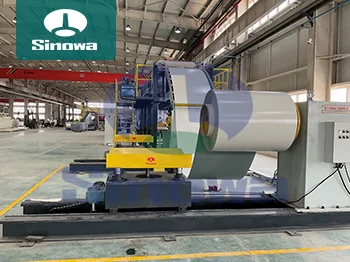
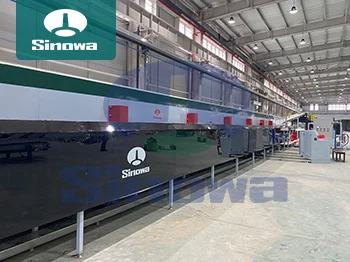
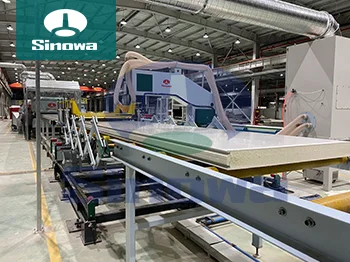
Sinowa is committed to the development and manufacturing of high-end and high-efficiency polyurethane sandwich panel machinery. Our polyurethane sandwich panel machinery are leading the way in efficiency, automatic control, human-computer interaction, environmental protection and energy consumption. Using system integration and bus control technology, it realizes the automatic integrated linkage control of the entire polyurethane sandwich panel machinery, and can achieve remote interactive communication, which has the world-class level and a comprehensive leading high-performance polyurethane sandwich panel machinery in the market.
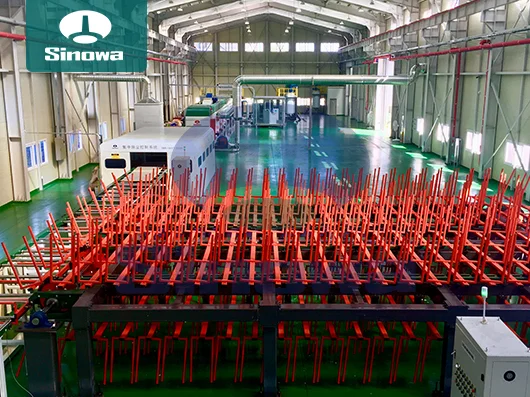
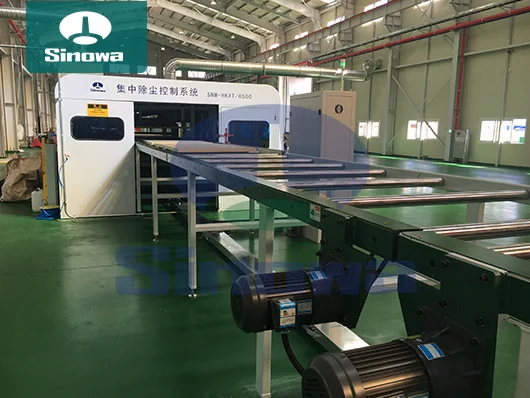
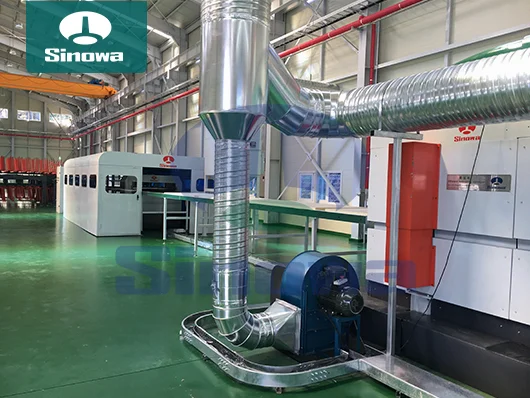
For more than ten years, relying on our innovative manufacturing concept and excellence in quality, reliable and trustworthy service to customers, we cooperate with customers all over the world, exported products to Canada, South Korea, Israel, Australia, the Middle East and other more than 20 countries and regions. contributed to building energy conservation and low-carbon production and have won widespread praise.
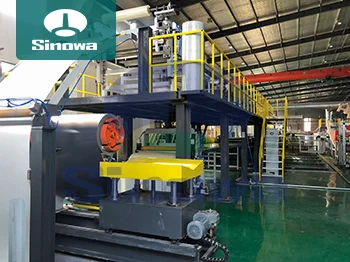
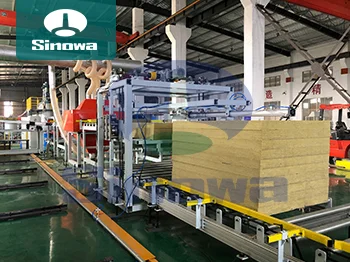
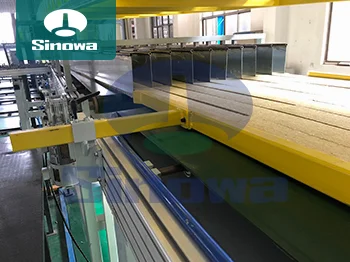
Sinowa has invested outstanding efforts in polyurethane sandwich panel machinery, this is why our products are more efficiency, quality, automatic control technology, environmental protection, energy consumption indicators and the appearance and safety protection are comprehensively leading, some subversive design changes in many major technical points, these major innovations make our products excellent in price/performance and user experience.
In the modern construction and manufacturing landscape, the demand for efficient, energy-saving and versatile building materials has driven continuous innovation in production equipment. Among these, polyurethane sandwich panel machinery stands out as a key enabler, producing composite panels that integrate thermal insulation, soundproofing, fire resistance and structural strength. These panels have become indispensable in various fields, from industrial workshops and logistics warehouses to cold storage facilities and public buildings. The machinery behind their production has evolved significantly, incorporating advanced technologies to meet diverse customer needs and environmental standards, while optimizing production efficiency and product quality.
The core functionality of polyurethane sandwich panel machinery lies in its ability to seamlessly combine two surface materials with a polyurethane foam core through a series of coordinated processes. The production process typically begins with the uncoiling and preparation of surface materials, which can include metal sheets (such as color steel or aluminum), non-woven fabrics, aluminum foil or fiberboards. Uncoiling systems are designed to handle different coil weights and widths, with precision guiding and leveling mechanisms to ensure the surface materials remain flat and aligned throughout the production process. This initial step is crucial, as any deviation in the surface materials can affect the final panel's dimensional accuracy and structural integrity.
Following uncoiling, the surface materials undergo preheating, a process that optimizes the bonding with the polyurethane core. Preheating temperatures are carefully controlled based on the type of surface material and the desired foam properties, ensuring that the polyurethane foam adheres firmly to the surfaces without causing damage or deformation. The preheating stage also helps to accelerate the curing process of the foam, reducing overall production time. For applications requiring specific surface finishes, additional processes such as film lamination or embossing may be integrated at this stage, adding versatility to the machinery's output capabilities.
The heart of the production line is the foaming and lamination system, where the polyurethane core is formed and bonded to the surface materials. Polyurethane foam is created by mixing two main components, polyol and isocyanate, along with additives such as catalysts, foaming agents and flame retardants. High-pressure metering pumps ensure precise mixing ratios, which is essential for achieving consistent foam density and performance. The mixed foam is then uniformly distributed onto the bottom surface material through a cloth feeding system, which can be adjusted to control the thickness of the foam layer. The top surface material is then brought into contact with the foam, and the entire assembly enters a double-track lamination conveyor.
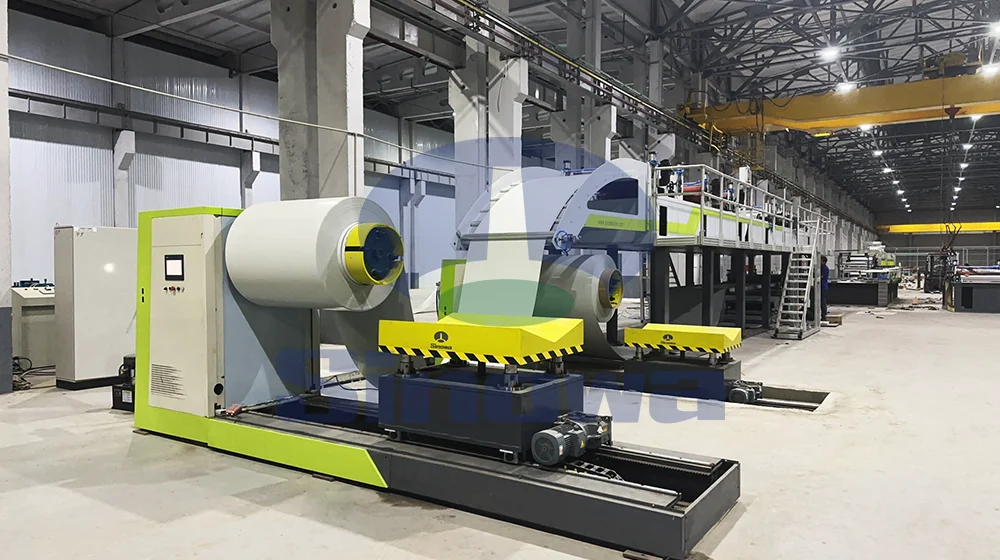
The double-track lamination conveyor plays a critical role in shaping and curing the sandwich panel. This system consists of two parallel tracks with heated plates that apply uniform pressure to the composite structure. The temperature and pressure are carefully regulated to facilitate the foaming and curing of the polyurethane core. During this process, the foam expands to fill the space between the two surface materials, forming a dense, uniform core with excellent thermal insulation properties. The length of the lamination conveyor is designed to provide sufficient curing time, ensuring that the foam reaches its full structural strength before proceeding to the next stage. Advanced systems may incorporate servo-driven mechanisms for precise speed control, allowing for adjustments to accommodate different panel thicknesses and production speeds.
After lamination and curing, the continuous panel is subjected to edge trimming and cutting processes. Edge trimming systems remove excess material from the sides of the panel, ensuring clean, straight edges and precise width dimensions. The cutting process is typically performed by automatic tracking crosscut saws, which can be programmed to cut the continuous panel into custom lengths without interrupting the production flow. This flexibility allows manufacturers to produce panels of varying sizes to meet specific project requirements, from standard lengths for industrial buildings to custom dimensions for specialized applications such as ship interiors or highway sound barriers.
Modern polyurethane sandwich panel machinery is characterized by its modular design, which offers significant advantages in terms of versatility and adaptability. Modular components allow for easy reconfiguration of the production line to accommodate different panel types, core materials and surface finishes. For example, by changing certain components, the same machinery can produce panels with polyurethane, rock wool or glass wool cores, expanding its application range. This modularity also simplifies maintenance and upgrades, as individual components can be replaced or upgraded without disrupting the entire production line. Additionally, modular design facilitates quick setup and commissioning, reducing downtime and enabling manufacturers to respond rapidly to changing market demands.
Automation and intelligent control systems have become integral to modern polyurethane sandwich panel machinery, enhancing production efficiency and reducing human error. Centralized control panels integrate all production parameters, including speed, temperature, pressure and material flow, allowing operators to monitor and adjust the process in real time. Advanced systems may include touch-screen interfaces, real-time data visualization and remote monitoring capabilities, enabling operators to manage production from a single location or even remotely. Automation also extends to post-production processes, such as automatic stacking and packaging. Stacking systems use vacuum suction cups or mechanical arms to handle finished panels gently, avoiding surface damage and ensuring neat stacking. Packaging systems can wrap the stacked panels in protective film or cardboard, preparing them for shipping and storage.
Energy efficiency and environmental sustainability are key considerations in the design of modern polyurethane sandwich panel machinery. Manufacturers have implemented various measures to reduce energy consumption, such as optimizing heating systems to minimize heat loss, using high-efficiency motors and adopting energy-saving control algorithms. For example, some lines use closed-loop heating systems that recycle heat from the curing process, reducing overall energy usage by up to 60% compared to traditional systems. Additionally, the use of low-ODP (ozone-depleting potential) foaming agents aligns with global environmental regulations, reducing the machinery's environmental footprint. These sustainable design features not only help manufacturers comply with environmental standards but also lower operational costs over the long term.
The adaptability of polyurethane sandwich panel machinery is further demonstrated by its ability to handle different production scales and panel specifications. Continuous production lines are ideal for large-scale manufacturing, offering high output rates of up to 4300 square meters per hour for standard panels. These lines are designed for 24/7 operation, maximizing productivity for high-volume orders. In contrast, discontinuous (batch) production lines are suitable for small to medium-scale production, specialized panel shapes or custom orders. Discontinuous lines offer greater flexibility in terms of panel dimensions and core materials, making them ideal for applications such as cold storage panels, which require specific sealing systems and insulation properties. Some manufacturers also offer hybrid systems that combine the advantages of both continuous and discontinuous production, providing a balance between productivity and flexibility.
The application range of polyurethane sandwich panels directly influences the design and capabilities of the machinery. For example, panels used in cold storage facilities require exceptional thermal insulation properties, which demands precise control of foam density and thickness during production. Machinery producing these panels may include additional cooling systems to ensure the foam cures properly at lower temperatures, as well as specialized sealing mechanisms to prevent heat transfer at the edges. In contrast, panels used in industrial workshops may prioritize structural strength and fire resistance, requiring adjustments to the foam formulation and surface material thickness. The machinery must be able to accommodate these varying requirements through quick parameter adjustments and component changes.
Another important aspect of polyurethane sandwich panel machinery is its maintenance and reliability. Given the continuous operation of many production lines, machinery components must be durable and easy to maintain. Modular design simplifies maintenance tasks, as individual components can be removed and replaced without shutting down the entire line. Critical components such as metering pumps, mixing heads and conveyor tracks are made from high-quality materials, ensuring long service life and minimal wear. Regular maintenance schedules are supported by diagnostic systems that monitor component performance and alert operators to potential issues before they lead to downtime. This proactive approach to maintenance helps to maximize production uptime and extend the machinery's overall lifespan.
The evolution of polyurethane sandwich panel machinery has also been driven by global trends toward green building and energy conservation. Governments around the world have implemented policies promoting low-energy buildings and carbon reduction, increasing the demand for high-performance insulation materials. In response, machinery manufacturers have developed production lines that produce panels with improved thermal efficiency, using eco-friendly materials and processes. For example, the integration of green foaming technologies, such as third-generation zero-ODP alkane foaming agents, reduces the environmental impact of the production process while enhancing the panel's insulation properties. These advancements not only meet regulatory requirements but also appeal to environmentally conscious customers.
In addition to building applications, polyurethane sandwich panels are increasingly used in specialized fields such as automotive manufacturing (for interior components), aerospace (for lightweight insulation) and marine engineering (for ship interiors). This diversification has driven the development of specialized polyurethane sandwich panel machinery capable of producing panels with unique properties, such as enhanced water resistance, corrosion resistance or lightweight construction. For example, machinery used to produce marine-grade panels may include additional coating processes to protect against saltwater corrosion, while machinery for automotive components may focus on producing thin, lightweight panels with precise dimensional tolerances.
The global market for polyurethane sandwich panel machinery is characterized by growing demand from emerging economies, where rapid industrialization and urbanization are driving the construction of new infrastructure. Manufacturers are adapting their machinery to meet the specific needs of these markets, such as lower energy consumption, easier operation and lower maintenance requirements. Additionally, the trend toward customization has led to the development of more flexible machinery that can produce a wide range of panel types and sizes, catering to the diverse needs of small and medium-sized enterprises as well as large-scale manufacturers.
Looking ahead, the future of polyurethane sandwich panel machinery will be shaped by further advancements in automation, digitization and material science. The integration of artificial intelligence (AI) and machine learning technologies will enable predictive maintenance, optimizing production processes and reducing downtime. Digital twins of production lines will allow manufacturers to simulate and optimize production parameters before actual operation, improving efficiency and product quality. Additionally, the development of new foam formulations and surface materials will drive the need for machinery that can handle these innovative materials, further expanding the application range of polyurethane sandwich panels.
In conclusion, polyurethane sandwich panel machinery has become a vital part of the modern manufacturing ecosystem, enabling the production of high-performance composite panels that meet the evolving needs of the construction and industrial sectors. Its development has been marked by continuous innovation in modular design, automation, energy efficiency and environmental sustainability. As the demand for green, energy-saving building materials continues to grow, polyurethane sandwich panel machinery will continue to evolve, integrating new technologies and capabilities to meet the challenges of the future. Whether for large-scale continuous production or small-batch custom orders, this machinery plays a crucial role in delivering high-quality, versatile and sustainable solutions that drive progress in multiple industries.
« Polyurethane Sandwich Panel Machinery Manufacturer » Update Date: 2026/1/12
- High Efficiency Glass Wool Line
- Highly Intelligent Glass Wool Sandwich Panel Line
- PU Insulation Panel Production Line Price
- PU Foam Production Line In China
- Continuous PU Sandwich Panel Production Line Price
- PUR Sandwich Panel Machine Price
- High Efficiency Decorative PU Sandwich Panel Production Line
- Cheap Glass Wool Sandwich Panel Production Line
- PU Foam Production Line For Clean Room
- PUR Sandwich Panel Line Price
- High Efficiency PIR Sandwich Panel Line
- Low Price Isolation PU Sandwich Panel Line
- Continuous PU Sandwich Panel Line For Roof
- High-end PIR Insulation Panel Production Line
- High-quality Polyurethane Sandwich Panel Line
- Fully Automatic PU Sandwich Panel Production Line For Sale
- Lines For Glass Wool Production
- PIR Wall Panel Production Line On Sales
- Sandwich Panel Machine From China
- PU Sandwich Panel Machine Design
- Links:
- Sandwich Panel Continuous Production Line
- Automatic and Continuous Sandwich Panel Production Line
- Cheap and Low Price Sandwich Panel Production Line
- China Sandwich Panel Production Line Factory
- Color Steel Sandwich Panel Production Line For Cold Storage
- Continuous Composite Foam Sandwich Panel Production Line
- Continuous Production Line For Rockwool and Mineral Wool Sandwich Panels
- Continuous PU Phenolic Insulation Panel Production Line
- Continuous PU PIR Sandwich Panel Production Line
- Continuous PUF PUR Sandwich Panel Production Line
- Continuous Sandwich Panel Production Line For Roof and Wall
- Customized and Design Sandwich Panel Production Line
- Decorative Sandwich Panel Production Line For Glass Wool Boards
- High Quality Sandwich Panel Production Line For Sale
- Polyurethane(PU) Sandwich Panel Production Line
- Sandwich Panel Production Line Manufacturer and Supplier