
Color Steel Sandwich Panel Production Line In China
Sinowa is a well-known manufacturer and technical service provider of high-end color steel sandwich panel production line, learn more about color steel sandwich panel production line in china, please contact Sinowa's technical engineer, tell us what you need, we will contact you as soon as possible!
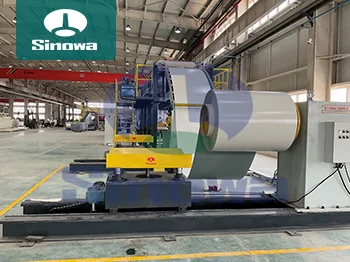
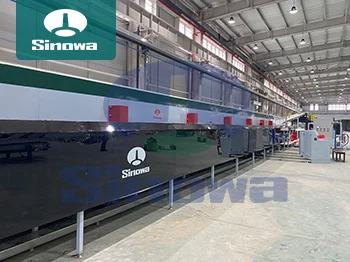
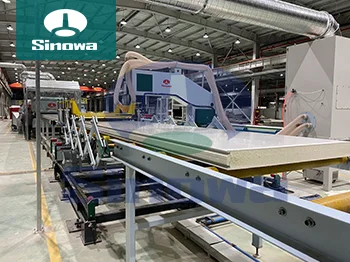
Sinowa is committed to the development and manufacturing of high-end and high-efficiency color steel sandwich panel production line. Our color steel sandwich panel production line are leading the way in efficiency, automatic control, human-computer interaction, environmental protection and energy consumption. Using system integration and bus control technology, it realizes the automatic integrated linkage control of the entire color steel sandwich panel production line, and can achieve remote interactive communication, which has the world-class level and a comprehensive leading high-performance color steel sandwich panel production line in the market.
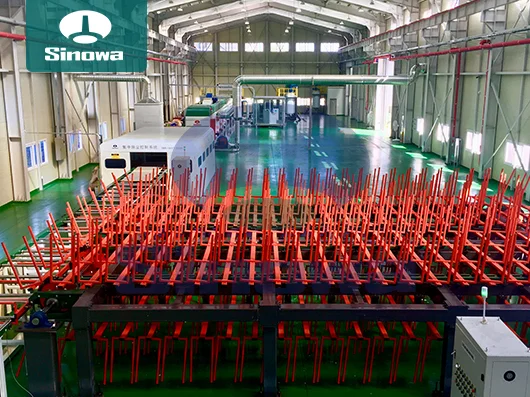
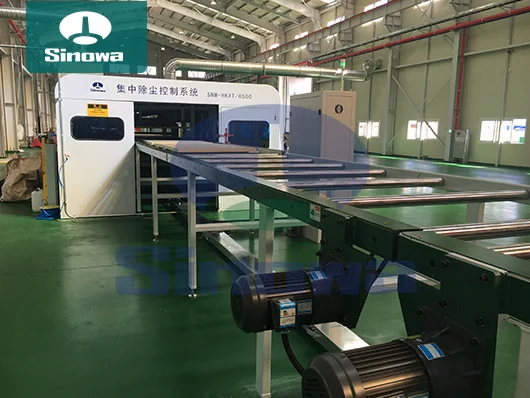
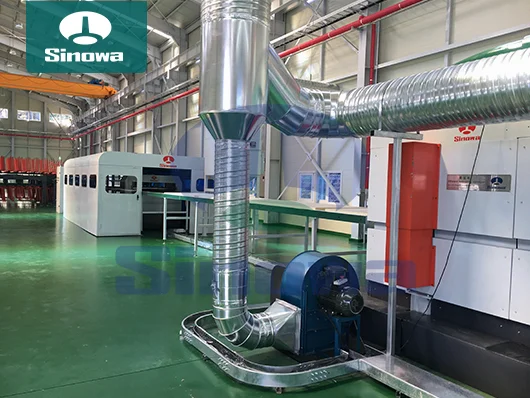
For more than ten years, relying on our innovative manufacturing concept and excellence in quality, reliable and trustworthy service to customers, we cooperate with customers all over the world, exported products to Canada, South Korea, Israel, Australia, the Middle East and other more than 20 countries and regions. contributed to building energy conservation and low-carbon production and have won widespread praise.
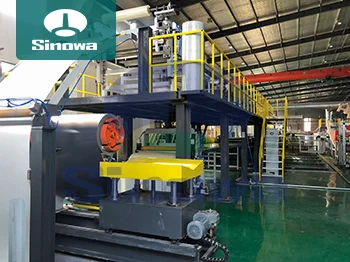
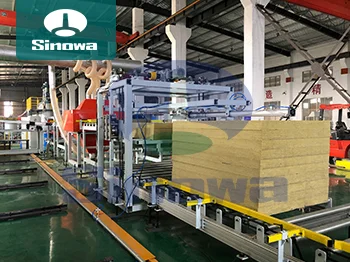
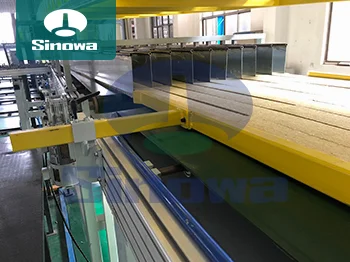
Sinowa has invested outstanding efforts in color steel sandwich panel production line, this is why our products are more efficiency, quality, automatic control technology, environmental protection, energy consumption indicators and the appearance and safety protection are comprehensively leading, some subversive design changes in many major technical points, these major innovations make our products excellent in price/performance and user experience.
The manufacturing sector of construction materials in China has undergone remarkable industrial upgrading over the past decades, and the production system for color steel sandwich panels stands out as one of the most mature and well-developed industrial segments in this field. These composite building panels have become indispensable materials for modern architectural construction, widely applied in industrial workshops, temporary buildings, cold storage facilities, and public construction projects across diverse climatic regions. Driven by the booming domestic construction demand and continuous optimization of industrial manufacturing systems, the color steel sandwich panel production lines in China have achieved large-scale production, intelligent operation, and diversified product iteration, forming a complete industrial chain that integrates raw material processing, automated manufacturing, and finished product optimization. The evolution of these production lines not only mirrors the technological progress of China’s construction material machinery industry but also adapts to the global trend of energy-saving, lightweight, and environmentally friendly building materials.
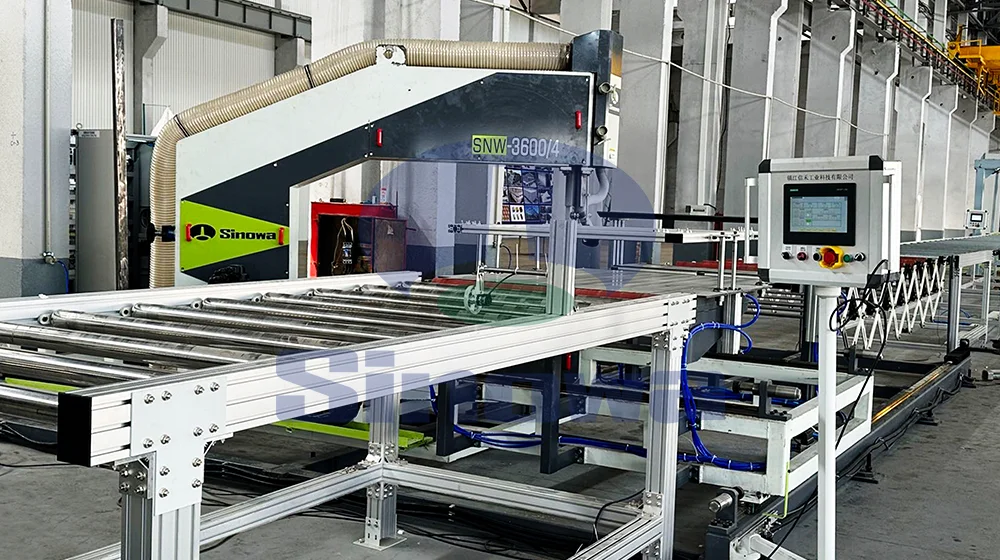
A complete color steel sandwich panel production line consists of a series of interconnected mechanical units that work in synchronous coordination to transform raw materials into finished composite panels through continuous automated procedures. The overall structural design of the production line focuses on seamless process connection, stable material transmission, and precise parameter control, eliminating redundant manual intervention and ensuring consistent product quality in mass production. The basic configuration of a standard production line includes raw material unwinding devices, leveling systems, surface treatment modules, core material feeding structures, composite pressing units, cutting mechanisms, and final stacking equipment. Each functional section undertakes independent processing tasks while maintaining synchronous operating rhythms, forming an uninterrupted production flow that adapts to long-term continuous industrial operation. The layout of these production lines is scientifically planned according to production logic, with compact internal space arrangement to reduce floor occupation and optimize material transportation paths, which effectively improves the overall operational efficiency of the production workshop.
The initial stage of the production process centers on the pretreatment of color steel coils, the fundamental surface material of sandwich panels. Raw color steel coils are fixed on unwinding brackets, where tension control devices maintain stable feeding speed to avoid material deviation and tensile deformation during transportation. After unwinding, the steel strips enter the leveling unit composed of multiple groups of staggered leveling rollers. Through repeated bending with gradually decreasing deformation amplitude, the equipment eliminates inherent wrinkles and irregular curvatures on the steel plate surface, restoring flatness and ensuring uniform thickness of subsequent composite products. During this procedure, auxiliary surface cleaning structures remove floating dust, fine impurities, and residual oil stains attached to the steel plate, laying a clean foundation for later bonding treatment. Some optimized production lines are equipped with adjustable preheating components in this stage, which moderately raise the temperature of the steel plate to reduce surface humidity and enhance the adhesion between the steel plate and intermediate core materials in the subsequent composite process.
Following steel plate pretreatment, the production line proceeds to the feeding and arrangement of core materials, which determine the thermal insulation, shock absorption, and fire resistance performance of finished panels. Common core materials applied in industrial production include foam materials, rock wool, and other lightweight fillers, each with unique physical characteristics adapted to different usage scenarios. The core material feeding system adopts automated conveying equipment to quantitatively and continuously transport bulk or rolled core materials to the composite station. During transportation, sorting and trimming devices adjust the width and thickness of core materials to match the specification parameters of outer steel plates, ensuring consistent dimensions of composite structures. For fibrous core materials, targeted compression and shaping mechanisms are installed to optimize internal density distribution, avoiding hollow gaps or loose structures inside finished panels. The feeding speed of core materials maintains precise synchronization with the transmission speed of color steel plates, preventing material misalignment and layered dislocation in composite products.
The composite pressing stage represents the core working procedure of the entire production line, directly influencing the bonding firmness and structural stability of sandwich panels. Modern production lines in China widely adopt integrated hot pressing and cold pressing composite structures. In the hot pressing module, constant temperature heating systems activate adhesive substances between steel plates and core materials, enabling uniform glue penetration and tight fitting between different material layers. The internal pressure of the pressing equipment is regulated through hydraulic transmission systems, maintaining stable pressure values to ensure no local gaps or debonding during composite molding. After hot pressing and preliminary bonding, the semi-finished panels enter the cooling and shaping unit, where circulating cooling structures gradually reduce the panel temperature to solidify the adhesive structure and fix the overall shape of composite panels. The entire pressing process strictly controls temperature variation ranges and pressure balance, effectively reducing the probability of product deformation and improving the overall flatness of finished panels.
Subsequent to composite molding, the production line conducts fine processing and fixed-length cutting of semi-finished panels. The trimming mechanism first polishes the edges of composite panels to remove redundant raw materials and smooth rough sections, ensuring neat and consistent edge structures. For panels requiring assembly connection, specialized grooving devices carve standardized connecting grooves on panel edges through precision milling tools. The spacing and depth of grooves can be adjusted according to assembly requirements, facilitating seamless splicing between panels during construction. The cutting unit adopts high-precision hydraulic cutting structures, which automatically complete fixed-length cutting according to preset parameter instructions. The cutting system features sensitive response and high dimensional accuracy, effectively avoiding burrs and irregular notches on cutting sections. All fine processing procedures operate in linkage with the front-end production speed to realize uninterrupted integrated processing from composite molding to finished product shaping.
The final stage of the production process involves finished product inspection, conveying, and automatic stacking. Qualified panels after cutting are transported along low-noise conveying platforms to the inspection area, where simple manual observation and mechanical detection identify surface scratches, bonding defects, and dimensional deviations. Unqualified products are screened out separately for reprocessing or material recycling to control the overall qualification rate of production batches. Standard qualified finished panels are automatically sorted and stacked by intelligent stacking equipment, with adjustable stacking height and arrangement mode to meet warehouse storage and transportation requirements. The entire post-processing stage minimizes manual contact with finished products, preventing secondary damage such as surface abrasion and collision deformation caused by human operation.
Driven by industrial technological iteration, the intelligent level of color steel sandwich panel production lines in China has been continuously improved in recent years. Most modern production lines are equipped with centralized intelligent control systems composed of human-computer interaction interfaces and programmable logic controllers. Operators can set production parameters such as plate width, thickness, and operating speed through touch screens, and the system automatically completes synchronous adjustment of each functional unit. High-precision positioning sensors are installed at key processing positions to monitor material transmission status, temperature changes, and pressure data in real time. Once abnormal operating parameters are detected, the system triggers automatic alarm prompts and carries out emergency shutdown protection to reduce equipment failure loss and product defective rate. In addition, the optimized transmission structure of the production line effectively reduces mechanical vibration and operating noise, improving the working environment of production workshops while extending the service life of mechanical components.
In terms of structural optimization, domestic production lines have made targeted improvements to adapt to complex production demands. The overall mechanical framework adopts high-strength metal materials with anti-corrosion and anti-rust treatments applied to external surfaces, enhancing the adaptability of equipment to humid and dusty production environments. Key moving parts such as transmission bearings and pressing rollers are processed with wear-resistant technology to reduce friction loss during long-term continuous operation and lower daily maintenance costs. The modular structural design enables flexible disassembly and assembly of each functional unit, facilitating equipment transportation, installation, and later maintenance. For production lines with diversified production needs, the quick switching structure realizes simple adjustment of production specifications, shortening the time required for product type conversion and improving the flexible production capacity of a single production line.
The rapid development of color steel sandwich panel production lines in China benefits from the sound domestic industrial supporting system. A complete upstream and downstream supply chain provides high-quality raw materials and mechanical accessories for production line manufacturing, including high-quality steel raw materials, environmentally friendly adhesives, and durable mechanical parts. Abundant industrial resources reduce the comprehensive manufacturing cost of production lines and ensure the stability of equipment quality. At the same time, numerous mechanical processing enterprises focus on the research and development of panel production equipment, continuously optimizing production line structures according to market feedback and usage scenarios. Long-term technical accumulation and production experience enable domestic manufacturers to independently complete the whole process from equipment design and processing to assembly and debugging, forming a localized industrial development model with independent research and development capabilities.
In terms of application market layout, production line manufacturers in China take into account the usage demands of different regional markets to carry out targeted equipment optimization. For high-temperature and humid areas, production lines are upgraded with enhanced moisture-proof and anti-corrosion structures to adapt to harsh environmental conditions; for cold northern regions, the heating and constant temperature systems of composite units are optimized to ensure stable bonding quality in low-temperature production environments. In addition to meeting domestic construction material production needs, these production lines are continuously exported to overseas markets, providing reliable manufacturing equipment for construction material processing enterprises in multiple regions. The equipment exported maintains consistent structural stability and intelligent operation performance, adapting to diverse local industrial production conditions and market usage standards.
From the perspective of industrial development trends, the color steel sandwich panel production line industry in China is moving toward energy conservation, environmental protection, and green manufacturing. Traditional production lines have problems such as high energy consumption and slight waste of raw materials, while newly upgraded equipment optimizes the heating circulation system and power transmission structure to reduce unit energy consumption during production. The closed-loop processing design realizes effective recycling of leftover materials generated in the cutting and trimming process, improving the utilization rate of raw materials. Moreover, the production line adopts low-pollution adhesive coating structures to reduce volatile substance emissions during the composite process, complying with the global environmental protection requirements for industrial production. In the future, with the further integration of digital technology and mechanical manufacturing, production lines will realize more refined intelligent management, including automatic production data statistics, equipment operation fault prediction, and remote parameter adjustment.
Despite the mature development of the current industrial system, the color steel sandwich panel production line industry in China still retains continuous innovation potential. At the technical level, research institutions and manufacturing enterprises are jointly exploring new composite processing technologies to further improve the fire resistance, thermal insulation, and compression resistance of finished panels. In terms of equipment automation, the industry is promoting the deep integration of robotic handling and intelligent sorting systems to reduce human participation in the entire production chain and realize fully unmanned automated production. In terms of industrial standardization, the continuous improvement of internal production specifications promotes the unified optimization of equipment structure and production processes, laying a foundation for large-scale standardized production of sandwich panels.
In conclusion, the color steel sandwich panel production lines in China have formed an industrial system with mature technology, complete functions, and wide market adaptability after long-term technological accumulation and industrial optimization. Relying on standardized production processes, intelligent control systems, and sound industrial supporting facilities, these production lines efficiently manufacture high-quality composite building materials to meet the diversified construction needs of domestic and overseas markets. With the continuous advancement of construction industrialization and green building concepts, the market demand for color steel sandwich panels will maintain a steady growth trend. Driven by technological innovation and industrial upgrading, China’s sandwich panel production line industry will further optimize equipment performance, reduce production energy consumption, and expand application scenarios, continuously consolidating its important position in the global construction material machinery manufacturing industry and providing reliable technical and equipment support for the high-quality development of the modern construction industry.
« Color Steel Sandwich Panel Production Line In China » Update Date: 2026/5/8
- Cheap Continuous PU Sandwich Panel Production Line
- PIR Sandwich Panel Line From China
- High Efficiency Sandwich Wall Panel Production Line
- High-end Decorative PU Sandwich Panel Production Line
- Polyurethane Sandwich Panel Line Price
- High-quality Foam Sandwich Panel Machine
- High-end Isolation Sandwich Panel Production Line
- PIR Sandwich Panel Machine For Clean Room
- Polyurethane Sandwich Panel Machinery On Sales
- Composite Panel Production Line Manufacturer
- High-quality Glass Wool Production Line
- High Efficiency Wall Sandwich Panel Production Line
- Continuous PU Sandwich Panel Production Line On Sales
- Custom Decorative PU Sandwich Panel Production Line
- Glass Wool Sandwich Panel Machine Supplier
- Polyurethane Sandwich Panel Line For Building
- PU Sandwich Panel Line For Sale
- High-quality Continuous Sandwich Panel Manufacturing Line
- Isolation PU Sandwich Panel Line Supplier
- Polyurethane Sandwich Panel Manufacturing Plant