
Polyurethane Sandwich Panel Production Line For Cold Room
Sinowa is a well-known manufacturer and technical service provider of high-end polyurethane sandwich panel production line, learn more about polyurethane sandwich panel production line for cold room, please contact Sinowa's technical engineer, tell us what you need, we will contact you as soon as possible!
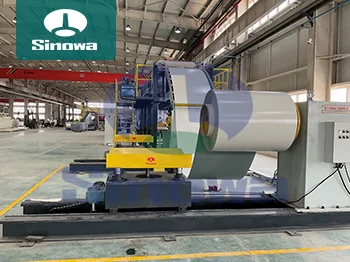
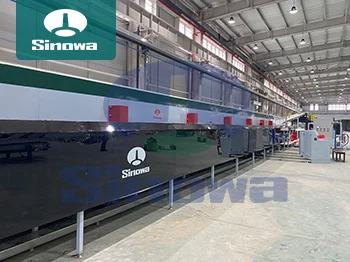
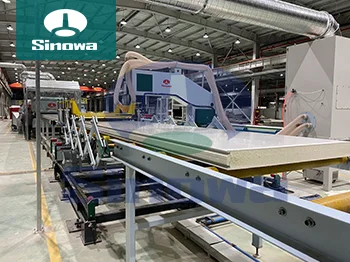
Sinowa is committed to the development and manufacturing of high-end and high-efficiency polyurethane sandwich panel production line. Our polyurethane sandwich panel production line are leading the way in efficiency, automatic control, human-computer interaction, environmental protection and energy consumption. Using system integration and bus control technology, it realizes the automatic integrated linkage control of the entire polyurethane sandwich panel production line, and can achieve remote interactive communication, which has the world-class level and a comprehensive leading high-performance polyurethane sandwich panel production line in the market.
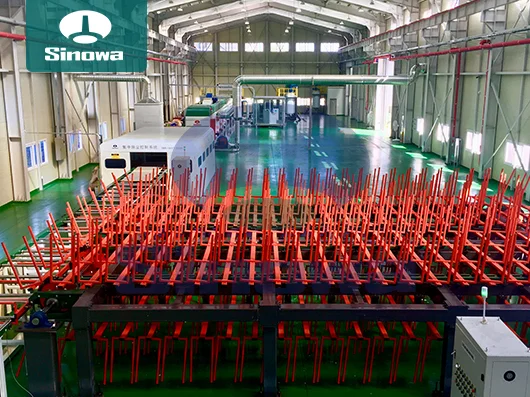
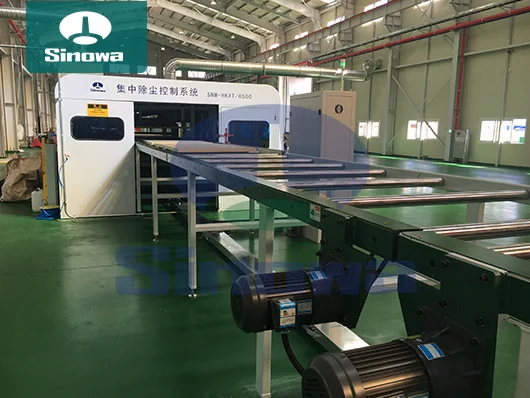
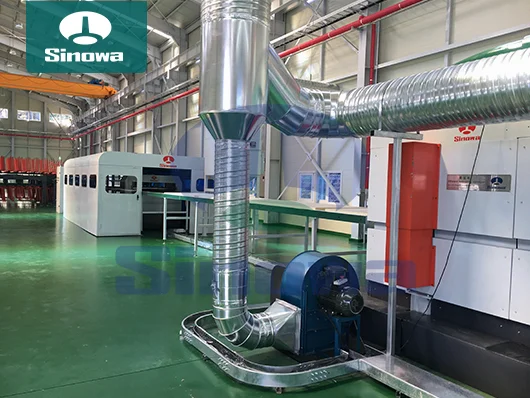
For more than ten years, relying on our innovative manufacturing concept and excellence in quality, reliable and trustworthy service to customers, we cooperate with customers all over the world, exported products to Canada, South Korea, Israel, Australia, the Middle East and other more than 20 countries and regions. contributed to building energy conservation and low-carbon production and have won widespread praise.
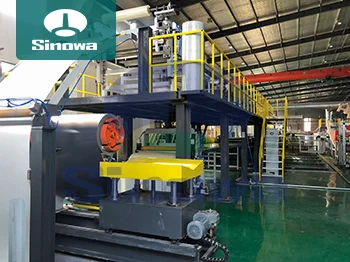
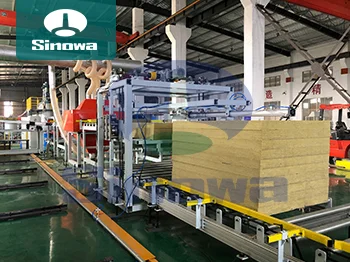
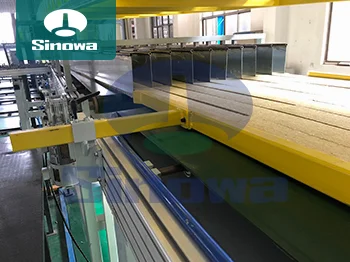
Sinowa has invested outstanding efforts in polyurethane sandwich panel production line, this is why our products are more efficiency, quality, automatic control technology, environmental protection, energy consumption indicators and the appearance and safety protection are comprehensively leading, some subversive design changes in many major technical points, these major innovations make our products excellent in price/performance and user experience.
In the modern cold chain industry, the demand for efficient, stable, and energy-saving cold storage facilities is constantly rising, and polyurethane sandwich panels have become the core material for cold room construction due to their excellent thermal insulation, structural strength, and moisture resistance. The polyurethane sandwich panel production line specially designed for cold rooms is a highly integrated electromechanical system that integrates multiple processes such as raw material processing, foaming, curing, and cutting, ensuring the mass production of high-quality panels that meet the strict requirements of cold storage environments. Unlike ordinary sandwich panel production lines, those for cold rooms need to focus more on the precision of thermal insulation performance, the stability of product structure, and the adaptability to low-temperature working conditions, making every link of the production process have strict technical standards and operational requirements.
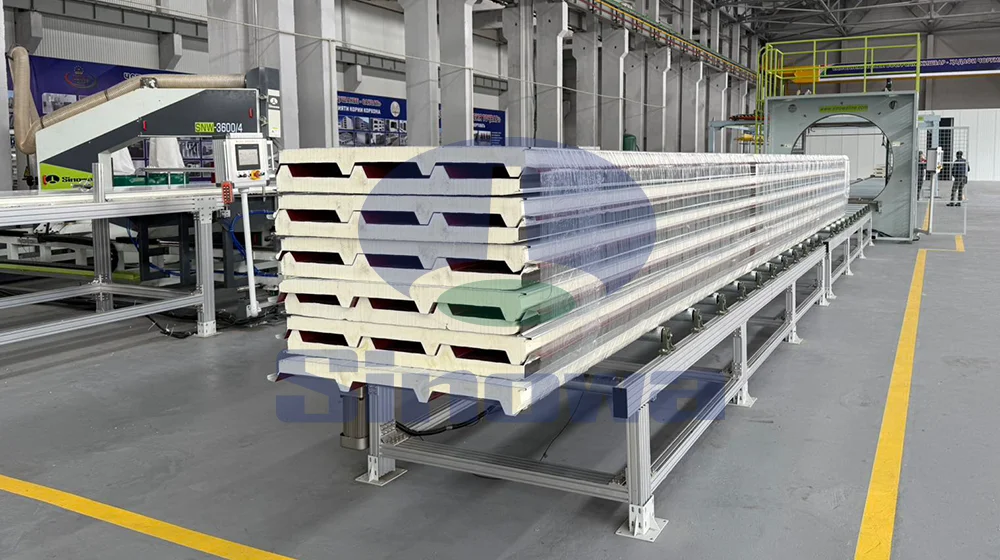
Polyurethane sandwich panels for cold rooms are composite materials composed of two layers of surface materials and a middle polyurethane core layer. The surface materials are usually metal plates such as color steel plates, stainless steel plates, or aluminum plates, which are processed to have good corrosion resistance, impact resistance, and hygienic performance, suitable for the high-humidity and low-temperature environment of cold rooms. The middle polyurethane core layer is formed by the foaming reaction of isocyanate and polyol, which has a closed-cell honeycomb structure with extremely low thermal conductivity, excellent moisture resistance, and certain mechanical strength. This unique structure enables the panels to effectively block heat transfer, maintain a stable low temperature inside the cold room, and reduce energy consumption, while also bearing the load of the cold room structure and ensuring the safety and durability of the building. The production line is the key to realizing the stable combination of these two parts and ensuring the consistent performance of each panel.
The basic working principle of the polyurethane sandwich panel production line for cold rooms is to continuously and efficiently complete the processing of surface materials, the mixing and foaming of core materials, the composite bonding of panels, and the cutting and finishing of finished products through a high degree of automated equipment coordination. The entire production process is a seamless connection of multiple links, and each link affects the final quality of the panels. The core of the production line lies in the precise control of the foaming process and the firm bonding between the core layer and the surface layer, which directly determines the thermal insulation effect and service life of the panels in cold room applications. Compared with traditional manual or semi-automatic production methods, the automated production line not only greatly improves production efficiency but also ensures the uniformity and stability of product quality, avoiding the defects caused by human operation errors.
A complete polyurethane sandwich panel production line for cold rooms is composed of multiple functional modules, each of which undertakes specific production tasks and cooperates closely to form a continuous production system. The main modules include the surface material pretreatment system, the core material mixing and foaming system, the composite laminating system, the curing system, the cutting system, and the finished product handling and packaging system. Each module is equipped with professional equipment, and the parameters of each equipment can be adjusted according to production needs to adapt to the production of panels of different specifications and performance requirements.
The surface material pretreatment system is the first link of the production line, which is mainly used to process the surface metal plates to ensure their flatness, cleanliness, and bonding performance with the polyurethane core layer. This system usually includes uncoiling equipment, leveling equipment, surface cleaning equipment, and preheating equipment. The metal coils are first uncoiled by the uncoiling machine, and then sent to the leveling machine to eliminate the internal stress of the plates and ensure their flatness, which is crucial for the subsequent composite process and the appearance quality of the finished panels. The surface cleaning equipment removes oil stains, oxides, and dust on the surface of the metal plates through high-pressure ion air or chemical cleaning methods, which can effectively improve the bonding strength between the surface plates and the polyurethane core layer, preventing the core layer from peeling off from the surface layer during use. The preheating equipment appropriately heats the surface plates to a certain temperature, which helps to promote the foaming reaction of the polyurethane raw materials and improve the bonding effect. Some advanced production lines may also be equipped with film laminating equipment to cover the surface of the metal plates with a layer of polymer film, enhancing their weather resistance and corrosion resistance.
The core material mixing and foaming system is the core part of the entire production line, which directly determines the performance of the polyurethane core layer. This system mainly includes raw material storage tanks, metering pumps, mixing heads, and foaming equipment. The main raw materials of the polyurethane core layer are isocyanate and polyol, which are stored in separate storage tanks and transported to the mixing head by metering pumps according to a certain proportion. The metering pumps have high precision, which can ensure that the mixing ratio of the two components is accurate, generally with an error of no more than ±1.5%, because the proportion of raw materials directly affects the foaming effect and the performance of the core layer. In addition to the main raw materials, appropriate additives such as catalysts, blowing agents, flame retardants, and stabilizers are also added to the mixing system to adjust the foaming speed, improve the flame retardant performance of the core layer, and enhance its stability. The mixing head fully mixes the raw materials and additives to form a uniform mixture, which is then evenly poured onto the surface of the lower surface plate.
The foaming process of the polyurethane core layer is a key link that requires strict control of temperature, pressure, and time. The mixed raw materials undergo a chemical reaction after being poured, releasing heat and generating gas, which makes the mixture expand and form a porous foam structure. The foaming process is usually carried out in a closed space formed by the upper and lower surface plates and the laminating equipment. The double-track laminating conveyor is commonly used in the production line, which is equipped with heating pressure plates and circulating steel strips on the upper and lower sides to form a forming channel with adjustable height. The temperature control system accurately adjusts the temperature of each section of the forming channel to ensure that the foaming reaction is carried out under the optimal conditions. Generally, the foaming temperature is controlled between 40℃ and 60℃, which can ensure that the foam expands fully and forms a uniform closed-cell structure. The closed-cell rate of the polyurethane core layer produced by this method is usually more than 95%, which gives it excellent moisture resistance and thermal insulation performance. The blowing agent used in the foaming process is usually environmentally friendly materials, which do not pollute the environment and can ensure the safety of the cold room for storing food, medicine, and other products.
After the foaming is completed, the composite panel enters the curing system to complete the solidification of the polyurethane core layer. The curing process is a process in which the foam structure gradually stabilizes and the strength gradually increases. The curing system is usually a long curing tunnel, with a length of 30 to 50 meters, which can provide sufficient curing time for the composite panel. The temperature and humidity in the curing tunnel are strictly controlled to ensure that the polyurethane core layer is fully cured. The curing time is usually affected by factors such as temperature and the type of additives, generally ranging from a few minutes to more than ten minutes. During the curing process, the composite panel is continuously conveyed by the conveyor belt, and the core layer gradually forms a stable structure, closely bonded with the upper and lower surface plates. After full curing, the composite panel has sufficient mechanical strength and thermal insulation performance, which can meet the use requirements of cold rooms.
The cutting system is used to cut the cured composite panel into finished products of the required length and width. The cutting equipment usually adopts a flying saw cutting machine, which is controlled by a servo system and has high cutting accuracy, with an error of no more than ±1mm. The flying saw cutting machine can move synchronously with the conveyor belt of the production line, ensuring that the cutting surface is flat and free of burrs, and does not damage the structure of the panel. The cutting length and width can be adjusted according to production needs, which is highly flexible and can meet the requirements of cold rooms of different sizes. Some production lines are also equipped with edge trimming equipment to trim the edges of the panels to ensure the dimensional accuracy and appearance quality of the finished products.
The finished product handling and packaging system is the last link of the production line, which is used to transport, stack, and package the cut finished panels. The handling equipment usually includes conveyor rollers, automatic stackers, and other equipment. The automatic stacker can use a robotic arm or a vacuum suction cup to stack the finished panels neatly, which not only improves the handling efficiency but also avoids damage to the panels during manual handling. The packaging system wraps the stacked panels with plastic film or other packaging materials to prevent dust, moisture, and damage during transportation and storage. The packaging process is also automated, which further improves the production efficiency and ensures the packaging quality.
In addition to the above main modules, the polyurethane sandwich panel production line for cold rooms is also equipped with an automatic control system, which is the "brain" of the entire production line. The control system adopts a user-friendly interface, which is easy to operate and monitor. Operators can set and adjust various production parameters through the control panel, such as the mixing ratio of raw materials, the temperature of the foaming and curing process, the cutting length, and the speed of the conveyor belt. The control system can also monitor the operation status of each equipment in real-time, find equipment faults in time, and send out an alarm signal, which is convenient for operators to handle in time, ensuring the continuous and stable operation of the production line. Some advanced control systems also have a data recording and analysis function, which can record the production data of each batch of panels, facilitating quality traceability and production optimization.
The operation and maintenance of the polyurethane sandwich panel production line for cold rooms are crucial to ensuring production efficiency and product quality. The production line has a high degree of automation, but it still requires professional operators to operate and maintain it. Operators need to be familiar with the structure and working principle of each equipment, master the operation skills and parameter adjustment methods, and strictly follow the operating procedures to avoid equipment faults and product quality problems caused by improper operation. Before starting the production line every day, operators need to check the operation status of each equipment, including the lubrication of transmission parts, the tightness of fasteners, the level of raw materials, and the normal operation of the control system. During the production process, operators need to monitor the production parameters in real-time, check the quality of the panels, and deal with any abnormalities in a timely manner.
The maintenance of the production line should adhere to the principle of "prevention first, combining maintenance and repair". Regular maintenance plans should be formulated according to the frequency of equipment use, including daily maintenance, weekly maintenance, monthly maintenance, and annual maintenance. Daily maintenance mainly includes cleaning the equipment, checking the lubrication status, and tightening loose fasteners. Weekly maintenance focuses on checking the wear of key components, such as the mixing head, metering pump, and conveyor belt, and replacing worn parts in time. Monthly maintenance involves comprehensively inspecting and calibrating the equipment, adjusting the parameters of the control system, and ensuring the accuracy and stability of the equipment. Annual maintenance is a comprehensive overhaul of the entire production line, replacing aging components, checking the structural stability of the equipment, and ensuring that the production line can work normally for a long time.
In the maintenance process, attention should be paid to the maintenance of different equipment under different seasons. For example, in cold seasons, the anti-freezing treatment of the raw material storage system and the pipeline system should be done to prevent the raw materials from freezing and affecting the production. In hot seasons, the heat dissipation of the electrical equipment should be strengthened to avoid overheating and damage to the equipment. At the same time, the maintenance personnel should summarize the maintenance experience continuously, improve the maintenance quality, and establish a detailed maintenance record to provide a basis for future maintenance and overhaul.
The polyurethane sandwich panel production line for cold rooms has significant advantages in the cold chain industry. First of all, it has high production efficiency. The automated continuous production mode can greatly improve the output of panels, meet the large demand for cold room construction, and reduce the labor intensity of operators. Secondly, the product quality is stable. The precise control of each production link ensures that the performance parameters of each panel, such as thermal conductivity, density, and bonding strength, are consistent, which can better meet the strict requirements of cold rooms for thermal insulation and structural strength. The thermal conductivity of the polyurethane core layer produced by the production line can be as low as 0.018-0.025 W/(m·K), and a 5cm thick panel can achieve the same thermal insulation effect as a 1m thick concrete, which can reduce the energy consumption of cold rooms by 20%-30%.
In addition, the production line has strong adaptability. It can produce panels of different thicknesses, widths, and lengths according to the needs of cold rooms of different sizes and uses. The surface materials and core material performance can also be adjusted according to the specific requirements of the cold room, such as choosing stainless steel surface plates for food cold rooms to ensure hygienic performance, or adding flame retardants to the core layer to improve the fire resistance of the panels. The modular design of the production line also allows the free combination of various modules, which can quickly adapt to the personalized production needs of customers.
With the continuous development of the cold chain industry, the requirements for cold room construction are becoming higher and higher, which also puts forward new requirements for the polyurethane sandwich panel production line. In the future, the production line will develop in the direction of higher automation, intelligence, and environmental protection. The intelligent control system will be more perfect, which can realize the automatic adjustment of production parameters and the intelligent diagnosis of equipment faults, further improving production efficiency and reducing labor costs. The use of more environmentally friendly raw materials and production processes will reduce the impact on the environment and meet the requirements of green development. At the same time, the production line will be more precise in the control of product performance, which can produce panels with better thermal insulation, moisture resistance, and durability, to meet the more strict requirements of the cold chain industry for cold storage facilities.
In conclusion, the polyurethane sandwich panel production line for cold rooms is an indispensable key equipment in the modern cold chain industry. It integrates multiple advanced technologies and processes, realizing the efficient, stable, and mass production of high-quality polyurethane sandwich panels. The panels produced by the production line have excellent performance, which can effectively improve the thermal insulation effect of cold rooms, reduce energy consumption, and ensure the safety and stability of cold storage. With the continuous progress of technology and the increasing demand of the cold chain industry, the polyurethane sandwich panel production line will continue to be optimized and upgraded, playing a more important role in the development of the cold chain industry. The rational operation and maintenance of the production line can not only extend the service life of the equipment but also ensure the stable output of high-quality panels, providing strong support for the construction and development of the cold chain industry.
« Polyurethane Sandwich Panel Production Line For Cold Room » Update Date: 2026/4/17
- Width Pur Panel Machine Customized
- High-tech Continuous PU Sandwich Panel Line
- Corrugated Sandwich Panel Production Line Design
- Glass Wool Sandwich Panel Production Line Design
- Custom Cold Storage Sandwich Panel Production Line
- Sandwich Wall Panel Making Machine
- High-quality PU Sandwich Panel Production Line
- High-end Continuous PUF Panel Production Line
- Polyurethane Sandwich Panel Line For House
- PU Sandwich Panel Making Machine For Wall
- High Efficiency Polyurethane Sandwich Panel Line
- Highly Intelligent PU Sandwich Panel Making Machine
- Custom Fully Automatic PU Sandwich Panel Production Line
- Cheap PU Sandwich Panel Making Machine
- PU Sandwich Panel Making Machine For Cold Storage
- Continuous PU Sandwich Panel Line Manufacturer
- High-end Cold Room Sandwich Panel Production Line
- Low Price PUF Panel Manufacturing Machine
- Fully Automatic Sandwich Panel Making Machine Design
- High-quality PU Insulation Board Production Line
- Links:
- Sandwich Panel Continuous Production Line
- Automatic and Continuous Sandwich Panel Production Line
- Cheap and Low Price Sandwich Panel Production Line
- China Sandwich Panel Production Line Factory
- Color Steel Sandwich Panel Production Line For Cold Storage
- Continuous Composite Foam Sandwich Panel Production Line
- Continuous Production Line For Rockwool and Mineral Wool Sandwich Panels
- Continuous PU Phenolic Insulation Panel Production Line
- Continuous PU PIR Sandwich Panel Production Line
- Continuous PUF PUR Sandwich Panel Production Line
- Continuous Sandwich Panel Production Line For Roof and Wall
- Customized and Design Sandwich Panel Production Line
- Decorative Sandwich Panel Production Line For Glass Wool Boards
- High Quality Sandwich Panel Production Line For Sale
- Polyurethane(PU) Sandwich Panel Production Line
- Sandwich Panel Production Line Manufacturer and Supplier