
Continuous PU Sandwich Panel Line Design
Sinowa is a well-known manufacturer and technical service provider of high-end continuous pu sandwich panel line, learn more about continuous pu sandwich panel line design, please contact Sinowa's technical engineer, tell us what you need, we will contact you as soon as possible!
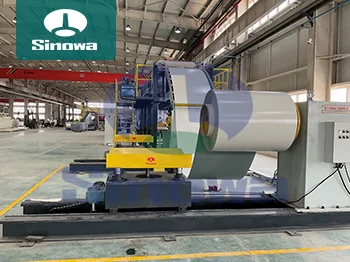
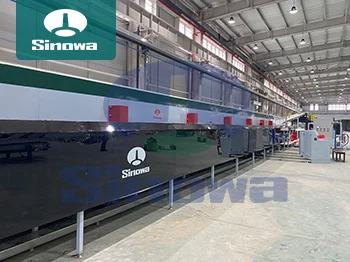
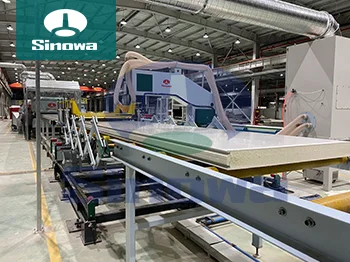
Sinowa is committed to the development and manufacturing of high-end and high-efficiency continuous pu sandwich panel line. Our continuous pu sandwich panel line are leading the way in efficiency, automatic control, human-computer interaction, environmental protection and energy consumption. Using system integration and bus control technology, it realizes the automatic integrated linkage control of the entire continuous pu sandwich panel line, and can achieve remote interactive communication, which has the world-class level and a comprehensive leading high-performance continuous pu sandwich panel line in the market.
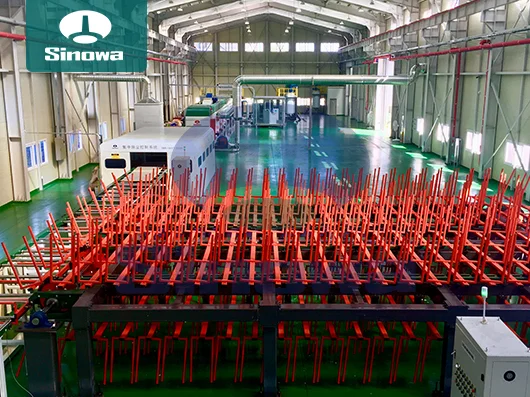
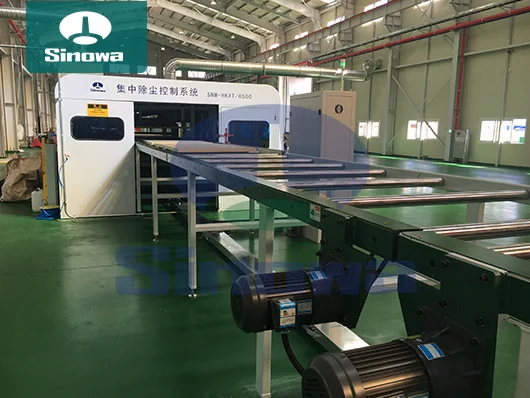
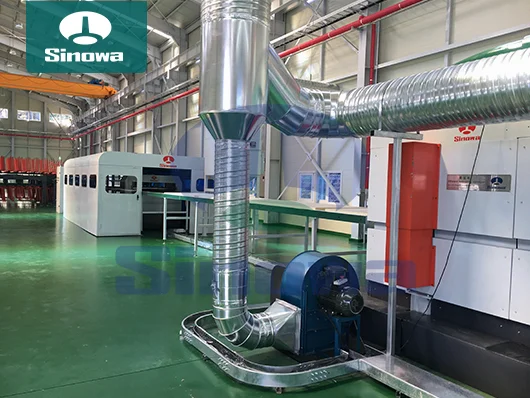
For more than ten years, relying on our innovative manufacturing concept and excellence in quality, reliable and trustworthy service to customers, we cooperate with customers all over the world, exported products to Canada, South Korea, Israel, Australia, the Middle East and other more than 20 countries and regions. contributed to building energy conservation and low-carbon production and have won widespread praise.
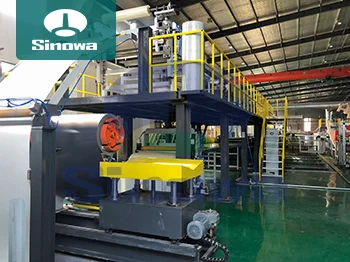
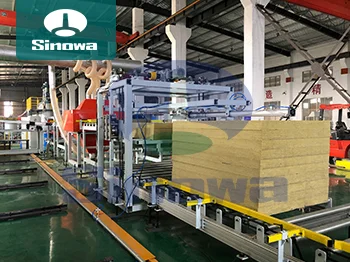
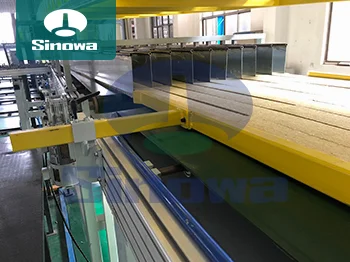
Sinowa has invested outstanding efforts in continuous pu sandwich panel line, this is why our products are more efficiency, quality, automatic control technology, environmental protection, energy consumption indicators and the appearance and safety protection are comprehensively leading, some subversive design changes in many major technical points, these major innovations make our products excellent in price/performance and user experience.
The design of a continuous PU (polyurethane) sandwich panel production line is a sophisticated integration of material science, mechanical engineering, and process optimization, aimed at achieving efficient, consistent, and high-quality manufacturing of composite panels widely used in construction, cold storage, and industrial applications. These panels, characterized by two outer facings and a PU foam core, offer superior thermal insulation, structural strength, and lightweight properties, making the production line design a critical factor in meeting the growing demand for energy-efficient and durable building materials. A well-designed continuous line ensures seamless material flow, precise process control, and minimal waste, while adapting to varying product specifications such as panel thickness, width, and facing materials.
The foundational aspect of continuous PU sandwich panel line design lies in the rational layout of production processes, which directly impacts operational efficiency and product quality. The layout must follow a logical sequence of operations, starting from raw material handling and ending with finished product packaging, while minimizing material and personnel flow conflicts. Typically, the production process is divided into several core stages: facing material unwinding and preprocessing, PU foam raw material metering and mixing, foam application and lamination, curing and shaping, post-processing (trimming and cutting), and finally stacking and packaging. Each stage requires careful spatial arrangement to ensure smooth material transfer, reduce transportation time, and avoid bottlenecks. For instance, the unwinding units for upper and lower facings should be positioned in close proximity to the lamination area to minimize material tension variations and ensure accurate alignment. Similarly, the post-processing area, including trimming and cutting equipment, should be adjacent to the curing section to maintain the panel’s dimensional stability before final processing. The overall layout also needs to consider maintenance space for equipment, safety exits, and utility pipelines (such as air, water, and electrical lines) to ensure operational safety and ease of maintenance.
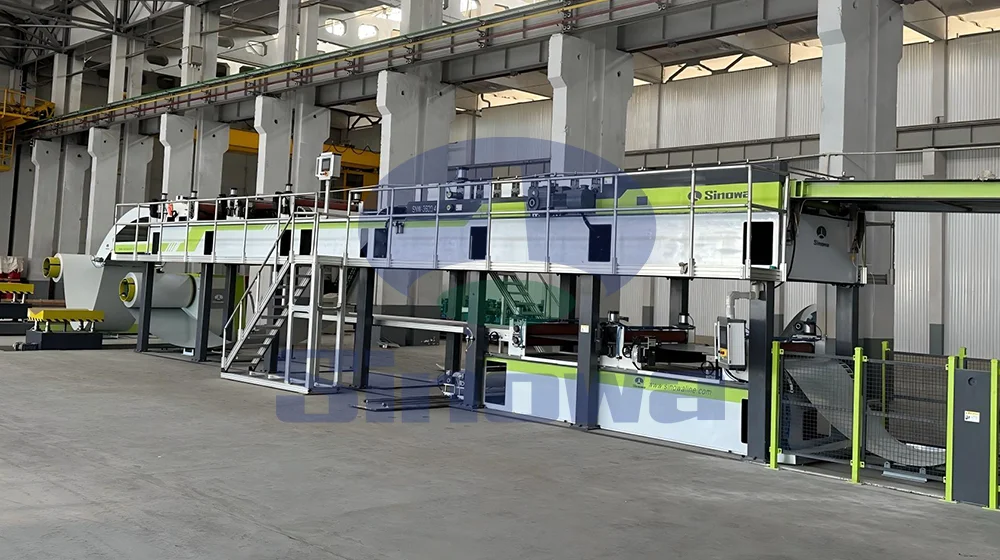
Facing material handling and preprocessing systems are critical components in the design of a continuous PU sandwich panel line, as the quality of the facings directly affects the final product’s appearance, structural integrity, and durability. Common facing materials include galvanized steel, aluminum, non-woven fabrics, kraft paper, and aluminum foil, each requiring specific handling and preprocessing techniques. The unwinding unit is designed to accommodate large rolls of facing materials, with tension control mechanisms to prevent material wrinkling or stretching. Double unwinders are often employed to enable continuous production without interruptions when one roll is exhausted, ensuring non-stop operation. Additionally, deviation correction systems are integrated into the unwinding unit to maintain precise alignment of the facing materials, which is essential for ensuring uniform foam distribution and proper bonding between the facings and the core.
Preprocessing of facing materials typically includes preheating and shaping. Preheating is a crucial step, especially for metal facings, as it enhances the adhesion between the facing and the PU foam core and promotes uniform foam curing. The preheating temperature is carefully controlled based on the type of facing material and the PU foam formulation, generally ranging from 40°C to 80°C. Excessive temperature can damage the facing material, while insufficient temperature may result in poor adhesion. For metal facings that require specific profiles (such as corrugated or trapezoidal shapes), shaping equipment is integrated into the preprocessing stage. This equipment uses rolling or pressing processes to form the desired profile, with precise dimensional control to ensure consistency across the entire production run. The design of the shaping rollers must be tailored to the specific profile requirements, with surface treatments to prevent material scratching and ensure smooth forming.
The metering and mixing system for PU foam raw materials is the core of the continuous production line, as the accuracy of raw material proportioning and the uniformity of mixing directly determine the properties of the PU foam core, such as density, thermal conductivity, and mechanical strength. PU foam is formed by the reaction of polyol and isocyanate, combined with additives such as catalysts, foaming agents, flame retardants, and curing agents. The metering unit must accurately measure each component according to the predetermined ratio, with adjustable flow rates to accommodate different foam formulations. High-precision metering pumps, driven by variable frequency motors, are commonly used to ensure consistent flow rates, even at high production speeds. Mass flow meters are often integrated to monitor and adjust the flow of each component in real-time, ensuring the accuracy of the mixture ratio.
The mixing unit is designed to achieve thorough and uniform mixing of the raw materials in a short time, as the PU reaction is rapid. High-pressure mixing heads are typically employed, which use the kinetic energy of the high-pressure fluid to create intense turbulence, ensuring that the polyol, isocyanate, and additives are fully mixed within milliseconds. The mixing head is equipped with self-cleaning mechanisms to prevent foam residue buildup, which can affect mixing efficiency and product quality. Additionally, the mixing system includes temperature control devices to maintain the raw materials at an optimal temperature (usually between 20°C and 35°C), as temperature variations can significantly impact the foam reaction rate and final foam properties. For systems using pentane as a foaming agent, special safety designs are required in the metering and mixing area, including explosion-proof equipment and gas detection systems, to ensure safe operation.
The foam application and lamination section is where the PU foam is applied between the two preprocessed facing materials, and the composite structure is formed under controlled pressure and temperature conditions. The design of this section must ensure uniform foam distribution, precise control of the foam layer thickness, and proper bonding between the foam core and the facings. The foam application unit, often a movable distribution head, is designed to spread the mixed foam evenly onto the lower facing material. The movement speed of the distribution head is synchronized with the production line speed to ensure a consistent foam layer thickness, which can be adjusted according to the desired panel thickness (typically ranging from 20mm to 150mm). The upper and lower facing materials, with the foam applied between them, are then fed into a double-belt laminator, which consists of two parallel endless belts supported by rollers. The laminator applies uniform pressure to the composite structure, ensuring that the foam fills the entire space between the facings and bonds tightly to them.
Temperature control in the lamination section is critical for the PU foam curing process. The double-belt laminator is equipped with heating systems (such as electric heating tubes or fuel-fired heaters) to maintain the belts at a specific temperature (usually between 60°C and 80°C), which accelerates the foam curing reaction. The length of the laminator is determined by the production line speed and the foam curing time, ensuring that the foam is fully cured before exiting the laminator. For example, a production line with a speed of 6 meters per minute requires a laminator length of approximately 24 meters to ensure sufficient curing time. The laminator’s belt tension and alignment are also precisely controlled to prevent panel warping or uneven thickness. Side guides are installed along the laminator to ensure that the composite panel maintains its width during the curing process.
Curing and shaping systems are designed to ensure that the PU foam core achieves its full mechanical properties and dimensional stability. After exiting the double-belt laminator, the composite panel enters a cooling section to complete the curing process and reduce its temperature to ambient levels. The cooling section typically consists of roller conveyors with cooling fans or water-cooled rollers, which accelerate the cooling rate while maintaining the panel’s flatness. The cooling time is adjusted based on the panel thickness and production speed to ensure that the foam core is fully cured and the panel does not deform during subsequent processing. In some cases, a secondary curing area may be required for thicker panels to ensure complete cross-linking of the PU foam.
Post-processing systems, including trimming and cutting, are essential for achieving the precise dimensional requirements of the finished panels. After cooling, the composite panel has excess material on both sides (due to the side guides during lamination) that needs to be trimmed. Trimming equipment, such as circular saws or planers, is used to cut the panel to the desired width with high precision. The trimming blades are adjusted according to the panel width, and the cutting speed is synchronized with the production line speed to ensure smooth and clean cuts. Following trimming, the panel is cut to the desired length using a traveling saw or a fixed saw with a tracking system. The length cutting system uses sensors to detect the panel’s position and trigger the saw at the predetermined length, with an accuracy of ±5mm or higher. The saw is equipped with a clamping device to hold the panel in place during cutting, preventing vibration and ensuring straight cuts.
Automated control systems are the "brain" of the continuous PU sandwich panel production line, integrating all production stages into a coordinated and efficient operation. The control system uses programmable logic controllers (PLCs) and human-machine interfaces (HMIs) to monitor and adjust various process parameters in real-time, such as production line speed, material tension, temperature, and foam mixing ratio. The HMI provides operators with an intuitive interface to set production parameters, monitor production status, and troubleshoot faults. Advanced control systems also include data logging and analysis functions, which record key process parameters (such as temperature, pressure, and flow rates) for quality traceability and process optimization. For example, if the foam density deviates from the set value, the control system can automatically adjust the metering pump speeds to correct the mixture ratio. Additionally, the control system integrates safety interlocks, such as emergency stop buttons at each operation station, overload protection for motors, and gas detection alarms for foaming agents, ensuring the safety of operators and equipment.
Energy efficiency and environmental considerations are increasingly important in the design of modern continuous PU sandwich panel lines. Energy consumption is a major operational cost, so the design incorporates various energy-saving measures. For instance, the double-belt laminator and heating systems are insulated with high-efficiency insulation materials to reduce heat loss. Variable frequency drives are used for motors to adjust speed according to production demand, reducing energy waste during low-load operation. Additionally, the recovery and reuse of waste materials (such as trimmed edges) are considered in the design. Some production lines are equipped with crushing and recycling systems to process waste PU foam and facing materials, which can be reused as raw materials or for other purposes, reducing environmental impact. For systems using environmentally friendly foaming agents (such as pentane), special ventilation and recovery systems are designed to prevent gas leakage and minimize environmental pollution.
Modularity and flexibility are key design principles for continuous PU sandwich panel lines, allowing manufacturers to adapt to changing market demands and product specifications. Modular design means that the production line is composed of independent units (such as unwinding units, metering units, and laminators) that can be easily assembled, disassembled, and replaced. This not only reduces the installation time and cost but also facilitates future upgrades and expansions. For example, if a manufacturer needs to produce panels with different facing materials or thicknesses, they can simply replace or adjust the corresponding modular units without modifying the entire production line. Flexibility is also reflected in the adjustable process parameters, such as production speed, foam density, and panel dimensions, which can be quickly changed through the control system to meet custom orders. Some advanced production lines can achieve product changeovers in a matter of minutes, significantly improving production efficiency and market responsiveness.
Quality control and testing mechanisms are integrated into the design of the continuous PU sandwich panel line to ensure that the finished products meet the required standards. Online quality inspection systems are installed at key stages of the production process to detect defects in real-time. For example, visual inspection systems using high-resolution cameras are used to check the surface quality of the facing materials, detecting scratches, spots, or color variations. Laser scanning systems are employed to measure the panel’s thickness and flatness, ensuring dimensional accuracy. Additionally, offline testing equipment is provided for periodic sampling and testing of the finished panels, including tests for foam density, thermal conductivity, tensile strength, and bond strength. The test results are used to adjust the production process parameters, ensuring continuous improvement of product quality. For instance, if the bond strength between the facing and the foam core is insufficient, the preheating temperature or foam mixing ratio can be adjusted to enhance adhesion.
Safety design is a fundamental requirement in the continuous PU sandwich panel line, ensuring the protection of operators, equipment, and the surrounding environment. The production line involves various potential hazards, such as moving parts, high-pressure systems, high temperatures, and flammable foaming agents, so comprehensive safety measures are incorporated into the design. Guardrails and safety covers are installed around moving parts (such as conveyors, saws, and mixing heads) to prevent accidental contact. Emergency stop buttons are placed at easily accessible locations along the production line, allowing operators to stop the line immediately in case of emergencies. For high-pressure systems (such as the foam mixing unit), pressure relief valves and pressure gauges are installed to prevent overpressure. For systems using flammable foaming agents, explosion-proof electrical equipment, gas detection sensors, and fire suppression systems are implemented to minimize the risk of fire and explosion. Additionally, the design complies with relevant safety standards, including proper ventilation in the production area to ensure air quality and prevent the accumulation of harmful gases.
The performance of a continuous PU sandwich panel line is also influenced by the selection of equipment components and materials. High-quality components, such as precision bearings, high-pressure seals, and durable conveyor belts, are essential for ensuring the reliability and longevity of the production line. For example, the double-belt laminator’s belts are made of high-temperature resistant and wear-resistant materials to withstand the harsh operating conditions of high temperature and pressure. The metering pumps and mixing heads are manufactured with high-precision machining to ensure accurate flow control and uniform mixing. Additionally, the frame structures of the equipment are made of high-strength steel, processed through CNC machining and stress relief treatment to ensure dimensional stability and structural rigidity. These high-quality components not only reduce equipment failure rates but also minimize maintenance costs and downtime.
In conclusion, the design of a continuous PU sandwich panel production line is a comprehensive process that requires careful consideration of process layout, material handling, process control, energy efficiency, flexibility, quality control, and safety. A well-designed production line achieves seamless integration of various processes, ensuring efficient and consistent production of high-quality PU sandwich panels. With the growing demand for energy-efficient and sustainable building materials, the design of continuous PU sandwich panel lines will continue to evolve, incorporating advanced technologies such as artificial intelligence for process optimization, Internet of Things (IoT) for real-time monitoring, and more environmentally friendly materials and processes. These advancements will further improve production efficiency, reduce environmental impact, and expand the application range of PU sandwich panels, making the production line design a key driver in the development of the composite material industry.
« Continuous PU Sandwich Panel Line Design » Update Date: 2026/1/12
- High-tech PU Sandwich Panel Making Machine
- Glass Wool Sandwich Panel Machine For Sale
- High-end PUR Sandwich Panel Production Line
- PU Sandwich Panel Making Machine Manufacturer
- Composite Panel Production Line
- Cheap PU Insulated Panel Production Line
- PIR Sandwich Panel Line Price
- High Efficiency PUR Sandwich Panel Production Line
- Automatic Sandwich Panel Production Line
- High-quality PUF Panel Making Machine
- High-tech Polyurethane Sandwich Panel Machinery
- Cheap Continuous PUF Panel Production Line
- Polyurethane Sandwich Panel Production Line
- PUR Sandwich Panel Production Line Factory
- High Efficiency Fully Automatic PU Sandwich Panel Line
- Continuous Sandwich Panel Manufacturing Line On Sales
- PIR Sandwich Panel Line On Sales
- Sandwich Roof Wall Panel Making Machine On Sales
- Glass Wool Sandwich Panel Line For Building
- High Efficiency Fully Automatic PU Sandwich Panel Machine
- Links:
- Sandwich Panel Continuous Production Line
- Automatic and Continuous Sandwich Panel Production Line
- Cheap and Low Price Sandwich Panel Production Line
- China Sandwich Panel Production Line Factory
- Color Steel Sandwich Panel Production Line For Cold Storage
- Continuous Composite Foam Sandwich Panel Production Line
- Continuous Production Line For Rockwool and Mineral Wool Sandwich Panels
- Continuous PU Phenolic Insulation Panel Production Line
- Continuous PU PIR Sandwich Panel Production Line
- Continuous PUF PUR Sandwich Panel Production Line
- Continuous Sandwich Panel Production Line For Roof and Wall
- Customized and Design Sandwich Panel Production Line
- Decorative Sandwich Panel Production Line For Glass Wool Boards
- High Quality Sandwich Panel Production Line For Sale
- Polyurethane(PU) Sandwich Panel Production Line
- Sandwich Panel Production Line Manufacturer and Supplier