
Automatic Sandwich Panel Production Line From China
Sinowa is a well-known manufacturer and technical service provider of high-end automatic sandwich panel production line, learn more about automatic sandwich panel production line from china, please contact Sinowa's technical engineer, tell us what you need, we will contact you as soon as possible!
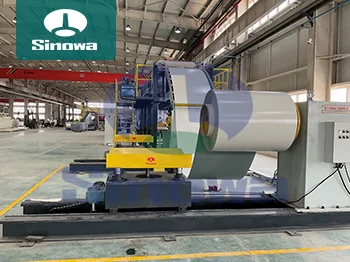
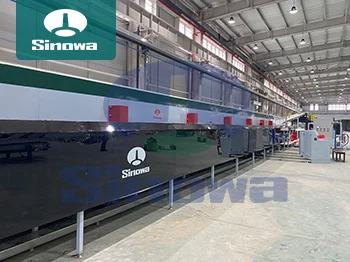
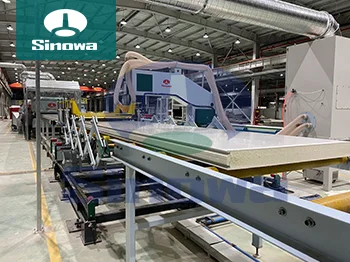
Sinowa is committed to the development and manufacturing of high-end and high-efficiency automatic sandwich panel production line. Our automatic sandwich panel production line are leading the way in efficiency, automatic control, human-computer interaction, environmental protection and energy consumption. Using system integration and bus control technology, it realizes the automatic integrated linkage control of the entire automatic sandwich panel production line, and can achieve remote interactive communication, which has the world-class level and a comprehensive leading high-performance automatic sandwich panel production line in the market.
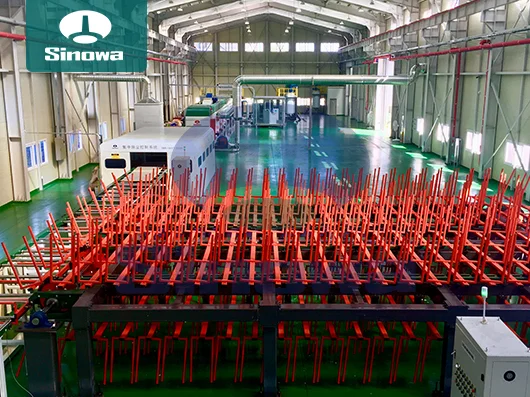
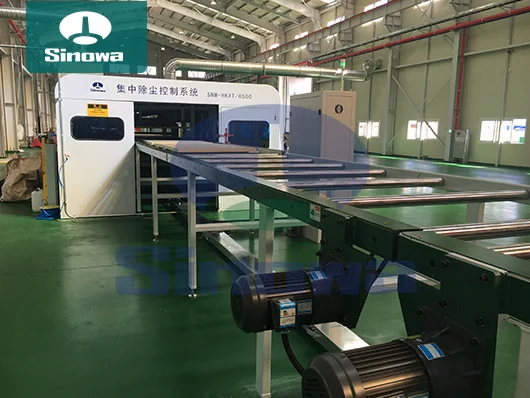
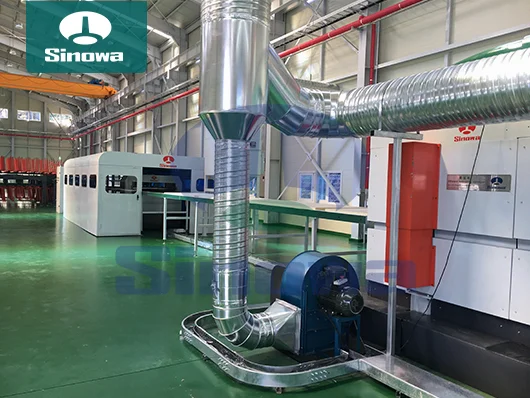
For more than ten years, relying on our innovative manufacturing concept and excellence in quality, reliable and trustworthy service to customers, we cooperate with customers all over the world, exported products to Canada, South Korea, Israel, Australia, the Middle East and other more than 20 countries and regions. contributed to building energy conservation and low-carbon production and have won widespread praise.
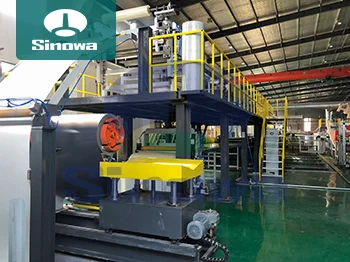
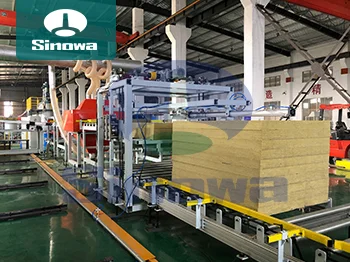
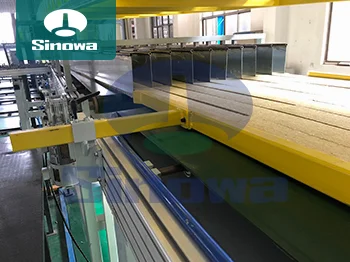
Sinowa has invested outstanding efforts in automatic sandwich panel production line, this is why our products are more efficiency, quality, automatic control technology, environmental protection, energy consumption indicators and the appearance and safety protection are comprehensively leading, some subversive design changes in many major technical points, these major innovations make our products excellent in price/performance and user experience.
In the evolving landscape of global construction and industrial manufacturing, lightweight composite building materials have become indispensable for modern engineering projects, and sandwich panels stand out as one of the most widely applied products due to their unique structural advantages and versatile performance. Chinese manufacturing sectors have made remarkable strides in the research, development, and production of automated processing equipment for building materials, and the automatic sandwich panel production line has gradually gained global recognition for its stable operation, mature technical logic, and high production integration. This type of production equipment is specially designed for the continuous manufacturing of composite sandwich plates, integrating multiple mechanical processing units into one streamlined system to complete the whole production process from raw material feeding to finished product stacking. It caters to the growing market demand for standardized, high-strength, and heat-insulating building panels, and has become a core piece of equipment supporting the development of the global prefabricated construction industry.
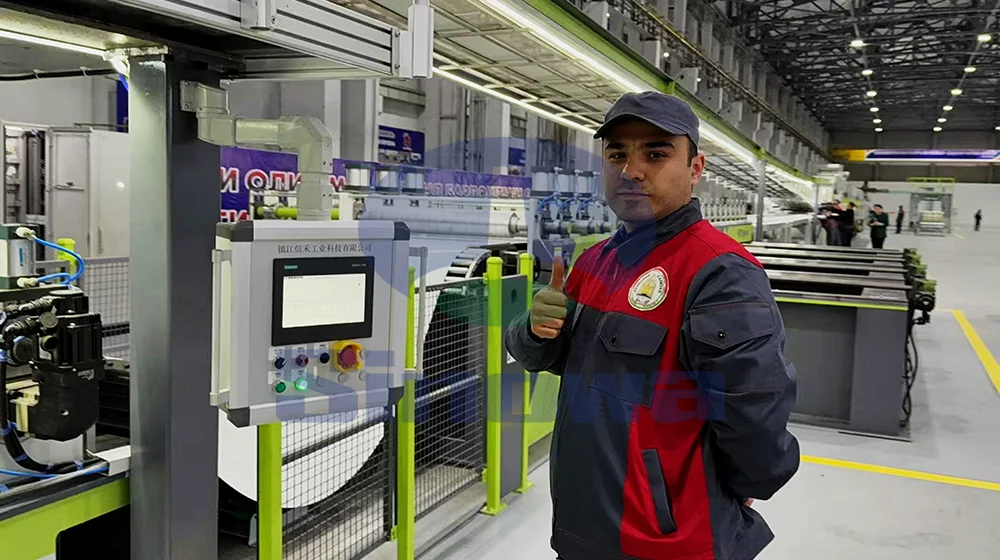
The overall structural design of China-originated automatic sandwich panel production lines follows the practical production logic of modern industrial manufacturing, focusing on mechanical integration, operational simplicity, and universal adaptability to different production environments. The entire production system consists of multiple interconnected functional modules, each undertaking independent processing tasks while maintaining synchronous operation to ensure the continuity of the production flow. The basic mechanical composition includes raw material unwinding units, surface layer pretreatment mechanisms, core material conveying and shaping structures, gluing and composite pressing systems, constant-temperature curing equipment, cutting and trimming devices, finished product conveying components, and intelligent stacking mechanisms. All functional units are arranged in a linear layout, which conforms to the forward processing sequence of sandwich panel production and effectively reduces the space occupation of the entire production line while simplifying the daily maintenance work for operators.
The raw material feeding module serves as the starting point of the entire production line, responsible for stably transporting different raw materials required for panel manufacturing to subsequent processing links. For metal surface materials, the unwinding unit adopts a reinforced mechanical winding shaft with a damping adjustment structure, which can maintain constant tension during the release of coiled metal sheets. This structural design effectively avoids material wrinkling, stretching, and positional deviation during feeding, ensuring the flatness of the metal surface layer in the initial processing stage. In terms of core material feeding, the equipment is compatible with multiple porous thermal insulation materials. The customized conveying bracket and limiting positioning structure can realize continuous and uniform feeding of bulk core materials, and the mechanical calibration device automatically corrects the placement position of core materials to keep the overlapping gap between raw materials within a tiny error range. The feeding speed of all raw materials is coordinated by a unified control system to ensure that the feeding rhythm of surface materials and core materials remains synchronized, laying a solid foundation for subsequent composite molding.
After completing raw material feeding, the materials enter the surface pretreatment and gluing link, which is a key procedure to determine the bonding firmness and service life of finished sandwich panels. The pretreatment mechanism is equipped with mechanical leveling and surface cleaning components, which can remove dust, oil stains, and surface attachments on metal sheets through physical friction and air blowing. This processing method enhances the surface roughness of the metal material, thereby improving the adhesion between the metal layer and the adhesive. The gluing system adopts an automatic quantitative coating structure, with evenly distributed glue outlet holes and adjustable coating rollers. The equipment can dynamically adjust the glue application amount and coating uniformity according to different raw material characteristics and production process requirements. Compared with manual gluing operation in traditional semi-automatic equipment, the automatic gluing unit eliminates the problem of uneven glue thickness and excessive glue consumption, realizing precise utilization of adhesive materials and reducing unnecessary material waste in the production process.
The composite pressing and constant-temperature curing module is the core functional area of the entire production line, undertaking the task of bonding multi-layer raw materials into an integrated panel structure. The pressing mechanism is composed of high-precision synchronous pressing rollers, and the internal hydraulic transmission structure provides stable and continuous pressing force. The pressure value can be adjusted freely according to the thickness and hardness of different core materials, ensuring that the surface layer and core material are closely bonded without damaging the internal porous structure of thermal insulation materials. Inside the curing section, a multi-temperature zone heating structure is adopted to form a stable internal temperature environment. The temperature distribution in the curing area is evenly controlled to promote the rapid solidification of the adhesive. The gradual temperature change mode avoids panel deformation caused by instantaneous temperature difference, effectively optimizing the internal bonding tightness of composite panels. The fully enclosed curing space also reduces heat loss, improving energy utilization efficiency during equipment operation.
Following the curing process, the initially molded sandwich panels enter the cutting and trimming stage to complete size shaping and edge finishing. The cutting unit is equipped with high-speed rotating cutting tools and intelligent positioning sensors. After detecting the real-time moving position of the panel through the sensing system, the equipment automatically executes fixed-length cutting actions. The mechanical transmission structure ensures that the cutting speed is matched with the production line operating speed, realizing uninterrupted continuous cutting without shutting down the equipment. The edge trimming mechanism polishes and cuts the four edges of the panels to remove excess adhesive and irregular raw material burrs generated during the composite process. The processed panels have smooth and flat edges without sharp corners, which not only improves the aesthetic degree of finished products but also facilitates subsequent transportation and on-site installation operations. All cutting parameters can be preset and stored in the control system, making it convenient to switch production specifications for different panel sizes.
The final stage of the production flow includes finished product conveying, quality inspection, and automatic stacking. The finished panel conveying mechanism adopts anti-slip roller structures to stably transport molded panels to the inspection area without scratching the metal surface. The built-in inspection system uses visual detection and mechanical measurement components to conduct real-time sampling and detection on panel flatness, thickness uniformity, and surface integrity. Unqualified products with deformation, scratches, or bonding defects will be automatically marked and separated from qualified products through the sorting structure to prevent defective products from entering the finished product stacking area. The automatic stacking device adopts a falling laminated design with an accurate positioning function. The mechanical arm and limiting baffle cooperate to complete orderly stacking of finished panels, and the stacking height and arrangement mode can be adjusted according to storage and transportation requirements. The whole stacking process is completed by mechanical automation, which replaces heavy manual carrying work and improves the neatness of finished product storage.
In terms of intelligent control, Chinese automatic sandwich panel production lines adopt mature integrated control systems with touchable human-computer interaction interfaces. The simple and intuitive operation panel displays real-time operating data of all functional modules, including operating speed, internal temperature, pressing pressure, and raw material consumption. Workers can complete parameter setting, equipment start-stop, and mode switching through simple touch operations. The system is equipped with an automatic early warning mechanism; when abnormal conditions such as material jamming, temperature fluctuation, and mechanical failure occur during operation, the equipment will automatically trigger an alarm signal and perform protective shutdown actions to reduce equipment wear and production risks. In addition, the data collection module can record daily production output, equipment operating duration, and raw material consumption data, providing clear data support for production management and operational optimization of manufacturing enterprises.
In terms of mechanical performance optimization, this type of production line fully considers the adaptability of different production environments. The main frame of the equipment is made of thickened metal profiles with anti-rust and anti-corrosion surface treatment, which can maintain stable mechanical performance in humid, dusty, and other harsh industrial production environments. The transmission parts are equipped with wear-resistant protective structures and regular automatic lubrication components to reduce mechanical friction loss and extend the service life of the equipment. The modular assembly design facilitates daily disassembly, inspection, and replacement of vulnerable parts, lowering the technical threshold of equipment maintenance. The motor and transmission components adopt energy-saving operation logic, which can effectively reduce power consumption while maintaining continuous high-load operation, meeting the energy-saving and consumption-reducing production requirements of modern manufacturing industries.
In terms of production applicability, China-made automatic sandwich panel production lines support the processing of diversified raw materials, covering common thermal insulation and fireproof core materials in the market. The adjustable internal spacing and pressing strength enable the equipment to produce panels with different thickness specifications, and the surface metal materials can also be replaced with different types of metal sheets according to usage needs. The finished panels produced by the equipment have excellent comprehensive performance, including lightweight characteristics, good thermal insulation, sound insulation, and fire resistance, as well as high structural compression resistance and bending resistance. These panels are widely used in prefabricated temporary buildings, industrial factory enclosures, cold storage thermal insulation structures, commercial building decoration, and agricultural breeding facilities, showing strong market adaptability in different engineering scenarios.
Compared with traditional semi-automatic production equipment, the fully automatic sandwich panel production line has obvious advantages in production efficiency and labor cost control. The highly integrated mechanical structure realizes continuous uninterrupted production, and the streamlined processing procedure shortens the production cycle of a single panel. The whole production line only requires a small number of operators to complete parameter monitoring and auxiliary feeding work, which greatly reduces the dependence on manual labor. The standardized mechanical processing mode avoids product quality differences caused by human operation errors, ensuring the consistency of the size, performance, and appearance of each batch of finished panels. For manufacturing enterprises, this automated production mode not only improves daily production capacity but also optimizes product quality stability, helping enterprises gain competitive advantages in the fierce building material market.
In the global market, Chinese automatic sandwich panel production lines have won wide market recognition with reliable quality and reasonable structural design. Relying on the complete industrial supporting system of China's building material machinery manufacturing industry, all mechanical parts and electronic control components of the production line can be independently produced and assembled locally, which shortens the production cycle of the equipment and simplifies the after-sales maintenance work for overseas users. Manufacturers keep optimizing the equipment structure according to the usage feedback of different regional markets, continuously improving the environmental adaptability and functional diversity of the production line. Whether for small-scale decentralized processing factories or large-scale centralized building material production bases, this type of automated production equipment can be adjusted and optimized according to actual production site conditions to meet customized production demands.
With the continuous development of the global prefabricated construction industry, the market demand for high-efficiency and intelligent building material production equipment is constantly rising. Chinese automatic sandwich panel production lines are constantly upgraded in terms of intelligent degree, energy-saving performance, and processing precision. The introduction of more sensitive sensing components and intelligent data analysis systems further improves the automatic adjustment ability of the equipment during operation. The optimized heating circulation structure and transmission system effectively reduce energy consumption and carbon emissions in the production process, conforming to the global green manufacturing development trend. In the future, relying on continuous technological innovation and mature manufacturing experience, China-originated sandwich panel production equipment will further expand its global market coverage and provide stable and efficient production solutions for the building material processing industry in more regions around the world.
« Automatic Sandwich Panel Production Line From China » Update Date: 2026/5/8
- Sandwich Foam Panel Making Machine On Sales
- PU Sandwich Panel Making Machine On Sales
- Customized PIR Sandwich Panel Line
- High-tech Foam Sandwich Panel Machine
- Custom PU Sandwich Panel Making Machine
- Custom Sandwich Panel Production Machinery
- PU Insulated Panel Production Line Manufacturer
- High-tech Polyurethane Foam Production Line
- Composite Panel Production Line On Sales
- Low Price PIR Insulated Panel Production Line
- PU Panel Machine
- Sandwich Panel Production Line Factory
- High-tech PUF Panel Making Machine
- Continuous PUF Panel Production Line For Sale
- Decorative PU Sandwich Panel Production Line Price
- High-end Glass Wool Equipment
- PU Sandwich Panel Machine
- Sandwich Wall Panel Production Line From China
- Cheap PUR Sandwich Panel Production Line
- Cheap Isolation PU Sandwich Panel Line
- Links:
- Sandwich Panel Continuous Production Line
- Automatic and Continuous Sandwich Panel Production Line
- Cheap and Low Price Sandwich Panel Production Line
- China Sandwich Panel Production Line Factory
- Color Steel Sandwich Panel Production Line For Cold Storage
- Continuous Composite Foam Sandwich Panel Production Line
- Continuous Production Line For Rockwool and Mineral Wool Sandwich Panels
- Continuous PU Phenolic Insulation Panel Production Line
- Continuous PU PIR Sandwich Panel Production Line
- Continuous PUF PUR Sandwich Panel Production Line
- Continuous Sandwich Panel Production Line For Roof and Wall
- Customized and Design Sandwich Panel Production Line
- Decorative Sandwich Panel Production Line For Glass Wool Boards
- High Quality Sandwich Panel Production Line For Sale
- Polyurethane(PU) Sandwich Panel Production Line
- Sandwich Panel Production Line Manufacturer and Supplier