
PIR Sandwich Panel Production Line Manufacturer
Sinowa is a well-known manufacturer and technical service provider of high-end pir sandwich panel production line, learn more about pir sandwich panel production line manufacturer, please contact Sinowa's technical engineer, tell us what you need, we will contact you as soon as possible!
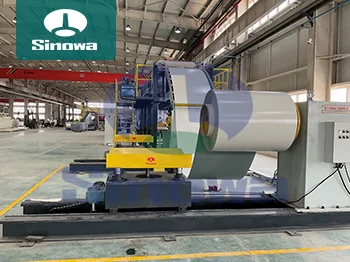
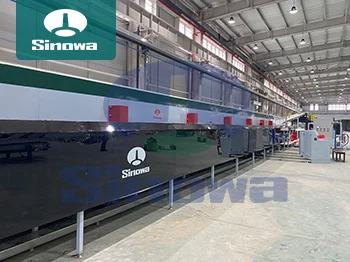
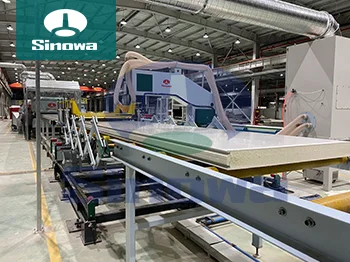
Sinowa is committed to the development and manufacturing of high-end and high-efficiency pir sandwich panel production line. Our pir sandwich panel production line are leading the way in efficiency, automatic control, human-computer interaction, environmental protection and energy consumption. Using system integration and bus control technology, it realizes the automatic integrated linkage control of the entire pir sandwich panel production line, and can achieve remote interactive communication, which has the world-class level and a comprehensive leading high-performance pir sandwich panel production line in the market.
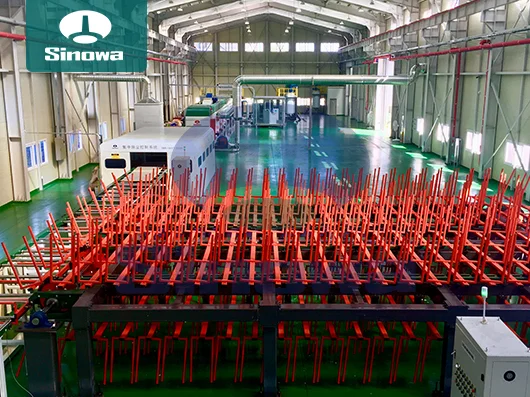
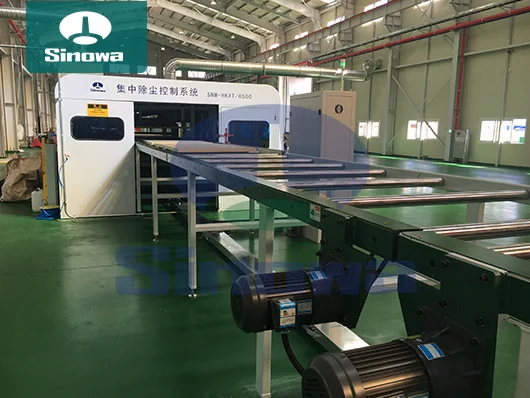
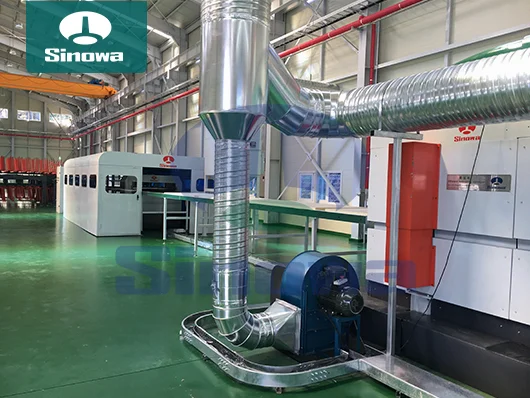
For more than ten years, relying on our innovative manufacturing concept and excellence in quality, reliable and trustworthy service to customers, we cooperate with customers all over the world, exported products to Canada, South Korea, Israel, Australia, the Middle East and other more than 20 countries and regions. contributed to building energy conservation and low-carbon production and have won widespread praise.
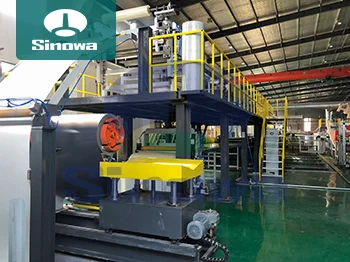
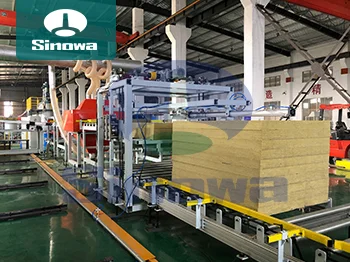
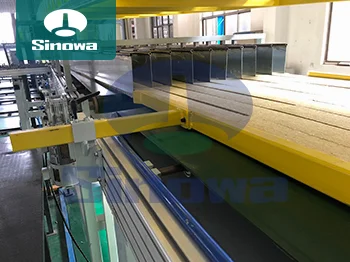
Sinowa has invested outstanding efforts in pir sandwich panel production line, this is why our products are more efficiency, quality, automatic control technology, environmental protection, energy consumption indicators and the appearance and safety protection are comprehensively leading, some subversive design changes in many major technical points, these major innovations make our products excellent in price/performance and user experience.
PIR sandwich panel production lines represent advanced automated manufacturing systems dedicated to the mass production of high-performance polyisocyanurate sandwich panels, which are widely applied in modern construction, cold chain logistics, industrial warehousing, and clean room engineering. As core industrial equipment in the insulation building material sector, these production lines integrate precision chemical batching, continuous foaming, composite molding, intelligent cutting, and automatic stacking processes, realizing uninterrupted one-stop production from raw material input to finished product output. Different from ordinary thermal insulation panel production equipment, professional PIR sandwich panel production lines are optimized for the unique polymerization and foaming characteristics of PIR materials, effectively improving the compactness, thermal stability, and structural uniformity of panel core layers. With the growing market demand for energy-saving, fire-resistant, and durable building insulation materials, professional production line manufacturing technology has become a key factor in determining the quality and application value of PIR sandwich panels, supporting the iterative upgrading of downstream building energy-saving industries.
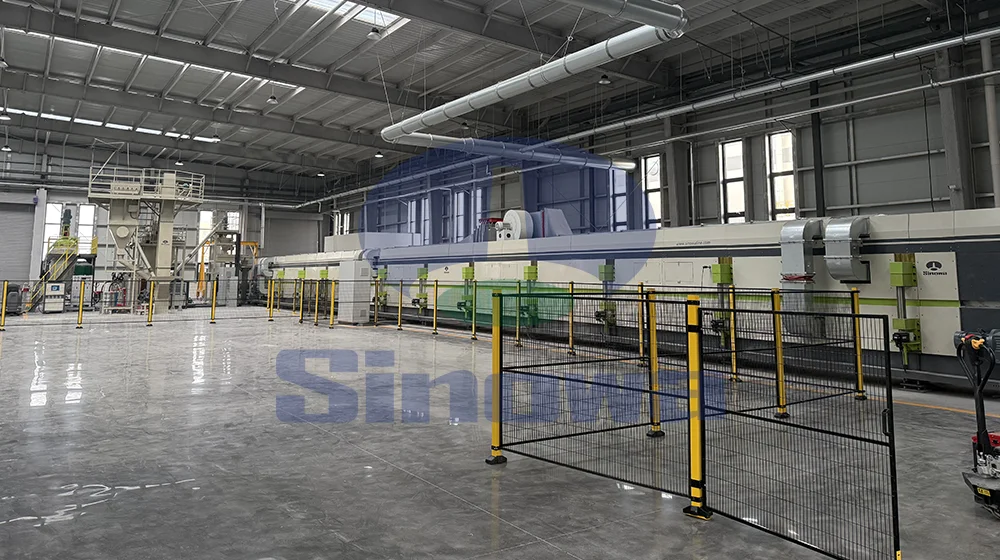
The overall operational logic of a standard PIR sandwich panel production line follows a continuous and streamlined production mode, with all functional modules closely interconnected to eliminate production gaps and ensure consistent product quality in batch manufacturing. The entire production workflow can be divided into three core and mutually coordinated functional sections: raw material pretreatment and feeding, core material foaming and composite molding, and finished product finishing and stacking. Each section is equipped with independent adjustable mechanical units and linked by a centralized intelligent control system, which synchronizes the operating speed and parameter settings of all equipment. In the initial feeding stage, the production line automatically completes the uncoiling, leveling, and surface pretreatment of upper and lower surface materials, removing surface impurities and adjusting flatness to create optimal bonding conditions for subsequent composite processing. Meanwhile, the precision metering system stores and transports PIR chemical raw materials separately, strictly controlling the delivery volume of each component to lay a solid foundation for stable chemical reactions. This integrated front-end processing mode avoids manual operation errors, greatly improves production continuity, and ensures that the basic conditions for each batch of panel production remain consistent.
The high-precision batching and mixing system is the core functional unit that distinguishes professional PIR sandwich panel production lines from ordinary insulation panel production equipment. PIR foam core materials are formed by the polymerization reaction of multiple chemical components, and the accuracy of raw material ratio directly determines the thermal insulation performance, structural strength, and dimensional stability of finished panels. The production line adopts a high-pressure synchronous metering and mixing structure, which can dynamically adjust the proportion and flow rate of different raw materials according to production demands. All chemical materials are stored in sealed constant-temperature tanks to prevent component deterioration caused by temperature and humidity changes, and transported to the mixing head through stable pressure pumps. The high-speed mixing head fully blends raw materials in an instantaneous high-pressure environment to form a uniform liquid mixture, avoiding local uneven mixing that may cause inconsistent foaming density. This precise batching technology ensures that the PIR core layer forms a dense and uniform cellular structure after foaming, effectively enhancing the panel’s overall structural rigidity and long-term service stability.
Continuous foaming and double-belt composite pressing is the key molding process of PIR sandwich panel production lines, determining the bonding firmness and overall flatness of panels. After the uniformly mixed liquid raw materials are evenly poured on the flat lower surface material through the traversing pouring system, the materials immediately start orderly chemical reactions including foaming, chain polymerization, and curing. The production line is equipped with a constant-temperature curing channel to stabilize the reaction environment, ensuring that the foaming speed and polymerization degree of PIR materials maintain a stable state. During the foaming process, the upper and lower double-belt pressing device applies uniform and continuous pressure to the semi-finished panel, which can effectively control the foaming thickness and prevent local bulging or deformation. The synchronous operation of the pressing system and the conveyor belt ensures that the core material and surface materials are tightly bonded without gaps or delamination. This continuous composite molding process not only greatly improves production efficiency compared with intermittent mold pressing equipment but also makes the overall structure of the panel more uniform, with more stable bonding performance between layers.
Intelligent constant-temperature curing and fixed-length cutting processes further optimize the finished product quality and production precision of PIR sandwich panel production lines. After composite molding, the semi-finished panels enter the independent constant-temperature curing area for secondary stabilization, which promotes the complete polymerization of PIR molecular structures and eliminates residual stress generated during foaming and pressing. Reasonable curing time and temperature control can significantly improve the high-temperature resistance and anti-aging performance of the panel core layer, avoiding performance attenuation during long-term use. After curing, the panels are automatically transported to the flying saw cutting unit, which realizes non-stop fixed-length cutting following the preset production parameters. The cutting system adopts high-precision servo positioning technology, which can accurately control the cutting length and edge flatness, ensuring consistent dimensional accuracy of each finished panel. At the same time, the equipment is equipped with an edge trimming function to smooth the panel edges, remove redundant leftover materials, and make the overall appearance of the finished product more standardized and neat.
Automatic post-processing and intelligent stacking systems realize the full automation of the final stage of PIR sandwich panel production, reducing manual intervention and improving production efficiency. After cutting and edge trimming, qualified panels are transported to the post-processing platform, where the equipment automatically completes surface inspection, minor defect trimming, and waste cleaning. The production line is equipped with a real-time monitoring device for panel surface flatness and thickness, which can automatically identify unqualified products and isolate them, effectively controlling the batch qualification rate of products. The finished qualified panels are turned over and sorted by the automatic turnover mechanism, and then stacked neatly by the intelligent stacking machine. The stacking system can adjust the stacking quantity and arrangement mode according to panel specifications, ensuring stable stacking without extrusion deformation. This fully automatic post-processing mode not only saves labor costs and reduces manual operation errors but also standardizes the finished product storage form, facilitating subsequent packaging, transportation, and on-site use of products.
Modern PIR sandwich panel production lines have excellent customizable production capabilities, which can meet the diversified product specification demands of different application scenarios. The whole line supports flexible adjustment of multiple core parameters, including panel thickness, width, surface material types, and core material density, enabling manufacturers to produce differentiated products according to market demands. The mechanical structure and control system of the production line are designed with universal adaptability, which can match various conventional surface materials and realize flexible switching of production specifications without large-scale equipment modification. In addition, the production line’s intelligent control system supports parameter memory and one-click switching functions, which can quickly respond to customized production orders and shorten production debugging cycles. This flexible production feature enables equipment users to cover multiple market segments, from conventional building insulation panels to special panels for low-temperature cold storage and high-temperature resistant industrial workshops, greatly expanding the product application scope and market competitiveness.
The technological advantages of advanced PIR sandwich panel production lines are mainly reflected in stable production performance, low energy consumption, and long-term operational reliability, bringing sustainable economic benefits to production enterprises. The optimized mechanical structure and intelligent control system minimize parameter fluctuations during continuous operation, ensuring that the physical properties of each batch of products remain stable and reducing the rate of defective products. The equipment adopts energy-saving transmission and constant-temperature control technology, which effectively reduces energy consumption per unit of product and lowers long-term production operating costs. In terms of equipment maintenance, the modular design of the production line makes each functional unit independent and easy to inspect, repair, and replace worn parts, reducing equipment failure rates and downtime losses. Professional production line manufacturing technology focuses on the compatibility between equipment and PIR material characteristics, maximizing the excellent thermal insulation, fire resistance, and structural stability of PIR materials, helping downstream manufacturers produce high-quality insulation panels and occupy a favorable position in the competitive building energy-saving material market.
« PIR Sandwich Panel Production Line Manufacturer » Update Date: 2026/9/1
- Fully Automatic PU Sandwich Panel Production Line Price
- PUF Panel Manufacturing Machine Factory
- Sandwich Roof Panel Production Line Factory
- Fully Automatic Sandwich Panel Making Machine In China
- High-end Cold Storage Sandwich Panel Production Line
- PIR Insulated Panel Production Line Design
- High Efficiency PU Insulation Board Production Line
- Continuous Sandwich Panel Line For Building
- PU Foam Production Line Supplier
- Sandwich Panel Making Equipment Supplier
- PU Board Production Line Supplier
- High-end PIR Sandwich Panel Production Line
- Low Price Foam Sandwich Panel Production Line
- PU Insulated Panel Production Line On Sales
- PUF Panel Making Machine
- High-end Sandwich Panel Integrated Production Line
- PU Insulation Panel Production Line For Sale
- Polyurethane Insulation Panel Production Line Design
- Low Price Composite Sandwich Panel Production Line
- Polyurethane Sandwich Panel Production Line Supplier
- Links:
- Sandwich Panel Continuous Production Line
- Automatic and Continuous Sandwich Panel Production Line
- Cheap and Low Price Sandwich Panel Production Line
- China Sandwich Panel Production Line Factory
- Color Steel Sandwich Panel Production Line For Cold Storage
- Continuous Composite Foam Sandwich Panel Production Line
- Continuous Production Line For Rockwool and Mineral Wool Sandwich Panels
- Continuous PU Phenolic Insulation Panel Production Line
- Continuous PU PIR Sandwich Panel Production Line
- Continuous PUF PUR Sandwich Panel Production Line
- Continuous Sandwich Panel Production Line For Roof and Wall
- Customized and Design Sandwich Panel Production Line
- Decorative Sandwich Panel Production Line For Glass Wool Boards
- High Quality Sandwich Panel Production Line For Sale
- Polyurethane(PU) Sandwich Panel Production Line
- Sandwich Panel Production Line Manufacturer and Supplier