
PU Sandwich Panel Production Line For House
Sinowa is a well-known manufacturer and technical service provider of high-end pu sandwich panel production line, learn more about pu sandwich panel production line for house, please contact Sinowa's technical engineer, tell us what you need, we will contact you as soon as possible!
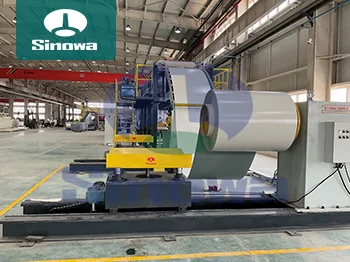
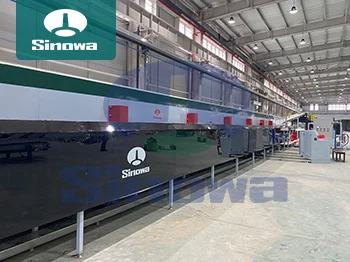
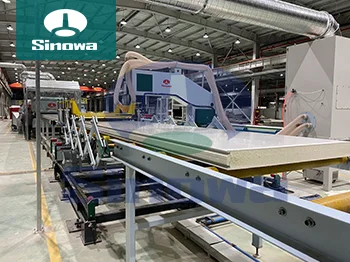
Sinowa is committed to the development and manufacturing of high-end and high-efficiency pu sandwich panel production line. Our pu sandwich panel production line are leading the way in efficiency, automatic control, human-computer interaction, environmental protection and energy consumption. Using system integration and bus control technology, it realizes the automatic integrated linkage control of the entire pu sandwich panel production line, and can achieve remote interactive communication, which has the world-class level and a comprehensive leading high-performance pu sandwich panel production line in the market.
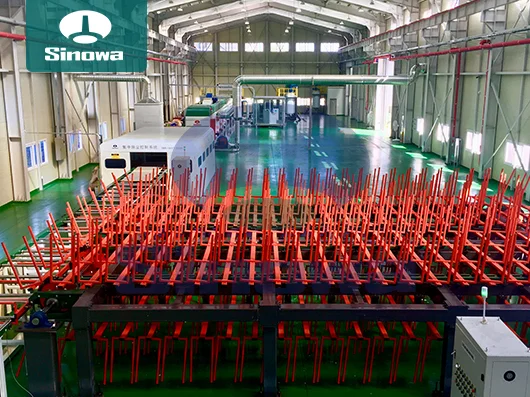
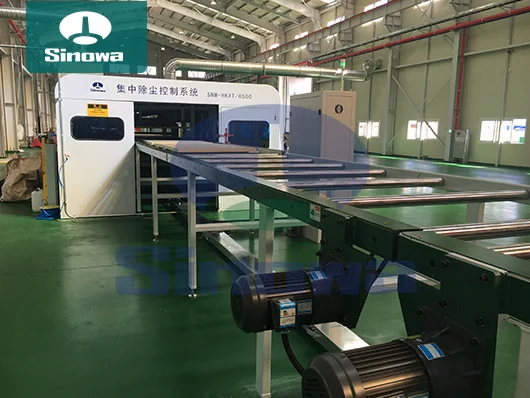
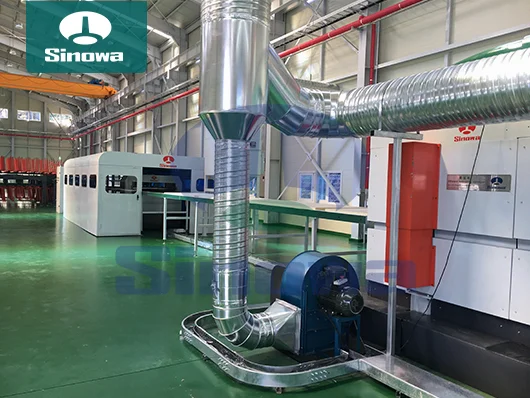
For more than ten years, relying on our innovative manufacturing concept and excellence in quality, reliable and trustworthy service to customers, we cooperate with customers all over the world, exported products to Canada, South Korea, Israel, Australia, the Middle East and other more than 20 countries and regions. contributed to building energy conservation and low-carbon production and have won widespread praise.
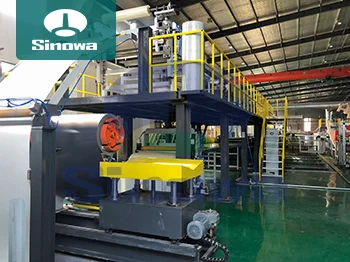
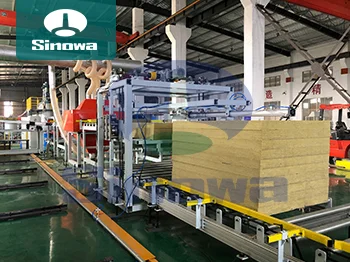
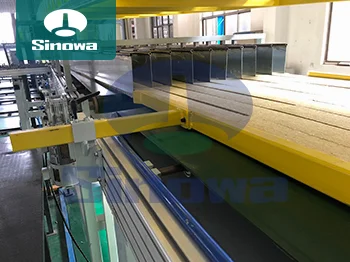
Sinowa has invested outstanding efforts in pu sandwich panel production line, this is why our products are more efficiency, quality, automatic control technology, environmental protection, energy consumption indicators and the appearance and safety protection are comprehensively leading, some subversive design changes in many major technical points, these major innovations make our products excellent in price/performance and user experience.
In the modern construction industry, the demand for efficient, energy-saving, and high-performance building materials is constantly rising, driven by the pursuit of sustainable development and improved living comfort. PU sandwich panels, composed of two outer facing materials and a middle polyurethane foam core, have become an indispensable choice for house construction due to their outstanding thermal insulation, sound insulation, structural stability, and lightweight properties. The production efficiency and product quality of these panels are directly determined by the performance of the production equipment, and the PU sandwich panel production line specifically designed for house construction has gradually become the core equipment in the industry, promoting the transformation and upgrading of the house building material production sector.
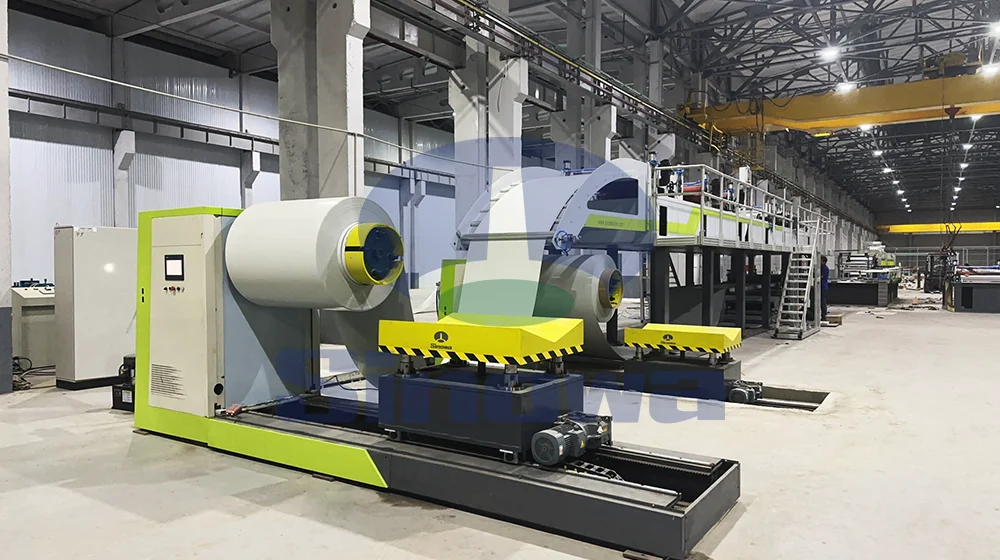
The PU sandwich panel production line for house construction is an integrated intelligent production system that combines mechanical manufacturing, electronic control, and chemical material technology. It is mainly used for the continuous production of various specifications and types of PU sandwich panels suitable for house walls, roofs, partitions, and other parts. Different from traditional production equipment with fixed-speed motor drive, modern PU sandwich panel production lines adopt advanced frequency conversion control systems as the core control unit, which can realize stepless adjustment of motor speed according to actual production needs, thereby optimizing the production process, improving production efficiency, and reducing energy consumption. The entire production line is composed of multiple functional modules that cooperate closely to form a complete production chain, realizing automatic operation from raw material input to finished product output, minimizing manual intervention, and ensuring the stability and consistency of product quality. This high degree of automation not only reduces labor costs but also avoids errors caused by manual operation, making the production process more efficient and reliable.
The core components of the PU sandwich panel production line for house construction are designed to meet the specific requirements of house building materials, ensuring that the produced panels have excellent performance and meet the safety and comfort standards of residential buildings. The main modules include the uncoiling and preprocessing system, forming system, foaming system, composite system, cutting system, and intelligent control system. Each module plays a crucial role in the production process, and their coordinated operation is the key to ensuring the quality of the final product. The uncoiling and preprocessing system is responsible for unwinding and processing the outer facing materials, which are usually metal plates such as color steel plates, galvanized plates, or aluminum plates, as well as non-metal materials such as glass fiber reinforced plastic plates, according to the needs of house construction. The uncoiling unit adopts hydraulic or mechanical methods to unwind the coil, equipped with an automatic correction device to ensure that the material is conveyed stably without deviation. The preprocessing equipment includes a surface cleaning device and a preheating device; the surface cleaning device removes oil stains and oxides on the surface of the facing materials through high-pressure ion air or chemical cleaning, improving the bonding strength between the facing material and the core material. The preheating device heats the facing material to an appropriate temperature, which helps to promote the foaming reaction of the polyurethane core and enhance the adhesion between the layers.
The forming system is another key component of the production line, which shapes the outer facing materials into the required specifications and shapes for house construction. For wall panels, the forming system usually processes the facing materials into flat or corrugated shapes according to the design requirements, while for roof panels, it may form special profiles to enhance water resistance and structural stability. The forming system adopts multi-pass progressive forming technology, with 12 to 24 sets of rolling rolls that gradually shape the flat material into the desired profile. The servo drive system ensures high positioning accuracy, with an error of no more than ±0.1 mm, which is crucial for ensuring the assembly accuracy of the panels during house construction. In addition, the forming system is equipped with a removable mold design, which supports quick switching of more than 30 board types, enabling the production line to meet the diverse needs of different house designs, such as different wall thicknesses, roof slopes, and partition sizes.
The foaming system is the core of the PU sandwich panel production line, as it determines the performance of the polyurethane core, which directly affects the thermal insulation, sound insulation, and structural strength of the panels. The foaming system mainly includes a high-pressure foaming machine, a metering pump, a mixing head, and a temperature control system. The high-pressure foaming machine uses a metering pump to accurately control the mixing ratio of isocyanates and polyols, the two main raw materials of polyurethane foam, with a mixing accuracy of ±1.5% or higher. This precise control ensures that the polyurethane foam has uniform density and stable performance, avoiding problems such as uneven foaming or insufficient bonding strength. The mixing head fully mixes the two components under high pressure, and then uniformly sprays the mixture between the two layers of facing materials. The temperature control system accurately regulates the temperature of each section of the foaming process through advanced algorithms, ensuring that the polyurethane foaming reaction proceeds under optimal conditions. The optimal foaming temperature is usually between 50℃ and 70℃, which can be adjusted according to the ambient temperature and the type of raw materials to ensure the full curing of the foam core.
The composite system is responsible for bonding the outer facing materials and the polyurethane foam core into a stable "sandwich" structure. It mainly includes a double-track laminating machine and a curing zone. The double-track laminating machine is equipped with heating pressure plates and circulating steel strips on the upper and lower sides, forming an adjustable height forming channel. When the two layers of facing materials with the foaming mixture in between enter the laminating machine, the heating pressure plates apply a certain pressure and temperature to promote the bonding between the facing materials and the foam core. The circulating steel strips ensure that the panels are conveyed stably and evenly, maintaining the flatness of the panel surface. After leaving the laminating machine, the panels enter the curing zone, which is usually 30 to 50 meters in length, allowing the polyurethane foam to fully cure and form the final strength. The curing zone is also equipped with a temperature control system to ensure that the curing process is carried out under stable temperature conditions, which is essential for improving the structural stability and durability of the panels.
The cutting system is used to cut the continuous composite panels into finished products of the required length according to the design requirements of the house. It mainly includes a flying saw cutting machine with servo control, which has high cutting accuracy, with an error of no more than ±1 mm. The cutting speed can be adjusted according to the production speed, which can reach up to 15 meters per minute, ensuring that the production line maintains high efficiency. The cutting machine is equipped with an automatic detection device that can accurately capture the length of the panel and complete the cutting process automatically, avoiding manual measurement errors. After cutting, the finished panels are conveyed to the stacking system, which usually adopts a robotic arm or vacuum suction cup type automatic stacker crane, realizing automatic stacking of finished products, reducing manual labor and improving the efficiency of the production line.
The intelligent control system is the "brain" of the entire production line, integrating advanced electronic control technology and software systems to realize the full-process automatic control of the production line. The control system includes a programmable controller, a touch screen, and a variety of detection sensors, which can realize the setting and adjustment of production parameters such as production speed, panel thickness, foaming temperature, and cutting length. Operators can complete the operation of the entire production line through the touch screen, and the system can real-time monitor the operation status of each module, alarm in time when a fault occurs, and provide fault diagnosis information, which is convenient for maintenance personnel to quickly solve problems. In addition, the control system can record production data, such as production volume, production time, and product parameters, which is convenient for enterprise management and quality traceability.
The PU sandwich panel production line for house construction has many advantages that make it widely used in modern house building. First of all, it has high production efficiency. The continuous production mode enables the production line to work 24 hours a day, with a production speed of 3 to 15 meters per minute, and an annual output of up to 1 million square meters or more, which can meet the large-scale demand of house construction projects. Secondly, the product quality is stable. The high degree of automation and precise control of the production line ensure that the produced PU sandwich panels have uniform thickness, flat surface, and stable performance, with excellent thermal insulation, sound insulation, and structural strength. The thermal conductivity of the polyurethane foam core is as low as 0.022 to 0.028 W/m·K, which can effectively reduce heat transfer and maintain a stable indoor temperature, helping to save energy consumption of the house. The sound insulation performance of the panels can reach 28 to 32 dB, effectively isolating external noise and creating a quiet living environment.
Thirdly, the production line has strong flexibility and can produce PU sandwich panels of various specifications and types to meet the diverse needs of house construction. By adjusting the production parameters and replacing the molds, the production line can produce wall panels, roof panels, partitions, and other products of different thicknesses, widths, and shapes, adapting to different house designs and construction requirements. For example, for low-rise residential buildings, lightweight and thin wall panels can be produced, while for high-rise residential buildings, thicker and higher-strength panels can be produced to meet the structural safety requirements. Fourthly, the production line is energy-saving and environmentally friendly. The adoption of frequency conversion speed regulation technology and high-efficiency motors reduces energy consumption by 30% to 50% compared with traditional production lines. In addition, the polyurethane raw materials used in the production process are non-toxic, tasteless, and environmentally friendly, and the waste gas and waste materials generated during production can be recycled and treated, reducing environmental pollution.
In house construction, PU sandwich panels produced by this production line have a wide range of applications, covering almost all parts of the house, including external walls, internal partitions, roofs, and even floors. In external wall construction, PU sandwich panels can not only provide excellent thermal insulation performance but also have good weather resistance, corrosion resistance, and impact resistance, which can effectively protect the house from the erosion of the external environment and extend the service life of the house. The lightweight characteristics of the panels also reduce the load of the building structure, reducing the construction cost of the foundation. In internal partition construction, PU sandwich panels are easy to install and can be cut arbitrarily according to the needs, which can improve the construction efficiency and reduce the construction period. At the same time, the sound insulation performance of the panels can effectively isolate the noise between different rooms, improving the living comfort. In roof construction, PU sandwich panels with special profiles can enhance the water resistance and wind resistance of the roof, avoiding problems such as water leakage and roof damage.
In addition to traditional residential buildings, PU sandwich panels produced by the production line are also widely used in prefabricated houses, villas, apartments, and other types of residential buildings. Prefabricated houses, as a new type of house construction mode, have the advantages of fast construction speed, energy saving, and environmental protection, and PU sandwich panels are an important component of prefabricated houses. The production line can produce prefabricated wall panels, roof panels, and other components according to the design requirements, which can be directly assembled on the construction site, greatly shortening the construction period and improving the construction efficiency. For villas and high-end apartments, PU sandwich panels can be combined with various decorative materials to meet the aesthetic requirements of the house while ensuring the performance of the materials.
With the continuous development of the construction industry and the increasing emphasis on energy conservation and environmental protection, the PU sandwich panel production line for house construction is also constantly optimizing and upgrading. In terms of technology, the production line is gradually moving towards intelligence and digitalization, integrating technologies such as the Internet of Things, big data, and artificial intelligence to realize remote monitoring, intelligent adjustment, and predictive maintenance of the production line. For example, through the Internet of Things technology, operators can monitor the operation status of the production line in real time on mobile devices, and the system can predict potential faults according to the production data, providing a basis for maintenance work. In terms of environmental protection, the production line is constantly improving the recycling and treatment technology of waste materials, reducing the emission of harmful substances, and moving towards green production.
In terms of product performance, the production line is constantly optimizing the foaming process and raw material ratio to improve the thermal insulation, fire resistance, and durability of PU sandwich panels. For example, by adding flame-retardant additives to the polyurethane raw materials, the fire resistance of the panels can be improved, meeting the higher fire safety standards of house construction. In addition, the production line is also developing new types of PU sandwich panels, such as composite panels with renewable materials as the core, which further improves the environmental protection performance of the products. In terms of equipment structure, the production line is gradually becoming more compact and flexible, adapting to the needs of small and medium-sized enterprises and small-scale construction projects.
However, the PU sandwich panel production line for house construction also faces some challenges in its development. On the one hand, the price of raw materials such as polyurethane and metal plates fluctuates greatly, which increases the production cost of enterprises. On the other hand, the technical level of some production line manufacturers is relatively low, resulting in uneven product quality, which affects the development of the industry. In addition, with the continuous improvement of building energy conservation and environmental protection standards, the performance requirements of PU sandwich panels are also getting higher and higher, which puts forward higher requirements for the technical level of the production line.
To address these challenges, enterprises need to strengthen technological innovation, improve the technical level of the production line, and reduce production costs through technological progress. At the same time, enterprises should strengthen quality control, establish a complete quality management system, and ensure the stability and reliability of product quality. In addition, the government and industry associations should strengthen guidance and supervision, formulate relevant industry standards and norms, and promote the healthy and orderly development of the industry. With the joint efforts of all parties, the PU sandwich panel production line for house construction will surely play a more important role in the modern construction industry, contributing to the development of energy-saving, environmental protection, and high-quality house construction.
In conclusion, the PU sandwich panel production line for house construction is an important equipment in the modern construction industry, which integrates advanced technology and intelligent control, and has the advantages of high efficiency, stable quality, strong flexibility, energy saving, and environmental protection. It produces PU sandwich panels with excellent performance, which are widely used in various types of house construction, improving the living comfort, energy conservation, and environmental protection level of the house. With the continuous progress of technology and the increasing demand of the market, the PU sandwich panel production line will continue to optimize and upgrade, moving towards intelligence, digitalization, and greenization, and making greater contributions to the sustainable development of the construction industry.
« PU Sandwich Panel Production Line For House » Update Date: 2026/4/16
Tags: Fully Automatic PU Sandwich Panel Production Line , Decorative PU Sandwich Panel Production Line , Continuous PU Sandwich Panel Production Line , PU Sandwich Panel Production Line ,
- Glass Wool Sandwich Panel Line Design
- Fully Automatic PU Sandwich Panel Production Line
- High-end Polyurethane Sandwich Panel Line
- High-end Corrugated Sandwich Panel Production Line
- Continuous PU Sandwich Panel Production Line For Cold Room
- PU Insulated Panel Production Line For Sale
- Fully Automatic PU Sandwich Panel Line Design
- Fully Automatic PU Sandwich Panel Line
- Glass Wool Sandwich Panel Line Supplier
- Customized PUF Panel Making Machine
- Foam Sandwich Panel Production Line
- Exterior Wall Insulation Panel Production Line On Sales
- PUR Sandwich Panel Production Line On Sales
- PIR Sandwich Panel Machine Factory
- High-tech Metal Sandwich Panel Production Line
- High-tech Continuous Sandwich Panel Production Line
- High-tech Fully Automatic PU Sandwich Panel Production Line
- Custom Polyurethane Sandwich Panel Machinery
- Corrugated Sandwich Panel Production Line On Sales
- Decorative PU Sandwich Panel Production Line
- Links:
- Sandwich Panel Continuous Production Line
- Automatic and Continuous Sandwich Panel Production Line
- Cheap and Low Price Sandwich Panel Production Line
- China Sandwich Panel Production Line Factory
- Color Steel Sandwich Panel Production Line For Cold Storage
- Continuous Composite Foam Sandwich Panel Production Line
- Continuous Production Line For Rockwool and Mineral Wool Sandwich Panels
- Continuous PU Phenolic Insulation Panel Production Line
- Continuous PU PIR Sandwich Panel Production Line
- Continuous PUF PUR Sandwich Panel Production Line
- Continuous Sandwich Panel Production Line For Roof and Wall
- Customized and Design Sandwich Panel Production Line
- Decorative Sandwich Panel Production Line For Glass Wool Boards
- High Quality Sandwich Panel Production Line For Sale
- Polyurethane(PU) Sandwich Panel Production Line
- Sandwich Panel Production Line Manufacturer and Supplier