
Glass Wool Sandwich Panel Production Line For Sale
Sinowa is a well-known manufacturer and technical service provider of high-end glass wool sandwich panel production line, learn more about glass wool sandwich panel production line for sale, please contact Sinowa's technical engineer, tell us what you need, we will contact you as soon as possible!
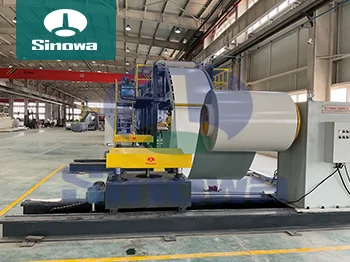
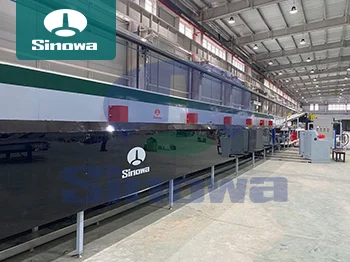
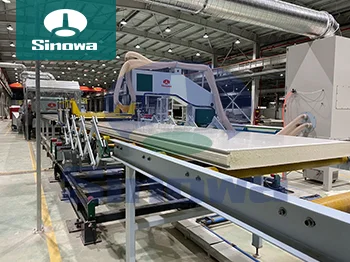
Sinowa is committed to the development and manufacturing of high-end and high-efficiency glass wool sandwich panel production line. Our glass wool sandwich panel production line are leading the way in efficiency, automatic control, human-computer interaction, environmental protection and energy consumption. Using system integration and bus control technology, it realizes the automatic integrated linkage control of the entire glass wool sandwich panel production line, and can achieve remote interactive communication, which has the world-class level and a comprehensive leading high-performance glass wool sandwich panel production line in the market.
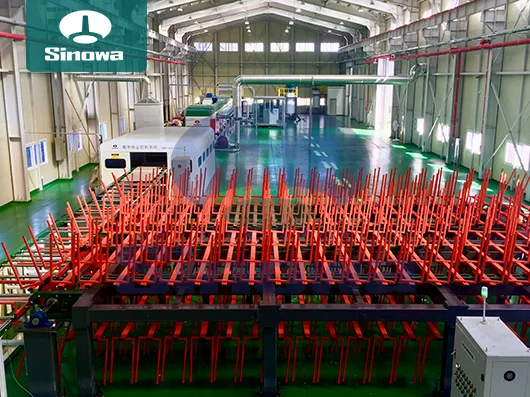
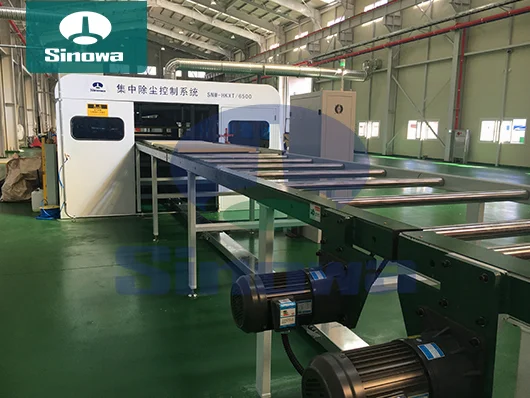
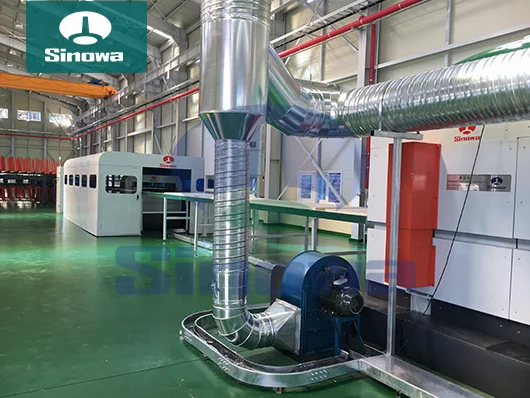
For more than ten years, relying on our innovative manufacturing concept and excellence in quality, reliable and trustworthy service to customers, we cooperate with customers all over the world, exported products to Canada, South Korea, Israel, Australia, the Middle East and other more than 20 countries and regions. contributed to building energy conservation and low-carbon production and have won widespread praise.
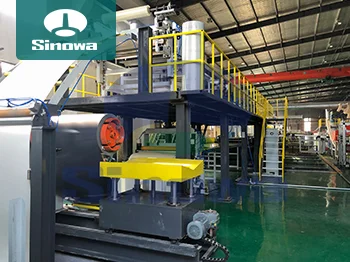
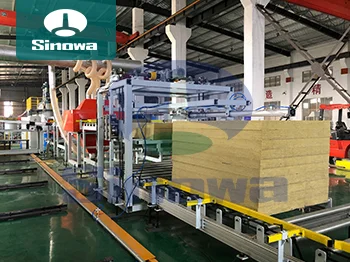
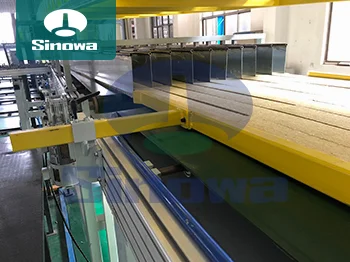
Sinowa has invested outstanding efforts in glass wool sandwich panel production line, this is why our products are more efficiency, quality, automatic control technology, environmental protection, energy consumption indicators and the appearance and safety protection are comprehensively leading, some subversive design changes in many major technical points, these major innovations make our products excellent in price/performance and user experience.
Glass wool sandwich panel production lines represent a fully integrated automated manufacturing solution built to turn raw coil stock and glass wool slabs into finished composite panels suitable for a wide range of building and industrial projects. Unlike segmented equipment that relies heavily on manual transfer between separate workstations, this type of line arranges every processing step in a continuous flow, starting from the release of metal coils all the way through to automatic stacking of completed panels. The design accounts for the special physical traits of glass wool, which is soft, fibrous, and easily damaged under uneven pressure, so conveying and pressing sections are fitted with gentle handling structures that avoid crushing the internal fiber arrangement. Operators can adjust running parameters to produce panels with different total thicknesses, different surface profiles, and different density levels of the glass wool core, allowing one setup to serve varied market demands. Many buyers choose this equipment when they plan to expand their insulation panel product portfolio, as glass wool core materials deliver strong thermal retention and sound absorption that appeal to clients constructing enclosed spaces that require stable internal temperatures and reduced noise transmission. Investing in such a production system means shifting from batch-style manufacturing to continuous output, which smooths out scheduling challenges and lowers the amount of idle time that often limits the throughput of simpler fabrication methods. The modular layout also creates room for future upgrades, so additional functions can be incorporated later as market preferences shift and new panel styles become desirable without requiring a full replacement of the main framework.
The opening stage of operation centers on decoiling, leveling, and roll forming of the outer facing sheets, which establish the exterior shape and surface quality of each sandwich panel. Coils are loaded onto decoiling supports that release sheet material at a controlled speed, with built-in splicing mechanisms that join the end of one coil to the start of the next so production does not stop during material changeovers. After unwinding, the metal strip passes through leveling rollers that remove warping and uneven tension left from the coiling process, ensuring the sheet stays flat and consistent as it enters the forming station. Roll forming stations use sequential sets of precision rollers to bend the flat sheet into the intended profile, whether for wall panels with simple flat edges or roof panels with interlocking ribs and drainage grooves. Every roller gap and forming angle can be fine-tuned, which directly affects how neatly the finished panels lock together during installation. This part of the line demands consistent synchronization with downstream units, because any mismatch in line speed will create wrinkles, misaligned profiles, or uneven bonding once the glass wool core is added. Sensors track sheet position and feed real-time data back to the central control interface, letting the system make minor corrections automatically rather than waiting for an operator to spot defects after many meters of material have already been processed. When calibrated properly, this front section lays a reliable foundation for the rest of the composite process and reduces surface flaws that would otherwise lead to rejected panels.
Immediately after the facing sheets take shape, the glass wool preparation and feeding unit takes charge of cutting, orienting, and placing the insulation core between the top and bottom facings. Bulk glass wool blocks arrive as large rigid slabs, and the line’s cutting mechanism slices them into strips matching the panel width and thickness required for the current production run. A turning device rotates some of these strips so the fiber direction sits perpendicular to the metal surfaces, a configuration that improves compressive strength and helps preserve the insulating performance of the core under load. Conveyors move the cut glass wool sections steadily toward the laminating zone, and side guides hold the core material centered so it does not shift sideways as the sheets close around it. Special guard structures contain loose fibers that shake free during cutting and transport, keeping airborne debris away from moving mechanical parts and reducing cleanup work between shifts. Operators can pause the glass wool feeder independently to swap core specifications without shutting down the metal forming sections entirely, which supports fast changeovers between different product types. Careful handling here is critical because tearing or compressing the glass wool will create weak spots that compromise thermal and acoustic performance, so the feed speed is calibrated to match the advance rate of the outer sheets and the adhesive application cycle. This coordinated feeding process removes much of the manual labor traditionally needed to position insulation cores and creates far greater uniformity across every panel produced in a single run.
Gluing and continuous lamination form the core bonding phase where glass wool and facing materials are pressed together into a single stable composite structure. The adhesive dispensing system spreads bonding agent evenly across the inner surfaces of both the top and bottom metal sheets, controlling flow volume and spray pattern to avoid excess glue squeeze-out or dry patches that fail to form a durable bond. The type of adhesive used is selected to match the operating environment of the finished panel, with options that maintain flexibility after curing and retain adhesion over long periods of temperature fluctuation. Once glue is applied, the top and bottom facings converge around the glass wool core and enter the double-belt pressing section, where uniform pressure is applied across the full width of the panel. The pressing belts move at the same line speed as the incoming materials, holding constant pressure while the adhesive begins to set, and the length of the pressing tunnel is sized to give enough residence time for initial bonding before the panel moves onward. Pressure settings are adjustable, striking a balance strong enough to secure all layers without squeezing the porous glass wool structure and reducing its insulating capacity. Temperature control inside the laminating zone supports consistent adhesive reaction, preventing slow curing in cool conditions or overly fast setting that leaves insufficient time for proper wetting of the glass wool surface. A well-tuned lamination stage eliminates delamination risks and ensures every finished panel maintains structural integrity through transport, storage, and final installation.
Following lamination, the newly formed continuous panel travels through curing and cooling tunnels that stabilize the adhesive and lock in the composite shape before cutting. The curing section maintains steady environmental conditions that allow the bonding agent to complete its chemical reaction gradually, avoiding internal stress that might cause warping after the panel leaves the line. Temperature distribution is kept even across the tunnel width, so panels at the edges do not cure faster or slower than those running through the center. After curing, the panel enters a cooling segment where controlled airflow brings the material down to ambient temperature at a gentle rate. Rapid cooling can create thermal stress between the metal skins and the glass wool core, which may lead to subtle bending or separation over time, so the cooling process is extended enough to prevent these issues. Throughout this stretch, encoders continuously track the travel distance of the panel, logging length data that feeds into the flying cutting system further downstream. Visual monitoring points are placed along the tunnel so staff can check for bubbling, separation, or uneven bonding without interrupting the production cycle. This extended conditioning phase adds reliability to the whole process and reduces the share of panels that develop hidden defects after they have been packaged and shipped to buyers. Many production operators recognize that rushing this curing and cooling stage often leads to expensive returns and damage claims, making this seemingly passive section one of the most valuable parts of the complete line.
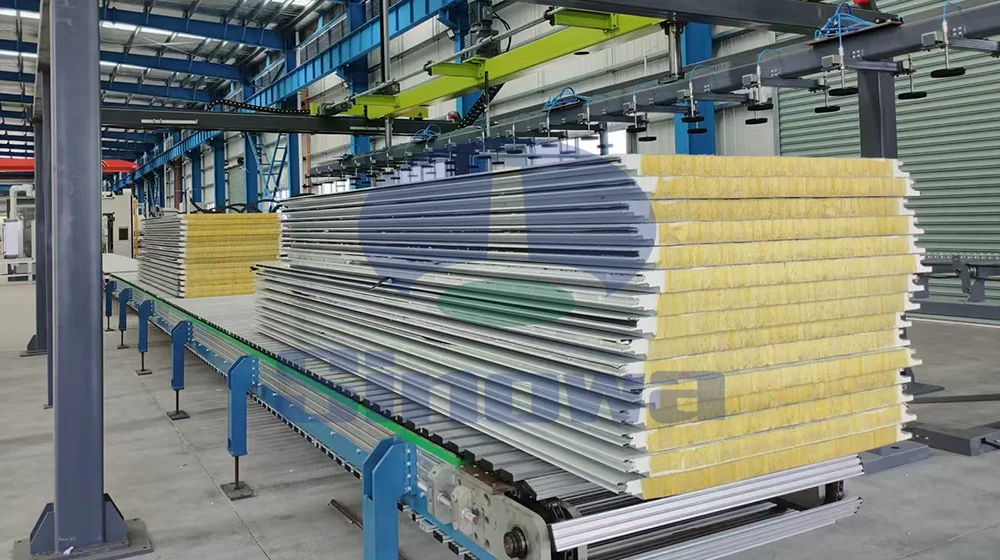
Fixed-length flying cutting and edge finishing turn the endless continuous panel into individual pieces ready for handling and delivery. The flying saw unit moves synchronously with the running panel as it cuts, eliminating the need to stop the line for each cut and preserving the overall production rhythm. Cutting length targets are entered through the main control panel, and the system repeats that dimension automatically until a new size is selected. The cutting blade is engineered to slice cleanly through metal facings and glass wool without pulling fibers or leaving jagged edges, and dust extraction nozzles capture fine particles generated during each cut. After cutting, optional edge trimming stations can square the ends or shape side edges to improve fit during installation, removing minor misalignments that appear occasionally during lamination. Small inspection stations after the saw let workers spot obvious defects such as incomplete glue coverage, damaged core sections, or surface scratches, separating non-conforming pieces before they reach stacking. Once inspected, finished panels transfer onto exit conveyors that feed the automatic stacking system. Stacking arms lift and arrange panels neatly onto pallets, inserting protective separators between layers to stop surface abrasion and distribute weight evenly. Automated stacking reduces lifting injuries for staff and creates stable pallet loads that are easier to secure for transport. This final shaping and sorting sequence turns continuous material into saleable units prepared for warehousing and dispatch.
The central control and monitoring system serves as the nerve center of the glass wool sandwich panel production line, coordinating the speed, timing, and parameters of every connected module. It uses an intuitive graphical interface where authorized users set production recipes, each recipe storing preferred settings for panel thickness, line speed, glue output, cutting length, and core feeding style. When switching from one panel specification to another, recalling a saved recipe resets all relevant equipment parameters in one action, cutting down the time needed for changeovers and lowering human error. Real-time data streams display running speed, accumulated production length, machine status alerts, and fault notifications, so operators can identify trouble spots before they escalate into lengthy shutdowns. Safety interlocks halt specific sections automatically if a door is opened, a jam is detected, or a sensor loses signal, protecting both equipment and personnel. The system also records production logs that track total output, downtime events, and parameter adjustments, which plant managers use to analyze efficiency and plan maintenance schedules. Access permissions can be layered, limiting full modification rights to senior technicians while allowing line operators only to start, stop, and select existing recipes. Although the control system simplifies daily operation, it still requires trained staff to understand how changes to one setting ripple through other stages, because adjustments to line speed will affect glue application, pressing residence time, and curing requirements all at once. A capable control setup makes the whole line far more predictable and removes much of the guesswork that comes with running complex composite manufacturing machinery.
Buyers evaluating a glass wool sandwich panel production line for sale should weigh practical factors such as available workshop space, long-term service support, compatibility with future product plans, and the learning curve for their operating teams before making a commitment. The full line occupies a considerable floor area, and site planning must account for incoming raw material storage zones, access paths for forklifts, ventilation for fiber and adhesive fumes, and outgoing pallet storage space. It is also wise to consider how easy it is to source spare wear parts like cutting blades, roller bearings, sealing strips, and sensor components, because delayed part deliveries can bring production to a standstill. Training for operators and maintenance technicians is essential; even highly automated equipment performs poorly when staff cannot diagnose minor faults, calibrate glue systems, or adjust core feeding alignment correctly. Many purchasers look for flexible configurations that can run glass wool panels as the primary product while also supporting alternate core materials on the same base frame when market demand shifts. The total value of the investment lies not only in the hardware itself but also in its ability to deliver consistent panel quality over years of continuous operation and adapt to evolving customer preferences in the insulated construction market. A well-selected glass wool sandwich panel production line becomes a stable asset that expands a manufacturer’s product range, raises output capacity, and creates opportunities to serve projects that demand reliable thermal and acoustic insulation solutions.
« Glass Wool Sandwich Panel Production Line For Sale » Update Date: 2026/10/23
Tags: Glass Wool Sandwich Panel Production Line , glass wool sandwich panel production line, glass wool sandwich panel production line manufacturer, glass wool sandwich panel production line supplier, glass wool sandwich panel production line for sale, customized glass wool sandwich panel production line, china glass wool sandwich panel production line
- PU Sandwich Panel Production Line
- PIR Sandwich Panel Production Line From China
- Customized PUF Panel Machine
- High Efficiency PU Insulation Panel Production Line
- PIR Sandwich Panel Line For Clean Room
- High-end Fully Automatic Sandwich Panel Making Machine
- High Efficiency PIR Insulated Panel Production Line
- PIR Sandwich Panel Production Line Design
- Low Price PUR Sandwich Panel Line
- PIR Sandwich Panel Machine For Building
- Fully Automatic PU Sandwich Panel Production Line Supplier
- High Efficiency Polyurethane Sandwich Panel Manufacturing Line
- PIR Sandwich Panel Production Line Manufacturer
- Low Price Soundproofing Sandwich Panel Production Line
- Glass Wool Equipment Design
- PIR Insulated Panel Production Line Supplier
- Polyurethane Foam Production Line On Sales
- Glass Wool Panel Production Line From China
- Sandwich Panel Production Machinery Manufacturer
- Sandwich Foam Panel Making Machine Design
- Links:
- Sandwich Panel Continuous Production Line
- Automatic and Continuous Sandwich Panel Production Line
- Cheap and Low Price Sandwich Panel Production Line
- China Sandwich Panel Production Line Factory
- Color Steel Sandwich Panel Production Line For Cold Storage
- Continuous Composite Foam Sandwich Panel Production Line
- Continuous Production Line For Rockwool and Mineral Wool Sandwich Panels
- Continuous PU Phenolic Insulation Panel Production Line
- Continuous PU PIR Sandwich Panel Production Line
- Continuous PUF PUR Sandwich Panel Production Line
- Continuous Sandwich Panel Production Line For Roof and Wall
- Customized and Design Sandwich Panel Production Line
- Decorative Sandwich Panel Production Line For Glass Wool Boards
- High Quality Sandwich Panel Production Line For Sale
- Polyurethane(PU) Sandwich Panel Production Line
- Sandwich Panel Production Line Manufacturer and Supplier
- Sandwich Panel Production Machinery and Equipment