
Sandwich Panel Manufacturing Line Manufacturer
Sinowa is a well-known manufacturer and technical service provider of high-end sandwich panel manufacturing line, learn more about sandwich panel manufacturing line manufacturer, please contact Sinowa's technical engineer, tell us what you need, we will contact you as soon as possible!
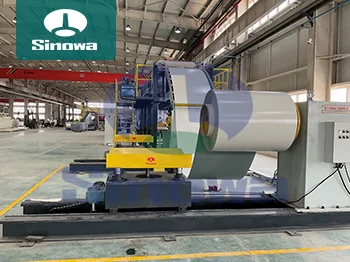
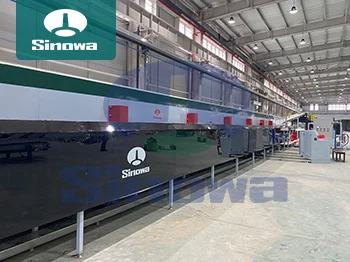
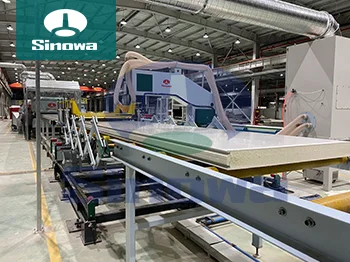
Sinowa is committed to the development and manufacturing of high-end and high-efficiency sandwich panel manufacturing line. Our sandwich panel manufacturing line are leading the way in efficiency, automatic control, human-computer interaction, environmental protection and energy consumption. Using system integration and bus control technology, it realizes the automatic integrated linkage control of the entire sandwich panel manufacturing line, and can achieve remote interactive communication, which has the world-class level and a comprehensive leading high-performance sandwich panel manufacturing line in the market.
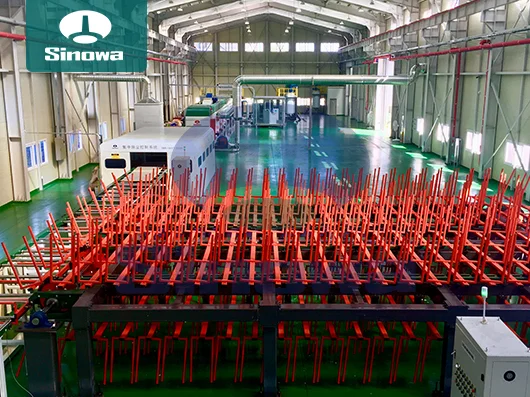
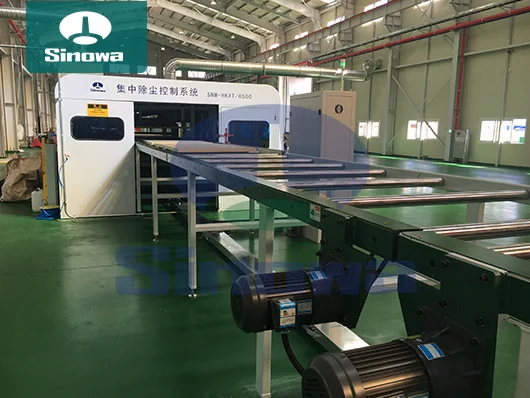
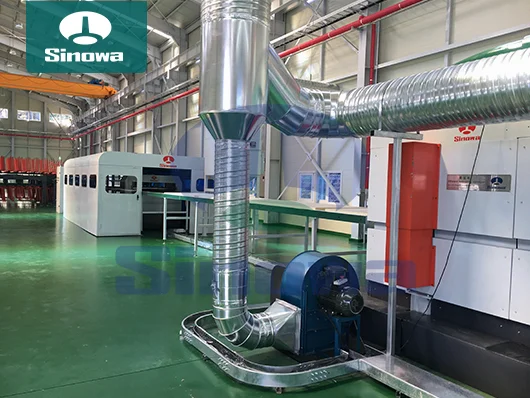
For more than ten years, relying on our innovative manufacturing concept and excellence in quality, reliable and trustworthy service to customers, we cooperate with customers all over the world, exported products to Canada, South Korea, Israel, Australia, the Middle East and other more than 20 countries and regions. contributed to building energy conservation and low-carbon production and have won widespread praise.
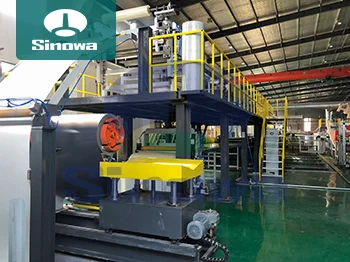
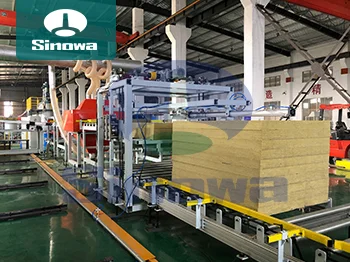
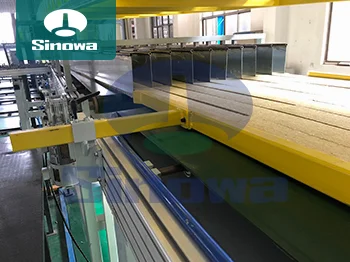
Sinowa has invested outstanding efforts in sandwich panel manufacturing line, this is why our products are more efficiency, quality, automatic control technology, environmental protection, energy consumption indicators and the appearance and safety protection are comprehensively leading, some subversive design changes in many major technical points, these major innovations make our products excellent in price/performance and user experience.
In the modern construction and industrial manufacturing industry, sandwich panels have become an indispensable core material due to their excellent comprehensive performance, and the equipment that supports their efficient and high-quality production—the sandwich panel manufacturing line—has gradually become the key to promoting the upgrading and development of the industry. A professional sandwich panel manufacturing line integrates multiple advanced technologies such as machinery, electronics, materials science, and automation control, realizing the continuous and intelligent production of various types of sandwich panels, which not only greatly improves production efficiency but also ensures the stability and consistency of product quality, providing strong support for the large-scale application of sandwich panels in various fields. As a professional manufacturer focusing on the research, development, and production of sandwich panel manufacturing lines, the core goal is to provide customers with efficient, stable, and flexible production solutions that adapt to the diverse needs of the market and promote the sustainable development of the sandwich panel industry.
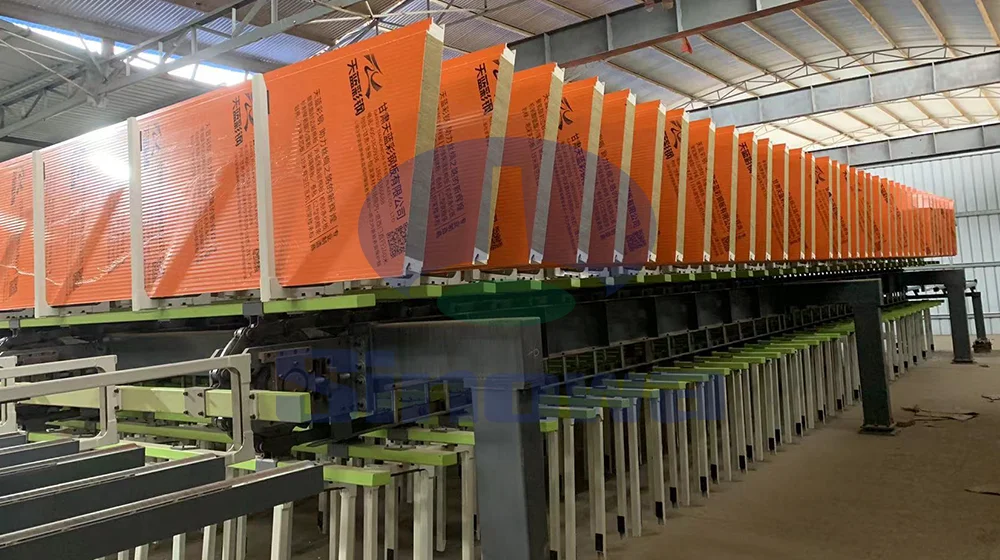
A complete sandwich panel manufacturing line is composed of multiple functional modules that are closely connected and coordinated with each other, forming a seamless production process from raw material input to finished product output. Each module undertakes a specific production task, and the rational matching and efficient operation between modules directly determine the overall performance of the production line and the quality of the final sandwich panels. The uncoiling and preprocessing system is the starting point of the entire production line, mainly responsible for the unfolding, leveling, and preliminary treatment of metal coils, which are usually color steel plates, aluminum plates, or stainless steel plates. The uncoiling unit is equipped with a dual-station design, which can realize non-stop coil changing, effectively avoiding production interruptions caused by coil replacement and improving production efficiency. The leveling machine in the system can eliminate the internal stress of the metal coil, ensuring that the metal plate is flat and free of wrinkles, laying a solid foundation for the subsequent forming process. In addition, some advanced preprocessing units are also equipped with cleaning and passivation devices, which can remove oil stains, dust, and other impurities on the surface of the metal plate, and enhance the surface energy of the metal through chemical treatment, thereby improving the bonding strength between the metal plate and the core material, ensuring that the composite structure of the sandwich panel is firm and durable.
The forming system is another key component of the sandwich panel manufacturing line, which is responsible for processing the flat metal plate into the required cross-sectional shape and size through a series of precision rolling molds. The forming process usually adopts multi-pass continuous rolling technology, with the number of rolling passes ranging from 12 to 24, and each pass of rolling gradually shapes the metal plate to approach the final desired shape. The rolling molds are made of high-strength alloy materials, through precision machining and heat treatment, which have excellent wear resistance and dimensional stability, ensuring that the formed metal plate has consistent shape and precise dimensions. The forming system is also equipped with a hydraulic servo control system, which can precisely adjust the forming pressure and speed according to the thickness of the metal plate and the required shape, realizing the flexible production of different specifications and types of sandwich panels. For example, it can produce corrugated roof panels with good drainage performance and structural strength, as well as flat wall panels suitable for interior and exterior decoration, meeting the diverse needs of different application scenarios.
The core material processing system is an important part that determines the performance of sandwich panels, and its structure and configuration vary according to the type of core material. Common core materials include polyurethane (PU), polyisocyanurate (PIR), rock wool, glass wool, and EPS, each with unique performance characteristics, and the corresponding processing systems are also different. For polyurethane and PIR core materials, the processing system mainly includes a high-pressure foaming machine, a temperature control unit, a mixing head, and a precise measurement system. The high-pressure foaming machine can maintain a stable working pressure between 120 and 200 bar, and the mixing head adopts a self-cleaning design, ensuring that the two components of the foaming agent are fully mixed with a mixing efficiency of more than 98%. The temperature control unit uses a PID algorithm to accurately control the temperature of the raw materials within a range of ±0.5℃, ensuring the stability of the foaming process and the uniformity of the core material density. For prefabricated core materials such as rock wool and glass wool, the processing system includes an automatic slitting machine, a conveyor belt, and a positioning device, which can accurately cut the core material into the required thickness and width, and transport it to the composite system in a timely and accurate manner to ensure the consistency of the core material layer of the sandwich panel. Some advanced production lines also have a multi-core material compatible design, which can quickly switch between different core materials within a short time, realizing the integrated production of multiple types of sandwich panels and improving the flexibility and adaptability of the production line.
The composite system is the core link of the sandwich panel manufacturing line, which realizes the firm bonding of the upper and lower metal panels and the core material under controlled temperature and pressure conditions. The composite system mainly includes a double-track press, a temperature control platform, and an online thickness gauge. The double-track press can evenly adjust the pressure within the range of 0.1 to 0.3 MPa, ensuring that the metal panels and the core material are fully bonded without gaps, and improving the structural strength and flatness of the sandwich panel. The temperature control platform maintains the optimal foaming and bonding temperature environment, which is crucial for the curing of the core material and the formation of a firm bond. The online thickness gauge can monitor the thickness of the sandwich panel in real time with an accuracy of ±0.2 mm, and automatically adjust the relevant parameters of the production line according to the monitoring results, ensuring that the thickness of the finished product meets the set requirements. In addition, some advanced composite systems are also equipped with edge sealing devices, which can inject polyurethane or other sealants into the edges of the sandwich panel to form a sealed edge, improving the waterproof, moisture-proof, and fire-resistant performance of the sandwich panel, and extending its service life.
The cutting and stacking system is the final link of the sandwich panel manufacturing line, which is responsible for cutting the continuous composite sandwich panel into the required length and stacking the finished products in an orderly manner. The cutting system adopts a high-precision servo-controlled flying saw or laser cutting device, which has a cutting accuracy of up to ±0.5 mm, ensuring that the length of the sandwich panel is accurate and the cutting surface is flat and smooth, without burrs or deformation. The flying saw cutting device can realize continuous cutting without stopping the production line, further improving production efficiency. The stacking system is equipped with an automatic stacker crane, which can automatically collect and stack the cut sandwich panels according to the set specifications, with a maximum stacking height that can meet the needs of industrial storage and transportation. The stacking process is fully automated, reducing labor intensity and avoiding damage to the finished products caused by manual stacking, ensuring the integrity and quality of the sandwich panels.
In addition to the above core modules, a professional sandwich panel manufacturing line is also equipped with an intelligent control system, which is the "brain" of the entire production line. The control system adopts PLC + touch screen control mode, integrating functions such as parameter setting, real-time monitoring, fault diagnosis, and data statistics. Operators can set relevant production parameters such as production speed, panel thickness, and cutting length through the touch screen, and monitor the operation status of each module in real time. The fault self-diagnosis function can quickly identify potential faults and display the fault location and cause on the touch screen, facilitating maintenance personnel to quickly troubleshoot and repair, reducing downtime and improving production efficiency. Some advanced control systems also support remote interaction and intelligent management, allowing operators to monitor and control the production line through mobile devices or computers, realizing the intelligent management of the production process. At the same time, the control system can record production data in real time, such as production volume, product specifications, and equipment operation parameters, providing a data basis for production management and optimization.
The sandwich panel manufacturing line has significant advantages such as high automation, high production efficiency, stable product quality, low labor intensity, and high raw material utilization rate. Compared with traditional manual or semi-automatic production methods, the fully automatic sandwich panel manufacturing line can increase production efficiency by 10 to 15 times, with a standard production line capable of producing 150 to 300 square meters of sandwich panels per hour, and a daily production capacity of up to 5000 to 10000 square meters. The automated production process ensures that the quality of each sandwich panel is uniform and consistent, avoiding the quality differences caused by manual operation, and fully meeting the strict requirements of the modern construction industry for material performance. In terms of raw material utilization, the continuous production mode of the production line can reduce material waste by 18 to 22%, effectively reducing production costs for customers. In addition, the production line adopts an energy-saving design, with a thermal energy recovery utilization rate of more than 60%, and uses fluorine-free foaming technology such as pentane foaming, which has a zero ODP value, meeting the requirements of environmental protection and energy conservation, and conforming to the global trend of green development.
The sandwich panel manufacturing line can produce various types of sandwich panels according to the needs of different application scenarios, covering a wide range of applications in the construction, cold chain logistics, industrial manufacturing, and other fields. In the construction field, sandwich panels produced by the production line are widely used in the walls, roofs, and ceilings of industrial plants, warehouses, commercial buildings, and high-rise buildings. They have excellent thermal insulation, sound insulation, and fire-resistant performance, which can effectively reduce building energy consumption and improve the comfort and safety of the building. For example, phenolic sandwich panels with A-level fire resistance are suitable for high-rise buildings, while polyurethane sandwich panels with low thermal conductivity are widely used in cold storage and constant temperature workshops. In the cold chain logistics field, the sandwich panels produced by the production line have good thermal insulation and moisture-proof performance, which can effectively maintain the temperature inside the refrigerated warehouse and refrigerated truck, ensuring the quality and freshness of the goods. In the industrial manufacturing field, sandwich panels are used as partition walls, sound insulation panels, and heat insulation panels in factories, which can improve the working environment and reduce noise and energy loss. In addition, sandwich panels are also used in the fields of ships, solar energy, agriculture, and medical purification, showing a broad market prospect.
With the continuous development of the construction industry and the increasing emphasis on environmental protection and energy conservation, the market demand for sandwich panels is constantly growing, which also puts forward higher requirements for the performance and quality of sandwich panel manufacturing lines. Professional manufacturers have been committed to the research and development and innovation of sandwich panel manufacturing lines, continuously integrating advanced technologies and processes to improve the automation level, production efficiency, and product adaptability of the production line. For example, the fourth-generation production line integrates an AI-powered quality control system, which can perform 120 surface inspections per minute, effectively detecting surface defects of sandwich panels and ensuring product quality. At the same time, manufacturers pay attention to the customization needs of customers, can design and produce sandwich panel manufacturing lines of different specifications and configurations according to the customer's production scale, product type, and site conditions, providing personalized solutions for customers. Whether it is a small-scale production line suitable for small and medium-sized enterprises or a large-scale continuous production line for large enterprises, professional manufacturers can provide corresponding products and services to meet the diverse needs of the market.
In the process of using the sandwich panel manufacturing line, regular maintenance and maintenance are crucial to ensuring the long-term stable operation of the equipment and extending its service life. Professional manufacturers usually provide comprehensive after-sales services, including equipment installation and commissioning, operator training, and regular maintenance guidance. During the installation and commissioning stage, professional technicians will install and debug the production line on site, ensure that the equipment operates normally, and train the operator to master the operation skills and daily maintenance methods of the equipment. In the daily use process, manufacturers will provide regular maintenance guidance, remind customers to check and maintain key components such as rolling molds, foaming machines, and cutting devices, and replace worn parts in a timely manner to avoid equipment failures caused by improper maintenance. In addition, manufacturers also have a professional after-sales service team, which can quickly respond to customer needs, provide timely troubleshooting and repair services, and minimize the impact of equipment failures on production.
The development of the sandwich panel manufacturing line is closely related to the progress of the construction industry and the upgrading of environmental protection requirements. In the future, with the continuous popularization of modular construction and green building concepts, the market demand for sandwich panels will continue to grow, and the sandwich panel manufacturing line will develop in the direction of higher automation, intelligence, energy conservation, and environmental protection. Professional manufacturers will continue to increase investment in research and development, integrate more advanced technologies such as artificial intelligence, big data, and the Internet of Things into the production line, realize the intelligent monitoring and management of the entire production process, improve production efficiency and product quality, and reduce production costs and environmental impact. At the same time, manufacturers will pay more attention to the research and development of multi-functional and multi-material compatible production lines, meet the diverse needs of different fields, and promote the sustainable development of the sandwich panel industry. Whether it is for customers who need to produce a single type of sandwich panel or those who need to realize the integrated production of multiple types of sandwich panels, the professional sandwich panel manufacturing line can provide efficient and reliable production support, helping customers gain a competitive advantage in the market.
In conclusion, the sandwich panel manufacturing line is an important equipment in the modern sandwich panel industry, and its performance and quality directly determine the development level of the sandwich panel industry. Professional manufacturers, with their rich experience in research and development and production, advanced technological strength, and perfect after-sales service, provide customers with high-quality sandwich panel manufacturing lines and personalized production solutions, promoting the efficient and healthy development of the sandwich panel industry. With the continuous progress of technology and the continuous expansion of market demand, the sandwich panel manufacturing line will play a more important role in the construction and industrial manufacturing fields, bringing more convenience and value to customers and society.
« Sandwich Panel Manufacturing Line Manufacturer » Update Date: 2026/4/13
Tags: Continuous Sandwich Panel Manufacturing Line , Sandwich Panel Manufacturing Line , Polyurethane Sandwich Panel Manufacturing Line ,
- Low Price PU Insulation Board Production Line
- Glass Wool Line Price
- High-tech PU Insulation Panel Production Line
- High-quality Glass Wool Equipment
- High-end PU Sandwich Panel Line
- Corrugated Sandwich Panel Production Line Factory
- PUF Panel Manufacturing Machine From China
- Glass Wool Sandwich Panel Production Line Supplier
- High-quality PUR Sandwich Panel Line
- Polyurethane Sandwich Panel Production Line Design
- High-quality Metal Sandwich Panel Production Line
- Low Price PIR Wall Panel Production Line
- High Efficiency PIR Insulation Panel Production Line
- Continuous Sandwich Panel Line For Sale
- Custom PIR Insulation Panel Production Line
- PIR Wall Panel Production Line From China
- Custom Sandwich Panel Making Machine
- Sandwich Panel Line
- PU Panel Machine For Sale
- Polyurethane Foam Production Line For Sale
- Links:
- Sandwich Panel Continuous Production Line
- Automatic and Continuous Sandwich Panel Production Line
- Cheap and Low Price Sandwich Panel Production Line
- China Sandwich Panel Production Line Factory
- Color Steel Sandwich Panel Production Line For Cold Storage
- Continuous Composite Foam Sandwich Panel Production Line
- Continuous Production Line For Rockwool and Mineral Wool Sandwich Panels
- Continuous PU Phenolic Insulation Panel Production Line
- Continuous PU PIR Sandwich Panel Production Line
- Continuous PUF PUR Sandwich Panel Production Line
- Continuous Sandwich Panel Production Line For Roof and Wall
- Customized and Design Sandwich Panel Production Line
- Decorative Sandwich Panel Production Line For Glass Wool Boards
- High Quality Sandwich Panel Production Line For Sale
- Polyurethane(PU) Sandwich Panel Production Line
- Sandwich Panel Production Line Manufacturer and Supplier