
Cheap PUF Panel Manufacturing Machine
Sinowa is a well-known manufacturer and technical service provider of high-end puf panel manufacturing machine, learn more about cheap puf panel manufacturing machine, please contact Sinowa's technical engineer, tell us what you need, we will contact you as soon as possible!
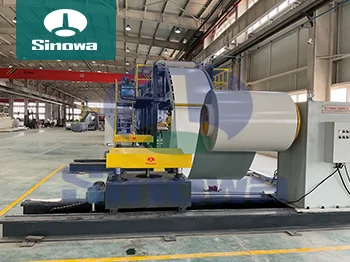
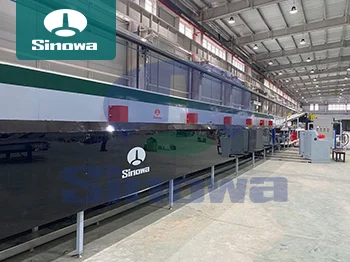
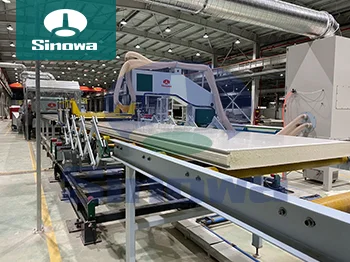
Sinowa is committed to the development and manufacturing of high-end and high-efficiency puf panel manufacturing machine. Our puf panel manufacturing machine are leading the way in efficiency, automatic control, human-computer interaction, environmental protection and energy consumption. Using system integration and bus control technology, it realizes the automatic integrated linkage control of the entire puf panel manufacturing machine, and can achieve remote interactive communication, which has the world-class level and a comprehensive leading high-performance puf panel manufacturing machine in the market.
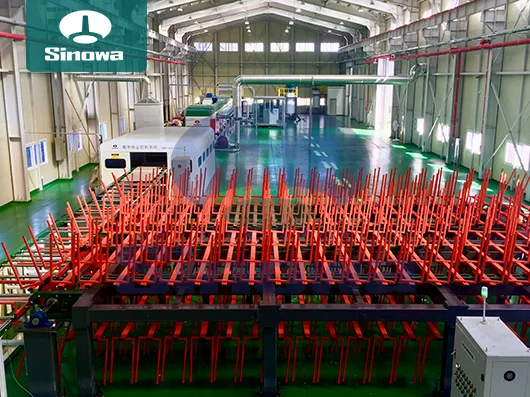
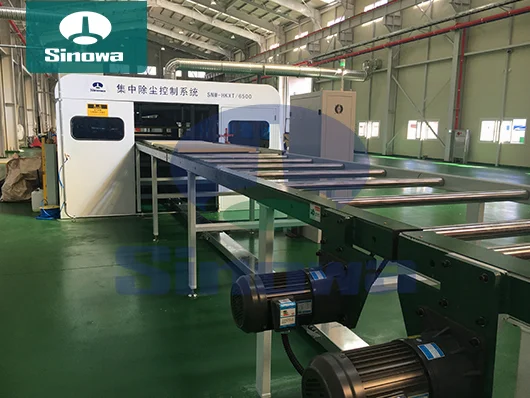
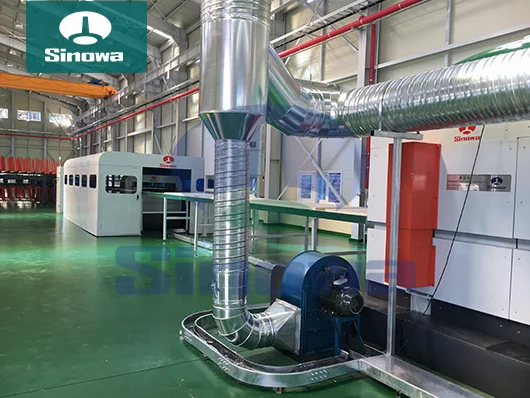
For more than ten years, relying on our innovative manufacturing concept and excellence in quality, reliable and trustworthy service to customers, we cooperate with customers all over the world, exported products to Canada, South Korea, Israel, Australia, the Middle East and other more than 20 countries and regions. contributed to building energy conservation and low-carbon production and have won widespread praise.
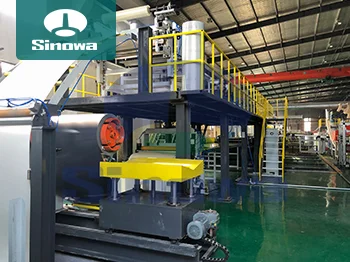
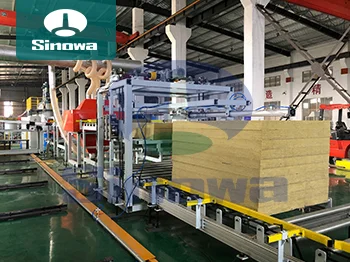
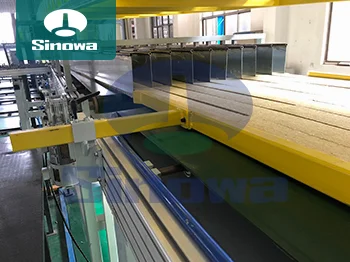
Sinowa has invested outstanding efforts in puf panel manufacturing machine, this is why our products are more efficiency, quality, automatic control technology, environmental protection, energy consumption indicators and the appearance and safety protection are comprehensively leading, some subversive design changes in many major technical points, these major innovations make our products excellent in price/performance and user experience.
The production of cheap PUF panel manufacturing machines meets the growing market demand for affordable equipment used to produce polyurethane foam insulated panels, which are widely adopted in construction, cold storage and temporary building projects. These machines are engineered to simplify the continuous or semi-continuous forming process of PUF panels, combining raw material feeding, high-pressure foaming, lamination, curing and cutting functions within a single integrated production line. Unlike high-end heavy-duty models built for large-scale industrial factories, low-cost versions focus on core functional realization while cutting redundant structural designs and complex automated modules. Operators can adjust raw material proportion, foaming speed and panel thickness through basic control interfaces, making the equipment suitable for small production workshops and new market entrants with limited initial capital. The structural framework uses standard metal components to reduce manufacturing costs, and the hydraulic and mixing systems adopt mature, easy-to-source spare parts. This design choice lowers the threshold for equipment maintenance and part replacement after installation. Many buyers select this type of machine to start small-batch panel production, testing local market response before expanding production capacity. Even with cost reduction, the machine still maintains stable foaming performance to ensure the finished panels achieve consistent insulation and bonding effects between the metal skin and foam core. Users need to understand the operational limits of low-cost equipment, such as maximum daily output and continuous running duration, to avoid overloading the system and shortening service life. Proper training for operators remains essential to control raw material consumption and reduce waste during panel forming cycles.
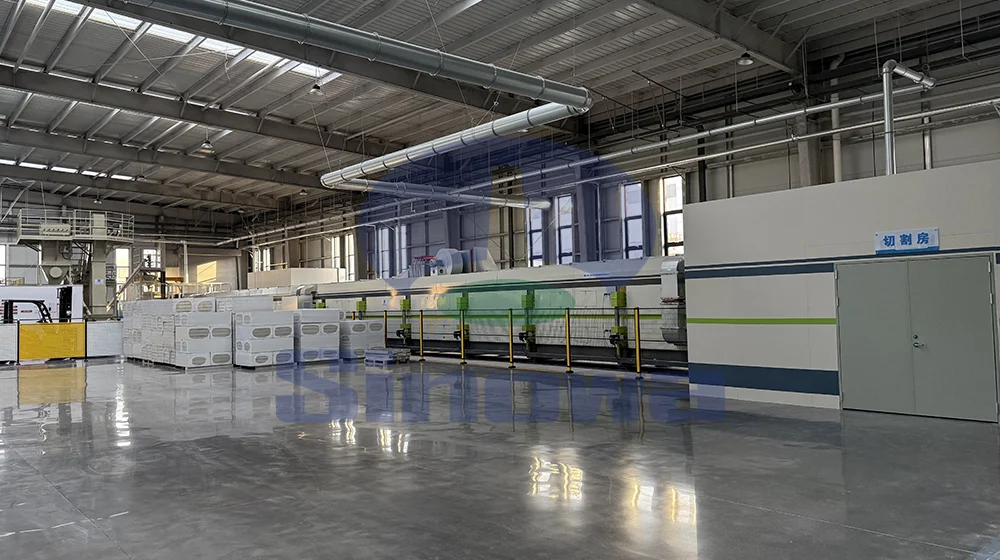
Raw material handling forms a critical working module inside cheap PUF panel manufacturing machines, directly influencing the quality of finished insulated panels and overall production efficiency. The machine is designed to store and deliver two primary liquid polyurethane components separately, preventing premature mixing before reaching the spraying head. Liquid polyol and isocyanate are pumped into the mixing chamber at calibrated flow rates, where high-speed blending triggers the chemical reaction that creates rigid polyurethane foam. Affordable machine models use basic metering pumps to regulate material flow instead of advanced digital metering systems, requiring manual fine-tuning at the start of each production run. Operators must monitor material temperature and viscosity regularly, as environmental temperature changes will affect foaming expansion rate and core density of PUF panels. The feeding system connects to simple storage tanks that can be refilled manually, eliminating the need for expensive automatic material replenishment devices. When raw materials mix and foam expands between two surface sheets, pressure control keeps the panel thickness uniform during the curing phase. Cost-effective equipment limits the width and thickness range of producible panels, which matches the typical product requirements of small workshops. Material waste can rise if operators fail to adjust the mixing ratio correctly, so routine inspection of pump seals and mixing nozzles helps reduce unnecessary raw material loss. Understanding the interaction between raw material properties and machine settings helps operators achieve steady production results with budget-limited manufacturing equipment.
Lamination and forming processes in cheap PUF panel manufacturing machines shape the composite structure of finished panels by bonding metal or non-metal surface sheets with the expanding polyurethane foam core. Surface sheets are unwound from roll holders and guided through a set of adjustable rollers that keep the sheets flat and aligned as they move forward. Once the mixed PUF liquid is sprayed onto the lower sheet, the upper sheet closes over the expanding foam, and the whole assembly moves into the curing section. The machine uses mechanical pressing rollers to maintain constant pressure while foam rises and solidifies, ensuring tight adhesion between foam and facing materials without gaps or delamination. Low-cost machine designs rely on mechanical roller pressure rather than complex hydraulic pressing platforms to control panel formation, which reduces equipment purchase cost but restricts the maximum production speed. The length of the curing tunnel is shortened in these budget models, so production speed must be reduced to allow sufficient time for foam polymerization and hardening. If the line runs too fast, panels may leave the curing area before full solidification, leading to deformation or poor surface flatness. Roller spacing can be manually adjusted to produce panels of different thickness within the supported range. Operators need to check sheet tension frequently to prevent wrinkling or offset of the top and bottom facings. Stable lamination quality depends on synchronized movement of sheet unwinding, foam spraying and conveying systems. Although the forming process of cheap PUF machines cannot match the high precision of premium industrial lines, it can deliver qualified panels for general insulation applications when operated within recommended working parameters.
Cutting and output systems for cheap PUF panel manufacturing machines handle the final shaping of continuous PUF slabs into finished panels of preset lengths after the foam core completes curing. As continuous composite material exits the curing zone, a tracking cutting unit follows the moving panel to perform cross-cutting without stopping the production line. Budget equipment adopts mechanical saw cutting structures instead of advanced flying shear cutting devices, bringing down manufacturing cost while creating minor limitations on cutting surface smoothness. Small burrs may appear on panel edges after cutting, which can be removed through simple manual trimming as part of post-processing work. The cutting length is set manually on the control panel, and operators need to verify the first few finished pieces at the start of each shift to confirm dimension accuracy. After cutting, finished panels slide onto an output table for manual stacking. Cheap machine configurations usually exclude automatic stacking and packaging modules, requiring workers to collect and stack panels by hand. This setup reduces total equipment investment but increases labor input in the downstream stage. The cutting blade needs regular cleaning and sharpening, because residual polyurethane foam can stick to blade surfaces and reduce cutting precision over time. Operators should also clear foam debris from the output area regularly to avoid interfering with panel transportation. The cutting system is built for moderate output volumes, which fits small-scale production operations. With careful routine maintenance, the cutting unit can maintain stable performance for long-term panel fabrication and deliver panels that meet common dimensional requirements for insulation projects.
Control systems of cheap PUF panel manufacturing machines prioritize basic operability, avoiding complicated digital control architectures to keep overall equipment cost low. The control cabinet contains simple switches, knobs and basic display meters that show running status, material pump pressure and conveying speed. Most parameter adjustments are completed manually, without automatic feedback loops that can instantly correct deviations in material flow or panel thickness. Before starting production, operators set conveying speed, pump output and roller pressure one by one based on experience and sample test results. During operation, staff stay beside the machine to observe foaming status and adjust settings in real time when abnormal conditions appear. This semi-manual control design lowers the cost of electronic components, but it requires operators to accumulate practical experience to judge foaming quality quickly. Alarm functions are kept to basic fault prompts, alerting users to pump overload or material blockage instead of performing automatic shutdown and fault diagnosis. The control circuit uses standard electrical parts that are widely available in local markets, making component replacement affordable and convenient. Training for new operators focuses on recognizing common abnormal signs, adjusting material ratios and safely stopping the machine. Although lacking intelligent automatic control features, this simple control system fulfills the core production needs for small batch PUF panel manufacturing. Users can operate the machine reliably once they master the relationship between parameter changes and finished panel performance.
Maintenance and daily care are essential to extend the service life of cheap PUF panel manufacturing machines and keep production interruption to a minimum. The equipment is assembled with common mechanical and electrical parts, making maintenance work straightforward for technicians with basic mechanical knowledge. Daily maintenance tasks include cleaning residual polyurethane foam from mixing heads, rollers and cutting units after each production cycle. Cured foam material is abrasive and can block nozzles or wear moving parts if left unattended for extended periods. Operators need to check lubrication points on conveying chains and roller bearings regularly, adding lubricant according to usage frequency to reduce friction and component wear. Seals on material pumps and pipelines are consumable items; periodic inspection helps identify leaks of liquid raw materials before leaks grow into serious failures. Loose bolts on the machine frame and roller supports should be tightened during routine checks to maintain structural stability. Electrical connections in the control cabinet need to be kept dry and free from dust to prevent short circuit risks. Compared with high-end automated production lines, low-cost PUF machines do not require sophisticated professional maintenance tools. However, skipping routine upkeep will accelerate part aging and lead to unexpected downtime. Creating a simple maintenance log helps track component wear and schedule part replacement in advance. Proper daily care can greatly reduce repair frequency and help small manufacturers maintain consistent panel output with limited maintenance budgets.
Safety considerations when running cheap PUF panel manufacturing machines cannot be overlooked, even though cost reduction focuses on production functions. The chemical reaction of polyurethane raw materials releases heat during foaming, and improper handling of liquid components may cause skin and eye irritation. Basic protective equipment must be worn by all operators working near the mixing and spraying section. Ventilation around the machine workspace is important to disperse vapor generated in the foaming process, improving working conditions for on-site staff. Mechanical moving parts including rollers, conveying chains and cutting blades present pinch and cutting hazards. Safety guards are installed on key moving areas of low-cost machines, but users must keep these protective covers in place during operation and never remove them to speed up production. Operators should follow fixed startup and shutdown sequences, and avoid reaching into the machine while the production line is running. Emergency stop buttons are fitted at accessible positions on the equipment to halt operation quickly when dangerous situations occur. Before maintenance work, power and material supply must be fully disconnected to prevent accidental startup. Operators should receive safety training covering raw material handling, emergency response and hazard identification. Even with simple mechanical design, unsafe operation may lead to workplace accidents. Establishing clear site safety rules reduces risks effectively and supports stable long-term production of PUF panels on budget manufacturing equipment.
Market positioning and application suitability define the value of cheap PUF panel manufacturing machines within the insulation material industry. This type of equipment targets small-scale manufacturers, new startup workshops and regional material suppliers who want to produce insulated panels without heavy upfront capital investment. It fits production scenarios that do not require ultra-high daily output or extremely strict tolerance standards for finished panels. Panels produced from these machines find wide use in building enclosure systems, thermal insulation for storage spaces and modular temporary constructions. The flexible production capacity allows manufacturers to accept small orders and customize panel dimensions within the machine’s working range. The lower entry barrier enables more local producers to supply insulated panels, shortening supply chains for regional construction projects. Meanwhile, buyers of this equipment need to set realistic expectations about production limits. Budget machines cannot sustain nonstop operation around the clock for long periods, and product consistency will depend heavily on operator skill and stable raw material quality. This equipment serves as a practical entry point for entrepreneurs entering the PUF panel sector. After gaining market experience and stable sales revenue, some operators later upgrade to larger, more automated production lines. As demand for affordable thermal insulation materials continues, low-cost PUF panel manufacturing machines remain a practical option for small manufacturers aiming to create local panel supply capacity with restrained capital spending.
« Cheap PUF Panel Manufacturing Machine » Update Date: 2026/10/20
Tags: PUF Panel Manufacturing Machine , puf panel manufacturing machine, puf panel manufacturing machine manufacturer, puf panel manufacturing machine supplier, puf panel manufacturing machine for sale, customized puf panel manufacturing machine, china puf panel manufacturing machine
- High-tech Automatic Sandwich Panel Production Line
- Foam Core Sandwich Panel Line For Sale
- Fully Automatic PU Sandwich Panel Line Factory
- Sandwich Panel Foam Making Machine For Sale
- Roof Sandwich Panel Production Line Price
- Highly Intelligent PU Sandwich Panel Production Line
- Sandwich Panel Foam Production Line Supplier
- High-quality PU Sandwich Panel Making Machine
- Cheap Sandwich Foam Panel Making Machine
- PU Board Production Line Factory
- PU Insulation Board Production Line For Sale
- Sandwich Panel Production Machinery Factory
- High-quality PUF Panel Machine
- Glass Wool Sandwich Panel Production Line In China
- Soundproofing Sandwich Panel Production Line For Sale
- PUF Panel Manufacturing Machine Supplier
- PUR Sandwich Panel Machine From China
- Low Price Glass Wool Line
- Foam Core Sandwich Panel Line Price
- PIR Insulated Panel Production Line On Sales
- Links:
- Sandwich Panel Continuous Production Line
- Automatic and Continuous Sandwich Panel Production Line
- Cheap and Low Price Sandwich Panel Production Line
- China Sandwich Panel Production Line Factory
- Color Steel Sandwich Panel Production Line For Cold Storage
- Continuous Composite Foam Sandwich Panel Production Line
- Continuous Production Line For Rockwool and Mineral Wool Sandwich Panels
- Continuous PU Phenolic Insulation Panel Production Line
- Continuous PU PIR Sandwich Panel Production Line
- Continuous PUF PUR Sandwich Panel Production Line
- Continuous Sandwich Panel Production Line For Roof and Wall
- Customized and Design Sandwich Panel Production Line
- Decorative Sandwich Panel Production Line For Glass Wool Boards
- High Quality Sandwich Panel Production Line For Sale
- Polyurethane(PU) Sandwich Panel Production Line
- Sandwich Panel Production Line Manufacturer and Supplier
- Sandwich Panel Production Machinery and Equipment