
PU Sandwich Panel Machine Manufacturer
Sinowa is a well-known manufacturer and technical service provider of high-end pu sandwich panel machine, learn more about pu sandwich panel machine manufacturer, please contact Sinowa's technical engineer, tell us what you need, we will contact you as soon as possible!
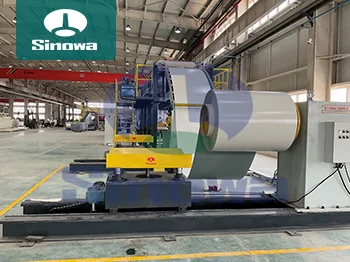
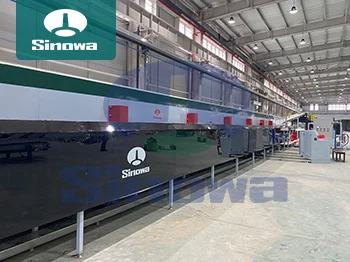
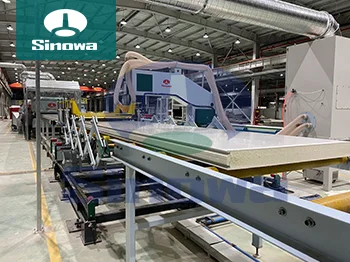
Sinowa is committed to the development and manufacturing of high-end and high-efficiency pu sandwich panel machine. Our pu sandwich panel machine are leading the way in efficiency, automatic control, human-computer interaction, environmental protection and energy consumption. Using system integration and bus control technology, it realizes the automatic integrated linkage control of the entire pu sandwich panel machine, and can achieve remote interactive communication, which has the world-class level and a comprehensive leading high-performance pu sandwich panel machine in the market.
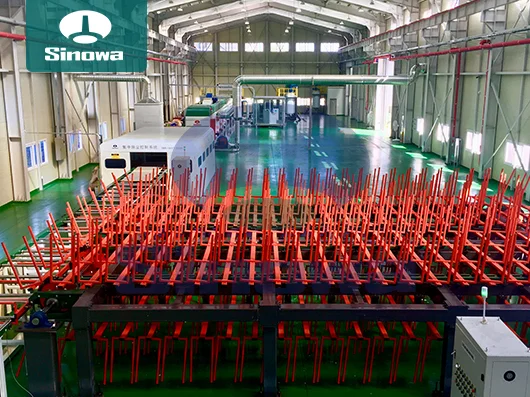
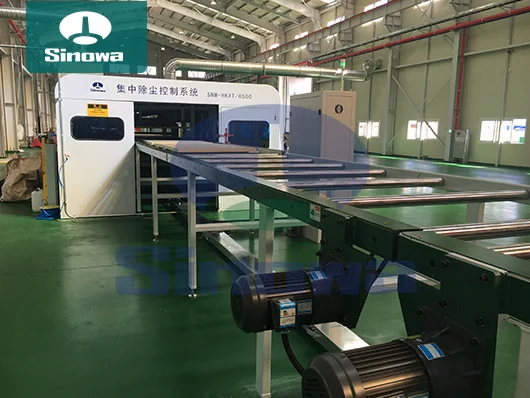
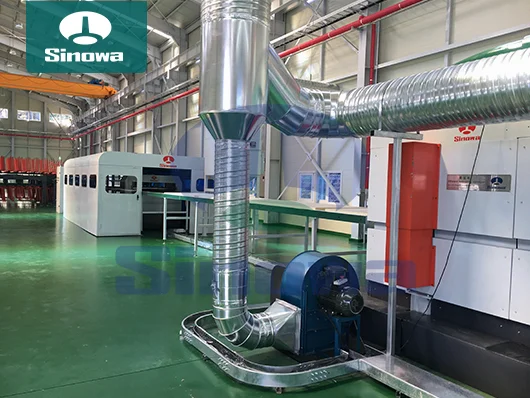
For more than ten years, relying on our innovative manufacturing concept and excellence in quality, reliable and trustworthy service to customers, we cooperate with customers all over the world, exported products to Canada, South Korea, Israel, Australia, the Middle East and other more than 20 countries and regions. contributed to building energy conservation and low-carbon production and have won widespread praise.
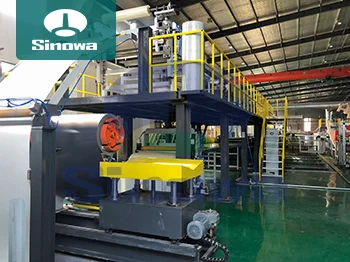
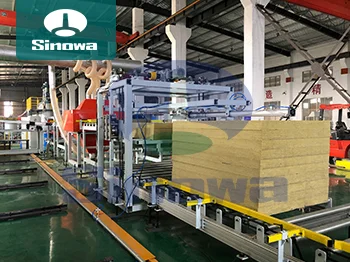
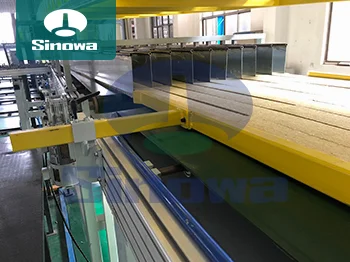
Sinowa has invested outstanding efforts in pu sandwich panel machine, this is why our products are more efficiency, quality, automatic control technology, environmental protection, energy consumption indicators and the appearance and safety protection are comprehensively leading, some subversive design changes in many major technical points, these major innovations make our products excellent in price/performance and user experience.
In the realm of modern construction and industrial manufacturing, the demand for efficient, energy-saving, and versatile building materials has driven continuous innovation in production technology. Among these materials, polyurethane (PU) sandwich panels have emerged as a cornerstone in applications ranging from industrial warehouses and cold storage facilities to commercial complexes and residential buildings. Central to the widespread adoption of these high-performance panels is the advanced machinery that produces them. PU sandwich panel machines have evolved significantly over the years, integrating precision engineering, automation, and sustainable technologies to meet the growing demands of global construction markets.
Understanding PU Sandwich Panels and Their Manufacturing Significance
Before delving into the machinery itself, it is essential to recognize the unique properties of PU sandwich panels that make their production technology so critical. PU sandwich panels consist of two outer facing materials (typically steel sheets, aluminum foil, or composite materials) bonded to a core of polyurethane foam. This composite structure combines the structural strength of the facing materials with the exceptional thermal insulation, soundproofing, and waterproofing properties of polyurethane foam. The closed-cell structure of PU foam ensures a thermal conductivity as low as 0.022–0.024 W/(m·K), making these panels highly energy-efficient compared to traditional building materials like concrete or brick. A 5cm thick PU sandwich panel can achieve the same insulation effect as a 1m thick concrete wall, a factor that has made them indispensable in meeting global energy conservation standards.
The versatility of PU sandwich panels extends to their wide range of applications. They are commonly used in the construction of large industrial厂房 roofs and walls, where their lightweight nature reduces structural load while providing superior insulation. In cold storage facilities and refrigerated warehouses, their excellent thermal retention properties help maintain stable low temperatures, reducing energy consumption for cooling systems. Additionally, they find use in modular buildings, mobile homes, airports, stadiums, and hospitals, thanks to their quick installation, durability, and aesthetic flexibility. The growing demand for these panels across diverse sectors has directly fueled the need for advanced, high-capacity production machinery that can ensure consistent quality and efficiency.
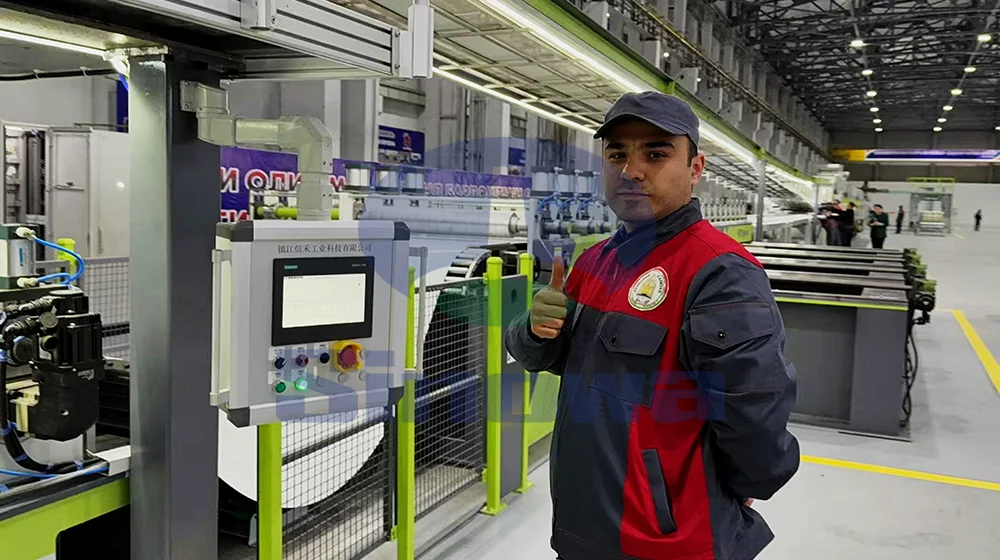
Core Components and Operational Mechanisms of PU Sandwich Panel Machinery
Modern PU sandwich panel production lines are complex integrated systems that combine mechanical engineering, electrical control, hydraulic systems, and chemical reaction technologies. These lines typically operate as continuous or semi-continuous processes, with each component designed to work in seamless coordination to produce panels of uniform quality. The core components of a standard PU sandwich panel machine include uncoiling units, preprocessing modules, foaming systems, lamination and curing sections, cutting mechanisms, and stacking and packaging equipment. Each of these components plays a vital role in the production process, and advancements in any single area can significantly enhance overall line performance.
Uncoiling and Preprocessing: The Foundation of Quality Panels
The production process begins with the uncoiling of the facing materials, which are typically supplied in large rolls. Uncoiling units are equipped with tension control systems to ensure the facing materials are fed into the line smoothly without wrinkling or stretching. This is critical because any irregularities in the facing materials can compromise the bond with the PU core and affect the structural integrity of the final panel. After uncoiling, the facing materials undergo preprocessing steps that may include cleaning, and preheating. processes apply protective or decorative films to the surface of the facing materials, while preheating ensures that the materials reach the optimal temperature for bonding with the PU foam. Preheating also helps accelerate the curing process of the foam, improving production efficiency.
Foaming Systems: The Heart of Panel Production
The foaming system is arguably the most critical component of a PU sandwich panel machine, as it determines the quality and performance of the panel's core. This system is responsible for mixing polyurethane raw materials (polyol and isocyanate) with additives such as catalysts, foaming agents, and flame retardants, then depositing the mixture onto the lower facing material. Advanced foaming systems use high-pressure mixing technology to ensure uniform blending of the raw materials, which is essential for creating a PU core with consistent density and insulation properties. The use of precision metering pumps allows for accurate control of the raw material ratio, ensuring that the foam meets specific performance requirements.
Recent advancements in foaming technology have focused on sustainability and efficiency. Modern systems often use eco-friendly foaming agents that comply with global environmental regulations, replacing older HCFC-based agents that have a high ozone-depleting potential. Additionally, variable frequency drives and servo control systems enable the foaming system to adjust the output rate in real-time based on the production speed of the line, reducing material waste and improving resource utilization.
Lamination, Curing, and Cutting: Shaping the Final Product
After the foam mixture is deposited onto the lower facing material, the upper facing material is fed into the line, and the combined structure enters the lamination and curing section. This section typically consists of a double-belt conveyor system that applies uniform pressure to the panel while maintaining a controlled temperature. The pressure ensures that the PU foam bonds tightly with both facing materials, while the controlled temperature accelerates the curing process. The length of the curing section and the temperature settings are carefully calibrated based on the desired thickness of the panel and the type of PU foam being used. For continuous production lines, the curing process must be synchronized with the line speed to ensure that the foam is fully cured before the panel reaches the cutting section.
Once the foam is cured, the continuous panel is cut into the desired lengths using precision cutting mechanisms. Modern cutting systems use either circular saws or band saws equipped with automatic tracking technology to ensure clean, straight cuts without damaging the panel edges. Some advanced lines also feature "cut-to-length without stopping" technology, which allows the line to continue operating while cutting, significantly improving production efficiency. After cutting, the panels are transported to stacking units, which use automated systems to stack the panels neatly. Finally, packaging equipment wraps the stacked panels in protective film to prevent damage during transportation and storage.
Key Advantages of Modern PU Sandwich Panel Machinery
Modern PU sandwich panel machines offer a range of advantages over older, less advanced equipment, making them an attractive investment for manufacturers. These advantages include high automation levels, improved production efficiency, superior product quality, reduced operational costs, and enhanced flexibility. Together, these benefits enable manufacturers to meet the growing demand for PU sandwich panels while maintaining competitive pricing and high standards of quality.
High Automation: Reducing Labor Dependency
One of the most significant advancements in PU sandwich panel machinery is the integration of full computerized control systems, which have greatly increased automation levels. Modern lines use a combination of digital servo technology, frequency conversion vector technology, and hydraulic control systems to achieve fully integrated control of the entire production process. Operators only need to input the desired panel specifications (thickness, length, width) into the control system, and the line will automatically adjust all parameters to produce panels that meet these requirements. This high level of automation reduces the need for manual intervention, minimizing the risk of human error and reducing labor costs. A typical modern continuous production line requires only 7–8 operators to run at full capacity, compared to older lines that may have required twice as many workers.
Enhanced Efficiency and Productivity
Modern PU sandwich panel machines are designed for high-speed production, with line speeds ranging from 3 to 7 meters per minute, and some advanced lines capable of even higher speeds. This translates to annual production capacities of up to 800,000 square meters per line (based on 250 working days per year and 10 working hours per day). The use of continuous production processes eliminates the need for batch processing, further improving efficiency. Additionally, advancements in curing technology have reduced the time required for the PU foam to fully cure, allowing for faster throughput. The combination of high speed and continuous operation makes modern lines highly productive, enabling manufacturers to meet large orders quickly and efficiently.
Superior Product Quality and Consistency
The precision control systems used in modern PU sandwich panel machinery ensure that every panel produced meets strict quality standards. Uniform mixing of raw materials in the foaming system results in a PU core with consistent density, which translates to consistent insulation and structural properties. Tension control in the uncoiling units and uniform pressure in the lamination section ensure that the facing materials bond tightly with the core, eliminating delamination issues. Additionally, precision cutting mechanisms ensure that panels have accurate dimensions and clean edges, reducing waste and improving the ease of installation for end-users. The ability to maintain consistent quality is critical for manufacturers, as it helps build trust with customers and ensures compliance with industry standards.
Reduced Operational Costs
While the initial investment in modern PU sandwich panel machinery may be higher than in older equipment, the long-term operational cost savings are significant. High automation levels reduce labor costs, while precision control systems minimize material waste. Advanced energy-saving technologies, such as efficient heating systems and variable frequency drives, reduce energy consumption. For example, some modern lines are designed to consume only 40% of the energy of comparable older systems. Additionally, modular design principles make maintenance easier and reduce downtime, as components can be quickly replaced or repaired. The combination of these factors results in lower per-unit production costs, making manufacturers more competitive in the global market.
Flexibility and Versatility
Modern PU sandwich panel machines are highly flexible, capable of producing a wide range of panel types to meet diverse customer needs. Through modular design, lines can be easily reconfigured to produce panels with different thicknesses, widths, and facing materials. Some lines can even switch between producing PU sandwich panels and panels with other core materials, such as rock wool or glass wool, with minimal downtime. This versatility is particularly valuable in today's market, where customer requirements are increasingly diverse. Manufacturers can quickly adapt to changing market demands without the need for significant additional investment in new equipment.
The Role of PU Sandwich Panel Machinery in Sustainable Construction
As the global construction industry shifts toward sustainability and energy efficiency, PU sandwich panel machinery has a critical role to play. PU sandwich panels themselves are inherently sustainable due to their excellent insulation properties, which reduce energy consumption in buildings. However, the sustainability of the panels is further enhanced by advancements in the machinery used to produce them. Modern machines are designed to minimize environmental impact through reduced energy consumption, lower material waste, and the use of eco-friendly raw materials.
Energy efficiency is a key focus of modern machinery design. The integration of variable frequency drives, servo motors, and efficient heating systems reduces the overall energy consumption of the production line. Additionally, some lines feature heat recovery systems that capture and reuse waste heat from the curing process, further reducing energy requirements. Material waste is minimized through precision control systems that ensure accurate mixing of raw materials and precise cutting of panels. This not only reduces the environmental impact but also improves the economic efficiency of production.
Another important aspect of sustainability is the use of eco-friendly raw materials. Modern foaming systems are designed to work with low-VOC (volatile organic compound) and ozone-friendly foaming agents, complying with global environmental regulations such as the Montreal Protocol. Additionally, some manufacturers are exploring the use of bio-based polyols derived from renewable resources, further reducing the carbon footprint of PU sandwich panels. The machinery used to produce these panels is adapted to handle these new materials, ensuring that the production process remains efficient and the final product maintains its high performance.
Future Trends in PU Sandwich Panel Machinery Technology
The future of PU sandwich panel machinery is shaped by ongoing advancements in automation, digitalization, sustainability, and material science. As the demand for PU sandwich panels continues to grow, manufacturers of machinery are investing heavily in research and development to create even more efficient, flexible, and sustainable production systems. Several key trends are emerging that are likely to define the next generation of PU sandwich panel machinery.
Digitalization and Smart Manufacturing
Digitalization is transforming the manufacturing industry, and PU sandwich panel machinery is no exception. Future lines will feature even more advanced control systems that leverage the Internet of Things (IoT), artificial intelligence (AI), and big data analytics to optimize production. IoT sensors will monitor every aspect of the production process in real-time, collecting data on temperature, pressure, material flow, and line speed. This data will be analyzed using AI algorithms to identify inefficiencies, predict maintenance needs, and adjust production parameters automatically. For example, AI systems could detect subtle changes in the foam mixture and adjust the metering pumps to maintain optimal quality. Remote monitoring and control capabilities will also become more common, allowing operators to manage production lines from anywhere in the world, reducing downtime and improving operational efficiency.
Further Advancements in Automation
While modern lines are already highly automated, future machinery will push the boundaries of automation even further. Fully autonomous production lines that require minimal human intervention are likely to become a reality, with robots handling tasks such as material loading, maintenance, and quality inspection. Automated quality inspection systems using machine vision technology will be able to detect even the smallest defects in panels, ensuring that only high-quality products reach the market. Additionally, advancements in stacking and packaging automation will further reduce labor requirements and improve the efficiency of the final stages of production.
Sustainability as a Core Design Principle
Sustainability will continue to be a major focus of machinery development. Future lines will be designed to use even less energy, with more efficient heating and cooling systems and increased use of renewable energy sources such as solar power. Material waste will be further reduced through closed-loop systems that recycle excess foam and scrap materials back into the production process. Additionally, machinery manufacturers will continue to adapt their systems to handle new, more sustainable raw materials, such as bio-based polyurethanes and recycled facing materials. The goal will be to create production lines that are not only efficient but also have a minimal environmental footprint.
Increased Customization and Flexibility
As customer demands become more diverse, future PU sandwich panel machinery will offer even greater customization capabilities. Modular design will be taken to new heights, allowing manufacturers to quickly reconfigure lines to produce panels with unique specifications, such as curved panels for architectural applications or panels with specialized insulation properties for extreme environments. Additionally, advances in cutting technology will enable more complex shapes and sizes, expanding the range of applications for PU sandwich panels. This increased flexibility will allow manufacturers to serve niche markets and differentiate themselves from competitors.
Conclusion
PU sandwich panel machinery has come a long way from its early days, evolving into highly sophisticated, efficient, and sustainable production systems. These machines play a pivotal role in the construction industry by enabling the mass production of high-performance PU sandwich panels that meet the growing demand for energy-efficient, versatile, and durable building materials. The core components of modern lines—from uncoiling and preprocessing to foaming, curing, and cutting—are designed to work in seamless harmony, ensuring consistent quality and high productivity.
The advantages of modern PU sandwich panel machinery, including high automation, improved efficiency, superior quality, reduced costs, and flexibility, have made them an indispensable tool for manufacturers around the world. As the industry continues to embrace sustainability and digitalization, the future of PU sandwich panel machinery looks promising, with advancements in smart manufacturing, automation, and sustainable design set to drive further innovation.
In a world where energy conservation and environmental protection are becoming increasingly important, PU sandwich panel machinery will continue to play a critical role in shaping a more sustainable built environment. By enabling the production of high-quality, energy-efficient PU sandwich panels, these machines are helping to reduce the carbon footprint of the construction industry and create buildings that are more comfortable, durable, and cost-effective. As technology continues to advance, there is no doubt that PU sandwich panel machinery will remain at the forefront of innovation in the manufacturing and construction sectors.
« PU Sandwich Panel Machine Manufacturer » Update Date: 2026/1/9
Tags: Fully Automatic PU Sandwich Panel Machine , PU Sandwich Panel Machine ,
- Cheap PU Insulation Board Production Line
- High-quality Continuous Sandwich Panel Line
- High-tech Sandwich Panel Foam Making Machine
- Polyurethane Sandwich Panel Machine For Wall
- PU Sandwich Panel Production Line Manufacturer
- High-quality PUF Panel Manufacturing Machine
- Sandwich Panel Foam Production Line Price
- Foam Sandwich Panel Production Line Design
- Polyurethane Sandwich Panel Machine Supplier
- PIR Insulated Panel Production Line Factory
- High-quality Sandwich Roof Panel Production Line
- Composite Sandwich Panel Production Line Factory
- Low Price Continuous Sandwich Panel Production Line
- PIR Sandwich Panel Production Line On Sales
- Continuous PUR Sandwich Panel Production Line
- Sandwich Duct Panel Machine On Sales
- High-end Insulated Sandwich Panel Line
- PU Sandwich Panel Machine For Roof
- High-end Polyurethane Sandwich Panel Machine
- Foam Sandwich Panel Production Line From China
- Links:
- Sandwich Panel Continuous Production Line
- Automatic and Continuous Sandwich Panel Production Line
- Cheap and Low Price Sandwich Panel Production Line
- China Sandwich Panel Production Line Factory
- Color Steel Sandwich Panel Production Line For Cold Storage
- Continuous Composite Foam Sandwich Panel Production Line
- Continuous Production Line For Rockwool and Mineral Wool Sandwich Panels
- Continuous PU Phenolic Insulation Panel Production Line
- Continuous PU PIR Sandwich Panel Production Line
- Continuous PUF PUR Sandwich Panel Production Line
- Continuous Sandwich Panel Production Line For Roof and Wall
- Customized and Design Sandwich Panel Production Line
- Decorative Sandwich Panel Production Line For Glass Wool Boards
- High Quality Sandwich Panel Production Line For Sale
- Polyurethane(PU) Sandwich Panel Production Line
- Sandwich Panel Production Line Manufacturer and Supplier