
Cheap Glass Wool Sandwich Panel Production Line
Sinowa is a well-known manufacturer and technical service provider of high-end glass wool sandwich panel production line, learn more about cheap glass wool sandwich panel production line, please contact Sinowa's technical engineer, tell us what you need, we will contact you as soon as possible!
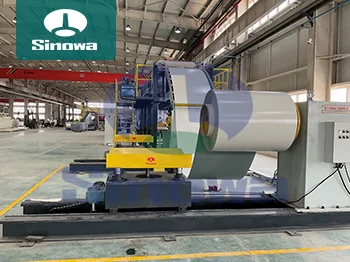
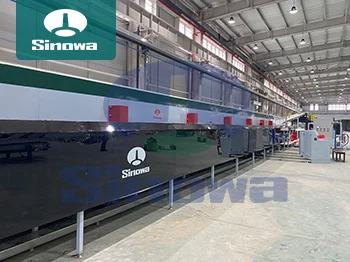
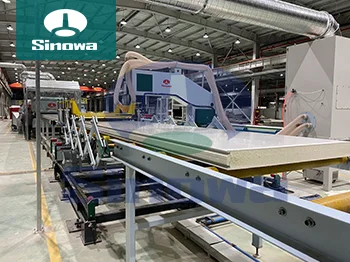
Sinowa is committed to the development and manufacturing of high-end and high-efficiency glass wool sandwich panel production line. Our glass wool sandwich panel production line are leading the way in efficiency, automatic control, human-computer interaction, environmental protection and energy consumption. Using system integration and bus control technology, it realizes the automatic integrated linkage control of the entire glass wool sandwich panel production line, and can achieve remote interactive communication, which has the world-class level and a comprehensive leading high-performance glass wool sandwich panel production line in the market.
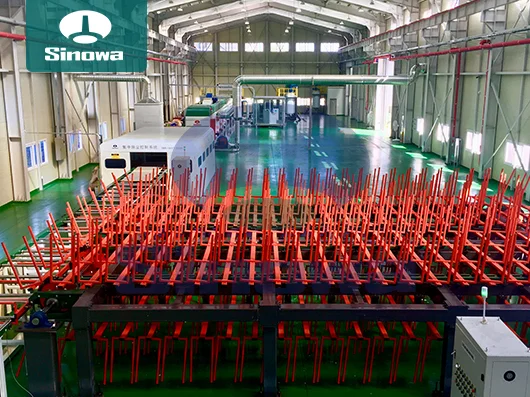
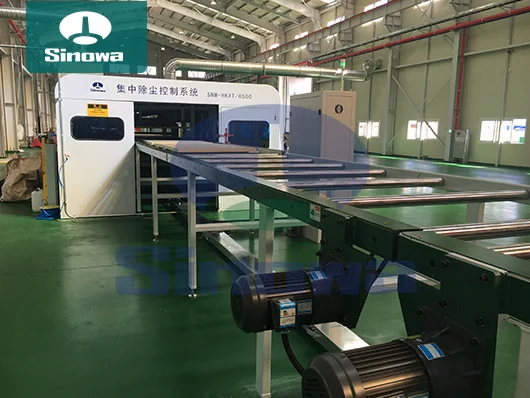
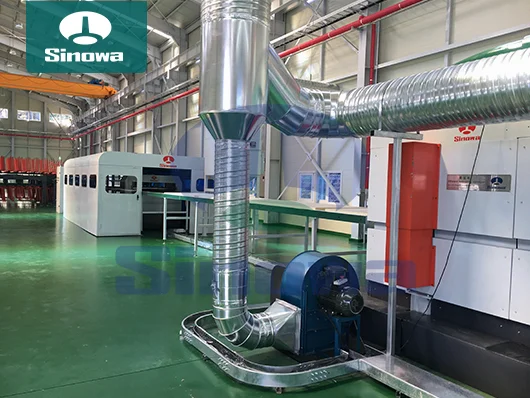
For more than ten years, relying on our innovative manufacturing concept and excellence in quality, reliable and trustworthy service to customers, we cooperate with customers all over the world, exported products to Canada, South Korea, Israel, Australia, the Middle East and other more than 20 countries and regions. contributed to building energy conservation and low-carbon production and have won widespread praise.
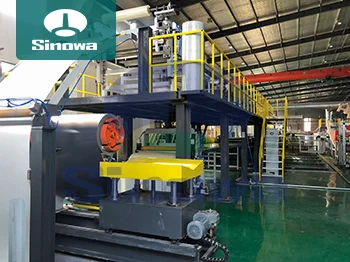
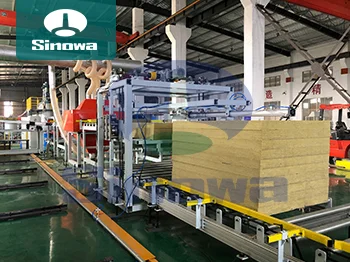
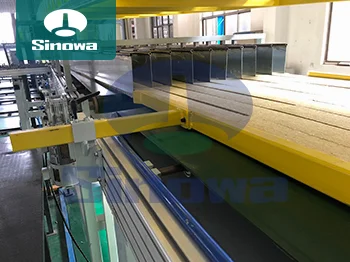
Sinowa has invested outstanding efforts in glass wool sandwich panel production line, this is why our products are more efficiency, quality, automatic control technology, environmental protection, energy consumption indicators and the appearance and safety protection are comprehensively leading, some subversive design changes in many major technical points, these major innovations make our products excellent in price/performance and user experience.
The cheap glass wool sandwich panel production line is a cost-effective, automated manufacturing system designed for mass production of lightweight, thermal-insulating, and soundproof composite panels tailored for construction and industrial enclosure applications. Engineered to balance stable production performance and low operational costs, this integrated production system streamlines the entire panel manufacturing process from raw material feeding to final cutting and stacking, eliminating inefficient manual procedures and reducing overall production expenses. Unlike high-end customized production equipment with redundant functional configurations, this cost-efficient production line focuses on core molding and composite technologies, retaining essential automated modules while simplifying complex auxiliary structures, which effectively lowers equipment investment, maintenance, and energy consumption costs. It is highly adaptable to small and medium-scale production demands, capable of processing glass wool core materials with different densities and matching various metal surface sheets. The finished panels produced feature stable structural performance, excellent thermal insulation and sound absorption effects, meeting the basic application needs of warehouse buildings, temporary facilities, interior partition projects and other scenarios, making it a practical and economical choice for bulk panel production.
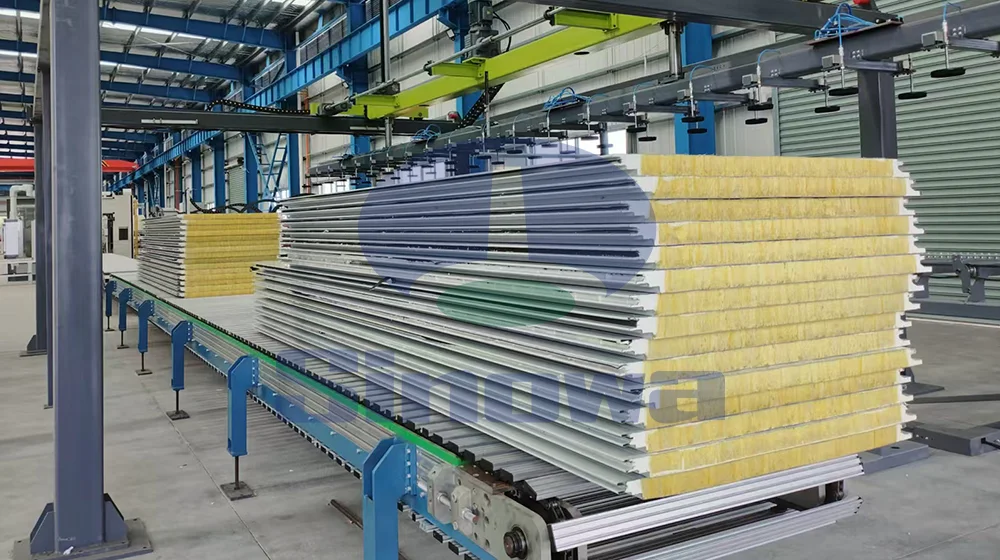
The overall structural design of the cheap glass wool sandwich panel production line adopts a modular and compact layout, which lays a solid foundation for its cost-saving and efficient operation characteristics. Each functional module of the equipment is independently assembled and connected through standardized interfaces, including raw material unwinding, surface plate forming, glue coating, core material laying, composite pressing, curing shaping and fixed-length cutting units. This modular design not only reduces the overall floor space of the production line but also greatly simplifies daily equipment maintenance and component replacement work. When individual parts wear out or fail, operators only need to replace the corresponding single module instead of overhauling the entire equipment, which significantly cuts maintenance time and spare part replacement costs. In addition, the mechanical structure of the production line is optimized for lightweight and durability, using high-strength ordinary alloy materials instead of expensive special materials under the premise of ensuring operational stability. This structural optimization effectively reduces the equipment’s self-weight and manufacturing cost, while avoiding excessive energy consumption during long-term continuous operation. The whole production line is equipped with a simplified centralized control system, which retains core parameter adjustment functions such as operating speed and pressing pressure, abandoning redundant intelligent modules that are unnecessary for conventional production, further reducing equipment procurement and operational thresholds for manufacturers.
The raw material feeding and pretreatment process is the initial core link of the entire production line, which directly affects the uniformity and finished quality of glass wool sandwich panels. The production line is equipped with stable hydraulic unwinding units for upper and lower metal surface sheets, which can stably release coiled metal materials at a constant speed without manual auxiliary feeding. The built-in leveling mechanism can effectively eliminate the bending and wrinkling defects of metal coils during unwinding, ensuring the flatness of surface materials before forming. For the glass wool core material, the equipment is fitted with a special soft conveying and laying device, which avoids fiber breakage and structural deformation caused by excessive extrusion during material transportation. Different from high-precision customized production lines with complex material detection systems, this cost-effective production line adopts simplified material positioning and conveying calibration technology, which can meet the precise laying requirements of conventional glass wool core materials while reducing equipment debugging difficulty. The pretreatment process also includes simple surface cleaning for metal sheets, removing dust and oil stains on the surface to ensure better bonding adhesion between the surface plate and adhesive. The entire feeding and pretreatment process realizes fully automated continuous operation, effectively improving feeding efficiency and consistency, and avoiding product quality differences caused by manual operation errors in traditional semi-automatic production modes.
Gluing and composite pressing are the key processes that determine the bonding strength and structural stability of glass wool sandwich panels, and the production line adopts optimized low-cost and high-efficiency process configurations in this link. The automatic gluing system of the equipment realizes uniform and quantitative adhesive coating on the inner surface of upper and lower metal plates through precise spray and coating integration technology. It adopts ultra-thin uniform gluing design, which can effectively prevent excessive adhesive penetration from damaging the fluffy porous structure of glass wool fibers, ensuring the core material retains good thermal insulation and sound absorption performance. Meanwhile, the gluing system uses low-loss glue supply pipelines and circulating control, which reduces adhesive waste compared with traditional manual gluing and irregular mechanical gluing, cutting raw material consumption costs in mass production. After the gluing process is completed, the glass wool core material is automatically laid between the two glued metal plates and sent to the composite pressing station. The pressing unit is equipped with multiple groups of pressure roller sets, which can apply uniform and stable vertical pressure on the composite blank. The pressure can be adjusted according to the thickness and density of different glass wool core materials, ensuring the core material is fully filled between the surface plates without pore collapse or hollow layering. The lateral limiting structure on both sides of the pressing station can constrain the moving track of the blank, effectively preventing lateral expansion and deformation of the panel during pressing.
The curing shaping and fixed-length cutting process further standardizes the finished product specifications and stabilizes the structural performance of sandwich panels. After composite pressing, the preliminary molded panels enter the slow cooling and curing area configured by the production line. Different from rapid high-temperature curing processes that require high energy consumption, this production line adopts gradient constant-temperature shaping technology, which realizes gradual cooling and internal stress elimination of the panels through reasonable temperature control. This low-energy curing mode not only saves electric energy consumption in the production process but also effectively maintains the fluffy structure of glass wool core materials, avoiding structural shrinkage and performance degradation caused by rapid temperature change. After curing and shaping, the panels maintain stable overall flatness and internal bonding tightness, with no warping or layering problems in subsequent use. The fixed-length cutting unit adopts servo precision positioning and automatic cutting technology, which can flexibly adjust the cutting length according to different production needs. The cutting tool is optimized for wear resistance, ensuring smooth and burr-free panel sections after cutting, eliminating the need for secondary trimming processing. The entire shaping and cutting process runs synchronously with the front-end production process, realizing uninterrupted continuous production, greatly improving production efficiency and reducing the defective rate caused by manual cutting and positioning errors.
The operating control and energy-saving performance of the cheap glass wool sandwich panel production line fully adapt to the cost control needs of medium and small production enterprises. The whole line adopts a simplified PLC centralized control system with frequency conversion speed regulation function, which integrates the operation parameters of each functional unit into a unified control panel. Operators can complete the adjustment of production speed, gluing volume, pressing pressure and cutting specifications through simple button operation, with low operation threshold and no need for professional high-end technical training. The linkage control design between various units ensures synchronous operation of each process link, avoiding production stagnation and material waste caused by mismatched operating speeds. In terms of energy saving, the production line optimizes the power configuration of each motor unit, adopting energy-saving frequency conversion motors that can automatically adjust power output according to production load, effectively reducing idle power consumption during equipment operation. Compared with traditional full-power continuous operating production lines, this equipment can significantly reduce daily energy consumption. In addition, the production line has low heat generation and no harmful substance emission during operation, with a clean and environmentally friendly production process. It does not require complex waste gas and waste residue treatment equipment, further reducing the auxiliary operating costs of the production workshop.
In terms of production flexibility and product applicability, this cost-effective production line can meet the diversified production needs of conventional glass wool sandwich panels. The modular functional structure supports flexible adjustment of production parameters, enabling rapid switching between panels of different thicknesses and core material densities. It can adapt to the production of light and medium-duty glass wool sandwich panels used in building partitions, roof insulation, industrial equipment enclosure and other conventional scenarios. Although it abandons ultra-high-precision customized production functions for special panels, it fully covers the specification requirements of most civilian and industrial conventional panels, achieving a high match between production capacity and market demand. The equipment supports continuous batch production and intermittent small-batch customized production, with strong production flexibility, which can help manufacturers flexibly respond to different order demands. The finished panels produced by this line have consistent specifications, stable thermal insulation, sound insulation and fire-retardant basic properties, good surface flatness and bonding firmness, and can maintain long-term structural stability in conventional use environments.
The economic and practical advantages of the cheap glass wool sandwich panel production line make it occupy an important position in the medium and low-end sandwich panel manufacturing market. In terms of comprehensive cost control, the equipment has low initial investment cost, low daily energy consumption and maintenance cost, and low failure rate during long-term operation, which greatly reduces the overall production cost of manufacturers. Its automated continuous production mode replaces traditional labor-intensive production methods, effectively saving labor costs and improving production efficiency, enabling enterprises to complete more order output with lower operating costs. In terms of product quality stability, the standardized and mechanized production process avoids the quality fluctuation problems of manual production, ensuring the uniformity and reliability of batch products. For small and medium-sized manufacturing enterprises and emerging production workshops, this production line balances production efficiency, product quality and operating costs perfectly. It not only meets the market’s demand for high-cost-performance glass wool sandwich panels but also helps enterprises reduce production risks, improve market competitiveness, and realize stable and sustainable production operation.
« Cheap Glass Wool Sandwich Panel Production Line » Update Date: 2026/9/3
- PIR Insulated Panel Production Line Supplier
- PIR Sandwich Panel Line For Clean Room
- Polyurethane Foam Production Line On Sales
- Glass Wool Panel Production Line From China
- Sandwich Panel Production Machinery Manufacturer
- Sandwich Foam Panel Making Machine Design
- PIR Sandwich Panel Machine For Building
- Cheap Glass Wool Equipment
- Sandwich Foam Panel Making Machine Manufacturer
- High-tech Sandwich Panel Production Machinery
- High-quality Continuous PUF Panel Production Line
- Cold Storage Sandwich Panel Production Line For Sale
- High-tech Isolation Sandwich Panel Production Line
- Cheap Continuous PU Sandwich Panel Line
- Cheap Insulated Sandwhich Panel Production Line
- High-end Glass Wool Production Line
- High-end Soundproofing Sandwich Panel Production Line
- Custom Fully Automatic PU Sandwich Panel Machine
- Color Steel Sandwich Panel Production Line Factory
- Glass Wool Sandwich Panel Machine Design
- Links:
- Sandwich Panel Continuous Production Line
- Automatic and Continuous Sandwich Panel Production Line
- Cheap and Low Price Sandwich Panel Production Line
- China Sandwich Panel Production Line Factory
- Color Steel Sandwich Panel Production Line For Cold Storage
- Continuous Composite Foam Sandwich Panel Production Line
- Continuous Production Line For Rockwool and Mineral Wool Sandwich Panels
- Continuous PU Phenolic Insulation Panel Production Line
- Continuous PU PIR Sandwich Panel Production Line
- Continuous PUF PUR Sandwich Panel Production Line
- Continuous Sandwich Panel Production Line For Roof and Wall
- Customized and Design Sandwich Panel Production Line
- Decorative Sandwich Panel Production Line For Glass Wool Boards
- High Quality Sandwich Panel Production Line For Sale
- Polyurethane(PU) Sandwich Panel Production Line
- Sandwich Panel Production Line Manufacturer and Supplier