
High-tech PU Insulation Board Production Line
Sinowa is a well-known manufacturer and technical service provider of high-end pu insulation board production line, learn more about high-tech pu insulation board production line, please contact Sinowa's technical engineer, tell us what you need, we will contact you as soon as possible!
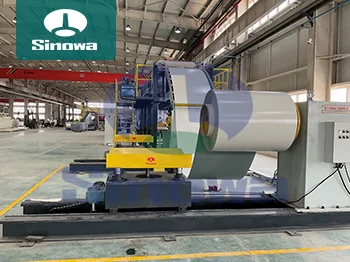
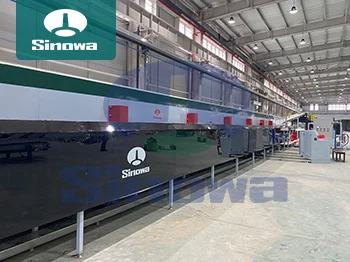
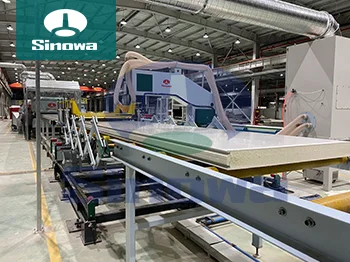
Sinowa is committed to the development and manufacturing of high-end and high-efficiency pu insulation board production line. Our pu insulation board production line are leading the way in efficiency, automatic control, human-computer interaction, environmental protection and energy consumption. Using system integration and bus control technology, it realizes the automatic integrated linkage control of the entire pu insulation board production line, and can achieve remote interactive communication, which has the world-class level and a comprehensive leading high-performance pu insulation board production line in the market.
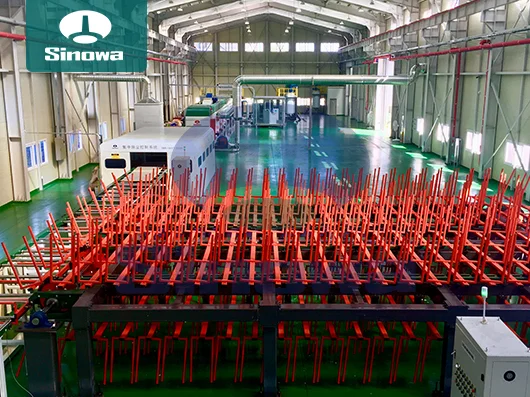
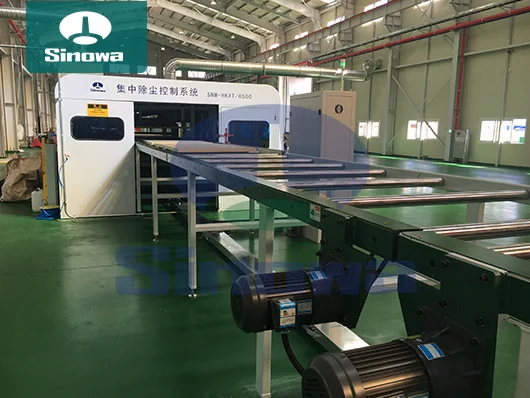
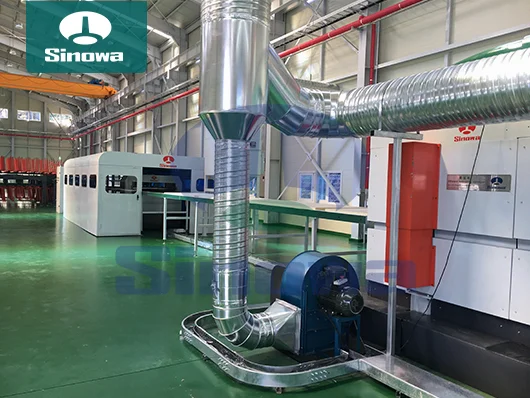
For more than ten years, relying on our innovative manufacturing concept and excellence in quality, reliable and trustworthy service to customers, we cooperate with customers all over the world, exported products to Canada, South Korea, Israel, Australia, the Middle East and other more than 20 countries and regions. contributed to building energy conservation and low-carbon production and have won widespread praise.
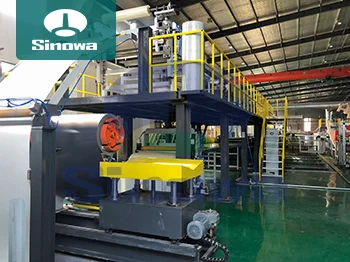
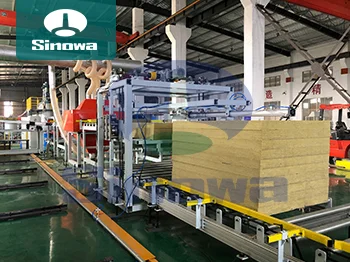
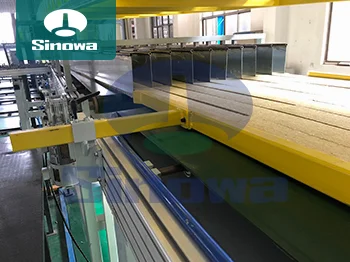
Sinowa has invested outstanding efforts in pu insulation board production line, this is why our products are more efficiency, quality, automatic control technology, environmental protection, energy consumption indicators and the appearance and safety protection are comprehensively leading, some subversive design changes in many major technical points, these major innovations make our products excellent in price/performance and user experience.
In the context of global emphasis on energy conservation and environmental protection, the demand for high-performance insulation materials in the construction, refrigeration, and transportation industries has surged dramatically. Among these materials, polyurethane (PU) insulation boards stand out due to their excellent thermal insulation properties, light weight, and high mechanical strength. The high-tech PU insulation board production line, as the core equipment for manufacturing such high-quality products, has undergone continuous technological innovations to realize automation, efficiency, and environmental friendliness.
The high-tech PU insulation board production line is a complex integrated system consisting of multiple functional sections, each of which is closely linked to ensure the continuous and stable production of high-quality insulation boards. The production process typically starts with the unwinding and preheating of facing materials. Facing materials for PU insulation boards are diverse, including aluminum foil, colored steel plates, cement-based cloth, kraft paper, and non-woven fabrics, which can be selected according to different application scenarios and performance requirements. In the unwinding section, double unwinding units are usually adopted to ensure continuous supply of materials, avoiding production interruptions caused by material replacement. The web control accumulator in this section can adjust the tension of the facing materials in real time to prevent wrinkles or breaks, which is crucial for ensuring the flatness of the final product. Subsequently, the facing materials enter the preheating unit, where they are heated to a specific temperature. This preheating process not only enhances the bonding strength between the facing materials and the PU foam core but also promotes the foaming reaction of the subsequent PU mixture, improving the overall performance of the insulation board.
After the preheating of the facing materials, the production process moves to the key stage of raw material mixing and metering. The main raw materials for PU insulation boards include polyol and isocyanate, supplemented by additives such as catalysts, blowing agents, flame retardants, and curing agents. The high-tech production line is equipped with precise metering systems that can accurately control the proportion of each raw material. This precision is essential because even slight deviations in the ratio of raw materials can significantly affect the foaming effect, thermal insulation performance, and mechanical strength of the final PU foam. The metering units adopt advanced flow control technology, which can realize real-time monitoring and adjustment of the raw material flow, ensuring the stability and consistency of the mixture. In the mixing process, the raw materials are injected into a high-speed mixer, where they undergo rapid and uniform mixing. The high-speed mixing not only ensures the full reaction of the raw materials but also reduces the generation of bubbles in the mixture, improving the density uniformity of the PU foam core.
The foaming and lamination section is the core part of the entire production line, where the formation of the PU insulation board's core structure and the combination with the facing materials are completed. The uniformly mixed PU raw material mixture is continuously sprayed onto the lower facing material that has been preheated and positioned. With the movement of the conveyor belt, the mixture is covered by the upper facing material, and then enters the foaming zone. In the foaming zone, the mixture undergoes a chemical reaction to generate a large number of gas bubbles, which expand and fill the space between the two layers of facing materials. The foaming process is carried out under strictly controlled temperature and pressure conditions. The high-tech production line uses intelligent temperature control systems to maintain the foaming zone at an optimal temperature, which promotes the full expansion of the bubbles and the curing of the foam. At the same time, the pressure control system ensures that the foam expands evenly without excessive expansion or collapse, ensuring the thickness and density uniformity of the insulation board. During the foaming process, the PU foam core and the facing materials are firmly bonded together, forming a composite structure with excellent integrity.
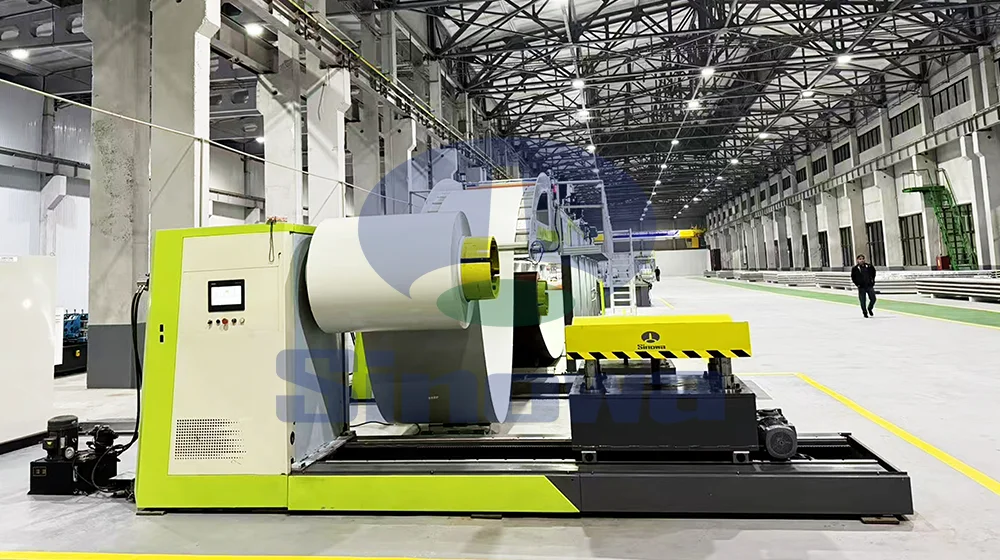
After the foaming and lamination, the composite board enters the cooling and curing section. At this stage, the initially formed PU insulation board has not yet fully cured and has poor stability, so it needs to go through a cooling and curing process to achieve the required performance. The high-tech production line usually adopts a combination of natural cooling and forced cooling. In the forced cooling section, cooling air or cooling water is used to rapidly reduce the temperature of the insulation board, accelerating the curing speed. This not only shortens the production cycle but also improves the dimensional stability of the insulation board, preventing deformation caused by uneven cooling. During the cooling and curing process, the production line is equipped with online monitoring systems that can real-time detect the temperature and curing degree of the insulation board, ensuring that the product meets the preset quality standards. After the cooling and curing are completed, the insulation board enters the cutting section.
The cutting section is responsible for cutting the continuous composite board into finished products of specified sizes. The high-tech production line is equipped with high-precision cutting equipment, which can realize automatic cutting according to the preset dimensions. The cutting equipment adopts advanced numerical control technology, which has the characteristics of high cutting precision, fast cutting speed, and smooth cutting edges. This not only improves the production efficiency but also ensures the dimensional accuracy of the finished products, facilitating the subsequent installation and use of the insulation boards. In addition, the cutting section is also equipped with waste recycling devices, which can collect and reuse the cutting waste, reducing material waste and improving the utilization rate of raw materials. After cutting, the finished insulation boards are conveyed to the stacking and packaging section. Here, the automatic stacking equipment arranges the finished products neatly, and then the packaging equipment wraps them with protective materials to prevent damage during transportation and storage. The entire stacking and packaging process is fully automated, reducing manual intervention and improving production efficiency.
The high-tech PU insulation board production line is characterized by a high degree of automation, which is one of its most prominent advantages. The entire production process, from the unwinding of facing materials, raw material metering and mixing, foaming and lamination, to cooling and curing, cutting, stacking, and packaging, is realized through automatic control systems. These automatic control systems are composed of advanced sensors, controllers, and actuators, which can realize real-time monitoring and adjustment of various parameters in the production process. For example, the sensors can detect the temperature, pressure, flow rate, and other parameters in each section in real time, and transmit the data to the controller. The controller processes and analyzes the data, and then issues control commands to the actuators to adjust the relevant parameters, ensuring the stability and consistency of the production process. The high degree of automation not only reduces the reliance on manual operations, lowers the labor intensity of workers, and reduces the probability of human errors but also improves the production efficiency. The production speed of high-tech production lines can reach up to 60 meters per minute, and the production capacity can reach 4300 square meters per hour for boards with a thickness of 50 millimeters and a width of 1200 millimeters, which is far higher than that of traditional production lines.
Modular design is another important feature of high-tech PU insulation board production lines. The production line is composed of multiple independent modules, such as the unwinding module, mixing and metering module, foaming and lamination module, cooling and curing module, cutting module, and stacking and packaging module. These modules are connected by bolts instead of welding, realizing standardized production. The modular design brings many advantages. First, it facilitates the assembly and disassembly of the production line. When the production line needs to be installed or relocated, each module can be transported separately and then assembled on site, which reduces the difficulty and cost of installation and relocation. Second, it improves the flexibility and adaptability of the production line. By replacing or adding different modules, the production line can produce insulation boards of different types, specifications, and performance, meeting the diverse needs of customers. For example, by replacing the facing material unwinding module and adjusting the raw material ratio, the production line can produce PU insulation boards with different facing materials and foam core densities. Third, it simplifies the maintenance and repair of the production line. When a certain module fails, it can be disassembled and repaired independently without affecting the operation of other modules, reducing the downtime of the production line and improving the reliability of the equipment.
Energy conservation and environmental protection are important development trends of high-tech PU insulation board production lines, and various energy-saving and environmental protection technologies have been widely applied in the production process. In terms of energy conservation, the production line adopts a series of measures to reduce energy consumption. For example, the laminating conveyor is covered with insulation materials on the outside, which improves the thermal insulation performance of the conveyor and reduces heat loss. At the same time, the production line optimizes the structure of the equipment, reducing the power of the motors. The motor power of the laminating conveyor in some high-tech production lines is only 3.0 kilowatts, which is about 50% of that of similar products. Comprehensive calculations show that the energy consumption of the entire production line is equivalent to 40% or even lower than that of similar products on the market. In terms of environmental protection, the production line mainly adopts environmentally friendly raw materials and processes. For example, pentane is used as a blowing agent instead of traditional blowing agents with ozone-depleting potential. Pentane has no ozone-depleting effect and low global warming potential, which is in line with environmental protection requirements. In addition, the production line is equipped with waste gas and wastewater treatment devices, which can effectively treat the waste gas and wastewater generated during the production process, reducing environmental pollution. At the same time, the recycling of cutting waste also reduces material waste, realizing the recycling of resources.
The high-tech PU insulation board production line also has the advantage of high product quality stability. Due to the adoption of precise metering systems, intelligent temperature and pressure control systems, and online monitoring systems, the production process is strictly controlled, which ensures the consistency of the product quality. The PU insulation boards produced by the high-tech production line have uniform density, stable thermal insulation performance, and high mechanical strength. Their thermal conductivity can be as low as 0.022 W/(m·K), which can effectively reduce the heat transfer between the inside and outside of the building, improving the energy efficiency of the building. At the same time, these insulation boards have good flame retardancy, corrosion resistance, and durability, which can meet the long-term use requirements of different application scenarios. The high quality stability of the products not only enhances the market competitiveness of the products but also reduces the maintenance costs of the users.
The PU insulation boards produced by the high-tech production line have a wide range of applications, covering many fields such as construction, refrigeration, transportation, and municipal engineering. In the construction field, they are widely used in the insulation of pitched roofs, flat roofs, exterior walls, and floors of residential buildings, industrial workshops, and public buildings. Due to their excellent thermal insulation performance and thin profile, they can effectively reduce the energy consumption of buildings for heating and cooling, which is of great significance for promoting energy-saving buildings. For example, in the insulation of flat roofs, the use of PU insulation boards can meet the increasingly strict thermal insulation requirements without increasing the thickness of the insulation layer excessively, avoiding problems such as affecting the use of skylights. In the renovation of old buildings, PU insulation boards are also an ideal choice for interior insulation, which can improve the energy efficiency of old buildings without damaging the external appearance of the buildings.
In the refrigeration field, PU insulation boards are widely used in the construction of cold storage, refrigerated trucks, and refrigerated containers. Their excellent thermal insulation performance can effectively maintain the low temperature inside the refrigeration equipment, reducing the energy consumption of the refrigeration system. At the same time, the light weight of PU insulation boards can reduce the load of refrigerated trucks and containers, improving the transportation efficiency. In the transportation field, in addition to refrigerated trucks, PU insulation boards are also used in the insulation of trains, ships, and other means of transportation, providing a comfortable environment for passengers and protecting the transported goods. In the municipal engineering field, PU insulation boards are used in the insulation of pipelines, ventilation ducts, and subway stations. The insulation of pipelines can reduce the heat loss of hot water pipelines and the freezing of water supply pipelines in winter, ensuring the normal operation of the pipeline system. The insulation of subway stations can improve the indoor thermal environment and reduce the energy consumption of the air conditioning system.
With the continuous advancement of technology and the increasing emphasis on environmental protection, the high-tech PU insulation board production line is also facing new development trends. One of the important trends is the development towards low-carbon and sustainable production. More and more production lines are adopting bio-based raw materials, such as bio-based polyols made from bio-waste, to reduce the carbon emissions in the production process. For example, some manufacturers use bio-waste as an alternative raw material for isocyanate, which can reduce the embodied carbon emissions of PU insulation boards by up to 43% while maintaining the original performance. At the same time, the recycling technology of PU insulation boards is also constantly developing. Through chemical decomposition or mechanical recycling, the waste PU insulation boards can be reused to produce new raw materials, realizing the circular economy of resources.
Another development trend is the integration of digital and intelligent technologies. The future high-tech PU insulation board production line will be more intelligent, with functions such as remote monitoring, predictive maintenance, and intelligent optimization. Through the Internet of Things technology, the production line can realize the interconnection of various equipment, and the operators can monitor the operation status of the production line in real time through mobile devices, and remotely adjust the production parameters when necessary. The predictive maintenance system can analyze the operation data of the equipment, predict potential faults in advance, and remind the maintenance personnel to carry out maintenance, reducing the downtime of the production line. The intelligent optimization system can automatically optimize the production process parameters according to the raw material characteristics and product requirements, improving the production efficiency and product quality.
In addition, the production line is also developing towards higher flexibility and customization. With the diversification of market demand, customers have increasingly personalized requirements for PU insulation boards, such as different sizes, thicknesses, facing materials, and performance parameters. The future high-tech production line will be able to realize rapid switching between different production processes and product specifications, meeting the customized needs of customers efficiently. At the same time, the production line will also pay more attention to the safety of the production process, adopting more advanced safety protection technologies to ensure the safety of workers and equipment.
In conclusion, the high-tech PU insulation board production line is an important symbol of the modernization of the insulation material industry. It realizes the efficient, automatic, and environmentally friendly production of PU insulation boards through advanced technological means such as precise metering, intelligent control, and modular design. The PU insulation boards produced by these production lines have excellent performance and are widely used in various fields, making an important contribution to energy conservation, environmental protection, and sustainable development. With the continuous integration of low-carbon technology, digital technology, and intelligent technology, the high-tech PU insulation board production line will usher in a more brilliant development prospect, providing stronger support for the transformation and upgrading of related industries and the realization of global climate goals.
« High-tech PU Insulation Board Production Line » Update Date: 2026/1/12
- Decorative PU Sandwich Panel Production Line On Sales
- Low Price Glass Wool Panel Production Line
- Sandwich Duct Panel Machine Design
- High Efficiency Fully Automatic PU Sandwich Panel Production Line
- Composite Panel Production Line From China
- Glass Wool Equipment In China
- Custom Cold Room Sandwich Panel Production Line
- High Efficiency Foam Sandwich Panel Machine
- High-end Fully Automatic PU Sandwich Panel Machine
- Sandwich Panel Making Equipment From China
- Cold Room Sandwich Panel Production Line Supplier
- High-end Automatic Sandwich Panel Production Line
- PU Panel Machine Supplier
- Cheap Sandwich Panel Integrated Production Line
- High-tech PU Isolation Panel Production Line
- High Efficiency Sandwich Panel Foam Making Machine
- High-end PU Insulated Panel Production Line
- Low Price Sandwich Roof Panel Production Line
- PU Insulation Panel Production Line In China
- High-tech Sandwich Panel Foam Production Line
- Links:
- Sandwich Panel Continuous Production Line
- Automatic and Continuous Sandwich Panel Production Line
- Cheap and Low Price Sandwich Panel Production Line
- China Sandwich Panel Production Line Factory
- Color Steel Sandwich Panel Production Line For Cold Storage
- Continuous Composite Foam Sandwich Panel Production Line
- Continuous Production Line For Rockwool and Mineral Wool Sandwich Panels
- Continuous PU Phenolic Insulation Panel Production Line
- Continuous PU PIR Sandwich Panel Production Line
- Continuous PUF PUR Sandwich Panel Production Line
- Continuous Sandwich Panel Production Line For Roof and Wall
- Customized and Design Sandwich Panel Production Line
- Decorative Sandwich Panel Production Line For Glass Wool Boards
- High Quality Sandwich Panel Production Line For Sale
- Polyurethane(PU) Sandwich Panel Production Line
- Sandwich Panel Production Line Manufacturer and Supplier