
PUR Sandwich Panel Production Line Supplier
Sinowa is a well-known manufacturer and technical service provider of high-end pur sandwich panel production line, learn more about pur sandwich panel production line supplier, please contact Sinowa's technical engineer, tell us what you need, we will contact you as soon as possible!
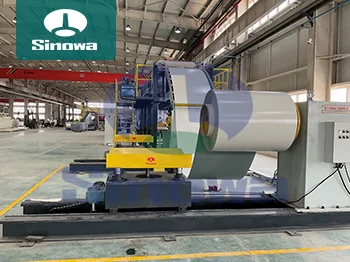
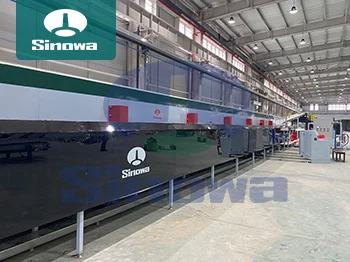
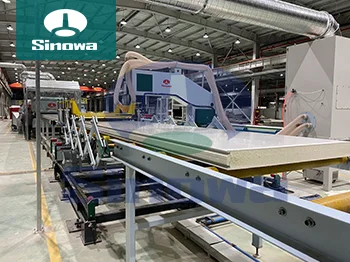
Sinowa is committed to the development and manufacturing of high-end and high-efficiency pur sandwich panel production line. Our pur sandwich panel production line are leading the way in efficiency, automatic control, human-computer interaction, environmental protection and energy consumption. Using system integration and bus control technology, it realizes the automatic integrated linkage control of the entire pur sandwich panel production line, and can achieve remote interactive communication, which has the world-class level and a comprehensive leading high-performance pur sandwich panel production line in the market.
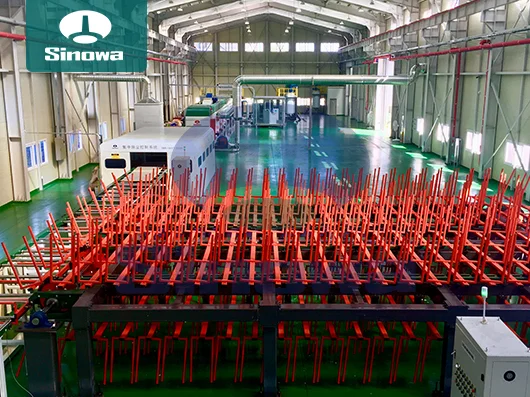
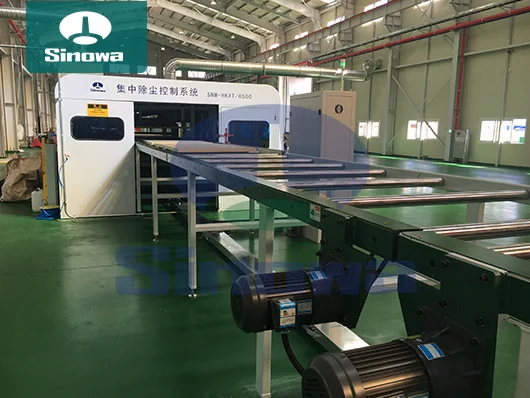
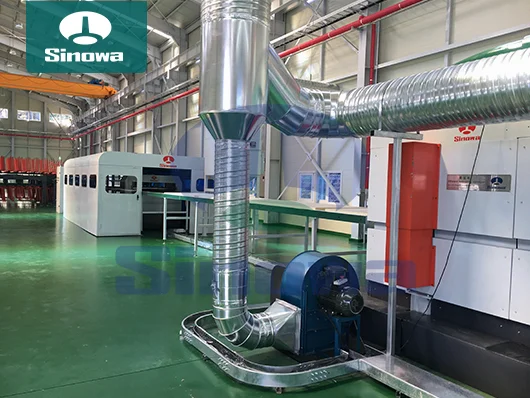
For more than ten years, relying on our innovative manufacturing concept and excellence in quality, reliable and trustworthy service to customers, we cooperate with customers all over the world, exported products to Canada, South Korea, Israel, Australia, the Middle East and other more than 20 countries and regions. contributed to building energy conservation and low-carbon production and have won widespread praise.
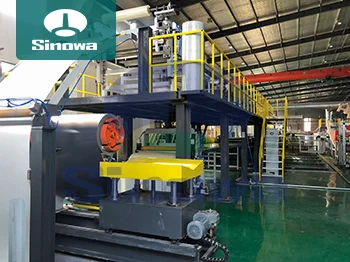
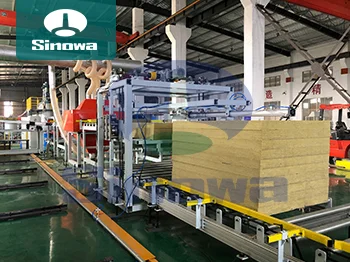
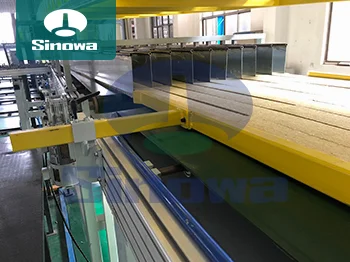
Sinowa has invested outstanding efforts in pur sandwich panel production line, this is why our products are more efficiency, quality, automatic control technology, environmental protection, energy consumption indicators and the appearance and safety protection are comprehensively leading, some subversive design changes in many major technical points, these major innovations make our products excellent in price/performance and user experience.
In the modern construction and industrial sectors, the demand for efficient, high-performance insulation materials has been steadily rising, driven by the global focus on energy conservation, environmental protection, and sustainable development. Among these materials, PUR sandwich panels have emerged as a preferred choice for a wide range of applications, thanks to their exceptional thermal insulation, structural stability, and durability. The production of high-quality PUR sandwich panels relies heavily on advanced and reliable production lines, which integrate multiple precision processes to ensure consistency, efficiency, and adherence to strict quality standards. As a dedicated supplier of PUR sandwich panel production lines, the focus is on delivering integrated solutions that meet the diverse needs of manufacturers across various industries, enabling them to produce panels that excel in performance and adaptability.
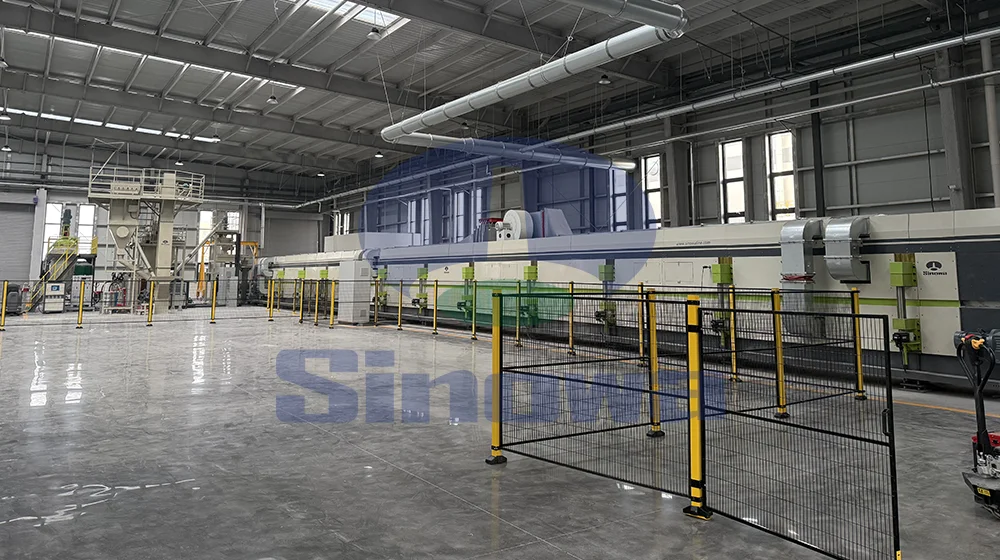
PUR, or polyurethane rigid foam, is a high-performance polymer material that forms the core of PUR sandwich panels, offering superior thermal insulation properties compared to traditional insulation materials such as polystyrene (EPS) and rock wool. Its low thermal conductivity ensures effective heat retention, reducing energy consumption in buildings and industrial facilities, while its closed-cell structure provides excellent water resistance and durability, extending the service life of the panels. When combined with facing materials such as pre-coated steel, aluminum, stainless steel, or fiberglass, PUR sandwich panels become versatile composite materials that can be tailored to suit specific application requirements, from industrial warehouses and cold storage facilities to residential buildings and cleanrooms. The production line plays a critical role in transforming these raw materials into high-quality panels, with each process step designed to optimize the performance and consistency of the final product.
A typical PUR sandwich panel production line is an integrated system that combines multiple interconnected modules, each responsible for a specific stage of the production process. These modules work in synchronization to ensure a seamless, efficient workflow, from the feeding of raw materials to the stacking of finished panels. The production process begins with the uncoiling and preprocessing of facing materials. Large coils of metal sheets, such as pre-coated steel or aluminum, are loaded onto automatic uncoilers, which feature tension control mechanisms to prevent material distortion and ensure smooth, consistent feeding. This step is crucial because any irregularities in the facing materials can affect the structural integrity and appearance of the final panels. Some production lines also incorporate surface treatment units, such as corona discharge systems, to enhance the adhesion between the facing materials and the PUR foam core, ensuring a strong bond that withstands long-term use.
Following the uncoiling and preprocessing stage, the facing materials are fed into the roll forming section, where they are shaped into the desired profiles through a series of precision-engineered rollers. The roll forming process is highly customizable, allowing manufacturers to produce panels with various profiles, such as corrugated, trapezoidal, or flat, depending on the intended application. For example, corrugated profiles are often used for roofing panels to enhance water drainage, while flat profiles are suitable for interior walls and cleanroom applications. The roll forming section is equipped with quick-change mechanisms, enabling rapid adjustment between different profiles, which improves production flexibility and reduces downtime when switching between product specifications.
The next critical stage in the production process is the PUR foam mixing and pouring. This stage requires precise control of raw material ratios and processing parameters to ensure the quality of the foam core. The PUR foam is produced by mixing two main components: isocyanate and polyol, along with additives such as foaming agents, catalysts, and flame retardants. High-precision metering pumps are used to deliver these components in exact proportions, ensuring consistent foam density and performance. The mixing process is carried out in a high-pressure mixing head, which ensures thorough blending of the components, resulting in a uniform foam with a dense closed-cell structure. The foam is then continuously poured between the upper and lower facing materials, which are moving synchronously through the production line.
After the foam is poured, the composite structure enters the lamination and curing section, where the foam expands and bonds with the facing materials. This section typically consists of a double-belt press, which applies uniform pressure to the panel to ensure proper adhesion between the core and the facing materials. The press is equipped with a precise temperature control system, which regulates the curing temperature of the PUR foam. The curing process is critical, as it determines the final properties of the foam core, including its thermal insulation, mechanical strength, and durability. The length of the curing section is designed to allow sufficient time for the foam to fully cure, ensuring that the panels maintain their shape and performance over time. Some advanced production lines also incorporate a closed-loop control system, which uses high-precision sensors to monitor the thickness and temperature of the panels during curing, making real-time adjustments to ensure consistency.
Once the panels are fully cured, they move to the cutting and edge trimming section. This section is equipped with servo-driven band saws or circular saws, which cut the continuous panel into the desired lengths with high precision. The cutting process is automated, ensuring that each panel meets the exact size requirements of the customer. Edge trimming is also performed to remove any excess material and ensure clean, smooth edges, which improves the appearance of the panels and facilitates easy installation. The cutting and trimming section is designed to minimize material waste, with some systems incorporating scrap recycling mechanisms to reduce environmental impact.
The final stage of the production process is the stacking and packaging of the finished panels. Automatic stacking systems are used to neatly stack the panels, reducing the need for manual labor and minimizing the risk of damage during handling. The stacking system can be adjusted to accommodate different panel sizes and thicknesses, ensuring flexibility in production. Packaging is an optional but recommended step, as it protects the panels from scratches, moisture, and other damage during transportation and storage. Packaging materials such as plastic film or cardboard are used to wrap the stacked panels, ensuring that they arrive at the customer’s facility in perfect condition.
One of the key advantages of modern PUR sandwich panel production lines is their high degree of automation. Automation not only improves production efficiency but also reduces the risk of human error, ensuring consistent product quality. The production line is controlled by a central PLC (Programmable Logic Controller) system, which integrates all the modules and allows operators to monitor and adjust production parameters in real time. The PLC system features a user-friendly interface, making it easy for operators to set up production jobs, track production progress, and troubleshoot any issues that may arise. Some advanced systems also offer remote monitoring and control capabilities, allowing manufacturers to manage the production line from a distance, which improves operational flexibility and reduces downtime.
Flexibility is another important feature of PUR sandwich panel production lines. Manufacturers often need to produce panels of different sizes, thicknesses, and profiles to meet the diverse needs of their customers. Modern production lines are designed to accommodate these variations, with adjustable components that allow for quick changes in panel specifications. For example, the thickness of the foam core can be adjusted by modifying the gap between the pressing rollers in the lamination section, while the width and length of the panels can be adjusted in the cutting section. This flexibility enables manufacturers to respond quickly to market demands and expand their product range without significant investments in new equipment.
Energy efficiency and environmental friendliness are also key considerations in the design of PUR sandwich panel production lines. Many production lines incorporate energy-saving technologies, such as variable-frequency drives for motors, which reduce energy consumption by adjusting the speed of the equipment based on production needs. The use of pentane-based foaming agents instead of traditional HCFCs helps to reduce greenhouse gas emissions, aligning with global environmental regulations. Additionally, the production process generates minimal waste, with scrap materials being recycled wherever possible. This focus on sustainability not only reduces the environmental impact of the production process but also helps manufacturers reduce costs and improve their corporate social responsibility profile.
The performance of the PUR sandwich panels produced by these lines makes them suitable for a wide range of applications. In the construction industry, they are used for exterior walls, roofs, and interior partitions, providing excellent thermal insulation and reducing energy costs for buildings. In cold storage facilities and refrigerated transport, their superior insulation properties help to maintain consistent low temperatures, ensuring the preservation of perishable goods such as food and pharmaceuticals. Industrial warehouses and factories use PUR sandwich panels for their structural stability and durability, while cleanrooms in the pharmaceutical and electronic industries benefit from their smooth, easy-to-clean surfaces. Agricultural buildings, such as livestock housing and grain storage facilities, also use these panels for their insulation and weather resistance.
When selecting a PUR sandwich panel production line, manufacturers should consider several key factors to ensure that the line meets their specific needs. The production capacity of the line is an important consideration, as it should align with the manufacturer’s output requirements. Lines with higher production capacities are suitable for large-scale manufacturers, while smaller lines are ideal for medium-sized enterprises or those with lower production volumes. The level of automation is another factor, as higher automation can reduce labor costs and improve production efficiency. The flexibility of the line, including its ability to produce different panel specifications, is also crucial, as it allows manufacturers to adapt to changing market demands. Additionally, the reliability and after-sales support provided by the supplier are important, as they ensure that the production line operates smoothly and any issues are resolved quickly.
In conclusion, PUR sandwich panel production lines are essential equipment for manufacturers looking to produce high-quality, high-performance composite panels. These lines integrate advanced technologies and automated processes to ensure consistency, efficiency, and flexibility, enabling manufacturers to meet the diverse needs of the construction, industrial, and cold chain sectors. With a focus on energy efficiency, environmental friendliness, and product quality, modern PUR sandwich panel production lines are designed to help manufacturers reduce costs, improve productivity, and gain a competitive edge in the market. Whether for large-scale mass production or small-batch custom orders, these production lines provide a reliable and efficient solution for producing PUR sandwich panels that meet the highest standards of performance and durability.
« PUR Sandwich Panel Production Line Supplier » Update Date: 2026/4/13
- Fully Automatic Sandwich Panel Making Machine For Sale
- Discontinuous PU Sandwich Panel Line Price
- High-tech Sandwich Roof Wall Panel Making Machine
- Custom PU Insulation Panel Production Line
- Continuous Sandwich Panel Production Line Price
- High Efficiency Sandwich Panel Making Equipment
- PU Sandwich Panel Machine For Sale
- High-tech PUR Sandwich Panel Line
- High-tech Discontinuous PU Sandwich Panel Machine
- Sandwich Panel Integrated Production Line Supplier
- Metal Sandwich Panel Production Line Manufacturer
- Continuous PU Sandwich Panel Line From China
- PIR Insulation Panel Production Line For Sale
- Custom Sandwich Roof Wall Panel Making Machine
- Corrugated Sandwich Panel Production Line Supplier
- Insulation Sandwich Panel Machines
- PIR Wall Panel Production Line Supplier
- Polyurethane Sandwich Panel Line For Cold Room
- High Efficiency Isolation PU Sandwich Panel Line
- Polyurethane Foam Production Line Manufacturer