
Continuous PU Sandwich Panel Line From China
Sinowa is a well-known manufacturer and technical service provider of high-end continuous pu sandwich panel line, learn more about continuous pu sandwich panel line from china, please contact Sinowa's technical engineer, tell us what you need, we will contact you as soon as possible!
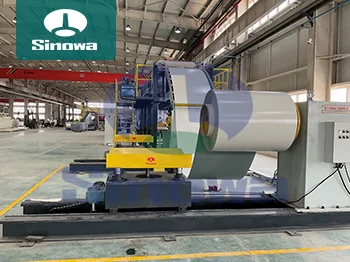
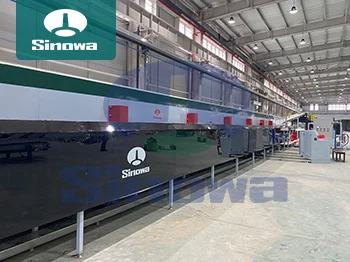
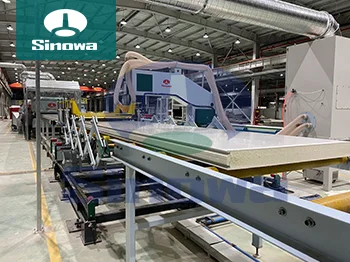
Sinowa is committed to the development and manufacturing of high-end and high-efficiency continuous pu sandwich panel line. Our continuous pu sandwich panel line are leading the way in efficiency, automatic control, human-computer interaction, environmental protection and energy consumption. Using system integration and bus control technology, it realizes the automatic integrated linkage control of the entire continuous pu sandwich panel line, and can achieve remote interactive communication, which has the world-class level and a comprehensive leading high-performance continuous pu sandwich panel line in the market.
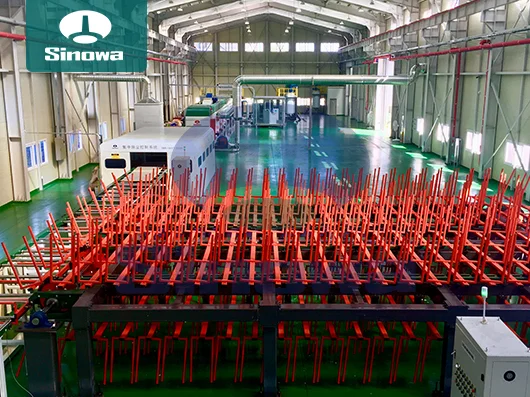
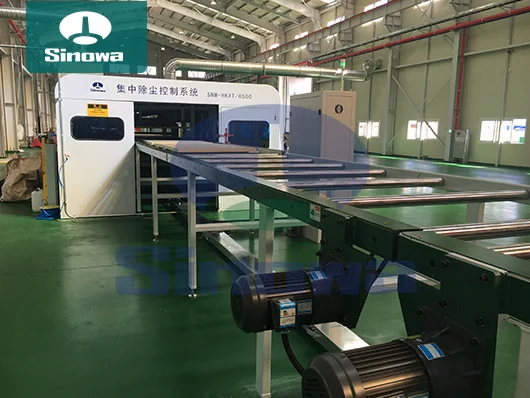
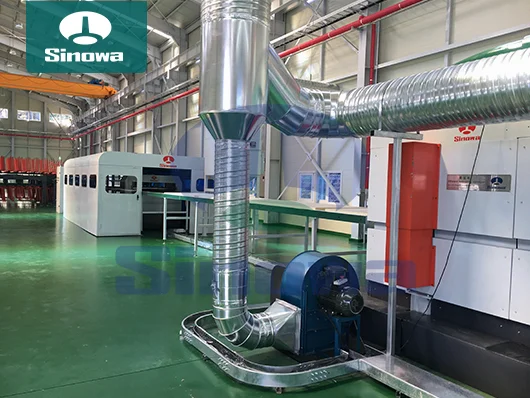
For more than ten years, relying on our innovative manufacturing concept and excellence in quality, reliable and trustworthy service to customers, we cooperate with customers all over the world, exported products to Canada, South Korea, Israel, Australia, the Middle East and other more than 20 countries and regions. contributed to building energy conservation and low-carbon production and have won widespread praise.
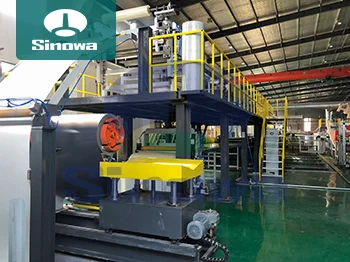
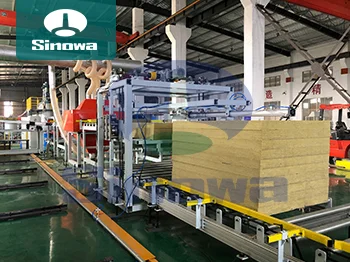
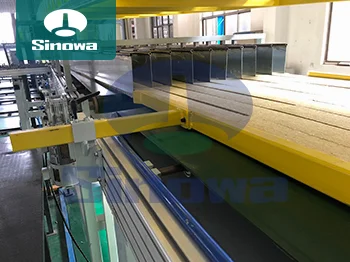
Sinowa has invested outstanding efforts in continuous pu sandwich panel line, this is why our products are more efficiency, quality, automatic control technology, environmental protection, energy consumption indicators and the appearance and safety protection are comprehensively leading, some subversive design changes in many major technical points, these major innovations make our products excellent in price/performance and user experience.
Continuous PU sandwich panel lines have become a cornerstone in modern manufacturing, especially in the production of composite materials that balance structural strength, thermal insulation, and versatility. Originating from ongoing technological advancements and industrial optimization, these production lines from China have gained global recognition for their efficiency, adaptability, and ability to meet diverse industry demands. Unlike discontinuous production methods that suit small-batch or specialized products, continuous lines are designed for high-volume output, making them indispensable for large-scale construction, cold storage, and industrial projects worldwide. The integration of advanced automation, modular design, and precise process control has positioned Chinese continuous PU sandwich panel lines as reliable solutions for businesses seeking consistent quality and operational efficiency.
At the core of a continuous PU sandwich panel line is a series of interconnected systems that work in tandem to transform raw materials into finished composite panels. The production process begins with the uncoiling and feeding of facing materials, typically metal sheets such as galvanized steel, aluminum, or pre-painted metal coils. These coils are loaded onto decoilers, which gently unroll and feed the sheets into the line at a steady pace. The facing materials then pass through a series of roll forming stands, where they are progressively bent and shaped into specific profiles according to design requirements. This roll forming process ensures uniformity in the panel’s surface structure, with precise control over dimensions, angles, and curvature to meet different application needs—whether for roof panels, wall cladding, or cold storage partitions. The use of precision rollers and guided gear systems minimizes material waste and ensures that each panel maintains consistent structural integrity.
Following the roll forming stage, the next critical step is the injection of polyurethane (PU) foam core. Liquid PU chemicals are mixed in exact proportions in a high-pressure foaming system, where they undergo a rapid polymerization reaction. This reactive mixture is then continuously injected between the two pre-formed facing sheets as they move through the production line. The PU foam expands quickly to fill the entire gap between the facings, adhering tightly to both surfaces to form a solid, integrated composite structure. The expansion and curing process is carefully controlled by regulating temperature and line speed, ensuring that the foam achieves the desired density, thermal insulation performance, and structural bond. The closed-cell structure of PU foam not only provides exceptional thermal resistance—with a thermal conductivity as low as 0.022 W/(m·K)—but also offers excellent moisture resistance, preventing water absorption and subsequent degradation of the panel’s performance over time.
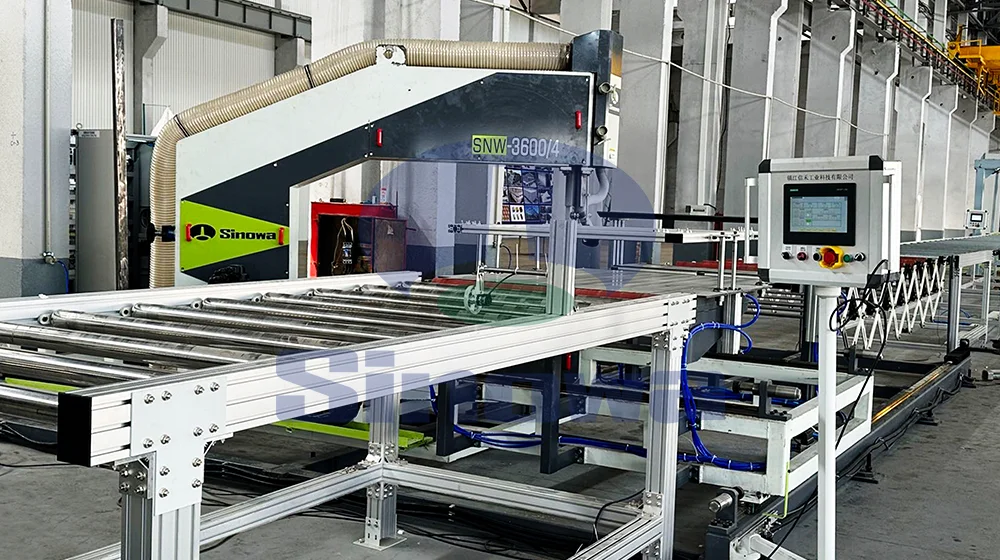
After foam injection, the composite panel moves into a cooling and curing zone. Here, the panel is subjected to controlled cooling to accelerate the curing of the PU foam, transforming it from a liquid mixture into a rigid, stable core. The cooling process is optimized to maintain the panel’s shape and prevent warping, with conveyor systems ensuring steady movement through the zone. Once fully cured, the panel proceeds to the cutting stage, where an automatic cutting machine trims it to the required length without stopping the production line—a key feature that distinguishes continuous lines from discontinuous alternatives. This non-stop cutting capability maximizes production efficiency, allowing for high-speed output rates that can reach 3 to 8 meters per minute, depending on product specifications. Additional inline processes can be integrated as needed, such as punching, embossing, or surface spraying, to enhance the panel’s functionality or aesthetic appeal for specific applications.
One of the defining advantages of Chinese continuous PU sandwich panel lines is their high level of automation and integrated control systems. These lines utilize centralized control consoles with human-machine interface (HMI) technology, allowing operators to monitor and adjust all production parameters from a single station. Parameters such as line speed, foam density, temperature, and cutting length can be fine-tuned in real time, ensuring consistent product quality even during long production runs. Advanced control systems also incorporate fault self-diagnosis functions, which detect anomalies in the production process and alert operators promptly, minimizing downtime and reducing the risk of defective products. The automation of the entire line significantly reduces the need for manual labor, with a typical line requiring only 5 to 8 operators to manage the entire production process—from raw material feeding to finished product stacking. This not only lowers labor costs but also reduces human error, further enhancing the reliability and consistency of the output.
Modular design is another key feature that sets Chinese continuous PU sandwich panel lines apart. The components of these lines are designed to be modular, allowing for flexible integration and combination according to customer needs. This modularity enables manufacturers to easily switch between different panel types—such as roof panels, wall panels, or cold storage panels—by reconfiguring specific modules, without the need for extensive retooling. It also facilitates customization of panel dimensions, with adjustable width and thickness settings to accommodate a wide range of specifications. For example, panels can be produced in thicknesses ranging from 50mm to 200mm and widths up to 2600mm, with lengths customizable up to 12 meters or more. This flexibility makes the lines suitable for diverse applications, from small prefabricated cabins to large industrial warehouses and cold storage facilities.
The versatility of the panels produced by these lines contributes to their widespread adoption across multiple industries. In the construction sector, PU sandwich panels are widely used for roofing, wall cladding, and partitions in industrial buildings, commercial complexes, prefabricated modular homes, and sports facilities. Their lightweight nature reduces the overall structural load of buildings, while their thermal insulation properties help lower energy consumption for heating and cooling—an increasingly important factor in sustainable construction practices. In the cold storage and logistics industry, these panels are indispensable for constructing cold rooms, refrigerated trucks, and food storage facilities, as their superior insulation performance maintains stable temperature environments, protecting perishable goods. They are also used in agricultural buildings, such as animal housing and crop storage facilities, where moisture resistance and thermal regulation are critical. Additionally, the panels find applications in the automotive and transportation sectors, used in the production of caravans, trailers, and portable cabins due to their durability and ease of installation.
Chinese continuous PU sandwich panel lines also excel in energy efficiency and environmental performance. The production process is optimized to minimize energy consumption, with advanced heating and cooling systems that reduce power usage while maintaining process stability. The use of PU foam as a core material further enhances the environmental benefits of the end product, as its exceptional insulation properties contribute to reduced carbon emissions in buildings and cold storage facilities. Moreover, the continuous production process generates less waste compared to discontinuous methods, as precise material control and automated operations minimize overproduction and material scrap. Many lines also incorporate recycling systems for excess PU foam and facing materials, further reducing their environmental footprint.
The adaptability of these lines to different core materials is another significant advantage. While primarily designed for PU foam, many continuous lines can be configured to produce panels with other core materials, such as rock wool, glass wool, or polystyrene, by adjusting the foaming or feeding systems. This flexibility allows manufacturers to cater to specific market demands, such as fire-resistant panels for high-risk applications or cost-effective alternatives for budget-conscious projects. For example, rock wool core panels offer enhanced fire resistance, making them suitable for buildings with strict fire safety requirements, while PU foam panels remain the preferred choice for applications requiring maximum thermal insulation.
In the global market, Chinese continuous PU sandwich panel lines have gained traction due to their balanced combination of performance, flexibility, and cost-effectiveness. As urbanization accelerates in developing economies, the demand for efficient construction materials and manufacturing equipment continues to grow, driving the adoption of these lines. In mature markets, businesses are increasingly upgrading their existing equipment to continuous lines to improve efficiency, reduce labor costs, and meet stricter sustainability standards. The ability of Chinese manufacturers to offer tailored solutions—from small-scale lines for regional producers to large, fully automated systems for multinational corporations—has further strengthened their position in the global market.
The reliability and durability of the equipment itself are also key factors contributing to the success of Chinese continuous PU sandwich panel lines. The lines are constructed with high-quality components and undergo rigorous testing to ensure stable operation even in harsh industrial environments. Modular design not only enhances flexibility but also simplifies maintenance, as individual modules can be inspected, repaired, or replaced without shutting down the entire line. This reduces maintenance downtime and extends the service life of the equipment, providing long-term value for businesses.
Looking ahead, the development of Chinese continuous PU sandwich panel lines is focused on further improving automation, energy efficiency, and sustainability. Advances in digital technology, such as the integration of IoT (Internet of Things) sensors and data analytics, are enabling predictive maintenance, where potential equipment issues are identified before they cause downtime. This proactive approach to maintenance further enhances operational efficiency and reduces costs. Additionally, research is ongoing to develop more eco-friendly PU formulations, such as bio-based polyols, to reduce the environmental impact of the foam core. There is also a trend toward higher production speeds and greater customization capabilities, allowing manufacturers to meet the evolving demands of the global market.
In conclusion, continuous PU sandwich panel lines from China represent a sophisticated blend of automation, precision engineering, and flexibility, making them essential equipment for modern composite material manufacturing. Their ability to produce high-quality, consistent panels at high volumes, while accommodating diverse specifications and applications, has made them a preferred choice for businesses worldwide. From the construction of energy-efficient buildings to the development of advanced cold storage solutions, these lines play a crucial role in supporting sustainable industrial growth. As technology continues to evolve, Chinese continuous PU sandwich panel lines are poised to remain at the forefront of the global market, driving innovation and meeting the changing needs of industries across the globe.
« Continuous PU Sandwich Panel Line From China » Update Date: 2026/1/24
- Cheap PU Sandwich Panel Machine
- High-quality Continuous Sandwich Panel Production Line
- Glass Wool Sandwich Panel Line Factory
- High-quality Glass Wool Sandwich Panel Machine
- Systems For Glass Wool Production
- Metal Sandwich Panel Production Line
- High-end Fully Automatic PU Sandwich Panel Production Line
- High-quality Glass Wool Sandwich Panel Line
- Roof Sandwich Panel Production Line In China
- High-quality Fully Automatic Sandwich Panel Making Machine
- PU Foam Production Line For House
- PU Isolation Panel Production Line On Sales
- Sandwich Panel Making Equipment For Sale
- PU Foam Production Line Manufacturer
- High-quality PU Insulation Panel Production Line
- Low Price Sandwich Panel Integrated Production Line
- High-end Roof Sandwich Panel Production Line
- PU Foam Production Line On Sales
- Wall Sandwich Panel Production Line For Sale
- PUR Sandwich Panel Line For Sale
- Links:
- Sandwich Panel Continuous Production Line
- Automatic and Continuous Sandwich Panel Production Line
- Cheap and Low Price Sandwich Panel Production Line
- China Sandwich Panel Production Line Factory
- Color Steel Sandwich Panel Production Line For Cold Storage
- Continuous Composite Foam Sandwich Panel Production Line
- Continuous Production Line For Rockwool and Mineral Wool Sandwich Panels
- Continuous PU Phenolic Insulation Panel Production Line
- Continuous PU PIR Sandwich Panel Production Line
- Continuous PUF PUR Sandwich Panel Production Line
- Continuous Sandwich Panel Production Line For Roof and Wall
- Customized and Design Sandwich Panel Production Line
- Decorative Sandwich Panel Production Line For Glass Wool Boards
- High Quality Sandwich Panel Production Line For Sale
- Polyurethane(PU) Sandwich Panel Production Line
- Sandwich Panel Production Line Manufacturer and Supplier