
Sandwich Panel Integrated Production Line Supplier
Sinowa is a well-known manufacturer and technical service provider of high-end sandwich panel integrated production line, learn more about sandwich panel integrated production line supplier, please contact Sinowa's technical engineer, tell us what you need, we will contact you as soon as possible!
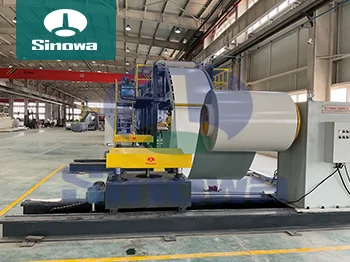
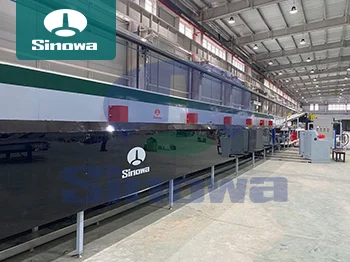
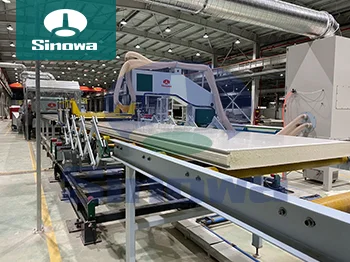
Sinowa is committed to the development and manufacturing of high-end and high-efficiency sandwich panel integrated production line. Our sandwich panel integrated production line are leading the way in efficiency, automatic control, human-computer interaction, environmental protection and energy consumption. Using system integration and bus control technology, it realizes the automatic integrated linkage control of the entire sandwich panel integrated production line, and can achieve remote interactive communication, which has the world-class level and a comprehensive leading high-performance sandwich panel integrated production line in the market.
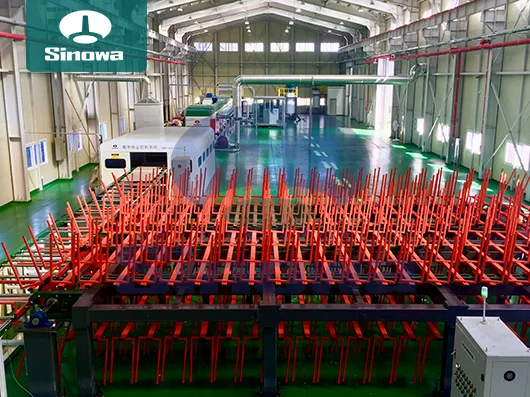
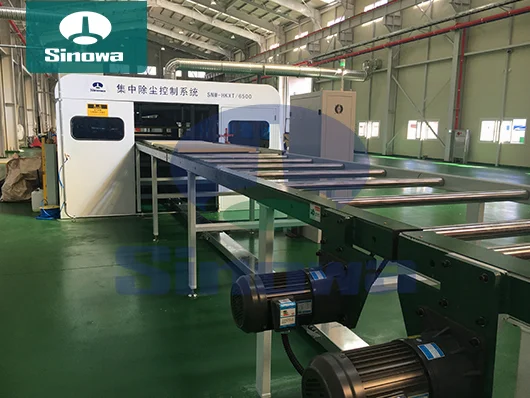
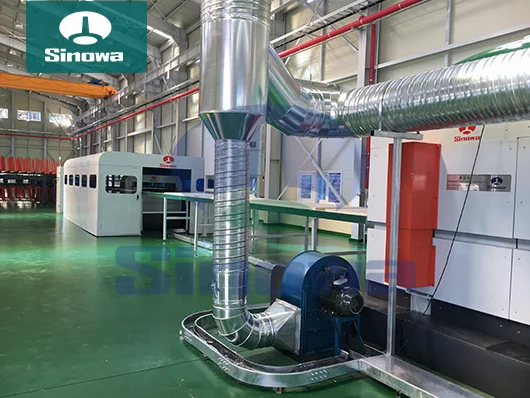
For more than ten years, relying on our innovative manufacturing concept and excellence in quality, reliable and trustworthy service to customers, we cooperate with customers all over the world, exported products to Canada, South Korea, Israel, Australia, the Middle East and other more than 20 countries and regions. contributed to building energy conservation and low-carbon production and have won widespread praise.
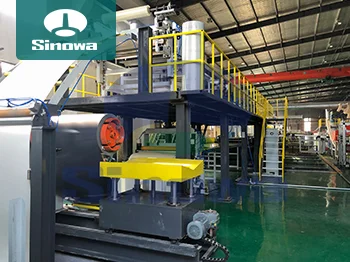
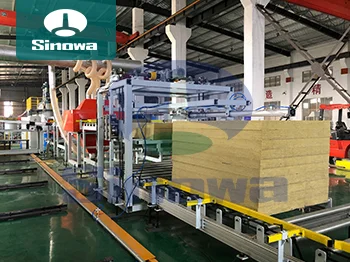
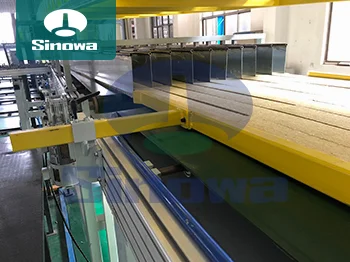
Sinowa has invested outstanding efforts in sandwich panel integrated production line, this is why our products are more efficiency, quality, automatic control technology, environmental protection, energy consumption indicators and the appearance and safety protection are comprehensively leading, some subversive design changes in many major technical points, these major innovations make our products excellent in price/performance and user experience.
The sandwich panel integrated production line stands as a comprehensive manufacturing system designed to streamline the full sequence of panel fabrication from raw material feeding to finished product stacking. Unlike separate standalone machines that require manual handling and material transfer between individual stations, this integrated setup connects every core process into one continuous workflow. Raw base materials are unwound steadily at the starting section, with automatic alignment devices keeping metal sheets stable as they move forward to surface treatment modules. These modules carry out cleaning and coating preparation work to enhance bonding performance between the metal skin and the core insulating material. The core material, whether foam or mineral-based substrate, is automatically metered and laid evenly onto the lower metal sheet. Upper metal sheet is then closed over the core layer, forming a composite structure before entering the pressing zone. Operators can adjust running speed and compression parameters according to the target panel thickness and density. Human intervention at this stage is limited to routine monitoring rather than constant manual adjustment, which greatly reduces labor input and lowers the chance of inconsistent product quality. The whole line is built with flexible compatibility so that it can switch between different panel specifications without extensive mechanical reconfiguration. Manufacturers using this integrated system gain better control over production rhythm, shorten transition time between batches, and minimize material waste caused by repeated loading and unloading. Such features make the equipment a practical choice for factories aiming to scale up composite panel output while maintaining stable product consistency across long production runs.
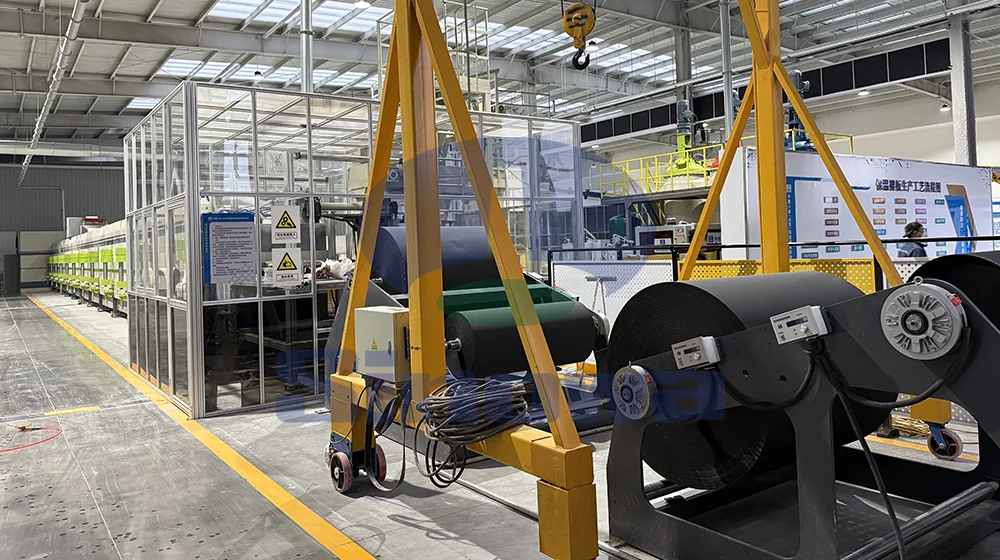
Consistent precision in material lamination serves as the core advantage delivered by a qualified sandwich panel integrated production line supplier. A reliable supplier does not merely assemble mechanical parts together; they design the whole production logic to ensure uniform pressure and temperature distribution across the entire panel surface during the curing process. Any uneven stress or temperature fluctuation can create weak bonding spots, which may lead to delamination or surface deformation after the panels leave the factory. Professional suppliers optimize the structure of pressing and curing sections to maintain stable operating conditions even during non-stop long-hour production. They also embed real-time sensing components along the conveying path to track dimensional data of semi-finished panels continuously. When deviations in thickness, width or alignment are detected, the system sends prompt alerts for operators to make timely corrections. Beyond mechanical design, the supplier considers material characteristics of different core and surface layers, adjusting the matching mechanism between feeding speed and curing duration. This tailored approach prevents over-curing or insufficient solidification, two common issues that undermine panel durability. Good suppliers also focus on the synchronization of every moving unit across the line. If one station runs faster or slower than adjacent sections, it can pull or squeeze the composite material and ruin panel flatness. Carefully calibrated synchronization ensures smooth material movement from the first feeding point all the way to cutting.
Equipment durability and convenient maintenance arrangements are critical factors that distinguish trustworthy sandwich panel integrated production line suppliers in the market. Heavy continuous operation creates ongoing wear on rollers, drive chains, sealing parts and cutting tools, and a well-engineered line accounts for this natural mechanical loss in its original design. Reputable suppliers select robust structural components that can withstand prolonged cyclic loads, reducing the frequency of unexpected shutdowns. At the same time, they avoid overly complicated internal layouts that block staff access to vulnerable parts. Key consumable components are placed at easy service positions, allowing maintenance teams to replace worn pieces quickly without major disassembly of large machine frames. The supplier also provides systematic operational guidance covering routine inspection schedules, lubrication procedures and fault diagnosis methods. Practical guidance helps factory technicians identify early warning signs before small faults escalate into full production halts. Many suppliers build modular structures for major functional units, so a single damaged module can be isolated and repaired separately while other sections of the line remain usable. This modular design effectively cuts downtime and protects the factory’s overall production capacity. In addition, suppliers pay attention to dust and debris management structures built into the equipment. Residues generated during cutting and forming can accumulate on transmission parts and accelerate wear, so integrated cleaning mechanisms help extend service life of the whole line and keep the working environment tidy.
Automation level and intelligent control capacity define how efficiently a sandwich panel integrated production line can adapt to changing market demands. Modern integrated lines rely on centralized control systems to manage all production parameters from one main operating interface. Production staff can input target specifications on the control terminal, and the system automatically adjusts feeding volume, line speed, pressing force and cutting length accordingly. This replaces tedious manual parameter resetting for every new product batch and reduces human error. Data collected during operation is stored within the control system, recording running status, material consumption and output volume for each production shift. Production managers can review these records to analyze efficiency, identify bottlenecks and optimize production plans. Safety interlock functions are embedded within the control framework to protect on-site workers. When protective doors are opened or abnormal pressure is detected, the system triggers controlled deceleration and stops relevant movements to prevent accidents. A capable supplier balances high automation with operational simplicity. Overly complex interfaces may raise training barriers for factory workers, while too basic controls limit flexibility. The supplier calibrates the human-machine interaction to ensure both advanced automatic adjustment and straightforward manual override functions. Operators can take direct control when needed, which is essential during equipment testing or special trial production tasks. This balanced intelligent setup helps production plants achieve higher automation without creating excessive operational complexity.
Customization capability is a key service dimension offered by experienced sandwich panel integrated production line suppliers, as different manufacturing sites have unique operational requirements. Some factories have limited workshop floor space, so the supplier can rearrange the layout of each functional section, adopting compact or folded line arrangements to fit available space. Others need to produce panels with special surface profiles or customized edge structures, which requires modification to forming and cutting units. The supplier carries out technical communication with buyers at the early project stage to clarify production targets, available site conditions, raw material types and expected output capacity. Based on collected information, technical teams adjust the configuration of feeding, pressing, curing and cutting modules rather than providing a one-size-fits-all standard machine package. Customization also includes adjustment of production speed range to match the buyer’s expected output scale. Smaller production operations may need a moderately paced line with lower maximum throughput, while large-scale manufacturers require high-speed continuous operation ability. Throughout the customization process, the supplier maintains focus on overall system coordination. Individual customized parts must work seamlessly with the rest of the production line, avoiding mismatched performance that could compromise panel quality. After finishing the equipment adjustment, the supplier conducts comprehensive offline testing before delivery to verify that customized functions operate as designed.
On-site installation, commissioning and technical training form an indispensable part of the full service package from professional sandwich panel integrated production line suppliers. Once the equipment arrives at the buyer’s workshop, technical teams arrange systematic installation work to position all units, connect transmission systems, set up control circuits and verify mechanical alignment. Every connection point and moving component undergoes careful checking to eliminate hidden issues before trial operation starts. Commissioning stages include empty machine running tests and trial production with real raw materials. During trial runs, technicians observe panel forming quality and fine-tune system parameters until stable qualified output is achieved. Training sessions are delivered for both equipment operators and maintenance personnel. Operator training covers standard startup and shutdown procedures, parameter adjustment steps, daily inspection routines and basic abnormal situation handling. Maintenance training focuses on part inspection, routine upkeep, fault location and safe component replacement. The supplier also sorts out complete technical documentation including circuit diagrams, structural drawings and operation manuals for permanent reference. Effective training empowers the buyer’s team to run the equipment independently after the supplier’s technicians leave the site. This transfer of technical knowledge prevents production disruptions caused by unfamiliar operation and helps the factory maximize the value of the production investment over long-term use.
After-sales support and long-term technical assistance demonstrate the reliability of sandwich panel integrated production line suppliers beyond equipment delivery and commissioning. Production lines run year-round in many manufacturing plants, and remote technical support becomes valuable when unexpected operating problems appear. Suppliers establish channels for buyers to submit technical inquiries, share equipment status data and describe fault phenomena. Technical specialists can analyze the situation remotely and provide step-by-step guidance to resolve many common issues without on-site visits. For faults requiring physical intervention, the supplier organizes timely on-site support according to agreed service arrangements. The supplier also keeps stable supply channels for spare components, ensuring that users can source replacement parts when consumable or critical components wear out. Timely spare part availability avoids long production shutdowns waiting for component procurement. As new material formulations and panel designs emerge in the market, forward-looking suppliers continue to upgrade their technical knowledge base. They can offer advice on adjusting existing production lines to process new raw materials or develop new panel styles, extending the usable scope of the original equipment. Continuous technical support helps manufacturers respond to evolving market requirements and protects their investment in the integrated production system over many years of operation.
When selecting a sandwich panel integrated production line supplier, buyers need to evaluate comprehensive system performance and service capacity rather than focusing only on the physical appearance of machinery. A suitable supplier can turn production requirements into a complete, coordinated manufacturing solution covering mechanical structure, control system, on-site implementation and continuing technical backing. Buyers should assess the supplier’s practical experience in delivering similar integrated lines, examine how the supplier handles technical challenges during production testing and understand the full scope of after-project support. The value of the production line comes from stable continuous operation, consistent finished panel quality, manageable maintenance workload and flexible adaptability to changing product demands. A well-matched integrated line reduces operational friction, optimizes material utilization and supports steady expansion of composite panel manufacturing capacity. With reliable equipment and dependable technical support, panel manufacturers can concentrate on product development and market expansion, confident that their core production system can sustain consistent output quality. Building a cooperative relationship with a capable supplier creates a solid foundation for long-term manufacturing growth, helping panel producers maintain competitiveness in a continuously evolving composite material industry.
« Sandwich Panel Integrated Production Line Supplier » Update Date: 2026/10/20
Tags: Sandwich Panel Integrated Production Line , sandwich panel integrated production line, sandwich panel integrated production line manufacturer, sandwich panel integrated production line supplier, sandwich panel integrated production line for sale, customized sandwich panel integrated production line, china sandwich panel integrated production line
- High-tech Polyurethane Sandwich Panel Line
- Low Price PUR Sandwich Panel Machine
- Sandwich Panel Manufacturing Line For Sale
- Composite Panel Production Line Factory
- Cheap Continuous PU Sandwich Panel Production Line
- PIR Sandwich Panel Line From China
- High Efficiency Sandwich Wall Panel Production Line
- High-end Decorative PU Sandwich Panel Production Line
- Polyurethane Sandwich Panel Line Price
- Sandwich Panel Line
- High-quality Foam Sandwich Panel Machine
- High-end Isolation Sandwich Panel Production Line
- Polyurethane Sandwich Panel Machinery On Sales
- Top Insulation Sandwich Panel Machines
- Composite Panel Production Line Manufacturer
- High-quality Glass Wool Production Line
- High Efficiency Wall Sandwich Panel Production Line
- Continuous PU Sandwich Panel Production Line On Sales
- Insulation Sandwich Panel Machines Manufacturer
- Custom Decorative PU Sandwich Panel Production Line
- Links:
- Sandwich Panel Continuous Production Line
- Automatic and Continuous Sandwich Panel Production Line
- Cheap and Low Price Sandwich Panel Production Line
- China Sandwich Panel Production Line Factory
- Color Steel Sandwich Panel Production Line For Cold Storage
- Continuous Composite Foam Sandwich Panel Production Line
- Continuous Production Line For Rockwool and Mineral Wool Sandwich Panels
- Continuous PU Phenolic Insulation Panel Production Line
- Continuous PU PIR Sandwich Panel Production Line
- Continuous PUF PUR Sandwich Panel Production Line
- Continuous Sandwich Panel Production Line For Roof and Wall
- Customized and Design Sandwich Panel Production Line
- Decorative Sandwich Panel Production Line For Glass Wool Boards
- High Quality Sandwich Panel Production Line For Sale
- Polyurethane(PU) Sandwich Panel Production Line
- Sandwich Panel Production Line Manufacturer and Supplier
- Sandwich Panel Production Machinery and Equipment