
Rockwool Insulated Panel Manufacturing Line
Sinowa is a rockwool insulated panel manufacturing line supplier from china, customized high-quality & high efficiency rockwool insulated panel manufacturing line at low price, the adoption of system integration technology and bus control technology accomplishes the full automatization of integrated and coordinated control of the rockwool insulated panel manufacturing line with accessible remote interactive communication. Ranking the first-class level in the world, it is currently the rockwool insulated panel manufacturing line in the market taking a comprehensive lead in high performance.
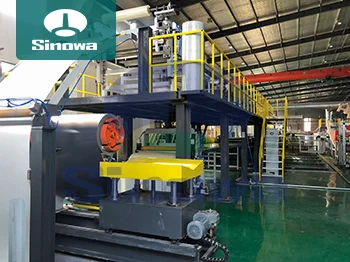
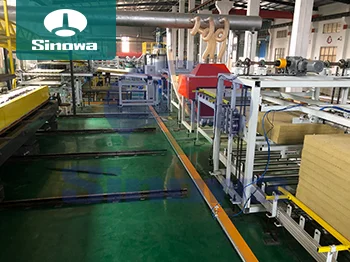
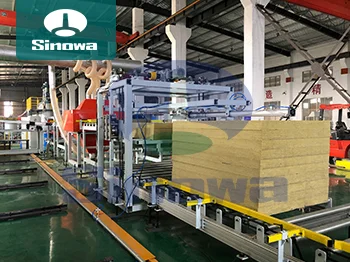
The high-tech rockwool insulated panel manufacturing line can meet a variety of production needs of customers, the whole rockwool insulated panel manufacturing line design concept of modularization enables all our components to be integrated and combined at will. Our high efficiency rockwool insulated panel manufacturing line can easily automate the production of roof sandwich panel, wall sandwich panel, cold storage sandwich panel and other products by different combination and configuration selection and siple switching. The inner core layer can be polyrethane or rock wool, glass wool, an so on. The precision servo hoisting mechanism employed by the main engine without hydraulic system makes the board thickness control flexible and the customer may conveniently change or adjust the board thickness. There will be not such troubles as hydraulic system adjustment, leakage, maintenance, etc.
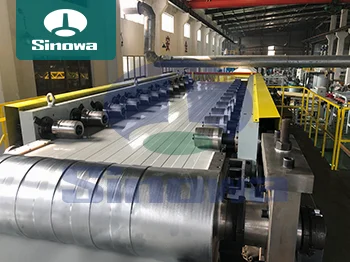
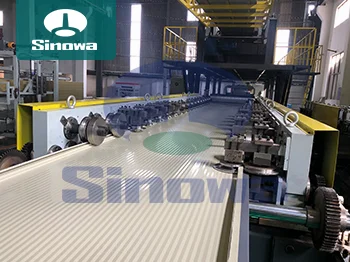
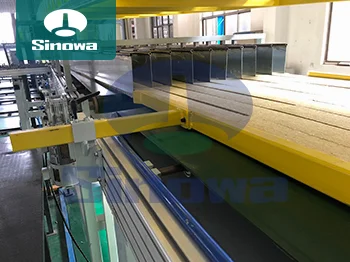
The high precision rockwool insulated panel manufacturing line has high adaptability, which may produce various sandwich panel of the PU, PIR and rock wool systems. We may design various products according to the customer’s requirements, including various configurations, so as to meet their demands with flexible price system. Highly integrated and linked control system centralizes all control points at the main central center, achieving parameter linkage, fault self-diagnosis controlled by the whole line and shipping distance control. High-level automatic control system also saves the manpower and reduces the manpower loss for customers. High-level energy saving and protection design makes the whole rockwool insulated panel manufacturing line possible to produce around the clock throughout the year and the customer will save huge budget. In addition, the isolated heat preservation room is constructed for warming the environment. The energy saving and protection design of our manufacturing line may guarantee that the customer’s production line may be freely heated and produce in the main time to save more costs for customers.
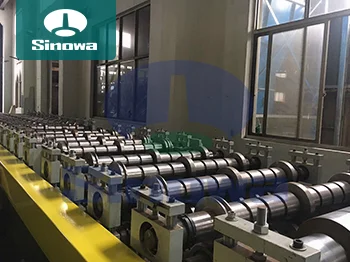
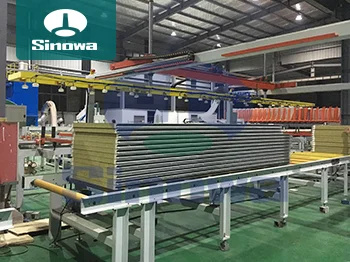
The high-power low-consumption design quickens the reaction of the cheap rockwool insulated panel manufacturing line while energy consumption is kept low. With the brand-new, fully sealed inner insulation design, the energy consumption is controlled at the minimum level to achieve the design objective of less than an hour for the insulation system to be activated from the room temperature above 5℃ to the production process temperature. The energy consumption is only 40% that of those similar products.
The Rockwool Insulated Panel Manufacturing Line represents a sophisticated integration of advanced engineering, material science, and automated technology, designed to produce high-performance insulation panels that play a crucial role in modern construction and industrial applications. These panels, characterized by their exceptional thermal insulation, fire resistance, and acoustic properties, are crafted through a series of meticulously controlled processes that transform natural raw materials into durable, multi-functional building components. The manufacturing line operates as a continuous, streamlined system, where each stage is closely coordinated to ensure consistency, efficiency, and the highest quality of the final product, meeting the evolving demands for energy efficiency and safety in building environments worldwide.
The foundation of the rockwool insulated panel manufacturing process lies in the careful selection and preparation of raw materials, a stage that directly influences the performance and durability of the end product. The primary raw material for the rockwool core is natural volcanic rock, typically basalt, combined with other mineral materials such as slag. These materials are chosen for their high melting point and fibrous properties when processed, which are essential for creating the insulating core. Before entering the production line, the raw materials undergo rigorous sorting and crushing to achieve a uniform particle size, ensuring consistent melting in subsequent stages. Additional materials, including a non-hazardous binder, dust-laying oil, and water repellent, are also prepared and pre-mixed to precise proportions. The binder plays a critical role in forming the fibrous structure into a stable panel, while the dust-laying oil and water repellent enhance the panel's usability and longevity by reducing dust generation and improving moisture resistance. All raw materials are stored in enclosed silos or covered areas to protect them from environmental factors such as moisture and contamination, and they are transported via enclosed conveyors to maintain cleanliness and prevent material loss.
The next critical stage in the manufacturing line is the melting of the raw materials, a process that requires extremely high temperatures to convert solid minerals into a molten state. The raw material mixture is fed into a furnace, which can be either a cupola furnace or a gas pool furnace, depending on the production scale and energy requirements. Cupola furnaces are equipped with a cooling water circulation system to ensure operational safety and a hot air system that preheats incoming air using the furnace's own heat, enhancing energy efficiency. They feature a single-row multiple air hole structure with adjustable air volume control valves, allowing for precise regulation of the combustion process. Gas pool furnaces, on the other hand, are constructed with refractory materials, and natural gas is injected through spray guns to generate the intense heat needed for melting. Regardless of the furnace type, the temperature inside reaches well above 2700°F (1500°C), a threshold necessary to fully melt the mineral mixture into a homogeneous liquid mass. This molten material, often referred to as "melt," is then ready for the fiber formation process, which is a defining step in creating the insulating properties of rockwool.
Fiber formation is achieved through a centrifugal spinning process, typically utilizing a four-roll centrifuge, which is the core equipment for producing rockwool fibers. The molten melt is poured onto the rotating rolls of the centrifuge, which spin at high speeds to generate centrifugal force. This force stretches the molten material into thin, continuous or non-continuous fibers, with diameters ranging from 4 to 7 micrometers—dimensions that are critical for the excellent thermal and acoustic insulation properties of the final product. As the fibers are formed, they are blown into a cotton collecting box by high-pressure air. The cotton collecting box employs a vertical cotton collecting system, where negative pressure wind draws the fibers onto a moving mesh belt, forming an initial fibrous mat known as the original felt. To ensure uniform thickness and density of the fiber mat, a pendulum distributor swings back and forth above the mesh belt, evenly distributing the fibers across the width of the belt. This pendulum process is essential for eliminating gaps or uneven areas in the fiber mat, which would compromise the insulation performance and structural integrity of the final panel.
Once the uniform fiber mat is formed, it moves on to the curing stage, where the mat is transformed into a rigid, stable structure through the application of heat. The fiber mat is transported by the mesh belt into a curing forge, where it travels between upper and lower chain belts that apply gentle pressure to maintain the mat's shape. A hot air furnace supplies heated air to the curing forge, which activates the binder in the fiber mat. The binder melts and flows around the fibers, bonding them together into a solid, cohesive panel. The temperature and duration of the curing process are precisely controlled to ensure complete activation of the binder without damaging the fiber structure. After curing, the panel enters a cooling zone, where it is gradually cooled to room temperature to prevent thermal stress and ensure dimensional stability. This cooling process is crucial for avoiding warping or cracking, which would affect the panel's fit and performance in construction applications.
Following cooling, the solidified panel undergoes cutting to meet specific size requirements. The cutting stage involves two main steps: longitudinal cutting and transverse cutting. Longitudinal cutting trims the edges of the panel to the desired width, while transverse cutting slices the panel into the required length. The cutting equipment is equipped with sharp, durable blades that make clean, precise cuts without generating excessive dust. Any dust produced during the cutting process is captured by a bag-filter system and transported to an internal recycling plant, minimizing environmental impact and reducing material waste. After cutting, the panels are visually inspected to check for any defects such as uneven edges, cracks, or inconsistencies in thickness. Non-conforming panels or waste material from the cutting process are sent to a granulator, where they are crushed into small particles and recycled back into the melting furnace, creating a closed-loop production system that enhances sustainability and reduces raw material consumption.
For rockwool insulated sandwich panels, which consist of a rockwool core bonded between two facing materials (typically metal sheets such as galvanized steel or aluminum), an additional lamination stage is required. In this stage, the rockwool core is first cut into the appropriate shape and size to fit the facing materials. Conveyor systems transport the rockwool core to a panel creation area, where it is positioned between the two facing sheets. An adhesive mixture, foamed by a glue foaming machine, is applied to the facing sheets or the rockwool core through a foaming distribution unit. The adhesive is evenly spread to ensure strong, uniform bonding between the core and the facing materials. The assembly of the rockwool core and facing sheets is then pressed together by a laminating machine, which applies controlled pressure to ensure complete adhesion. The type of adhesive used is carefully selected to provide excellent bonding strength, as well as resistance to moisture, temperature fluctuations, and aging, ensuring the long-term durability of the sandwich panel.
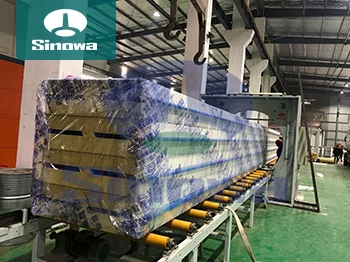
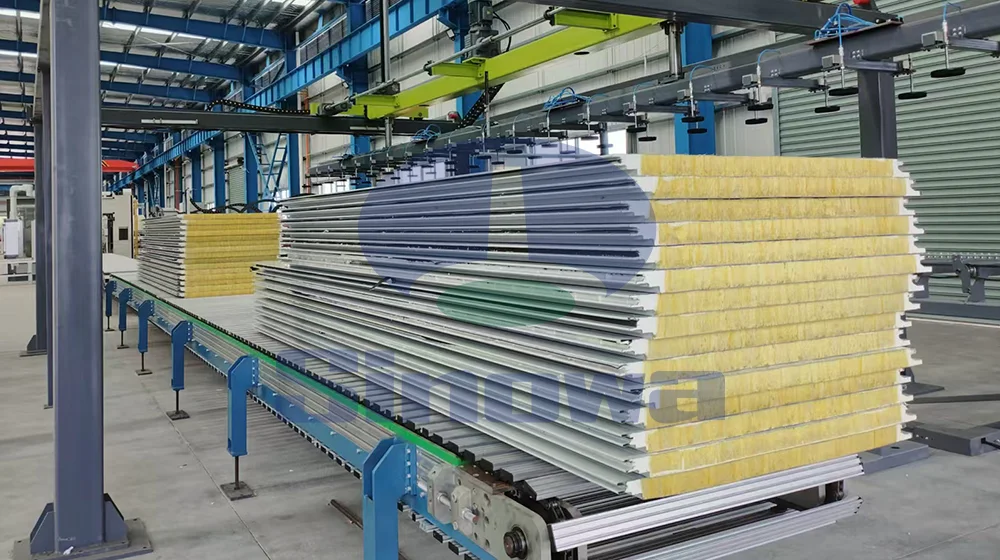
The final stage of the manufacturing line is packaging and stacking. The finished rockwool insulated panels are stacked on pallets using an automatic stacking system, which ensures neat arrangement and minimizes damage during transportation. The stacked panels are then wrapped in polyethylene film to protect them from moisture, dust, and mechanical damage during storage and shipping. The packaging also includes labels with information such as panel dimensions, thickness, and batch number, facilitating identification and inventory management. The packaged pallets are then transported to a finished goods warehouse, where they are stored in a dry, covered area until they are shipped to customers. The entire packaging process is designed to be efficient and protective, ensuring that the panels arrive at the construction site in perfect condition.
The operation of a rockwool insulated panel manufacturing line is supported by a comprehensive control system that monitors and regulates every stage of the production process. Modern manufacturing lines utilize advanced computer integration systems, including digital servo technology, frequency conversion vector technology, and hydraulic control technology, to achieve full automation and precise control. Operators use a man-machine interface to input production parameters such as panel size, thickness, and production speed, and the control system adjusts the equipment accordingly. Sensors placed throughout the line monitor temperature, pressure, speed, and material flow, providing real-time data to the control system. This data is used to make immediate adjustments if any parameters deviate from the set standards, ensuring consistent product quality and efficient production. The automation of the manufacturing line not only improves productivity and reduces labor costs but also minimizes human error, leading to higher quality and more reliable products.
In addition to automation, the manufacturing line is designed with energy efficiency and environmental sustainability in mind. Heat recovery systems capture waste heat from the melting furnace and hot air furnace, repurposing it for preheating raw materials or heating the production facility, reducing energy consumption and carbon emissions. The closed-loop recycling system for waste materials minimizes the amount of waste sent to landfills, while the use of natural, abundant raw materials such as basalt reduces reliance on non-renewable resources. The binders and other additives used in the production process are selected for their low environmental impact, and the manufacturing facilities are equipped with air and water treatment systems to ensure compliance with environmental regulations. These sustainable practices not only benefit the environment but also enhance the market appeal of the rockwool insulated panels, as more and more construction projects prioritize green building materials.
The performance of rockwool insulated panels, which is a direct result of the precision and quality control in the manufacturing line, makes them suitable for a wide range of applications. In the construction industry, they are used for insulating walls, roofs, ceilings, and floors in residential, commercial, and industrial buildings. Their excellent fire resistance, as a non-combustible material, makes them ideal for fire-rated walls and barriers, helping to prevent the spread of fire and protect lives and property. The acoustic absorption properties of the panels make them suitable for use in recording studios, cinemas, offices, and multi-family housing, where noise control is essential. In industrial settings, rockwool insulated panels are used to insulate pipelines, boilers, and machinery, protecting them from extreme temperatures and reducing noise pollution. Their moisture resistance and durability also make them suitable for use in harsh environments such as coastal areas or industrial facilities with high humidity.
The continuous development and improvement of rockwool insulated panel manufacturing lines are driven by the growing demand for energy-efficient and sustainable building materials. Advances in technology have led to higher levels of automation, improved energy efficiency, and enhanced product performance. For example, the development of more efficient centrifuges has improved fiber quality and production speed, while innovations in binder technology have enhanced the bonding strength and environmental performance of the panels. Future trends in manufacturing are likely to focus on further increasing automation, integrating artificial intelligence for predictive maintenance and quality control, and developing more sustainable production processes, such as the use of renewable energy sources to power the manufacturing line. These advancements will continue to improve the efficiency and sustainability of rockwool insulated panel production, making these panels an even more important part of the global construction industry's move towards greener, more energy-efficient buildings.
In conclusion, the Rockwool Insulated Panel Manufacturing Line is a complex, highly integrated system that combines raw material processing, high-temperature melting, fiber formation, curing, cutting, lamination, and packaging into a seamless production process. Each stage of the line is designed to ensure the highest quality of the final product, with precise control over temperature, pressure, and material flow. The automation and sustainability features of modern manufacturing lines not only improve productivity and reduce environmental impact but also enhance the performance and reliability of the rockwool insulated panels. As the demand for energy-efficient, safe, and sustainable building materials continues to grow, the rockwool insulated panel manufacturing line will play an increasingly important role in meeting these needs, contributing to the development of greener, more resilient buildings around the world. The ongoing innovation and improvement of these manufacturing lines will further solidify the position of rockwool insulated panels as a preferred choice for construction and industrial applications, driving progress towards a more sustainable built environment.
« Rockwool Insulated Panel Manufacturing Line » Update Date: 2026/1/16
URL: https://www.sinowamachine.com/tags/rockwool-insulated-panel-manufacturing-line.html
- Links:
- Sandwich Panel Continuous Production Line
- Automatic and Continuous Sandwich Panel Production Line
- Cheap and Low Price Sandwich Panel Production Line
- China Sandwich Panel Production Line Factory
- Color Steel Sandwich Panel Production Line For Cold Storage
- Continuous Composite Foam Sandwich Panel Production Line
- Continuous Production Line For Rockwool and Mineral Wool Sandwich Panels
- Continuous PU Phenolic Insulation Panel Production Line
- Continuous PU PIR Sandwich Panel Production Line
- Continuous PUF PUR Sandwich Panel Production Line
- Continuous Sandwich Panel Production Line For Roof and Wall
- Customized and Design Sandwich Panel Production Line
- Decorative Sandwich Panel Production Line For Glass Wool Boards
- High Quality Sandwich Panel Production Line For Sale
- Polyurethane(PU) Sandwich Panel Production Line
- Sandwich Panel Production Line Manufacturer and Supplier
- Sandwich Panel Production Machinery and Equipment