
PUF Panel Manufacturing Machine Price
Sinowa is a well-known manufacturer and technical service provider of high-end puf panel manufacturing machine, learn more about puf panel manufacturing machine price, please contact Sinowa's technical engineer, tell us what you need, we will contact you as soon as possible!
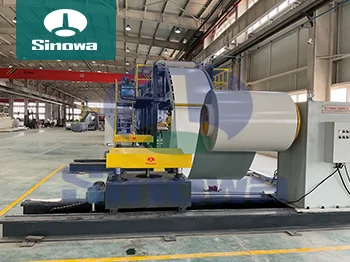
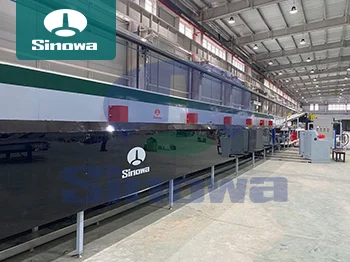
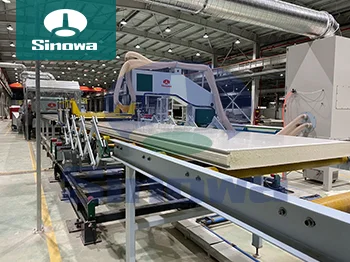
Sinowa is committed to the development and manufacturing of high-end and high-efficiency puf panel manufacturing machine. Our puf panel manufacturing machine are leading the way in efficiency, automatic control, human-computer interaction, environmental protection and energy consumption. Using system integration and bus control technology, it realizes the automatic integrated linkage control of the entire puf panel manufacturing machine, and can achieve remote interactive communication, which has the world-class level and a comprehensive leading high-performance puf panel manufacturing machine in the market.
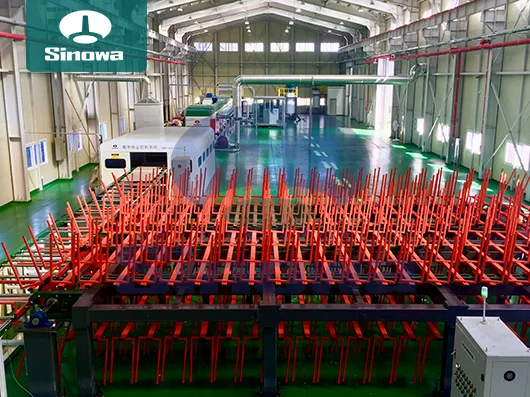
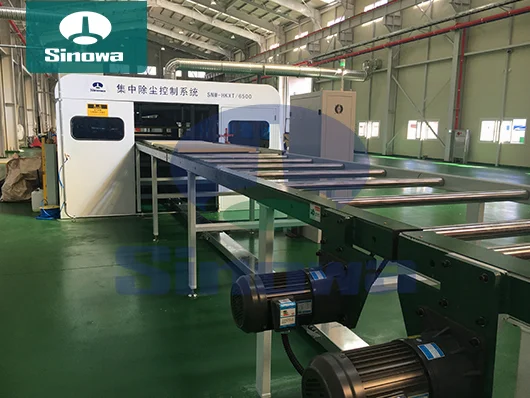
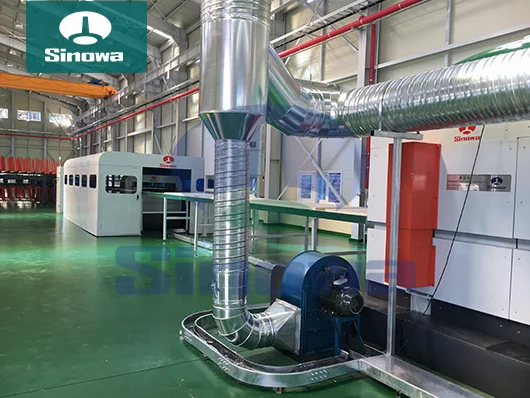
For more than ten years, relying on our innovative manufacturing concept and excellence in quality, reliable and trustworthy service to customers, we cooperate with customers all over the world, exported products to Canada, South Korea, Israel, Australia, the Middle East and other more than 20 countries and regions. contributed to building energy conservation and low-carbon production and have won widespread praise.
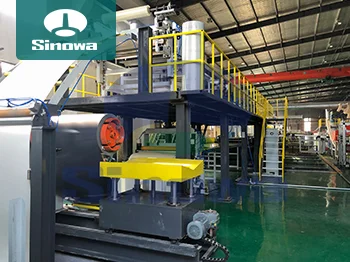
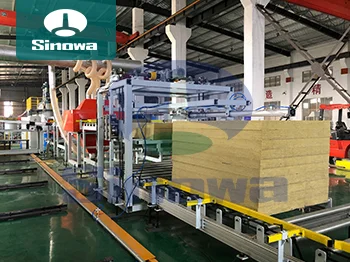
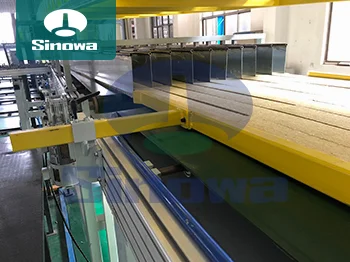
Sinowa has invested outstanding efforts in puf panel manufacturing machine, this is why our products are more efficiency, quality, automatic control technology, environmental protection, energy consumption indicators and the appearance and safety protection are comprehensively leading, some subversive design changes in many major technical points, these major innovations make our products excellent in price/performance and user experience.
The market for equipment built to produce PUF panels continues to expand as demand rises for insulated building components across many construction and industrial sectors. These machines are engineered to combine raw chemical inputs and facing materials in a continuous workflow, forming rigid foam panels that serve core insulation purposes. Many buyers approach purchasing decisions with a focus on balancing production capacity, operational stability, and long-term running costs rather than fixating on a single figure for the overall investment. Different configurations bring major differences in how the production line operates, from semi-automatic setups that require more manual handling of material feeding and panel collection to fully integrated lines that automate nearly every stage of forming, curing, cutting and stacking. Operators who plan smaller production runs often lean toward simpler layouts with fewer auxiliary modules, while facilities targeting high daily output select systems with extended conveyor sections, precision metering units and synchronized cutting assemblies. The complexity of the mixing station stands out as one of the most influential elements shaping the overall setup, since consistent blending of foam components directly affects the uniformity and physical performance of finished panels. Prospective buyers also spend time evaluating how easily the machine can be adjusted to create panels of varying thickness and width, as flexible output allows manufacturers to respond to shifting orders from different customer groups. Maintenance requirements factor heavily into these considerations too, because designs with accessible pump assemblies, mixing heads and sealing parts reduce downtime and keep production schedules on track over years of use.
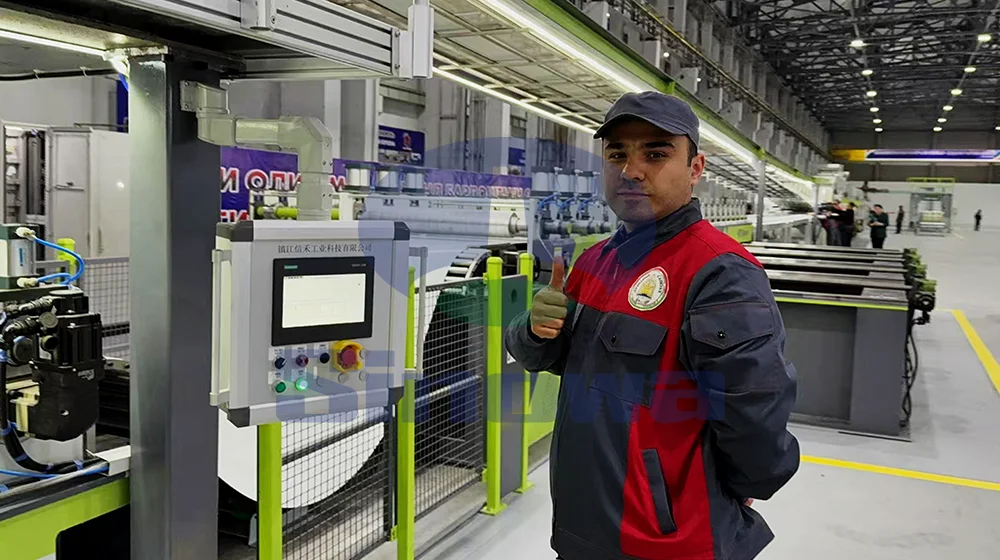
Raw material handling systems form a critical supporting part of any PUF panel manufacturing setup, and their design quality has a noticeable impact on the smoothness of daily production cycles. Well-designed feed systems maintain steady pressure and flow rates for liquid foam ingredients, preventing uneven mixing that can create defects within the finished foam core. Even minor fluctuations in ingredient proportion can lead to inconsistent density, surface imperfections or slower curing times, all of which create waste and lower overall yield. Many modern arrangements include separate storage and transfer units for each base material, fitted with monitoring tools that help operators track consumption and refill supplies before shortages halt operation. The lines also need reliable structures to hold and guide the facing materials, whether thin sheet or roll stock, ensuring proper alignment as the liquid foam mixture is dispensed between the two layers before the composite moves into the double belt conveyor. Alignment errors at this stage result in misaligned facings, edge trimming waste and rejected panels, so guiding rollers and tension control components must function reliably at constant speed. Operators learn quickly that consistent tension control matters just as much as accurate chemical mixing, especially when running longer production batches without stopping. Training for on-site staff covers routine checks of filters, transfer hoses and pressure regulators, as these small parts are frequent sources of interruption if neglected during regular shifts. Careful attention to these auxiliary systems helps new production sites avoid common early-stage problems that reduce throughput and raise operational expenses.
Continuous conveyor and curing sections define the core forming zone where liquid foam expands, bonds to facing layers and stabilizes into solid PUF panels. This part of the machine maintains controlled temperature and pressure conditions as the composite moves forward at a calibrated speed, giving the foam sufficient time to complete expansion and cross-linking before cutting. The length of the curing tunnel is matched to the designed line speed, and systems built for faster output require longer tunnels to maintain adequate setting time without rushing the chemical reaction. The upper and lower belts apply even pressure across the entire width of the panel, locking in the target thickness and creating flat, uniform surfaces free from bulges or depressions. Belt materials must resist contact with uncured foam and tolerate sustained operating temperatures without rapid wear, as surface damage to belts transfers marks onto the finished panel surface. Adjustment mechanisms allow technicians to modify the gap between belts to switch between different panel thicknesses, and precise locking features preserve the setting once adjusted to avoid gradual drift during long runs. Vibration control is another quiet but important detail; excessive vibration can disrupt foam expansion and create internal voids inside the insulation core. Many operators prefer designs with heavy, rigid frame construction to dampen movement and keep the forming area stable. When this section works as intended, panels leave the curing zone with stable dimensions and consistent internal structure, reducing the workload for quality checks further down the production line.
Cutting and post-processing modules handle the solidified panels after they exit the curing zone, separating continuous slabs into finished lengths and trimming uneven edges to meet dimensional requirements. Flying cut-off units operate while the panel remains in motion, synchronizing their travel speed with the conveyor so cuts stay clean and accurate without stopping the main production flow. Static cutting systems, by contrast, pause the line for each cut, which limits overall throughput but can be suitable for operations that do not need very high hourly output. Trimming devices remove ragged side edges where foam may overflow beyond the facing layers, producing straight edges that make panels easier to install and join on construction sites. Some setups also include optional stations for surface marking, film lamination or edge sealing, adding extra value to finished products for specific end uses. Dust and foam scrap collection attachments work alongside cutting tools to gather waste material, keeping the work area clear and lowering cleanup labor between shifts. The blades and cutting tools experience regular wear from repeated contact with rigid foam and facing materials, so easy access for blade replacement is a practical feature appreciated by maintenance teams. Operators often compare how much time these post-processing steps add to the full cycle, because slower cutting sequences can create a bottleneck even when the forming section runs at high speed. Choosing the right combination of cutting tools depends on the expected variety of panel sizes and the acceptable tolerance limits for finished dimensions.
Automation and control architecture determine how much human oversight is required during production and how quickly adjustments can be made to line parameters. Central control interfaces display key operating values including material flow, conveyor speed, belt temperature and production count, putting critical data in one place for the lead operator. Pre-saved parameter profiles allow users to recall settings for common panel sizes, cutting down setup time between different product runs and minimizing trial-and-error adjustments. Sensors distributed across the line detect irregular conditions such as low material levels, pressure drops or misaligned facings, triggering alerts before these issues create large batches of defective panels. More advanced control packages support data logging, recording production volume, run time and fault events for later review to identify recurring operational issues. Simpler control layouts rely more heavily on manual adjustment and visual inspection, which keeps the initial investment lower but depends heavily on the experience of on-site workers. Compatibility with spare control components is also a practical concern, since specialized electronic parts can take time to source if a failure occurs. Training for the control system forms a key part of the startup phase for new lines, because even well-built machinery underperforms when operators do not fully understand how parameter changes interact with foam behavior. A well-tuned control system reduces human error and helps maintain consistent output quality day after day.
Energy consumption and operational efficiency are central considerations for anyone evaluating PUF panel production equipment, as running costs accumulate steadily across thousands of operating hours. Heating systems for the curing zone and hydraulic or electric drive motors represent the largest ongoing energy draws, and differences in design efficiency create meaningful gaps in monthly operating expenditure. Some newer designs incorporate improved thermal insulation around the curing tunnel to retain heat and cut energy waste, while optimized drive systems reduce power use during steady-state operation. Waste reduction ties closely to efficiency as well; machines with precise metering and stable forming produce fewer rejected panels and less trim scrap, making every unit of raw material go further. Water usage for cooling systems, where fitted, also adds to site running costs, so many operators look for closed-loop cooling arrangements that recycle water instead of continuous discharge. Lubrication schedules and the consumption of wear parts such as seals, belts and cutting blades form another recurring expense stream that buyers must estimate over the expected service life of the equipment. Facilities operating on multiple shifts naturally place more stress on components and consume more energy, making durable, efficient designs more attractive for round-the-clock schedules. While a setup with stronger efficiency features may demand greater upfront commitment, the savings on energy, materials and waste can accumulate substantially over the years of operation.
Installation, commissioning and after-sales support services shape the overall experience of bringing a PUF panel production line into full operation, extending far beyond the physical machine itself. Delivery involves transporting large frame sections, heavy conveyor assemblies and delicate metering equipment, followed by careful positioning on a reinforced factory floor that can support the distributed weight and vibration of running machinery. Alignment of all connected modules takes time and precision; misalignment between the feeding section, forming tunnel and cutting station leads to ongoing quality problems that are difficult to correct after commissioning. Technicians carry out a series of test runs with raw materials to fine-tune mixing ratios, belt speed and temperature settings, gradually bringing the line up to stable production. On-site training covers both normal operation routines and response procedures for common faults, giving local teams confidence to manage daily production without constant outside support. After commissioning, access to technical guidance and supply channels for spare parts remains vital, since delayed support can halt production for extended periods. Buyers typically assess the responsiveness of support arrangements and the clarity of provided documentation before finalizing decisions, recognizing that reliable support protects their ability to fulfill customer orders. A smooth commissioning process shortens the time between equipment arrival and profitable production, turning the installed line into an active asset faster.
Long-term scalability and adaptability influence how well a PUF panel manufacturing machine continues to serve a business as market needs change over time. Many operators start with a moderate production target and plan to raise output later, so modular line designs offer the advantage of adding extra sections or upgraded modules without replacing the entire system. An initial setup built around a shorter curing tunnel can sometimes be extended later, or basic cutting equipment can be swapped for high-speed synchronized cutters once order volumes grow. Adaptability also means the ability to process different facing materials, from lightweight flexible sheets to sturdier rigid facings, allowing manufacturers to enter new market segments without completely reconfiguring their operation. Frame construction and foundation requirements must accommodate these future upgrades, as lines built with no room for expansion become limiting once business expands. Resale value and residual usefulness are less frequently discussed but still relevant; well-maintained machinery with standard component designs tends to retain more functional value if the production layout needs to be reshaped or relocated. Business owners often weigh whether a given design can support gradual evolution against the alternative of purchasing a larger, more capable line from the very beginning. Balancing immediate operational needs with future growth potential helps avoid situations where equipment becomes a bottleneck too soon, supporting sustainable development for panel manufacturing businesses in a changing market environment.
« PUF Panel Manufacturing Machine Price » Update Date: 2026/10/26
Tags: PUF Panel Manufacturing Machine , puf panel manufacturing machine, puf panel manufacturing machine manufacturer, puf panel manufacturing machine supplier, puf panel manufacturing machine for sale, customized puf panel manufacturing machine, china puf panel manufacturing machine
- High-tech PU Sandwich Panel Making Machine
- Glass Wool Sandwich Panel Machine For Sale
- High-end PUR Sandwich Panel Production Line
- PU Sandwich Panel Making Machine Manufacturer
- Cheap PU Insulated Panel Production Line
- PIR Sandwich Panel Line Price
- High Efficiency PUR Sandwich Panel Production Line
- PU Sandwich Panel Production Line
- High-quality PUF Panel Making Machine
- High-tech Polyurethane Sandwich Panel Machinery
- Cheap Continuous PUF Panel Production Line
- Continuous PU Sandwich Panel Line For Wall
- PUR Sandwich Panel Production Line Factory
- High Efficiency Fully Automatic PU Sandwich Panel Line
- Continuous Sandwich Panel Manufacturing Line On Sales
- PIR Sandwich Panel Line On Sales
- Sandwich Roof Wall Panel Making Machine On Sales
- High Efficiency Fully Automatic PU Sandwich Panel Machine
- Polyurethane Sandwich Panel Line Design
- Glass Wool Line Supplier
- Links:
- Sandwich Panel Continuous Production Line
- Automatic and Continuous Sandwich Panel Production Line
- Cheap and Low Price Sandwich Panel Production Line
- China Sandwich Panel Production Line Factory
- Color Steel Sandwich Panel Production Line For Cold Storage
- Continuous Composite Foam Sandwich Panel Production Line
- Continuous Production Line For Rockwool and Mineral Wool Sandwich Panels
- Continuous PU Phenolic Insulation Panel Production Line
- Continuous PU PIR Sandwich Panel Production Line
- Continuous PUF PUR Sandwich Panel Production Line
- Continuous Sandwich Panel Production Line For Roof and Wall
- Customized and Design Sandwich Panel Production Line
- Decorative Sandwich Panel Production Line For Glass Wool Boards
- High Quality Sandwich Panel Production Line For Sale
- Polyurethane(PU) Sandwich Panel Production Line
- Sandwich Panel Production Line Manufacturer and Supplier
- Sandwich Panel Production Machinery and Equipment