
High Efficiency Decorative PU Sandwich Panel Production Line
Sinowa is a well-known manufacturer and technical service provider of high-end decorative pu sandwich panel production line, learn more about high efficiency decorative pu sandwich panel production line, please contact Sinowa's technical engineer, tell us what you need, we will contact you as soon as possible!
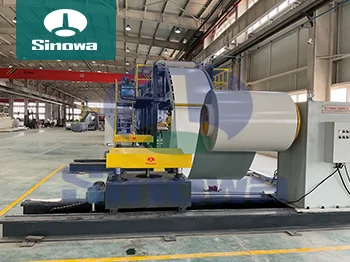
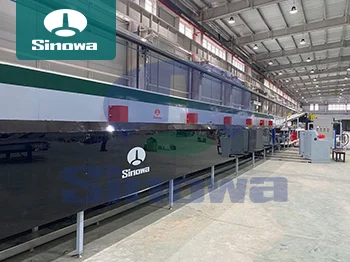
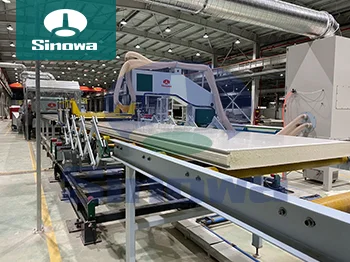
Sinowa is committed to the development and manufacturing of high-end and high-efficiency decorative pu sandwich panel production line. Our decorative pu sandwich panel production line are leading the way in efficiency, automatic control, human-computer interaction, environmental protection and energy consumption. Using system integration and bus control technology, it realizes the automatic integrated linkage control of the entire decorative pu sandwich panel production line, and can achieve remote interactive communication, which has the world-class level and a comprehensive leading high-performance decorative pu sandwich panel production line in the market.
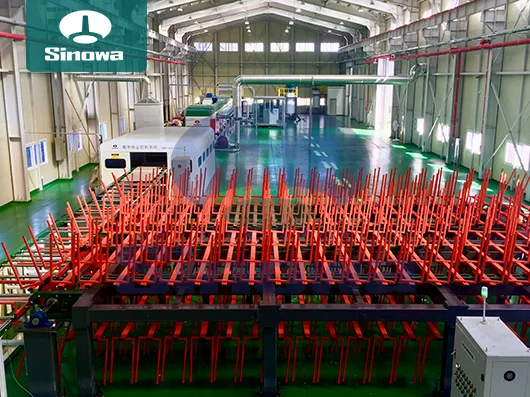
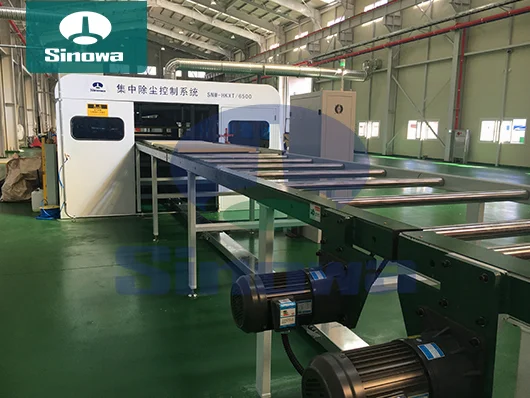
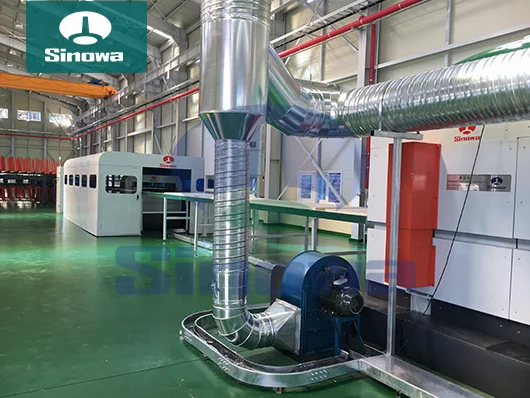
For more than ten years, relying on our innovative manufacturing concept and excellence in quality, reliable and trustworthy service to customers, we cooperate with customers all over the world, exported products to Canada, South Korea, Israel, Australia, the Middle East and other more than 20 countries and regions. contributed to building energy conservation and low-carbon production and have won widespread praise.
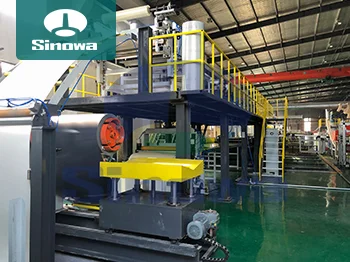
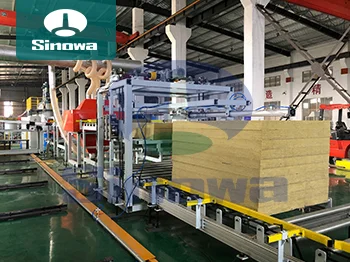
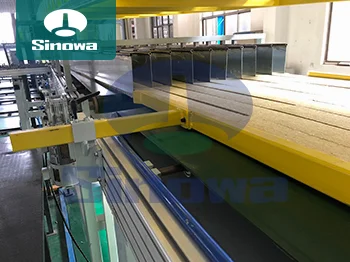
Sinowa has invested outstanding efforts in decorative pu sandwich panel production line, this is why our products are more efficiency, quality, automatic control technology, environmental protection, energy consumption indicators and the appearance and safety protection are comprehensively leading, some subversive design changes in many major technical points, these major innovations make our products excellent in price/performance and user experience.
The high efficiency decorative PU sandwich panel production line represents a refined integrated manufacturing system built to produce composite building panels that combine visual decorative effects with reliable thermal and mechanical performance. Unlike traditional intermittent manufacturing equipment that separates individual procedures and requires frequent manual adjustment, this continuous line connects all production stages in one seamless workflow, from raw material feeding to finished panel stacking. The core design prioritizes both production throughput and surface quality, because decorative sandwich panels must satisfy aesthetic requirements as well as functional needs, which sets this line apart from ordinary sandwich panel production systems. The decorative facings used on these panels can be embossed, printed, coated or carved to simulate textures such as wood grain, brickwork and stone, so the whole production system must maintain gentle and stable handling of surface materials to avoid scratches, deformation or uneven color marks during processing. Every functional unit of the line works under coordinated control to minimize unexpected downtime, reduce material waste and keep consistent output quality for long running production cycles. Operators can adjust key parameters to switch among different panel thicknesses, surface patterns and dimensions, which supports flexible responses to diverse market demands without extensive mechanical reconfiguration. The engineering design eliminates redundant transportation steps between isolated stations, and the synchronized motion of each module ensures the production rhythm stays steady, laying a solid foundation for large volume manufacturing of decorative cladding materials that meet modern architectural preferences.
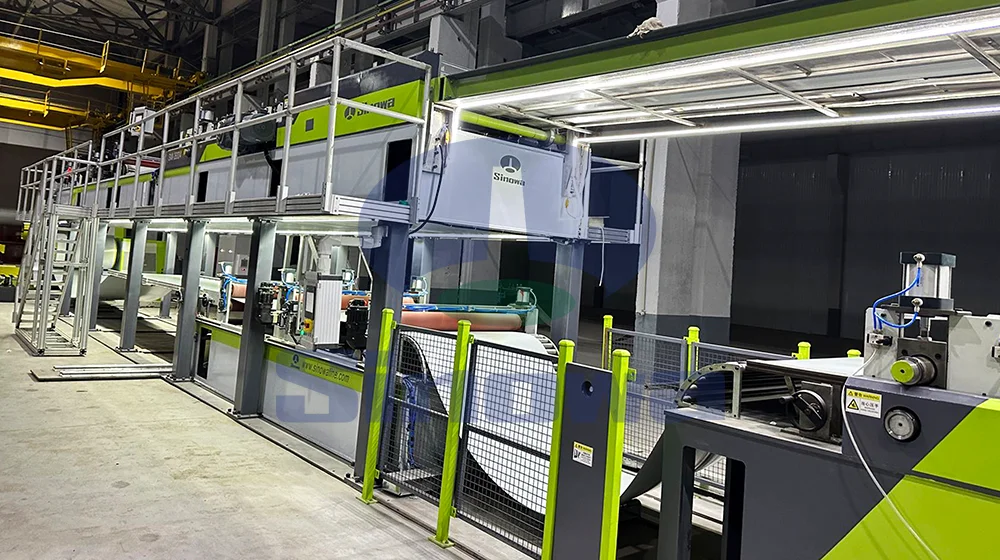
The initial segment of the production line focuses on raw material unwinding, leveling and surface preprocessing, which is critical for preserving the decorative integrity of outer facing sheets. Rolled decorative substrates are unwound steadily through tension control devices, preventing wrinkling or localized stretching that would ruin surface patterns. After unwinding, continuous leveling and deviation correction systems keep the sheet aligned precisely as it travels forward, avoiding lateral offset during roll forming and subsequent composite procedures. Some decorative surfaces receive light surface treatment in this stage to strengthen bonding between the facing and PU foam core, while protective films can be applied online to shield delicate decorative textures from dust and mechanical abrasion. The system carefully controls tension across the full width of the sheet, as uneven tension will create subtle distortion that becomes visible after foaming and curing. Backing materials are fed simultaneously on the lower side of the line, maintaining matching speed and alignment with the decorative top sheet. All feeding parameters are tracked in real time, and minor deviations trigger automatic fine tuning rather than full line shutdown. This careful pretreatment stage removes hidden defects before foaming begins, because flaws introduced in early steps cannot be easily corrected once the PU foam expands and bonds to the facings, making this part essential for stable decorative panel yield.
At the heart of the whole line sits the PU metering, mixing and foaming unit, which governs the formation of the foam core between the decorative facing and backing sheet. Two liquid PU raw materials are delivered through precision metering pumps to maintain accurate proportioning, before entering a high pressure mixing chamber to achieve homogeneous blending. The mixed liquid material is evenly distributed onto the moving lower substrate through a specially designed injection head, ensuring uniform coverage across the entire panel width without gaps or excess accumulation. The mixing equipment adopts self-cleaning structures to reduce material residue buildup and cut down the frequency of manual cleaning cycles, which improves overall equipment operation rate. As the liquid PU contacts the controlled temperature environment, it starts to expand gradually, filling the space between upper and lower sheets. The chemical reaction rate is regulated by adjusting raw material flow and environmental temperature, matching the moving speed of the continuous line perfectly. If foaming reacts too fast or too slowly, voids, poor adhesion or uneven foam density will appear, which harms both structural performance and flatness of the decorative panel. This foaming module balances reaction dynamics with line speed, guaranteeing the foam forms a dense, continuous core that firmly bonds with decorative surfaces without damaging their delicate texture.
Following foaming injection, the semi-finished assembly enters the double belt laminating and constant temperature curing section, the longest thermal control zone within the production line. Two heavy-duty endless conveyor belts apply consistent pressure on both sides of the panel blank, while maintaining a stable enclosed thermal environment to support complete PU polymerization. The adjustable gap between the upper and lower belts defines the finished panel thickness, and the pressure distribution remains uniform across the whole panel surface to prevent local thinning or bulging. During curing, the expanding foam solidifies and forms permanent adhesion with the decorative facing and backing layer. Temperature inside the curing tunnel is distributed evenly along the travel path, supporting gradual reaction progression without overheating the decorative surface coating. Excessive temperature may discolor or soften decorative finishes, so thermal management here is more demanding than standard sandwich panel lines. The moving belts carry the composite forward continuously, allowing sufficient residence time for full curing before the panel exits this zone. After curing, the panel structure becomes dimensionally stable, retaining its shape and decorative surface details through subsequent cutting and handling operations.
Once cured panels leave the laminating tunnel, they go through cooling, fixed-length cutting and edge trimming processes to obtain finished panel dimensions. Controlled cooling stabilizes the internal stress of PU foam and surface substrates, preventing warping after cutting. The cutting unit operates synchronously with line speed to achieve flying saw cutting, so the main production flow does not stop when separating panels to required lengths. Precision cutting tools deliver clean edges without tearing decorative surfaces or leaving rough foam residues. Edge trimming stations remove excess material on both sides of panels, creating neat, straight edges that simplify later installation for construction projects. Dust collection devices work alongside trimming tools to capture fine foam particles and debris, keeping the decorative surface clean and free from scratches caused by loose scraps. After trimming, visual inspection sensors scan panel surfaces to identify blemishes, unevenness or bonding defects, marking non-conforming products for separation. All dimension data is recorded automatically, supporting quality traceability throughout the whole batch. This post-forming processing section transforms continuous long composite sheets into individual finished decorative panels ready for stacking and packaging.
Intelligent control architecture is embedded throughout the high efficiency decorative PU sandwich panel production line, supporting centralized monitoring and coordinated operation of all functional modules. A main control platform displays real-time data including line speed, raw material flow rates, temperature profiles, pressure readings and panel output counts. Operators can adjust parameters on the interface to switch between different decorative panel specifications, and the system automatically synchronizes the settings of feeding, foaming, laminating and cutting units together. Protection logic is built into the control system; when abnormal parameters are detected, the system issues alerts and can reduce line speed or trigger partial protective actions to avoid large quantities of defective products. Historical operation data can be stored and reviewed, helping technicians analyze quality fluctuation patterns and optimize process parameters over time. Servo drive systems replace many traditional hydraulic components, lowering maintenance workload and reducing risks of fluid leakage that might stain decorative panel surfaces. Human-machine interaction is simplified to reduce the requirement for highly skilled operators, while maintaining precise control standards needed for decorative product quality. This intelligent framework raises overall equipment effectiveness and reduces human error in complex continuous production.
The finished decorative PU sandwich panels produced by this line carry combined advantages of lightweight structure, thermal insulation and customizable visual effects, opening broad application possibilities in modern building projects. The decorative outer layer can replicate diverse textures and colors, allowing designers to achieve rich facade and interior wall effects without using heavy stone, brick or solid wood materials. The rigid PU foam core delivers outstanding thermal resistance, helping stabilize indoor temperature and lower energy consumption for buildings. The finished panels are lightweight, which reduces static load on building structures and simplifies transportation and on-site installation. Panels are prefabricated into standard sizes, so construction teams can assemble them rapidly, shortening project schedules and cutting site labor input. These panels also show stable performance under varying ambient conditions, resisting deformation and surface fading when properly protected. They can be applied to exterior wall cladding for commercial buildings, interior partition decoration, renovation projects and modular building enclosures. Thanks to flexible configuration of the production line, manufacturers can offer customized decorative styles and panel dimensions to satisfy diverse aesthetic and functional requirements from different construction projects.
As the building material industry continues to pursue greener and more efficient manufacturing solutions, the high efficiency decorative PU sandwich panel production line keeps evolving to align with the direction of sustainable development. The closed foaming system improves raw material utilization and reduces material loss during production, lowering resource consumption for each square meter of finished panel. Optimized thermal control and drive systems cut unnecessary energy consumption in continuous operation, while the production process generates limited solid waste that can be collected and processed properly. Further upgrades focus on expanding the range of usable decorative surface materials, developing richer surface texture options and improving the long-term weather resistance of finished panels. Advances in online inspection technology will strengthen real-time detection capability for tiny surface defects on decorative layers, further lifting product consistency. The production concept behind this line matches the trend of prefabricated construction, shifting complicated on-site decoration work into standardized factory manufacturing. By integrating automation, precise material processing and aesthetic customization, this production system provides a reliable way to supply high-performance decorative composite panels, and will remain an important technical solution for modern, low-carbon architectural material manufacturing in the coming years.
« High Efficiency Decorative PU Sandwich Panel Production Line » Update Date: 2026/10/16
Tags: Decorative PU Sandwich Panel Production Line , decorative pu sandwich panel production line, decorative pu sandwich panel production line manufacturer, decorative pu sandwich panel production line supplier, decorative pu sandwich panel production line for sale, customized decorative pu sandwich panel production line, china decorative pu sandwich panel production line
- PU Sandwich Panel Production Line Factory
- Decorative Sandwich Panel Line Manufacturer
- PU Sandwich Panel Machine Manufacturer
- High-end Glass Wool Panel Production Line
- Wall Sandwich Panel Production Line Price
- PU Foam Production Line From China
- PU Board Production Line Price
- Sandwich Panel Making Machine Design
- PUF Panel Machine
- Fully Automatic PU Sandwich Panel Line Manufacturer
- High-tech PUF Panel Machine
- Sandwich Panel Manufacturing Line Manufacturer
- Low Price Wall Sandwich Panel Production Line
- Roof Sandwich Panel Production Line Manufacturer
- PUR Sandwich Panel Machine Supplier
- Custom Sandwich Wall Panel Production Line
- Sandwich Foam Panel Making Machine On Sales
- PU Sandwich Panel Making Machine On Sales
- Customized PIR Sandwich Panel Line
- PIR Sandwich Panel Machine For Cold Storage
- Links:
- Sandwich Panel Continuous Production Line
- Automatic and Continuous Sandwich Panel Production Line
- Cheap and Low Price Sandwich Panel Production Line
- China Sandwich Panel Production Line Factory
- Color Steel Sandwich Panel Production Line For Cold Storage
- Continuous Composite Foam Sandwich Panel Production Line
- Continuous Production Line For Rockwool and Mineral Wool Sandwich Panels
- Continuous PU Phenolic Insulation Panel Production Line
- Continuous PU PIR Sandwich Panel Production Line
- Continuous PUF PUR Sandwich Panel Production Line
- Continuous Sandwich Panel Production Line For Roof and Wall
- Customized and Design Sandwich Panel Production Line
- Decorative Sandwich Panel Production Line For Glass Wool Boards
- High Quality Sandwich Panel Production Line For Sale
- Polyurethane(PU) Sandwich Panel Production Line
- Sandwich Panel Production Line Manufacturer and Supplier
- Sandwich Panel Production Machinery and Equipment