
Roof Sandwich Panel Production Line Manufacturer
Sinowa is a well-known manufacturer and technical service provider of high-end roof sandwich panel production line, learn more about roof sandwich panel production line manufacturer, please contact Sinowa's technical engineer, tell us what you need, we will contact you as soon as possible!
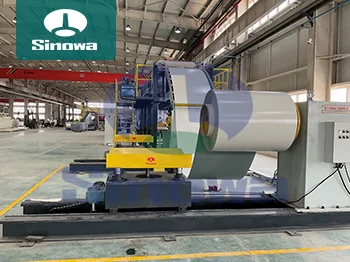
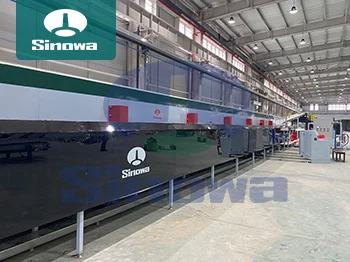
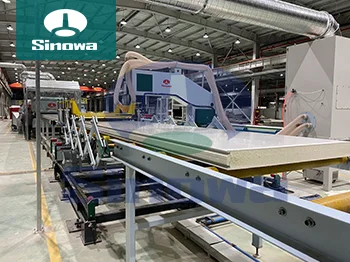
Sinowa is committed to the development and manufacturing of high-end and high-efficiency roof sandwich panel production line. Our roof sandwich panel production line are leading the way in efficiency, automatic control, human-computer interaction, environmental protection and energy consumption. Using system integration and bus control technology, it realizes the automatic integrated linkage control of the entire roof sandwich panel production line, and can achieve remote interactive communication, which has the world-class level and a comprehensive leading high-performance roof sandwich panel production line in the market.
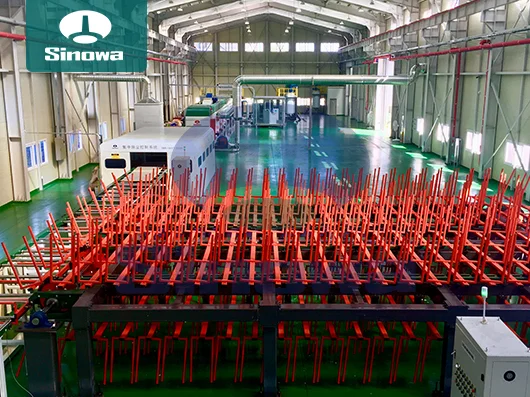
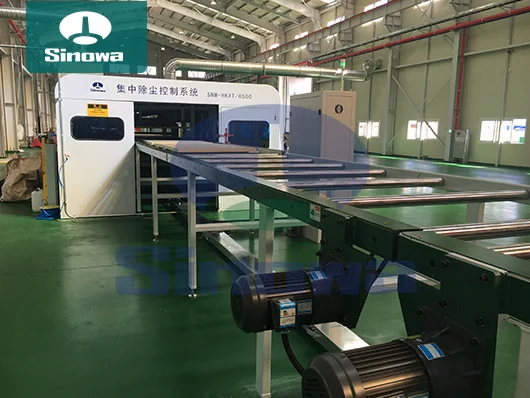
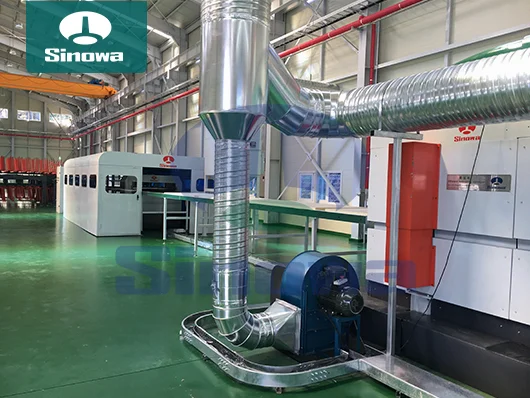
For more than ten years, relying on our innovative manufacturing concept and excellence in quality, reliable and trustworthy service to customers, we cooperate with customers all over the world, exported products to Canada, South Korea, Israel, Australia, the Middle East and other more than 20 countries and regions. contributed to building energy conservation and low-carbon production and have won widespread praise.
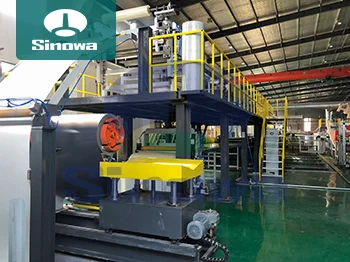
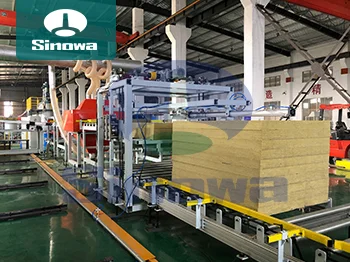
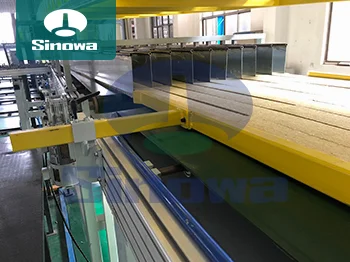
Sinowa has invested outstanding efforts in roof sandwich panel production line, this is why our products are more efficiency, quality, automatic control technology, environmental protection, energy consumption indicators and the appearance and safety protection are comprehensively leading, some subversive design changes in many major technical points, these major innovations make our products excellent in price/performance and user experience.
The roof sandwich panel production line stands as a sophisticated, fully automated manufacturing system tailored for the mass production of high-performance building roofing panels, integrating multiple core production procedures into a seamless continuous workflow. Designed to meet the growing demand for energy-efficient, durable, and structurally reliable roofing materials in modern construction, this production equipment unifies raw material feeding, surface sheet forming, core material compounding, high-pressure lamination, constant-temperature curing, fixed-length cutting, and post-processing packaging. Unlike traditional discrete manufacturing equipment that relies on semi-manual operation and segmented processing, the continuous production mode eliminates production gaps and inconsistent product quality caused by intermittent operations. It adapts to diverse core materials including polyurethane foam, mineral wool, and other thermal insulation substrates, enabling the fabrication of roofing panels with excellent heat preservation, waterproofing, and load-bearing properties. As a foundational equipment for the prefabricated construction industry, the production line balances high production efficiency and product customization, supporting the standardized manufacturing of roofing panels for industrial plants, commercial buildings, and public infrastructure projects worldwide.
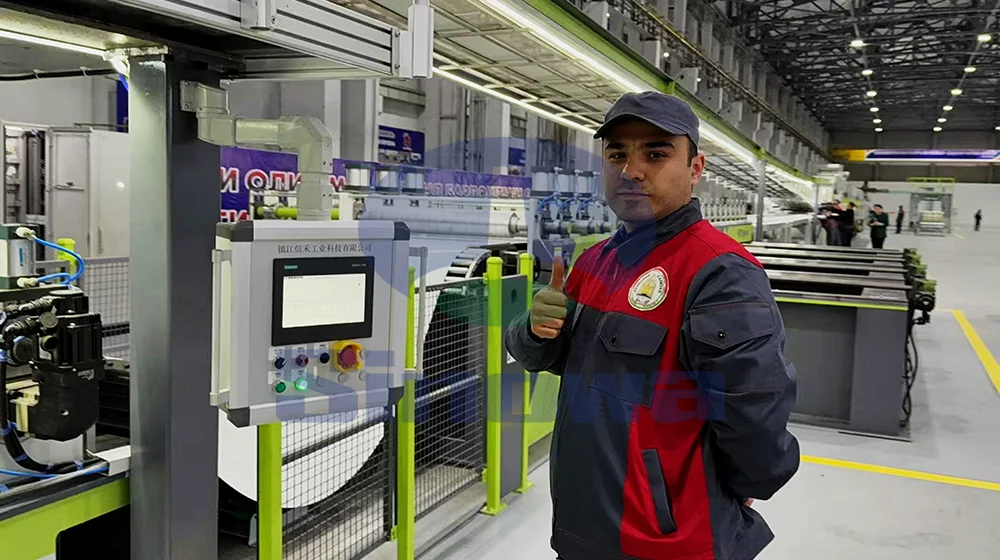
The overall structural design of a professional roof sandwich panel production line focuses on systematic integration and operational stability, ensuring every production link is precisely coordinated to deliver consistent panel quality. The entire equipment system is composed of multiple functional units with independent operational logic and synchronous operating rhythms, covering raw material unwinding, surface pretreatment, roll forming, core material filling, composite pressing, curing molding, fixed-size cutting, cooling conveying, and automatic stacking. Each functional module is optimized for the unique structural requirements of roofing panels, distinguishing it from ordinary wall panel production lines. Roofing panels require specialized curved or trapezoidal profiles to enhance drainage capacity and structural wind resistance, so the roll forming unit adopts multi-stage gradual cold extrusion technology to shape flat metal sheets into standardized roof profiles without damaging the metal surface structure. Meanwhile, the equipment frame is built with high-strength structural materials to resist long-term operational vibration and load pressure, maintaining stable precision during long-hour continuous production. The modular design also facilitates daily maintenance and later functional upgrading, allowing manufacturers to adjust equipment configurations according to different production needs and market trends, greatly improving the service life and application flexibility of the entire production line.
Raw material pretreatment and feeding systems constitute the initial and foundational stage of roof sandwich panel production, directly affecting the flatness and bonding performance of finished panels. The production line is equipped with a fully automatic unwinding and leveling unit that supports continuous feeding of metal coil materials of different thicknesses and materials. The synchronous speed control system ensures that the unwinding, leveling, and subsequent forming processes maintain consistent operating rhythms, effectively avoiding sheet deformation, wrinkling, and tensile damage caused by speed mismatches. Before formal forming, the surface pretreatment module completes surface cleaning and protective film pasting for metal sheets, removing dust, oil stains, and oxide layers generated during coil storage and transportation. This pretreatment process eliminates impurities that may affect the bonding tightness between the metal surface and the core material, while the protective film prevents scratches and abrasions on the metal surface during high-pressure lamination and transmission. In terms of core material feeding, the equipment adopts quantitative automatic feeding and uniform distribution technology, which can evenly lay thermal insulation core materials between upper and lower metal sheets. This uniform feeding mode avoids local hollowing or uneven thickness of the core layer, laying a solid foundation for the overall structural uniformity and stable thermal insulation performance of finished roof panels.
Roll forming and composite lamination are the core molding processes that determine the structural accuracy and mechanical properties of roof sandwich panels. After pretreatment, flat metal sheets enter the precision roll forming unit, where multiple groups of profiling rollers perform gradual bending and shaping according to preset roof profile parameters. This cold forming process features high molding accuracy and no thermal deformation, ensuring that the wave height, pitch, and edge size of the roof profile are highly consistent for each panel, which is crucial for the seamless assembly and waterproof performance of roof systems in actual construction. After the surface sheet molding is completed, the upper and lower profiled metal sheets enter the composite lamination unit synchronously with the paved core insulation material. The double-belt lamination system applies uniform and stable pressure across the entire panel surface, tightly compounding the metal surface layer and the core material into an integrated structure. The pressure control system supports stepless adjustment according to different core material characteristics and panel thicknesses, ensuring sufficient bonding strength without squeezing and damaging the internal porous structure of the thermal insulation core. This integrated composite molding process realizes one-time compounding of materials, effectively improving the overall structural integrity of the panel and avoiding delamination and cracking problems that often occur in traditional secondary bonding processes.
Constant-temperature curing and fixed-length cutting processes are key links to finalize panel performance and standardize product specifications. After composite lamination, the preliminary molded sandwich panels enter the independent constant-temperature curing channel, where a circulating hot air heating system maintains a stable internal temperature environment to promote sufficient reaction and solidification of the bonding layer and foaming core material. The upper and lower layered heating design ensures uniform temperature distribution inside the curing channel, enabling consistent curing effects on the upper and lower surfaces of the panel. Sufficient constant-temperature curing effectively enhances the bonding fastness between layers, improves the overall rigidity and structural stability of the panel, and avoids later deformation, degumming, and performance attenuation of roof panels in outdoor complex environments. After curing and shaping, the panels are transmitted to the fixed-length cutting unit, which adopts high-precision servo cutting technology to complete automatic sizing and cutting according to customized length requirements. The cutting system features fast response speed and high dimensional accuracy, ensuring flat and smooth cutting sections without burrs or edge warping. The synchronous tracking cutting mode can adapt to the continuous operating state of the production line, realizing non-stop cutting and effectively improving overall production efficiency while guaranteeing consistent product dimensional standards.
Intelligent control and automatic post-processing systems endow the roof sandwich panel production line with efficient, stable, and flexible production capabilities. The entire production process is centrally controlled by an intelligent PLC system, which integrates parameter monitoring, operation adjustment, fault diagnosis, and data recording functions. Operators can set and adjust production parameters such as panel thickness, length, operating speed, and molding profile through the human-machine interaction interface. The system supports parameter memory and one-key calling, enabling rapid switching between different product specifications and meeting the diversified customized production needs of the market. During operation, the real-time monitoring module tracks the operating status of each functional unit, automatically alarming and locking abnormal links such as speed deviation, pressure fluctuation, and temperature anomaly to avoid defective products. After cutting, the finished panels are transported to the cooling conveyor unit for natural cooling and shaping, eliminating internal stress generated during processing. Subsequently, the automatic stacking and packaging system completes orderly stacking, film wrapping, and bundling of finished panels, realizing fully automated production from raw material input to finished product output and greatly reducing manual intervention and labor costs.
The technical advantages of modern roof sandwich panel production lines are fully reflected in production efficiency, product quality stability, and energy-saving environmental protection performance. Compared with traditional semi-automatic intermittent production equipment, the fully continuous streamlined operation mode shortens the single-panel production cycle significantly and realizes large-scale batch production. The unified parameter control and standardized process flow eliminate manual operation errors, ensuring that the thermal insulation performance, structural strength, and appearance quality of each batch of roof panels remain highly consistent. In terms of energy consumption optimization, the equipment adopts an intelligent temperature control system that automatically adjusts heating power according to production speed and material characteristics, reducing invalid energy consumption during operation. Meanwhile, the closed production structure effectively avoids the overflow of raw material residues and dust, reducing production waste and environmental pollution. The produced roof sandwich panels feature lightweight, high strength, excellent thermal insulation, and weather resistance, which can adapt to harsh outdoor environments such as high temperature, heavy rain, and strong wind, and are widely applicable to various prefabricated building roof systems.
Continuous technological iteration and customized service capabilities enable professional roof sandwich panel production line manufacturers to adapt to the evolving development needs of the construction industry. With the rapid promotion of prefabricated and green buildings, the market has put forward higher requirements for the lightweight, energy-saving, and personalized design of roofing panels. Reliable manufacturers focus on technological research and development and equipment optimization, continuously upgrading production line functions to support the production of multi-specification, multi-functional composite roof panels, including fireproof, sound-insulating, and anti-corrosion customized products. In addition to standardized equipment production, manufacturers provide targeted equipment configuration solutions according to customers' production scale, product positioning, and site conditions. They also deliver full-cycle technical services including equipment installation, commissioning, operator training, and after-sales maintenance, ensuring long-term stable operation of production lines for customers. This combination of high-quality equipment and professional supporting services helps downstream building material producers improve product competitiveness and occupy a favorable position in the green building material market.
« Roof Sandwich Panel Production Line Manufacturer » Update Date: 2026/8/26
- High-tech Glass Wool Sandwich Panel Production Line
- Cold Room Sandwich Panel Production Line Factory
- Custom Automatic Sandwich Panel Production Line
- Sandwich Panel Production Line Manufacturer
- Customized Glass Wool Line
- Continuous Sandwich Panel Line For Building
- PU Sandwich Panel Making Machine For Sale
- Custom Sandwich Panel Foam Making Machine
- High-quality Sandwich Panel Foam Making Machine
- High-end PU Insulation Board Production Line
- High-end Sandwich Panel Foam Production Line
- Cheap Cold Room Sandwich Panel Production Line
- Fully Automatic PU Sandwich Panel Production Line Price
- PUF Panel Manufacturing Machine Factory
- Sandwich Roof Panel Production Line Factory
- PU Foam Production Line Supplier
- Fully Automatic Sandwich Panel Making Machine In China
- High-end Cold Storage Sandwich Panel Production Line
- Polyurethane Sandwich Panel Machinery For Wall
- PIR Insulated Panel Production Line Design
- Links:
- Sandwich Panel Continuous Production Line
- Automatic and Continuous Sandwich Panel Production Line
- Cheap and Low Price Sandwich Panel Production Line
- China Sandwich Panel Production Line Factory
- Color Steel Sandwich Panel Production Line For Cold Storage
- Continuous Composite Foam Sandwich Panel Production Line
- Continuous Production Line For Rockwool and Mineral Wool Sandwich Panels
- Continuous PU Phenolic Insulation Panel Production Line
- Continuous PU PIR Sandwich Panel Production Line
- Continuous PUF PUR Sandwich Panel Production Line
- Continuous Sandwich Panel Production Line For Roof and Wall
- Customized and Design Sandwich Panel Production Line
- Decorative Sandwich Panel Production Line For Glass Wool Boards
- High Quality Sandwich Panel Production Line For Sale
- Polyurethane(PU) Sandwich Panel Production Line
- Sandwich Panel Production Line Manufacturer and Supplier