
Cold Room Sandwich Panel Production Line Factory
Sinowa is a well-known manufacturer and technical service provider of high-end cold room sandwich panel production line, learn more about cold room sandwich panel production line factory, please contact Sinowa's technical engineer, tell us what you need, we will contact you as soon as possible!
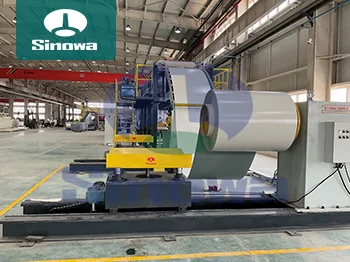
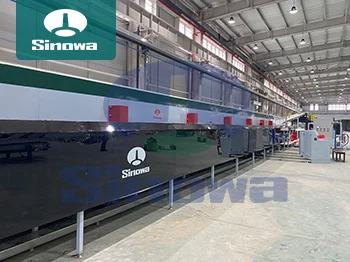
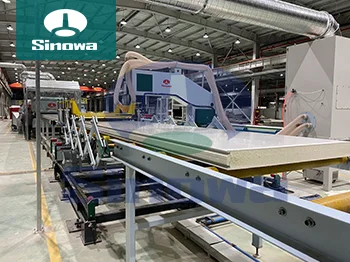
Sinowa is committed to the development and manufacturing of high-end and high-efficiency cold room sandwich panel production line. Our cold room sandwich panel production line are leading the way in efficiency, automatic control, human-computer interaction, environmental protection and energy consumption. Using system integration and bus control technology, it realizes the automatic integrated linkage control of the entire cold room sandwich panel production line, and can achieve remote interactive communication, which has the world-class level and a comprehensive leading high-performance cold room sandwich panel production line in the market.
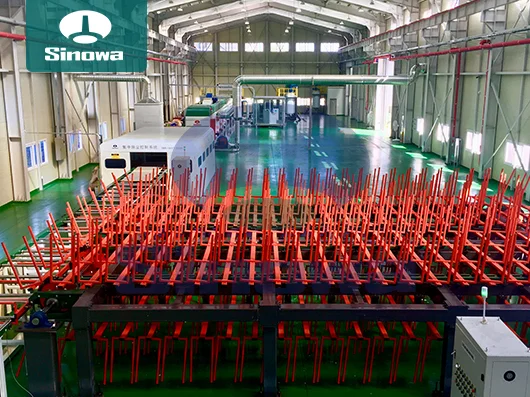
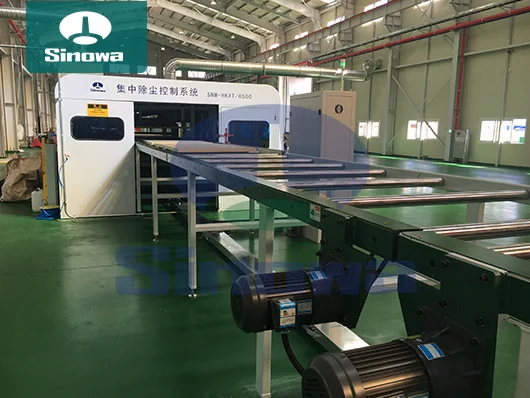
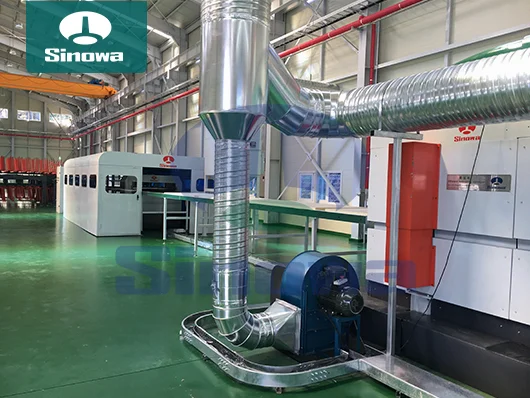
For more than ten years, relying on our innovative manufacturing concept and excellence in quality, reliable and trustworthy service to customers, we cooperate with customers all over the world, exported products to Canada, South Korea, Israel, Australia, the Middle East and other more than 20 countries and regions. contributed to building energy conservation and low-carbon production and have won widespread praise.
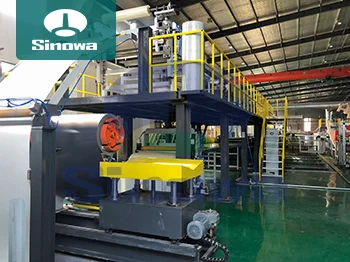
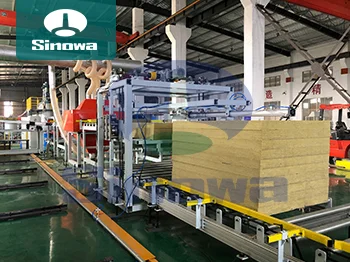
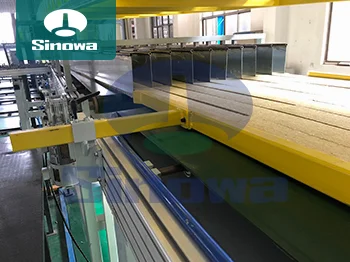
Sinowa has invested outstanding efforts in cold room sandwich panel production line, this is why our products are more efficiency, quality, automatic control technology, environmental protection, energy consumption indicators and the appearance and safety protection are comprehensively leading, some subversive design changes in many major technical points, these major innovations make our products excellent in price/performance and user experience.
The continuous expansion of cold chain logistics, food preservation, and low-temperature storage industries has steadily boosted market demand for high-performance cold room sandwich panels. As core production carriers of such building and thermal insulation materials, cold room sandwich panel production line factories undertake the vital task of manufacturing standardized, durable, and thermally efficient panels that adapt to diverse low-temperature application scenarios. These manufacturing facilities integrate mechanical automation, material processing, and thermal insulation technology to complete the whole production flow from raw material processing to finished panel molding, delivering reliable foundational materials for cold storage construction across various industries. Inside such factories, every production link follows mature technological logic and standardized operating procedures, balancing production efficiency with product usability to meet the differentiated construction needs of small-sized cold storage warehouses and large-scale low-temperature industrial parks.
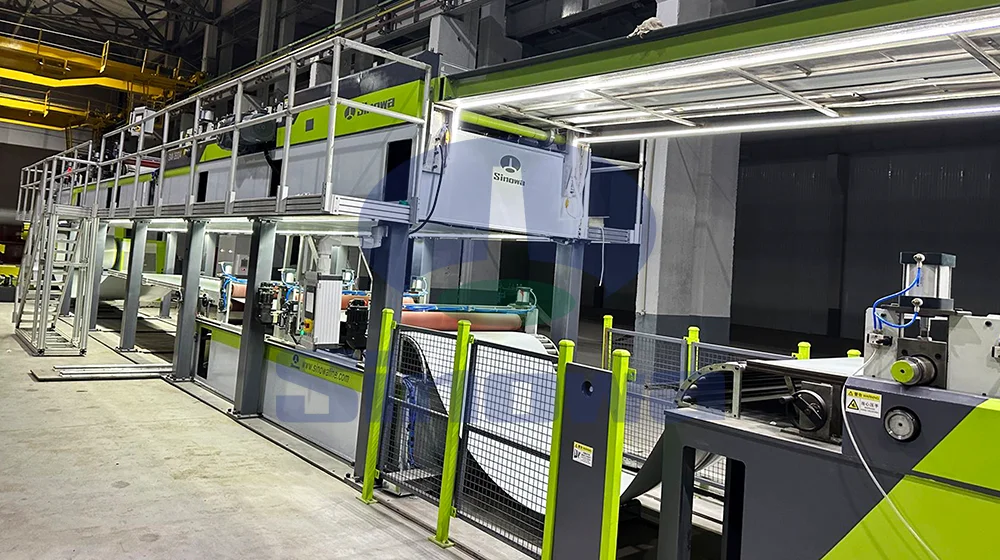
A professional cold room sandwich panel production line factory is structured with scientific spatial planning, dividing the plant area into raw material storage zone, automated production processing zone, finished product curing zone, and logistics transfer zone. This reasonable zoning design effectively avoids cross interference between different production stages, optimizes internal material transportation routes, and reduces unnecessary space and time consumption during production. The raw material storage area maintains constant temperature and dryness to protect metal sheets, foam core materials, and adhesive auxiliaries from moisture, oxidation, and environmental corrosion. Metal raw materials, commonly including color-coated steel sheets and corrosion-resistant metal plates, are stacked in classified areas with flat placement to prevent surface deformation and scratches. Foam core materials, which serve as the key thermal insulation layer of sandwich panels, are stored in sealed and ventilated spaces to avoid chemical composition changes caused by prolonged exposure to humid air. Adhesive materials are kept in constant-temperature storage units to stabilize their viscosity and bonding activity, laying a solid foundation for consistent product quality in subsequent production procedures.
The internal composition of the production line determines the overall production capacity and product quality stability of the factory. A complete cold room sandwich panel production line consists of multiple interconnected mechanical units, realizing automated continuous operation from raw material feeding to finished product output. The front-end feeding system is responsible for orderly conveying metal sheets, with automatic unwinding and leveling devices to eliminate wrinkles and bending deformation on metal surfaces. Precision leveling structures calibrate the flatness of metal plates within a tiny error range, ensuring the consistent appearance and structural uniformity of finished panels. After leveling, metal sheets enter the surface pretreatment link, where professional equipment removes surface dust, oil stains, and impurities through physical cleaning methods. This pretreatment process enhances the adhesion between metal sheets and intermediate core materials, preventing peeling and delamination of panels during long-term use in low-temperature environments.
The foaming and filling unit acts as the core functional module of the entire production line, directly defining the thermal insulation performance and structural firmness of cold room sandwich panels. Inside this unit, raw materials for foam core materials undergo precise proportional mixing under automatic material distribution systems. Mechanical stirring devices ensure uniform fusion of different raw material components, avoiding local density differences inside the foam layer. The mixed raw materials are injected between two layers of pretreated metal sheets through high-pressure spraying equipment. During the injection process, intelligent temperature control systems maintain a constant processing temperature to stabilize the foaming reaction speed. Moderate and steady foaming allows tiny and uniform bubbles to form inside the core material, which constructs a dense thermal insulation structure and effectively reduces heat conduction efficiency. This processing method also strengthens the integration between the foam core and metal layers, forming an integral composite structure without obvious gaps at the bonding interface.
Following the foaming filling process, the composite plates enter the continuous pressing and molding stage. The pressing equipment adopts multi-group synchronous pressure applying structures, with adjustable pressure parameters to adapt to panels of different thickness specifications. In the sealed pressing space, the panels undergo constant-pressure shaping for a fixed period, which accelerates the solidification and molding of foam materials while eliminating redundant gaps inside composite structures. The internal temperature of the pressing equipment is matched with the foaming reaction temperature to maintain the continuity of material curing, preventing structural cracks caused by drastic temperature changes. After pressing, preliminary molded panels are transmitted to the trimming and cutting area through automated conveying tracks. High-precision cutting devices execute fixed-length cutting according to customized dimensional requirements, and edge trimming mechanisms polish the panel edges to remove burrs and irregular residues. This processing step standardizes the appearance size of panels and improves the fitting degree during on-site assembly of cold storage buildings.
Finished panels cannot be directly delivered after cutting, requiring a complete curing process in the constant-temperature curing area of the factory. The curing space keeps stable temperature and humidity conditions to facilitate the complete solidification of internal adhesives and foam structures. During the curing period, the internal molecular structure of the panel tends to be stable, which significantly enhances compression resistance, tensile strength, and bonding firmness. Factories usually set different curing cycles based on panel thickness and material types to ensure each type of panel reaches the optimal structural state. After curing, professional staff conduct comprehensive appearance and structural inspections on finished products. The inspection work includes observing surface flatness, detecting edge sealing integrity, and checking for surface scratches and depressions. Simple pressure and bending tests are also carried out on random samples to verify the mechanical stability of panels under conventional external forces.
In addition to core production equipment, supporting auxiliary systems in the factory guarantee the stable operation of the entire production line. The intelligent control system runs through all production links, realizing unified regulation of feeding, foaming, pressing, and cutting processes. Through centralized control terminals, production parameters such as conveying speed, foaming ratio, and pressing pressure can be flexibly adjusted to adapt to diversified production demands. The dust removal and purification system collects tiny dust and chemical residues generated during cutting and foaming, maintaining a clean production environment and reducing the impact of production waste on mechanical operation. The constant-temperature water circulation system stabilizes the operating temperature of key equipment, avoiding equipment aging and parameter deviation caused by long-term high-load operation. Meanwhile, the factory is equipped with complete material transportation equipment, which realizes automatic turnover of raw materials, semi-finished products, and finished products, reducing manual handling intensity and improving overall production efficiency.
The daily operation management of cold room sandwich panel production line factories focuses on production stability and product consistency. Scientific production scheduling is formulated according to market demand, balancing the production proportion of panels with different thicknesses and materials to avoid excessive accumulation of single-type finished products. Regular daily inspection and maintenance are conducted on production equipment; staff check the operating status of transmission components, sealing parts, and temperature control modules before production every day. Worn parts are replaced in a timely manner, and equipment lubrication and cleaning work are completed to prolong the service life of mechanical units. In terms of raw material management, factories establish complete material screening standards, and each batch of incoming raw materials undergoes simple performance detection to eliminate unqualified raw materials with uneven texture and unstable chemical properties. Strict raw material screening lays a foundation for controlling the defective rate of finished products.
Cold room sandwich panels manufactured by such factories possess multiple practical advantages suitable for low-temperature storage environments. The compact internal foam structure endows panels with excellent thermal insulation performance, effectively isolating external heat and maintaining constant low temperature inside cold storage, which helps reduce long-term energy consumption of refrigeration equipment. The double-layer metal surface enhances the compression resistance and corrosion resistance of panels, enabling them to adapt to humid and low-temperature working environments for a long time without surface rust or structural deformation. The integrated composite structure is not easy to delaminate and crack, reducing the maintenance frequency and cost of cold storage buildings in the later stage. Moreover, standardized panel specifications simplify on-site assembly procedures, shorten the construction cycle of cold storage projects, and bring higher economic benefits to construction investors.
In terms of application scenarios, products from cold room sandwich panel production line factories cover multiple downstream industries. In the food processing industry, these panels are used to build fresh food cold storage and frozen product warehouses, providing stable low-temperature storage conditions for meat, dairy products, and fruits. In the pharmaceutical industry, they are applied to constant-temperature medical storage warehouses to ensure the storage environment stability of special medical supplies. In the chemical processing field, the panels serve as thermal insulation and anti-corrosion building materials for special low-temperature chemical storage spaces. In addition, they are also widely used in logistics and transportation cold storage, agricultural product preservation warehouses, and industrial low-temperature workshops, showing strong market compatibility and application flexibility.
With the continuous upgrading of industrial manufacturing technology, cold room sandwich panel production line factories are constantly optimizing production processes and production modes. More intelligent sensing components are introduced into production lines to realize real-time monitoring of material flow, temperature changes, and pressure fluctuations during production. Production data is recorded and sorted automatically, providing data support for subsequent process optimization. In terms of environmental protection optimization, factories gradually adopt low-pollution raw material formulas and closed production cycles to reduce the discharge of chemical waste and harmful gases. The recycling mechanism of production waste is continuously improved; leftover materials generated by cutting are crushed and recycled for secondary processing, improving the comprehensive utilization rate of raw materials. These optimization measures not only conform to the development trend of energy-saving and environmentally friendly manufacturing but also reduce the comprehensive production cost of factories.
The development of cold room sandwich panel production line factories is closely linked to the progress of the global cold chain industry. As consumers have higher requirements for the freshness and storage cycle of various products, the market puts forward stricter standards for the thermal insulation performance, structural stability, and environmental protection characteristics of cold storage panels. To adapt to market changes, factories continue to carry out technological research and development, trying to apply new composite materials and optimized foaming processes to production. Some factories adjust the internal production structure to realize the mixed production of multi-type panels, meeting the personalized customization needs of special cold storage engineering projects. While improving production technology, factories also pay attention to the training of professional operators, ensuring that employees can proficiently master equipment operation specifications and process adjustment methods, so as to maintain stable product quality in mass production.
Looking into the future, cold room sandwich panel production line factories will develop in the direction of higher automation, greener production, and more refined manufacturing. Intelligent linkage between equipment will be further strengthened to reduce manual intervention in the production process and lower the error rate caused by human operation. The application of new environmental protection materials will continuously reduce the energy consumption and pollution emissions of the production process. At the same time, factories will strengthen the matching ability of customized production to meet the construction demands of diversified and personalized cold storage projects in different industries. As an important part of the cold chain industrial chain, these production factories will continuously iterate production technology, optimize manufacturing processes, and provide more high-quality thermal insulation building materials for the global low-temperature storage industry, making steady contributions to the long-term development of the cold chain economy.
« Cold Room Sandwich Panel Production Line Factory » Update Date: 2026/5/8
- Sandwich Panel Production Line On Sales
- Sandwich Roof Panel Production Line Supplier
- High Efficiency PUR Sandwich Panel Line
- Insulated Sandwich Panel Line Factory
- High-tech Sandwich Panel Making Machine
- PIR Insulation Panel Production Line From China
- High-quality Sandwich Panel Integrated Production Line
- Customized Metal Sandwich Panel Production Line
- High-tech PIR Wall Panel Production Line
- High-quality Cold Room Sandwich Panel Production Line
- High-quality Sandwich Wall Panel Production Line
- Glass Wool Sandwich Panel Production Line
- High-tech Corrugated Sandwich Panel Production Line
- High Efficiency Polyurethane Sandwich Panel Machinery
- High-quality Wall Sandwich Panel Production Line
- Continuous Sandwich Panel Production Line
- Continuous PU Sandwich Panel Production Line For Construction
- Low Price Continuous PU Sandwich Panel Production Line
- PU Board Production Line For Sale
- Composite Sandwich Panel Production Line
- Links:
- Sandwich Panel Continuous Production Line
- Automatic and Continuous Sandwich Panel Production Line
- Cheap and Low Price Sandwich Panel Production Line
- China Sandwich Panel Production Line Factory
- Color Steel Sandwich Panel Production Line For Cold Storage
- Continuous Composite Foam Sandwich Panel Production Line
- Continuous Production Line For Rockwool and Mineral Wool Sandwich Panels
- Continuous PU Phenolic Insulation Panel Production Line
- Continuous PU PIR Sandwich Panel Production Line
- Continuous PUF PUR Sandwich Panel Production Line
- Continuous Sandwich Panel Production Line For Roof and Wall
- Customized and Design Sandwich Panel Production Line
- Decorative Sandwich Panel Production Line For Glass Wool Boards
- High Quality Sandwich Panel Production Line For Sale
- Polyurethane(PU) Sandwich Panel Production Line
- Sandwich Panel Production Line Manufacturer and Supplier