
Composite Panel Production Line Supplier
Sinowa is a well-known manufacturer and technical service provider of high-end composite panel production line, learn more about composite panel production line supplier, please contact Sinowa's technical engineer, tell us what you need, we will contact you as soon as possible!
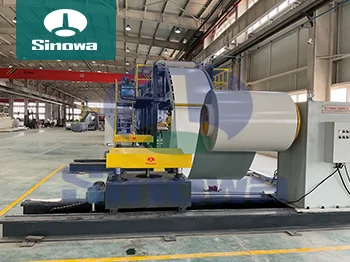
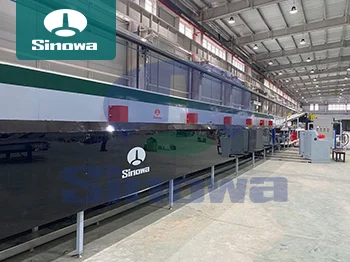
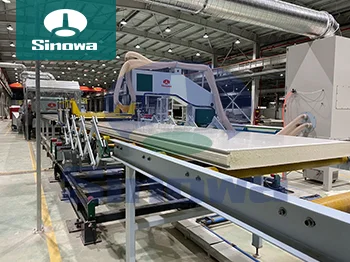
Sinowa is committed to the development and manufacturing of high-end and high-efficiency composite panel production line. Our composite panel production line are leading the way in efficiency, automatic control, human-computer interaction, environmental protection and energy consumption. Using system integration and bus control technology, it realizes the automatic integrated linkage control of the entire composite panel production line, and can achieve remote interactive communication, which has the world-class level and a comprehensive leading high-performance composite panel production line in the market.
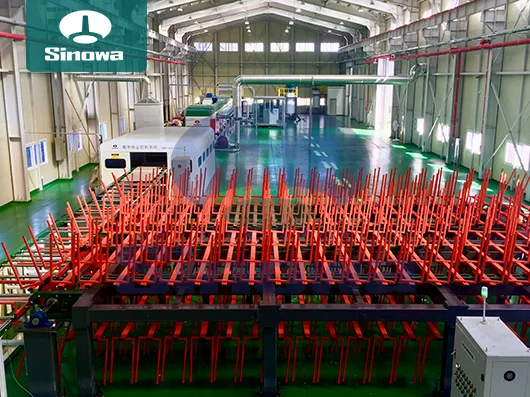
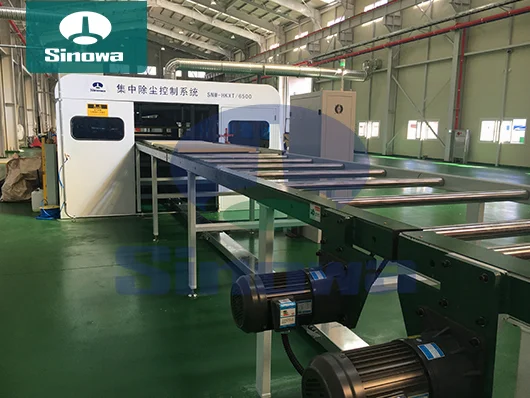
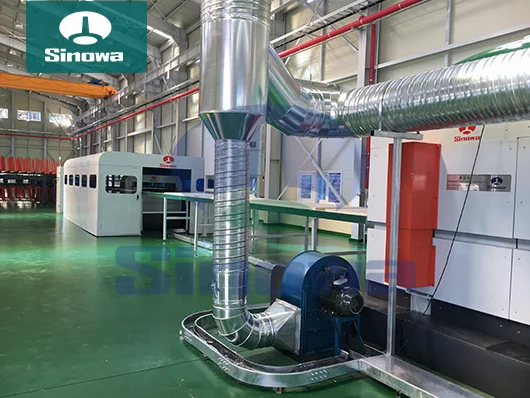
For more than ten years, relying on our innovative manufacturing concept and excellence in quality, reliable and trustworthy service to customers, we cooperate with customers all over the world, exported products to Canada, South Korea, Israel, Australia, the Middle East and other more than 20 countries and regions. contributed to building energy conservation and low-carbon production and have won widespread praise.
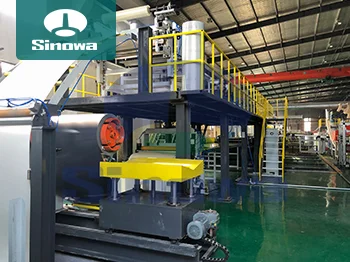
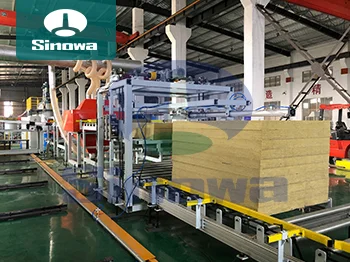
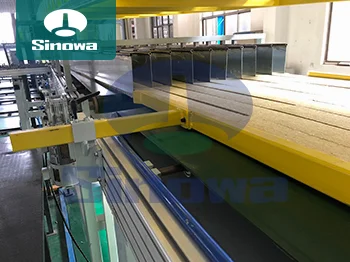
Sinowa has invested outstanding efforts in composite panel production line, this is why our products are more efficiency, quality, automatic control technology, environmental protection, energy consumption indicators and the appearance and safety protection are comprehensively leading, some subversive design changes in many major technical points, these major innovations make our products excellent in price/performance and user experience.
Working with a composite panel production line supplier means focusing first on the alignment between production goals and the technical layout of the entire manufacturing system. Many manufacturing operations begin the sourcing process with only a rough idea of their target output and product form, which can lead to mismatched equipment that struggles to keep pace with daily operational demands. A reliable supplier takes time to listen to these core production objectives, mapping out how each individual station connects from raw material feeding all the way through final cutting and stacking. This kind of collaborative planning avoids common pitfalls such as uneven material distribution, inconsistent bonding quality, or bottlenecks that slow the whole line down. The design phase accounts for variations in raw material characteristics, adjusting feeding speeds, compression parameters, and heating cycles to suit different combinations of core and surface materials. Instead of pushing a single fixed machine configuration for every buyer, experienced providers tailor the workflow layout to fit available factory space, considering floor load limits, material handling routes, and future expansion room. Operators who will run the line are also brought into early discussions wherever possible, so that control interfaces and maintenance access points match the practical habits of the production team. This foundational focus on customized layout and functional harmony sets the stage for stable, long-running production rather than short-term equipment delivery that fails to deliver consistent panel results over months and years of continuous use.
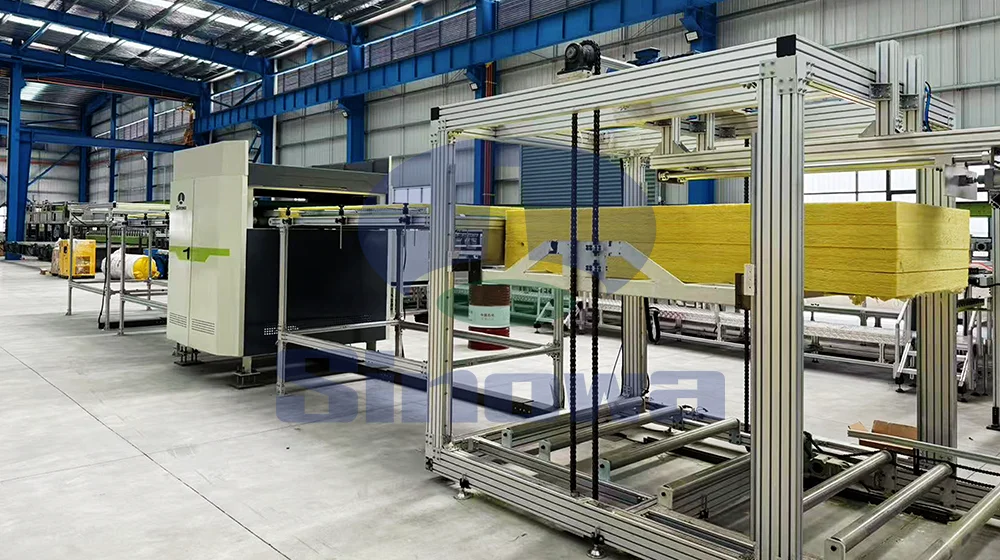
The mechanical structure and integrated automation of composite panel production lines form the backbone of consistent panel quality, and reputable suppliers invest heavily in refining these core components without overcomplicating daily operation. Every moving part across the feeding, laminating, pressing, and trimming stages is engineered to maintain precise positioning under extended running hours, reducing drift that can create thickness differences or misaligned layers on finished panels. Automated adjustment modules allow operators to modify pressure, temperature, and travel speed through centralized control, removing much of the guesswork that comes with manual calibration. Sensors embedded along the line track material presence, surface flatness, and bonding progression in real time, sending alerts when parameters drift outside preset comfortable ranges before defective products accumulate. While high levels of automation improve repeatability, good suppliers balance automation with simple mechanical access for routine inspections and part replacement. Heavy-duty frames are built to absorb vibration generated during continuous pressing and cutting, which protects both delicate sensor hardware and the uniform texture of composite materials. Wiring, pneumatic circuits, and hydraulic assemblies are arranged logically to limit wear from dust and residual processing waste that naturally builds up in panel production environments. This careful balance of robust mechanical construction and thoughtful automation design helps production facilities maintain steady output while keeping the frequency of unplanned downtime as low as practical.
Material handling systems deserve close attention when evaluating a composite panel production line supplier, as smooth transfer between stations directly impacts both yield and workplace safety. Raw materials used in composite panel manufacturing often come in large rolls, bulk sheets, or granular form, and improper handling can scratch decorative surfaces, distort core substrates, or introduce contaminants that ruin the final bond. Suppliers design feeding and conveying mechanisms to support gentle yet reliable transport, with adjustable tension controls for flexible sheet materials and stable support platforms for rigid core layers. Transition zones between pressing stations and cooling sections are engineered to prevent sudden shifts that cause delamination before the adhesive has fully set. Automated stacking and turning units remove the need for frequent manual lifting of heavy semi-finished panels, cutting down on fatigue-related errors and the risk of surface damage during handling. Dust collection and residue removal units are integrated at key transfer points to capture fine particles generated during trimming, which prevents debris from becoming trapped between layers during lamination. The supplier will also consider the sequence of material addition, ensuring that additives, adhesives, and surface films are introduced at exactly the right moment in the workflow. When material handling works in seamless coordination with the rest of the line, factories see fewer rejected panels and a much smoother rhythm across every shift of production.
Adhesive application and thermal processing systems are critical areas where the expertise of a composite panel production line supplier directly shapes the durability and visual finish of finished panels. Uniform spread of bonding agent across substrate surfaces prevents weak spots, bubbles, or gaps that can appear after panels leave the press and enter cooling. Different adhesive formulations require different delivery methods, and skilled suppliers offer adaptable coating modules that can adjust flow rate, spray pattern, or roller gap to match the viscosity and setting time of the chosen bonding material. Thermal zones within the pressing section distribute heat evenly across the full panel area, avoiding hot spots that discolor surface layers or cause premature curing in localized regions. Cooling stages are calibrated to lower temperature gradually rather than abruptly, which reduces internal stress inside the composite structure and limits warping once panels are cut to size. All temperature and coating settings are stored within the line’s control system, so proven recipes can be recalled quickly when switching between panel types. The supplier also provides guidance on how changes in ambient factory temperature and humidity affect curing behavior, helping production teams make small, effective adjustments without disrupting the full production run. Mastery over these thermal and coating functions separates generic equipment vendors from suppliers who truly understand composite material bonding behavior.
After the core forming and curing stages, cutting, edge finishing and quality monitoring stations complete the production sequence, and forward-thinking suppliers design these end-of-line functions to integrate naturally rather than operate as disconnected add-ons. Precision cutting units trim continuous composite stock into panel dimensions specified by each order, maintaining clean edges that reduce secondary finishing work downstream. Edge treatment modules can smooth sealed borders, remove rough flash, or prepare panel edges for later joining depending on the intended end use of the product. Inline inspection tools capture visual and dimensional data as panels pass through, flagging uneven edges, surface blemishes, or dimensional deviations automatically. Data captured during inspection can be reviewed by supervisors to spot recurring trends, such as consistent thickness drift or edge tearing, which can then be traced back to upstream settings on the line. Instead of requiring full offline inspection batches that delay shipment, inline checks let operators address small issues while production continues. Suppliers ensure that these final processing stations run at speeds synchronized with the upstream laminating and pressing sections, so no bottleneck forms at the end of the workflow. Well-designed finishing systems preserve the integrity of the composite layers and deliver panels ready for packaging and shipment with minimal extra handling required from factory staff.
Service and technical support arrangements define the long-term value received from a composite panel production line supplier, extending far beyond the moment when equipment arrives at the customer’s facility. Installation supervision is provided to make sure every section of the line is leveled, aligned, and connected correctly before trial runs begin, because poor installation is a leading cause of early operational trouble. Structured training covers daily operation, parameter adjustment, basic troubleshooting, and scheduled maintenance routines for both lead operators and maintenance technicians. Training sessions are tailored to match the actual functions of the delivered line, using live equipment demonstrations rather than generic material that does not reflect real working conditions. Ongoing remote support allows technical teams to review operational logs, walk through error codes, and guide minor corrections without waiting for an on-site visit. Spare part guidance helps customers build sensible inventory lists for high-wear components, so replacement pieces are available when needed and extended stops are avoided. Many suppliers also schedule periodic follow-up conversations months after commissioning, to hear about emerging operational challenges and share recommendations for optimizing output. This sustained support framework helps manufacturing teams grow confident in managing the line independently and protects the substantial investment made in composite panel production capacity.
Flexibility for product variation is an increasingly important consideration that distinguished composite panel production line suppliers prioritize in their system designs. Markets demand a wide spectrum of panel configurations, differing in total thickness, surface texture, layer composition, and overall weight, and production lines must accommodate these shifts without lengthy teardown and rebuild cycles. Quick-change adjustment points allow teams to reconfigure roller gaps, press clearances, and feeding guides when switching from one panel specification to another. Recipe storage within the control interface cuts setup time, as validated parameter sets for each panel variant can be loaded in moments. Suppliers test these changeover sequences during factory acceptance trials to confirm that transitions can happen efficiently between production batches. The mechanical design leaves room to add optional modules later if a manufacturer chooses to expand their product range, whether that means new surface film feeding units, extra edge processing tools, or upgraded inspection hardware. This modular mindset protects the buyer against rapid shifts in market demand, so the production line does not become limited to only a narrow set of panel styles. Factories equipped with flexible lines can respond faster to custom orders and explore new product opportunities without replacing major sections of their core manufacturing system.
Sustainable operational efficiency sits at the center of modern composite panel production line design, and responsible suppliers continuously refine equipment to reduce unnecessary resource consumption during every production cycle. Energy management features regulate power draw across heating, pressing, and drive systems, scaling output to match real-time production load rather than maintaining constant high consumption during idle periods. Optimized adhesive delivery reduces excess coating waste, cutting material loss while still guaranteeing complete coverage for reliable bonding. Dust and scrap collection systems capture usable offcuts and process waste, supporting organized recycling workflows on-site. The layout of the full line also reduces idle movement for operators and material transport, cutting wasted labor time over thousands of operating hours. Suppliers share practical operational guidance focused on efficiency, covering maintenance schedules that preserve energy performance and operating habits that limit material scrap. Efficiency gains do not come at the cost of panel consistency, as all resource-saving adjustments are tested to confirm finished product quality remains stable. For panel manufacturers, these efficiency improvements accumulate across each production shift, lowering ongoing operational expense and supporting more sustainable day-to-day manufacturing. Choosing a supplier that builds efficiency into every stage of line design creates lasting benefits that compound over the entire service life of the composite panel production system.
« Composite Panel Production Line Supplier » Update Date: 2026/10/21
Tags: Composite Panel Production Line , composite panel production line, composite panel production line manufacturer, composite panel production line supplier, composite panel production line for sale, customized composite panel production line, china composite panel production line
- Polyurethane Sandwich Panel Machinery On Sales
- Composite Panel Production Line Manufacturer
- High-quality Glass Wool Production Line
- High Efficiency Wall Sandwich Panel Production Line
- Polyurethane Sandwich Panel Line For Building
- Continuous PU Sandwich Panel Production Line On Sales
- Custom Decorative PU Sandwich Panel Production Line
- Glass Wool Sandwich Panel Machine Supplier
- Polyurethane Sandwich Panel Manufacturing Plant
- Highly Intelligent Polyurethane Sandwich Panel Line
- PU Sandwich Panel Line For Sale
- High-quality Continuous Sandwich Panel Manufacturing Line
- Isolation PU Sandwich Panel Line Supplier
- Glass Wool Sandwich Panel Line For Roof
- Cheap PU Isolation Panel Production Line
- Continuous Sandwich Panel Production Line Supplier
- Cheap Decorative Sandwich Panel Line
- PU Sandwich Panel Making Machine For Cold Room
- PU Isolation Panel Production Line Design
- Cold Storage Sandwich Panel Production Line Price
- Links:
- Sandwich Panel Continuous Production Line
- Automatic and Continuous Sandwich Panel Production Line
- Cheap and Low Price Sandwich Panel Production Line
- China Sandwich Panel Production Line Factory
- Color Steel Sandwich Panel Production Line For Cold Storage
- Continuous Composite Foam Sandwich Panel Production Line
- Continuous Production Line For Rockwool and Mineral Wool Sandwich Panels
- Continuous PU Phenolic Insulation Panel Production Line
- Continuous PU PIR Sandwich Panel Production Line
- Continuous PUF PUR Sandwich Panel Production Line
- Continuous Sandwich Panel Production Line For Roof and Wall
- Customized and Design Sandwich Panel Production Line
- Decorative Sandwich Panel Production Line For Glass Wool Boards
- High Quality Sandwich Panel Production Line For Sale
- Polyurethane(PU) Sandwich Panel Production Line
- Sandwich Panel Production Line Manufacturer and Supplier
- Sandwich Panel Production Machinery and Equipment