
Fully Automatic Rock Wool Sandwich Panel Production Line In China
Sinowa is a well-known manufacturer and technical service provider of high-end fully automatic rock wool sandwich panel production line, learn more about fully automatic rock wool sandwich panel production line in china, please contact Sinowa's technical engineer, tell us what you need, we will contact you as soon as possible!
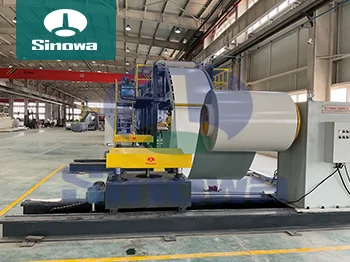
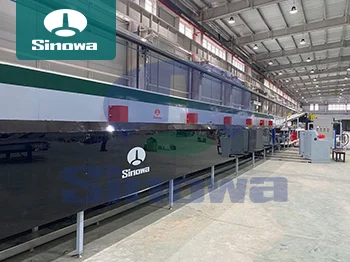
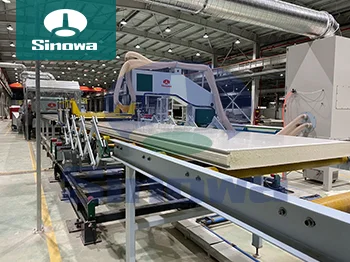
Sinowa is committed to the development and manufacturing of high-end and high-efficiency fully automatic rock wool sandwich panel production line. Our fully automatic rock wool sandwich panel production line are leading the way in efficiency, automatic control, human-computer interaction, environmental protection and energy consumption. Using system integration and bus control technology, it realizes the automatic integrated linkage control of the entire fully automatic rock wool sandwich panel production line, and can achieve remote interactive communication, which has the world-class level and a comprehensive leading high-performance fully automatic rock wool sandwich panel production line in the market.
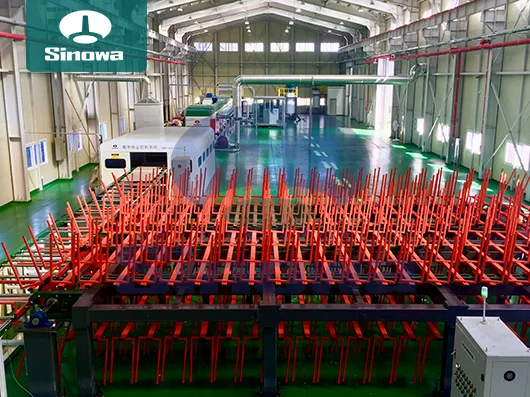
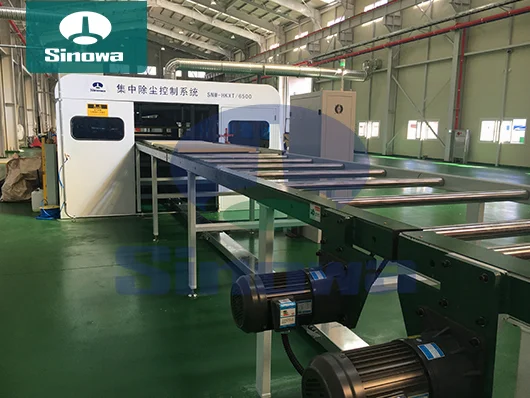
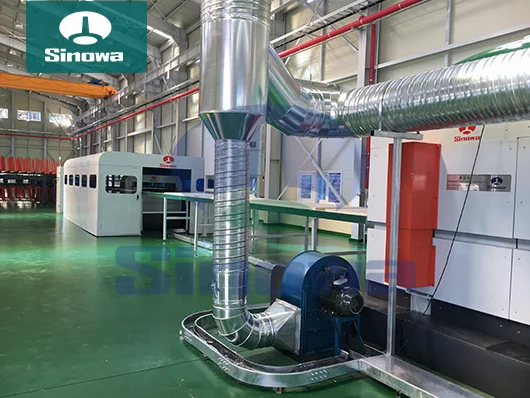
For more than ten years, relying on our innovative manufacturing concept and excellence in quality, reliable and trustworthy service to customers, we cooperate with customers all over the world, exported products to Canada, South Korea, Israel, Australia, the Middle East and other more than 20 countries and regions. contributed to building energy conservation and low-carbon production and have won widespread praise.
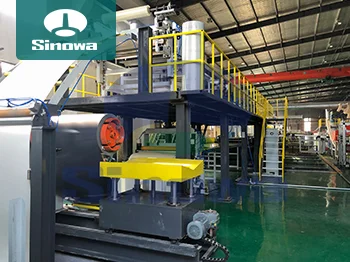
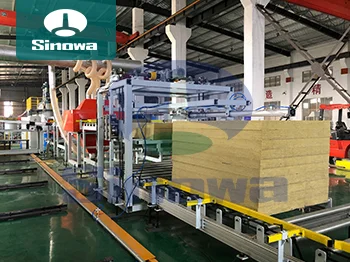
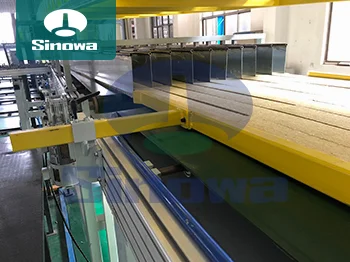
Sinowa has invested outstanding efforts in fully automatic rock wool sandwich panel production line, this is why our products are more efficiency, quality, automatic control technology, environmental protection, energy consumption indicators and the appearance and safety protection are comprehensively leading, some subversive design changes in many major technical points, these major innovations make our products excellent in price/performance and user experience.
The fully automatic rock wool sandwich panel production line developed and built in China represents a milestone in the evolution of continuous composite material manufacturing, reshaping how insulated building panels are fabricated for modern construction projects. Unlike older semi-automatic setups that require frequent manual intervention between discrete stages, this integrated system links every manufacturing step into one uninterrupted workflow, from raw material loading to finished panel stacking and wrapping. The core design philosophy centers on mechanical coordination and digital control, allowing the entire line to operate for extended periods with only a small team of supervisors for monitoring and routine maintenance. Rock wool, the fibrous inorganic core material, is valued for its thermal retention and sound dampening traits, and the automated line is purpose-built to embed this material securely between formed metal facings. Every mechanical station communicates through a unified control platform, so adjustments in one section automatically synchronize with downstream modules, eliminating mismatched speeds or positioning defects that often appear in fragmented production. Factory operators can adjust parameters through intuitive human-machine interfaces to adapt panel width, thickness and profiling without extensive mechanical reworking, granting remarkable flexibility for diverse building requirements. This shift away from hand-assisted operations also lowers workplace risks, as heavy lifting, material alignment and high-speed cutting tasks are handled by servo-driven machinery rather than workers, creating safer operating environments within material manufacturing workshops.
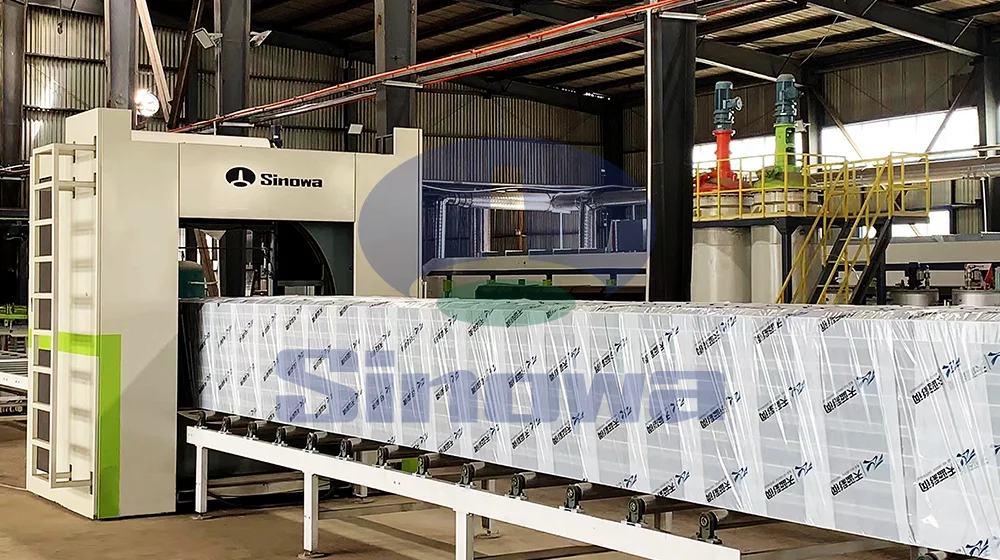
At the start of the production sequence, the decoiling and roll forming units prepare the metal sheets that form the outer skins of each sandwich panel, the first critical phase in the continuous production chain. Large metal coils are mounted on hydraulic decoilers that release sheet material at a steady, calibrated pace, while automatic splicing devices permit coil changes without halting the whole production run, cutting downtime significantly. The metal strip moves into roll forming stations, where sequential sets of shaping rollers bend and contour the flat sheet into roof or wall profiles according to preset geometric configurations. During forming, protective film can be laminated onto the metal surface to guard against scratches and abrasion during transportation and installation, a small yet valuable feature for maintaining visual quality of finished panels. The system continuously tracks sheet tension and feeding speed, correcting minor fluctuations automatically to prevent wrinkling, uneven profiling or stretching of the metal surface. After shaping, the inner side of the metal facing passes through an adhesive spraying station, where bonding compound is distributed evenly across the surface in controlled quantities. Consistent glue application is essential; too little creates weak bonding points, while excess adhesive wastes materials and may bleed out along panel edges. All these preliminary steps run in lockstep with the rock wool core feeding system, ensuring the metal facings arrive at the lamination zone at the exact moment the prepared rock wool segments are positioned between them.
Rock wool core handling is one of the most technically refined parts of the fully automatic line, as the proper orientation and placement of fiber slabs directly define the final panel performance. Bulk rock wool blocks are delivered to cutting and segmentation units, where machinery slices the material into strips of matching width for the target panel. The equipment rotates some rock wool segments to arrange fibers perpendicularly to the panel surface, a structural arrangement that improves compressive strength and overall stability compared with randomly aligned fibers. Conveyors transport these cut rock wool strips and arrange them side by side in tight formation, filling the space between upper and lower metal skins as they advance along the line. Sensors scan the core layer continuously to detect gaps, uneven density or misaligned rock wool pieces, sending real-time alerts to the central control system before defective composite material moves into pressing and curing. This automated inspection removes reliance on human eyes to spot subtle defects that could compromise panel performance after installation. The entire core feeding mechanism is adjustable to accommodate different rock wool densities and slab thicknesses, so the same production infrastructure can produce panels tailored for lighter wall cladding or heavier roof enclosures. By automating this traditionally labor-intensive core assembly, manufacturers maintain uniform core distribution across thousands of meters of continuous panel output in each production campaign.
Once the metal facings and rock wool core come together, the double-belt pressing and curing system fuses the three layers into a solid composite structure under controlled pressure and temperature. The assembled sandwich material enters a long continuous press chamber, where heavy-duty moving belts apply consistent compression across the full panel width to press the metal skins firmly against the adhesive-coated rock wool core. Pressure levels are digitally regulated to avoid crushing the porous rock wool fibers while still achieving tight contact for reliable bonding. Inside the curing tunnel, circulating air maintains stable thermal conditions throughout the chamber, allowing the adhesive to set gradually and uniformly across the whole panel. Gradient heating prevents sudden thermal shock that might cause warping, internal stress or separation between layers. The length of the curing zone is calculated to match the line travel speed, so the adhesive reaches sufficient bonding strength before the panel exits the heating section. After curing, the composite strip moves through a cooling zone, lowering surface temperature slowly to lock in the formed shape and reduce residual stress. The combination of precise pressure control and staged thermal treatment delivers reliable interlayer adhesion, a key factor for long-term panel durability in changing outdoor environments. This continuous lamination process outperforms batch pressing methods, which often suffer from inconsistent pressure distribution and longer production cycles.
Following cooling, the continuous panel enters the fixed-length cutting and trimming stage, where high-speed sawing equipment divides the endless composite strip into individual finished panels according to customer-defined dimensions. Encoder tracking systems measure the advancing panel length with high precision and trigger the cutting mechanism automatically once the target length is reached. The cutting head travels synchronously with the moving panel during the cut, eliminating the need to stop the line and preserving uninterrupted throughput. Side trimming units clean uneven edges and remove excess adhesive or protruding rock wool fibers, producing clean, straight edges for easy joining during building assembly. The cut panels are then transferred onto roller conveyors that transport each piece toward the final inspection and sorting area. Built-in sensors check panel flatness, edge dimension and surface integrity, flagging any units that fall outside preset tolerances for separate handling. Automated marking systems can imprint basic identification information onto each panel surface without slowing the material flow. All cutting parameters, including length, trimming width and saw travel speed, can be modified remotely through the main control console. This automated cutting workflow ensures every finished panel matches the required dimensions, reducing on-site adjustment work when panels arrive at construction sites.
Material handling after cutting relies on automatic stacking and packaging modules that complete the production cycle with minimal manual labor. Finished panels move along outfeed tables to a robotic stacking station, which lifts and arranges panels neatly into stacks, placing protective separators between each piece to prevent surface damage. The stacking system counts panels and builds stacks to specified heights optimized for forklift handling and container loading. Once a stack is complete, wrapping equipment applies stretch film around the bundle to shield panels from dust, moisture and minor impact during storage and shipment. Pallet feeding and binding operations can also be integrated into this end-of-line workflow, creating fully secured, ready-to-ship bundles straight from the production hall. Operators only need to oversee pallet exchange and occasional material replenishment rather than lifting heavy panels by hand. This final automation segment reduces the chance of surface scratches, edge chipping and stacking misalignment that frequently occur during manual packing. It also speeds up the transfer of finished goods from production to warehouse, streamlining inventory turnover and order fulfillment schedules for large-volume orders. Every action in this final stage is logged by the control system, supporting traceability for batches of panels produced over extended production runs.
The intelligent control and diagnostic architecture embedded within China’s fully automatic rock wool sandwich panel lines is what enables stable, long-cycle continuous operation and simplified maintenance. A central programmable platform synchronizes motors, hydraulic actuators, heating systems, sensors and safety interlocks across all stations, collecting real-time operational data from every part of the line. The system continuously monitors temperature, pressure, feed speed, motor load and sensor signals, performing self-diagnosis to identify emerging issues before they escalate into full breakdowns. Minor deviations trigger automatic parameter correction, while more serious faults generate clear alerts with location information to guide maintenance teams quickly. Remote data access allows technical personnel to review operating records and troubleshoot without being physically present at the factory, shortening response times for complex technical support. Safety interlock systems pause movement automatically if access doors are opened or abnormal conditions are detected, protecting both equipment and on-site personnel. The control software supports recipe storage, so manufacturers can save parameter sets for different panel types and recall them instantly when switching product variants. This digital framework lowers unplanned downtime and makes consistent quality easier to sustain over months of continuous manufacturing.
The global market for building enclosure materials continues to expand, and fully automatic rock wool sandwich panel production lines built in China support rising demand for efficient, durable composite panels across many construction sectors. The panels created by these lines serve industrial warehouses, clean working spaces, commercial building facades and temporary modular structures, where thermal management and acoustic comfort are important considerations. As construction practices shift toward prefabricated components, continuous automated lines are well suited to supply large quantities of pre-finished panels that cut on-site construction time significantly. The mature domestic manufacturing ecosystem for line components also supports timely spare part supply and after-sale technical assistance for operators across different regions. Ongoing technical refinement focuses on optimizing energy consumption, reducing material waste and expanding the range of panel profiles that can be produced on one unified line. These production systems demonstrate how mechanical engineering and digital automation can transform traditional building material manufacturing, balancing high throughput with consistent product performance. By enabling scalable, repeatable panel production, fully automatic rock wool sandwich panel lines help meet the evolving needs of modern construction, supporting projects that prioritize efficient assembly and reliable long-term enclosure performance.
« Fully Automatic Rock Wool Sandwich Panel Production Line In China » Update Date: 2026/10/17
Tags: Fully Automatic Rock Wool Sandwich Panel Production Line , fully automatic rock wool sandwich panel production line, fully automatic rock wool sandwich panel production line manufacturer, fully automatic rock wool sandwich panel production line supplier, fully automatic rock wool sandwich panel production line for sale, customized fully automatic rock wool sandwich panel production line, china fully automatic rock wool sandwich panel production line
- High-tech Rock Wool Board Production Line
- Low Price Sandwich Panel Rock Wool Production Line
- High-tech Mineral Wool Production Line
- Rock Wool Production Line Manufacturer
- Rock Wool Sandwich Panel Line Price
- Rockwool Sandwich Panel Line For House
- Rock Wool Board Production Line Factory
- Low Price Rockwool Sandwich Panel Line
- Rock Wool Production Line Price
- Rockwool Sandwich Panel Line For Sale
- Rock Wool Sandwich Panel Production Line Price
- Rock Wool Production Line For Building
- High-quality Rock Wool Board Production Line
- Fully Automatic Rock Wool Sandwich Panel Production Line
- Rock Wool Sandwich Panel Machine Supplier
- Rock Wool Production Line Factory
- High-end Mineral Wool Sandwich Panel Production Line
- Rockwool Sandwich Panel Line On Sales
- Mineral Wool Sandwich Panel Line For Cold Storage
- Highly Intelligent Mineral Wool Line
- Links:
- Sandwich Panel Continuous Production Line
- Automatic and Continuous Sandwich Panel Production Line
- Cheap and Low Price Sandwich Panel Production Line
- China Sandwich Panel Production Line Factory
- Color Steel Sandwich Panel Production Line For Cold Storage
- Continuous Composite Foam Sandwich Panel Production Line
- Continuous Production Line For Rockwool and Mineral Wool Sandwich Panels
- Continuous PU Phenolic Insulation Panel Production Line
- Continuous PU PIR Sandwich Panel Production Line
- Continuous PUF PUR Sandwich Panel Production Line
- Continuous Sandwich Panel Production Line For Roof and Wall
- Customized and Design Sandwich Panel Production Line
- Decorative Sandwich Panel Production Line For Glass Wool Boards
- High Quality Sandwich Panel Production Line For Sale
- Polyurethane(PU) Sandwich Panel Production Line
- Sandwich Panel Production Line Manufacturer and Supplier
- Sandwich Panel Production Machinery and Equipment