
High Quality PU Foam Production Line
Sinowa is a well-known manufacturer and technical service provider of high-end pu foam production line, learn more about high quality pu foam production line, please contact Sinowa's technical engineer, tell us what you need, we will contact you as soon as possible!
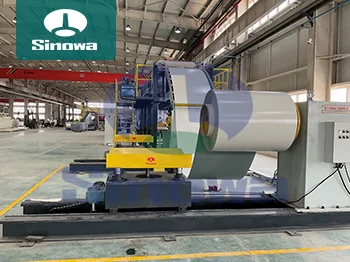
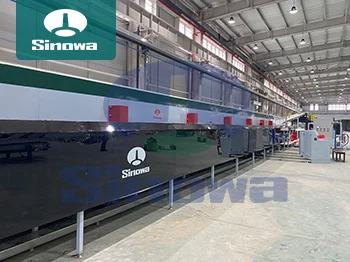
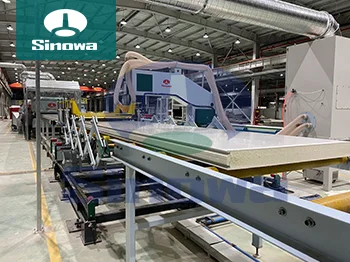
Sinowa is committed to the development and manufacturing of high-end and high-efficiency pu foam production line. Our pu foam production line are leading the way in efficiency, automatic control, human-computer interaction, environmental protection and energy consumption. Using system integration and bus control technology, it realizes the automatic integrated linkage control of the entire pu foam production line, and can achieve remote interactive communication, which has the world-class level and a comprehensive leading high-performance pu foam production line in the market.
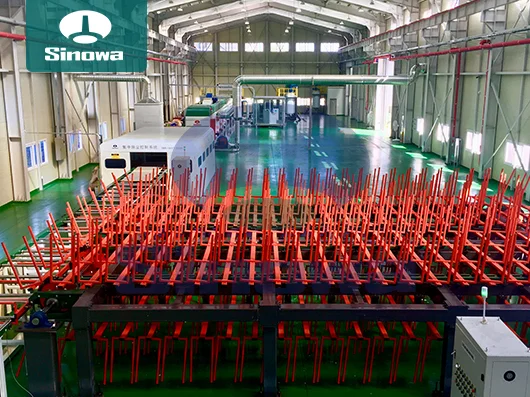
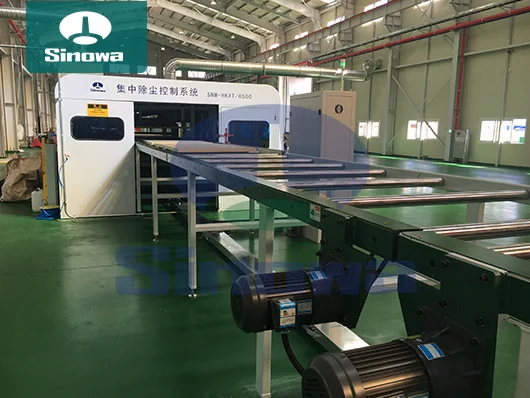
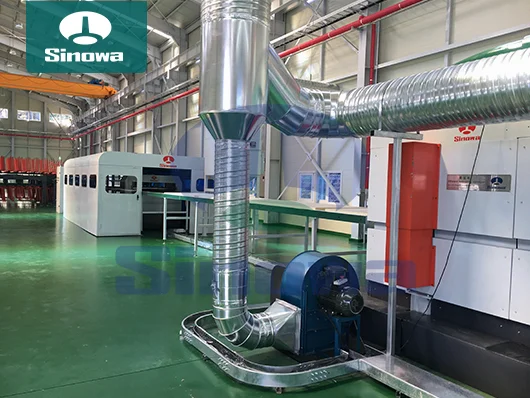
For more than ten years, relying on our innovative manufacturing concept and excellence in quality, reliable and trustworthy service to customers, we cooperate with customers all over the world, exported products to Canada, South Korea, Israel, Australia, the Middle East and other more than 20 countries and regions. contributed to building energy conservation and low-carbon production and have won widespread praise.
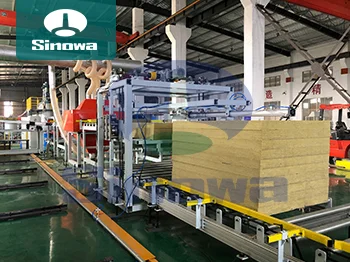
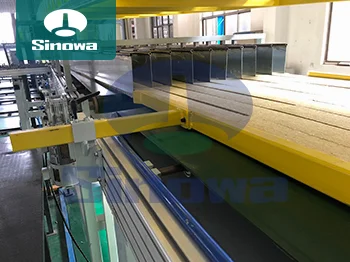
Sinowa has invested outstanding efforts in pu foam production line, this is why our products are more efficiency, quality, automatic control technology, environmental protection, energy consumption indicators and the appearance and safety protection are comprehensively leading, some subversive design changes in many major technical points, these major innovations make our products excellent in price/performance and user experience.
The production of high-quality polyurethane (PU) foam is a sophisticated integration of precise chemical reactions, advanced process control, and systematic quality management. Unlike simple material expansion, it relies on the delicate balance between exothermic chemical reactions and dynamic nucleation-growth processes, where every formulation variable and process parameter plays a crucial role in determining the final product's performance. A high-quality PU foam production line is not merely a collection of machinery but a well-coordinated system that ensures consistency, reliability, and excellence from raw material input to finished product output.
At the core of any high-quality PU foam production line lies the strict control of raw materials, as the chemical composition and purity of inputs directly dictate the foam's structural and functional properties. The primary raw materials for PU foam production are isocyanates and polyols, whose interaction forms the basic polymer framework. Isocyanates, which contribute to the hard segments of the foam structure, and polyols, which form the soft segments, must be carefully selected and proportioned to achieve the desired performance characteristics. The isocyanate index, defined as the ratio of isocyanate groups (-NCO) to active hydrogen groups from polyols and water, is a critical stoichiometric parameter; for flexible PU foam, this index typically ranges between 0.95 and 1.05. A low index can result in an insufficient crosslinked network, leading to weak strength, poor resilience, and potential foam collapse, while a high index may cause side reactions that make the foam hard, brittle, and less resilient, along with excessive heat generation that risks scorching and structural unevenness.
Polyols, the skeleton builders of PU foam, are selected based on their molecular weight, functionality, and hydroxyl value. High molecular weight polyols (3000–5000) with low functionality are preferred for flexible foams, as they ensure long, flexible polymer chains and moderate crosslink density, endowing the foam with softness and elasticity. A low hydroxyl value, which corresponds to higher molecular weight and longer chains, further enhances the foam's softness. In addition to these primary components, auxiliary materials such as blowing agents, catalysts, and silicone oil play indispensable roles in the foaming process. Water, the most common chemical blowing agent, reacts with isocyanates to produce carbon dioxide (CO₂) that drives foam expansion, while also contributing to the foam's hardness through the formation of rigid urea bonds. The typical dosage of water ranges from 2 to 5 parts per 100 parts of polyol; excessive water can lead to brittleness and poor tear resistance, while insufficient amounts result in inadequate expansion and high density.
Catalysts are essential for balancing the two key reactions in PU foam production: the foaming reaction (between isocyanate and water) and the gelling reaction (between isocyanate and polyol). Amine catalysts promote the foaming reaction, while organotin catalysts accelerate the gelling reaction. A delicate balance between these two types of catalysts is critical—too much emphasis on foaming can cause the foam to collapse, while overly rapid gelling may result in high density or coarse cells. Silicone oil, another vital auxiliary, reduces surface tension, stabilizes bubbles, and ensures a fine, uniform cell structure, which is essential for consistent foam performance. The quality control of these auxiliary materials is equally rigorous; for example, acidic impurities in raw materials can neutralize amine catalysts, slowing reactions and causing foam shrinkage, so acid values above 0.1 mg KOH/g must be strictly avoided.
Raw material storage and handling are also integral parts of ensuring high quality. Polyether polyols, for instance, are highly hygroscopic, and excessive moisture absorption (above 0.1%) can lead to unwanted reactions with isocyanates, producing excess CO₂ that results in coarse cells or cracking. To prevent this, raw materials are typically stored in nitrogen-sealed tanks at temperatures between 20–30 °C to avoid moisture absorption and oxidative degradation. High-precision metering systems, such as automatic dosing pumps, are employed to control the ratio of raw materials with an error margin within ±0.5%, a significant improvement over manual dosing which often has errors exceeding ±2%. For a production line with an annual output of 5,000 tons, this precision can save approximately 30 tons of raw material waste annually, highlighting the economic and quality benefits of strict material control.
The mixing process is a critical stage where raw materials are combined to initiate the foaming reaction, and its efficiency directly affects the uniformity of the foam's internal structure. High-shear mixing equipment is commonly used to ensure thorough blending of isocyanates, polyols, and auxiliary materials. The mixing speed and duration must be precisely controlled: insufficient mixing leads to uneven distribution of components, resulting in inconsistent foam density and structural defects, while excessive mixing may entrain air bubbles, affecting the cell structure. The temperature of the raw materials during mixing is another key parameter; too high a temperature accelerates the gelling reaction, leading to closed cells and potential scorching (when temperatures exceed 180 °C), while too low a temperature increases material viscosity, reducing mixing efficiency and delaying the reaction.
Following mixing, the reactant mixture is transferred to the foaming and molding stage, which can be implemented through either continuous or batch production processes depending on the application requirements. Continuous foaming machines are designed for large-scale, high-efficiency production of flexible PU foam slabs. These systems typically include a three-conveyor system and a large touch panel for process control, with production recipes stored in a programmable logic controller (PLC) for quick recall. The key to continuous production is maintaining the continuity and uniformity of foaming by precisely controlling raw material flow rates, conveyor speeds, and tunnel temperatures. Any misalignment in these parameters can lead to uneven foaming, cell defects, or foam collapse, resulting in the scrapping of entire foam rolls. At the end of the conveyor line, block cut-off machines trim the continuous foam slab into blocks of the desired length with high precision.
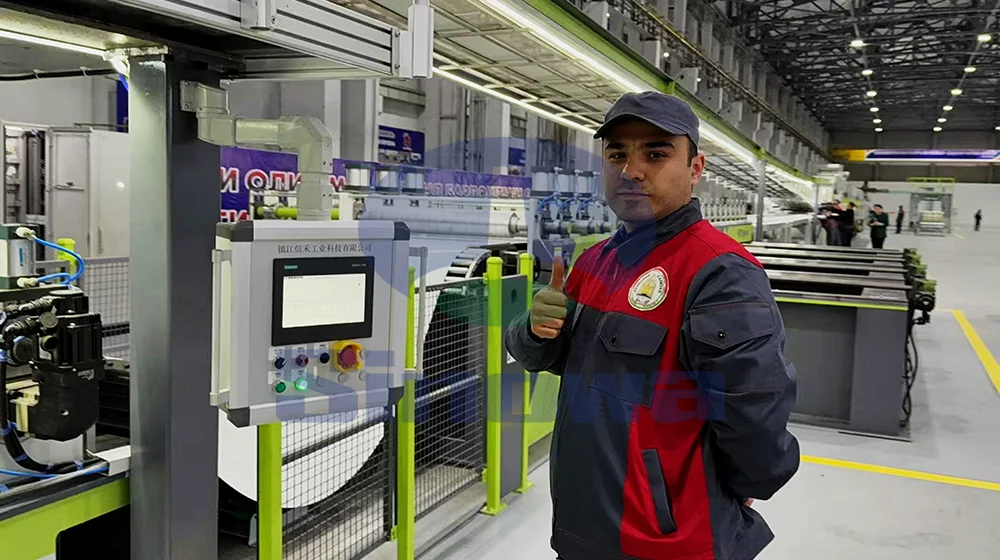
Batch foaming machines, by contrast, are suitable for small-batch or specialized foam products that require custom specifications. In batch production, the focus is on precisely controlling the initial temperature of the raw materials and ensuring sufficient curing time. For example, slow-rebound foam often requires more than 24 hours of curing to complete molecular crosslinking; insufficient curing leads to incomplete solidification and high breakage rates during cutting. Molding conditions in both continuous and batch processes have a significant impact on product properties. A study using Box-Behnken design found that the interaction between molding temperature and time has a notable effect on foam density, with optimal conditions identified as 96.41 for the isocyanate index, 43.31 °C for molding temperature, and 2.15 minutes for molding time to achieve cost-effective production of low-density foam that meets quality standards.
The curing stage is essential for the formation of the foam's final structure and mechanical properties. During curing, the polymer chains continue to crosslink, and the foam solidifies into its stable form. The curing environment must be carefully controlled, with temperature and humidity maintained at constant levels to ensure consistent crosslinking. High humidity can interfere with the reaction process, leading to surface defects and reduced mechanical strength, while temperature fluctuations may cause uneven curing and internal stress. For flexible PU foams, proper curing ensures the development of the desired open-cell structure, which is critical for properties such as breathability, resilience, and compression recovery. Open-cell rates above 90% are typically required for flexible foams to ensure optimal rebound performance.
After curing, the foam undergoes cutting and finishing processes to achieve the required dimensions and surface quality. CNC cutting machines are widely used in high-quality production lines, enabling dimensional deviations within ±1 mm, a fivefold improvement in precision compared to manual cutting. This precision is crucial for applications such as automotive interiors and furniture, where tight dimensional tolerances are required. The cutting process must be carefully controlled to avoid damaging the foam's internal structure; excessive cutting speed or dull blades can cause cell collapse and surface roughness, affecting both the appearance and performance of the final product.
Process optimization through advanced technologies has become a hallmark of modern high-quality PU foam production lines. Artificial intelligence (AI) and machine learning are increasingly being integrated into production systems to monitor and adjust process parameters in real time. These smart systems continuously check temperature, pressure, and chemical balance, making automatic adjustments to ensure accurate mixing ratios and consistent reaction conditions. The use of AI eliminates the guesswork from production, reducing waste, improving quality consistency, and enabling predictive maintenance. By detecting potential equipment issues before they lead to breakdowns, AI systems minimize production disruptions and improve overall operational efficiency.
Digital simulation and virtual prototyping are also transforming PU foam production. Digital twins of PU systems, built on comprehensive chemical understanding and advanced numerical modeling, can predict foaming behavior with high accuracy. These simulations enable manufacturers to optimize formulations, adjust processing setups, and troubleshoot potential issues before production begins, reducing the need for costly physical trials. By integrating data from formulation, experiments, and real production processes, digital twins accelerate product development cycles and ensure that the final product meets performance requirements.
Quality control and troubleshooting are integral components of a high-quality PU foam production line, ensuring that any defects are identified and addressed promptly. Common foam defects include inconsistent density, shrinkage, high closed-cell content, internal cracking, and batch-to-batch variability. Inconsistent density, often caused by improper mixing ratios, can be resolved through regular equipment calibration and strict adherence to formulation parameters. Foam shrinkage typically results from an imbalance between the gelling and foaming reactions, which can be corrected by adjusting catalyst ratios or raw material temperatures. Environmental factors such as humidity and temperature also significantly impact foam quality, so production facilities must be equipped with climate control systems to maintain stable conditions.
A robust quality control system includes regular testing of both raw materials and finished products. Raw materials are tested for purity, viscosity, and chemical composition to ensure they meet specifications. Finished foam products are evaluated for key performance indicators such as density, indentation force deflection, hysteresis loss, compression force deflection, rebound rate, tensile strength, and tear strength. Density testing is particularly critical, with the actual density required to deviate by less than 5% from the target value; for sofa foams, the typical target density ranges from 30 to 40 kg/m³. These tests are conducted at multiple points throughout the production process, from raw material incoming inspection to final product verification, ensuring that only high-quality foam reaches the market.
Sustainability has become an increasingly important consideration in high-quality PU foam production lines, driven by stricter environmental regulations and growing consumer demand for eco-friendly products. Manufacturers are adopting cleaner raw materials, such as bio-based polyols and non-isocyanate systems, to reduce carbon footprints and eliminate volatile organic compounds (VOCs). Eco-resins are being used to minimize emissions, while advancements in material technology have led to the development of recyclable PU foams with extended service lives. Energy-efficient equipment and process optimization also contribute to sustainability, reducing energy consumption and waste generation. For example, the use of physical blowing agents such as liquid CO₂, which has a lower environmental impact than traditional chemical blowing agents, is becoming more widespread.
The operational efficiency of a high-quality PU foam production line is further enhanced through systematic equipment maintenance and waste management. Regular calibration and maintenance of mixing equipment, metering pumps, and cutting machines ensure their reliability and accuracy, preventing defects caused by equipment malfunctions. Waste recycling programs, such as reprocessing trimmings and defective foam into secondary raw materials, reduce material waste and lower production costs. By adopting a holistic approach to production management, manufacturers can achieve a balance between quality, efficiency, and sustainability.
In conclusion, a high-quality PU foam production line is a complex, integrated system that relies on strict raw material control, precise process management, advanced technology integration, and robust quality assurance. Every stage of production, from raw material storage and mixing to foaming, curing, and finishing, requires meticulous attention to detail to ensure the final product meets the desired performance characteristics. The adoption of AI, digital simulation, and sustainable practices is driving continuous improvement in production efficiency and product quality, enabling manufacturers to meet the evolving demands of diverse applications such as automotive, furniture, construction, and packaging. As the industry continues to advance, the focus on precision, consistency, and sustainability will remain central to the development of high-quality PU foam production lines, ensuring their ongoing relevance and competitiveness in the global market.
« High Quality PU Foam Production Line » Update Date: 2026/1/12
Tags: PU Foam Production Line ,
- PU Insulated Panel Production Line Supplier
- Continuous PU Sandwich Panel Production Line For Sale
- Custom Sandwich Foam Panel Making Machine
- High-end Discontinuous PU Sandwich Panel Production Line
- Soundproofing Sandwich Panel Production Line Design
- High-quality PU Sandwich Panel Line
- High-end PUF Panel Making Machine
- High-end Continuous Sandwich Panel Manufacturing Line
- High-quality Sandwich Panel Production Machinery
- PIR Sandwich Panel Line For Building
- Foam Core Sandwich Panel Line Factory
- Polyurethane Sandwich Panel Production Line Factory
- PUR Sandwich Panel Production Line Design
- Discontinues Sandwich Panel Machine For Sale
- High-tech Color Steel Sandwich Panel Production Line
- PUF Insulation Sandwich Panel Line
- Continuous Sandwich Panel Line Supplier
- PIR Sandwich Panel Machine Manufacturer
- Soundproofing Sandwich Panel Production Line Factory
- Polyurethane Sandwich Panel Line For Clean Room