
Continuous PU Sandwich Panel Line For Cold Storage
Sinowa is a well-known manufacturer and technical service provider of high-end continuous pu sandwich panel line, learn more about continuous pu sandwich panel line for cold storage, please contact Sinowa's technical engineer, tell us what you need, we will contact you as soon as possible!
Sinowa is committed to the development and manufacturing of high-end and high-efficiency continuous pu sandwich panel line. Our continuous pu sandwich panel line are leading the way in efficiency, automatic control, human-computer interaction, environmental protection and energy consumption. Using system integration and bus control technology, it realizes the automatic integrated linkage control of the entire continuous pu sandwich panel line, and can achieve remote interactive communication, which has the world-class level and a comprehensive leading high-performance continuous pu sandwich panel line in the market.
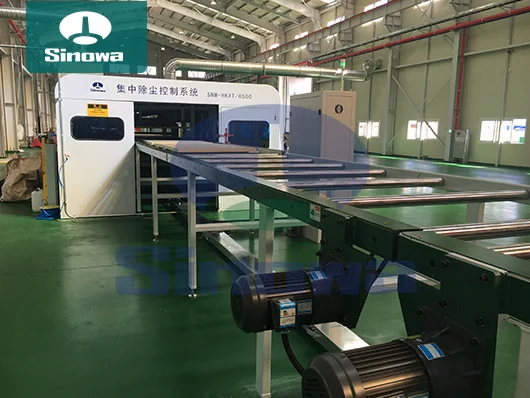
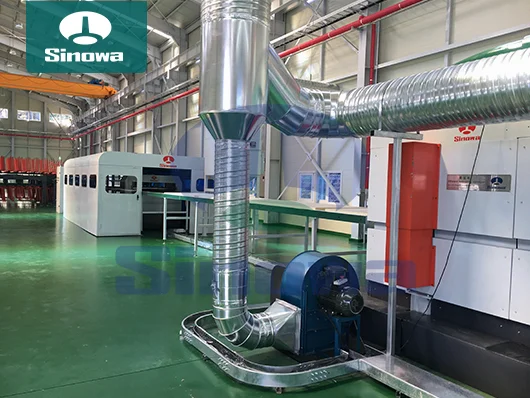
For more than ten years, relying on our innovative manufacturing concept and excellence in quality, reliable and trustworthy service to customers, we cooperate with customers all over the world, exported products to Canada, South Korea, Israel, Australia, the Middle East and other more than 20 countries and regions. contributed to building energy conservation and low-carbon production and have won widespread praise.
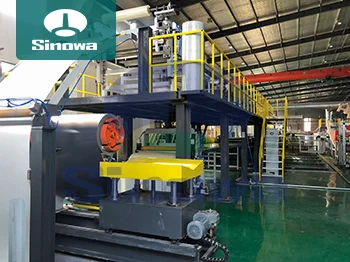
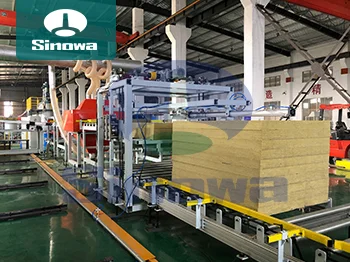
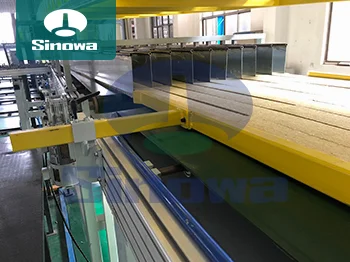
Sinowa has invested outstanding efforts in continuous pu sandwich panel line, this is why our products are more efficiency, quality, automatic control technology, environmental protection, energy consumption indicators and the appearance and safety protection are comprehensively leading, some subversive design changes in many major technical points, these major innovations make our products excellent in price/performance and user experience.
In the modern cold chain logistics and food storage industry, the demand for efficient, energy-saving and stable cold storage facilities is increasingly prominent. As the core component of cold storage insulation systems, polyurethane (PU) sandwich panels play a decisive role in maintaining stable internal temperatures, reducing energy consumption and ensuring storage quality. The continuous PU sandwich panel production line, which integrates advanced automation technology and precise process control, has become the key equipment for mass production of high-quality PU sandwich panels. Compared with traditional discontinuous production methods, this production line not only significantly improves production efficiency and product consistency but also optimizes the overall performance of PU sandwich panels, making them more adaptable to the harsh working environment of cold storage, such as low temperature, high humidity and frequent temperature fluctuations.
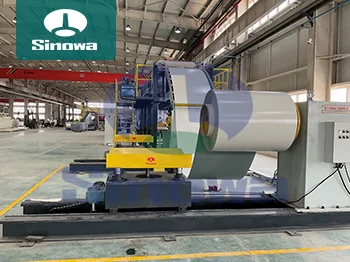
The working principle of the continuous PU sandwich panel line for cold storage is based on the continuous and coordinated operation of multiple functional modules, realizing the seamless connection from raw material processing to finished product output. The entire production process starts with the uncoiling and preprocessing of surface materials. Common surface materials for cold storage PU sandwich panels include color steel plates, stainless steel plates and embossed aluminum plates, which need to go through uncoiling, leveling and preheating procedures first. Uncoiling equipment equipped with tension control systems ensures that the surface material rolls are unwound smoothly without deviation, while leveling devices correct any deformation or unevenness of the surface materials, laying a foundation for the flatness of the final product. Preheating is a crucial link, as it can adjust the temperature of the surface materials to the optimal range for PU foam bonding, enhancing the adhesion between the surface layer and the core layer and preventing problems such as poor bonding caused by temperature differences.
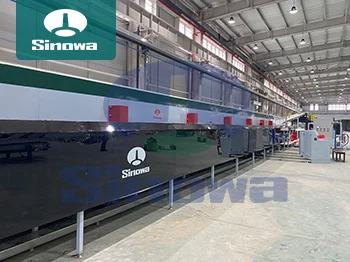
After preprocessing, the surface materials are transported to the foaming and lamination area, which is the core part of the entire production line. In this area, the metering and mixing system accurately conveys polyurethane resin, curing agent, foaming agent and other raw materials to the high-speed mixing head according to a specific ratio. The high-speed rotation of the mixing head makes the raw materials fully and uniformly mixed, and then the mixture is continuously coated on the bottom surface material through the reciprocating movement of the distributing head. At the same time, the upper surface material is synchronously transported to cover the mixed raw materials, and the three-layer structure (upper surface material, PU foam core layer, bottom surface material) enters the double-belt laminating machine together. The double-belt machine provides a stable and sealed environment for the foaming and curing of polyurethane. The upper and lower crawler belts, heated to a specific temperature, apply uniform pressure to the composite structure, ensuring that the PU foam fully foams and cures under controlled temperature and pressure conditions. The length of the double-belt machine is usually designed according to the foaming and curing time of PU materials, which is generally more than 20 meters, to ensure that the foam core layer can be completely cured before leaving the laminating area, avoiding deformation or performance degradation of the panels due to insufficient curing.
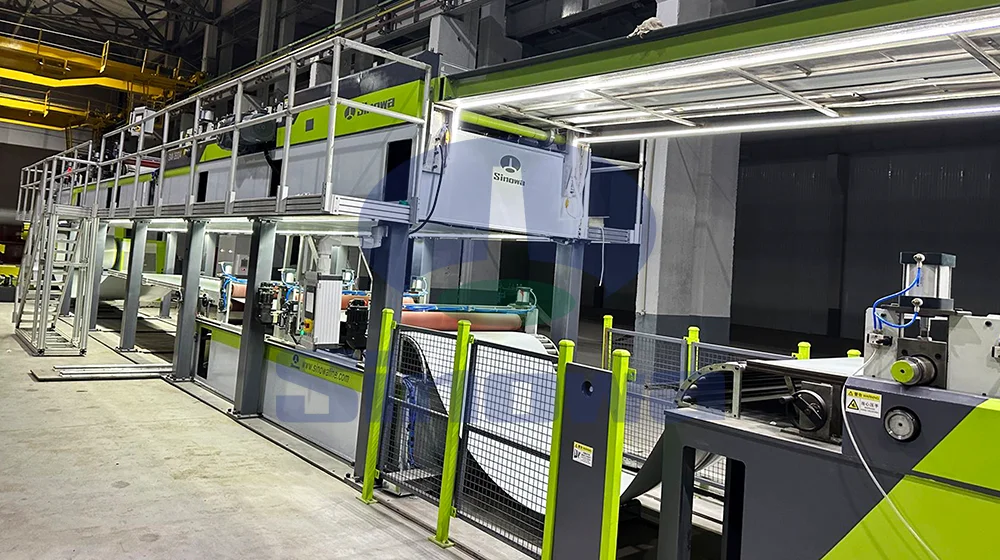
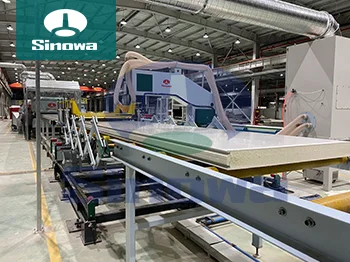
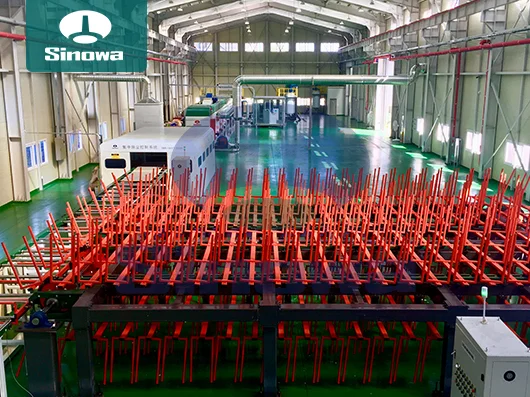
After foaming and curing, the continuous composite board enters the post-processing stage, which mainly includes edge trimming, fixed-length cutting, cooling and stacking. Edge trimming devices on both sides of the production line accurately trim the irregular edges of the continuous board to obtain precise width dimensions, usually ranging from 400mm to 1200mm, which can be adjusted according to actual needs. The fixed-length cutting system adopts a follow-up tracking saw, which can move synchronously with the continuous board. When the board reaches the preset length, the clamping device first fixes the board, and then the saw blade moves horizontally to complete the cutting. The cutting precision can be controlled within ±5mm, ensuring the consistency of the length of the finished panels. After cutting, the finished panels need to go through a cooling process to reduce their temperature to room temperature, which helps to stabilize the physical properties of the panels and prevent thermal deformation during storage or transportation. Finally, the automatic stacking system arranges the cooled finished panels neatly and packages them, which is convenient for storage and transportation.
The continuous PU sandwich panel line for cold storage has significant technical advantages that make it irreplaceable in the mass production of cold storage panels. Firstly, it has high production efficiency. The production speed of the continuous line can reach 3-10 meters per minute, and the daily output can reach thousands of square meters, which is far higher than the discontinuous production method with a daily output of only a few dozen square meters. This efficient production capacity can meet the large demand for PU sandwich panels in large-scale cold storage construction projects, shortening the construction cycle of cold storage. Secondly, the product quality is stable and consistent. The entire production process of the continuous line is controlled by an advanced computer-aided system, which can accurately monitor and adjust parameters such as raw material ratio, mixing speed, foaming temperature, pressure and production speed. This precise control ensures that the density of the PU foam core layer is uniform (usually 40-60 kg/m³), the closed-cell rate is as high as 95% or more, and the thermal conductivity is as low as 0.022-0.027 W/(m·K). Compared with manually foamed panels, the bonding strength between the core layer and the surface layer of the panels produced by the continuous line is increased by 50%, effectively eliminating cold bridges and ensuring excellent thermal insulation performance.
In addition, the continuous production line has strong customization capabilities, which can produce PU sandwich panels of different specifications and performances according to the specific requirements of cold storage. For example, for ultra-low temperature cold storage (such as -35℃ quick-freeze warehouses), the production line can adjust the thickness of the core layer to 150mm or more to ensure sufficient thermal insulation; for high-humidity cold storage (such as fruit and vegetable fresh-keeping warehouses), it can match surface materials with strong corrosion resistance, such as stainless steel plates or plastic-coated plates, which can improve corrosion resistance by more than 3 times compared with ordinary color steel plates. At the same time, the continuous line can also produce panels with different edge profiles, such as tongue-and-groove or cam-lock structures, which enhance the airtightness of the panels during assembly. The airtightness of the assembly method using invisible hooks and double sealing strips is increased by 60% compared with the traditional bolt connection method, effectively preventing cold air leakage and improving the energy-saving effect of cold storage.
The application of continuous PU sandwich panel lines has brought revolutionary changes to the cold storage industry. In food cold storage, the high-performance PU sandwich panels produced by these lines can maintain a stable temperature environment. For example, in fruit and vegetable fresh-keeping warehouses, they can maintain a temperature of 0℃ to 4℃ and a humidity of 85%-95%, maximizing the inhibition of microbial activity and delaying the metabolism of ingredients; in meat frozen warehouses, they can stably maintain a temperature of -18℃ to -25℃, ensuring the quality and shelf life of frozen meat. In the pharmaceutical cold chain field, these panels can meet the strict temperature control requirements of pharmaceutical storage, maintaining a constant temperature of 0℃ to -5℃, ensuring the effectiveness and safety of drugs. In addition, continuous PU sandwich panels are also widely used in logistics transit cold storage, aquatic product processing cold storage and other fields. The excellent thermal insulation performance of the panels can reduce the energy consumption of the cold storage refrigeration system by 20%-30% compared with traditional insulation materials, significantly reducing the operating costs of cold storage facilities.
The operation and maintenance of the continuous PU sandwich panel line for cold storage are also crucial to ensuring long-term stable production. In terms of daily operation, operators need to strictly follow the operating procedures to check the status of each equipment module before startup, such as the tension of the uncoiling machine, the temperature of the preheating device, the accuracy of the metering system and the operation of the conveyor belt. During the production process, real-time monitoring of key parameters such as raw material supply, foam density and panel thickness is required, and adjustments are made in a timely manner when abnormalities are found. In terms of maintenance, regular inspection and maintenance of easily worn parts such as mixing heads, saw blades and conveyor belts are required to ensure their normal operation. At the same time, the cleaning of the production line is essential. Residual PU raw materials on the equipment need to be cleaned in time to prevent them from solidifying and affecting the production process and product quality. For the electrical control system, regular system checks and software updates are required to ensure the stability and reliability of the control functions.
With the continuous advancement of the global carbon neutrality goal and the continuous upgrading of the cold chain industry, the continuous PU sandwich panel line for cold storage is also developing in the direction of intelligence, environmental protection and high performance. In terms of intelligence, the integration of Internet of Things (IoT) technology makes remote monitoring and intelligent adjustment of the production line possible. Operators can monitor the production status, collect production data and issue adjustment commands through mobile devices or computer terminals, improving the efficiency of production management. Some advanced production lines have also introduced artificial intelligence (AI) algorithms to optimize the raw material ratio and process parameters according to different production requirements and environmental conditions, further improving product quality and energy efficiency.
In terms of environmental protection, the development of non-fluorinated foaming technology has become a major trend. Traditional foaming agents may have an impact on the ozone layer, while new non-fluorinated foaming agents such as pentane are environmentally friendly and meet international environmental protection standards. Many continuous production lines have been upgraded to adapt to the use of non-fluorinated foaming agents, realizing green production. At the same time, the recycling and reuse of raw materials have also been paid more attention to. The production line is equipped with material recovery systems to collect and reuse excess raw materials, reducing waste and environmental pollution. In terms of high performance, the research and development of new composite materials have further improved the performance of PU sandwich panels. For example, adding nano-aerogel layers to the PU core layer can reduce the thermal conductivity to 0.018 W/(m·K), significantly enhancing the thermal insulation effect. The development of bio-based polyurethane raw materials also provides a new direction for the environmental protection and sustainability of PU sandwich panels.
The application of continuous PU sandwich panel lines has also promoted the modular construction of cold storage. Modular cold storage is composed of prefabricated PU sandwich panel modules, which can be assembled quickly on site, greatly shortening the construction cycle. Compared with traditional cast-in-place cold storage, modular cold storage can reduce the construction period by 40% or more, and has the advantages of flexible combination and easy expansion. The continuous production line can mass-produce standardized modular panels, ensuring the interchangeability and assembly accuracy of modules, laying a solid foundation for the popularization and application of modular cold storage. This modular construction method is particularly suitable for temporary cold storage needs in emergency situations such as natural disasters and public health events, as well as the rapid expansion of cold storage capacity in the food and pharmaceutical industries.
In conclusion, the continuous PU sandwich panel line for cold storage is an important pillar of the modern cold chain industry. Its advanced production technology, efficient production capacity and stable product quality provide a reliable guarantee for the construction of high-performance cold storage facilities. With the continuous development of intelligence and environmental protection technology, this production line will continue to upgrade and improve, bringing more innovations to the cold storage industry. At the same time, the popularization and application of continuous PU sandwich panels will further promote the energy conservation and emission reduction of the cold chain industry, improve the efficiency and quality of cold storage, and make important contributions to the development of the global food security and cold chain logistics industry. For enterprises in the cold storage industry, choosing the appropriate continuous PU sandwich panel production line and optimizing the production process will be the key to enhancing core competitiveness and adapting to market development trends.
« Continuous PU Sandwich Panel Line For Cold Storage » Update Date: 2026/1/12
- PU Foam Production Line For Building
- Customized PU Foam Production Line
- PU Sandwich Panel Line Manufacturer
- Foam Sandwich Panel Machine For Sale
- High-tech Foam Sandwich Panel Production Line
- Custom Sandwich Panel Production Line
- Low Price Polyurethane Sandwich Panel Production Line
- Low Price Cold Room Sandwich Panel Production Line
- Custom Composite Sandwich Panel Production Line
- Glass Wool Line Factory
- Soundproofing Sandwich Panel Production Line
- Cheap PU Sandwich Wall Production Line
- Continuous Sandwich Panel Line Factory
- Glass Wool Panel Production Line Design
- High Efficiency Insulated Sandwich Panel Line
- Glass Wool Sandwich Panel Production Line Factory
- Cheap PU Foam Production Line
- Glass Wool Equipment Supplier
- Cheap Fully Automatic PU Sandwich Panel Machine
- PU Sandwich Panel Production Line Factory
- Links:
- Sandwich Panel Continuous Production Line
- Automatic and Continuous Sandwich Panel Production Line
- Cheap and Low Price Sandwich Panel Production Line
- China Sandwich Panel Production Line Factory
- Color Steel Sandwich Panel Production Line For Cold Storage
- Continuous Composite Foam Sandwich Panel Production Line
- Continuous Production Line For Rockwool and Mineral Wool Sandwich Panels
- Continuous PU Phenolic Insulation Panel Production Line
- Continuous PU PIR Sandwich Panel Production Line
- Continuous PUF PUR Sandwich Panel Production Line
- Continuous Sandwich Panel Production Line For Roof and Wall
- Customized and Design Sandwich Panel Production Line
- Decorative Sandwich Panel Production Line For Glass Wool Boards
- High Quality Sandwich Panel Production Line For Sale
- Polyurethane(PU) Sandwich Panel Production Line
- Sandwich Panel Production Line Manufacturer and Supplier
- Sandwich Panel Production Machinery and Equipment