
Continuous PU Sandwich Panel Line For Construction
Sinowa is a well-known manufacturer and technical service provider of high-end continuous pu sandwich panel line, learn more about continuous pu sandwich panel line for construction, please contact Sinowa's technical engineer, tell us what you need, we will contact you as soon as possible!
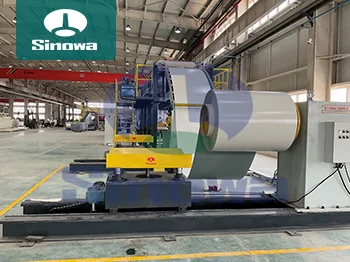
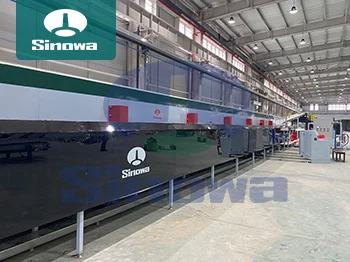
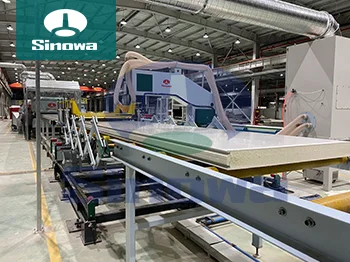
Sinowa is committed to the development and manufacturing of high-end and high-efficiency continuous pu sandwich panel line. Our continuous pu sandwich panel line are leading the way in efficiency, automatic control, human-computer interaction, environmental protection and energy consumption. Using system integration and bus control technology, it realizes the automatic integrated linkage control of the entire continuous pu sandwich panel line, and can achieve remote interactive communication, which has the world-class level and a comprehensive leading high-performance continuous pu sandwich panel line in the market.
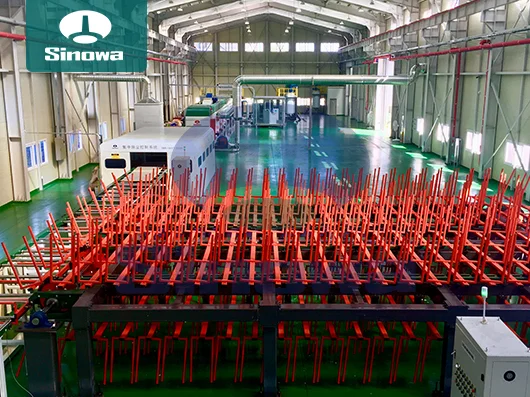
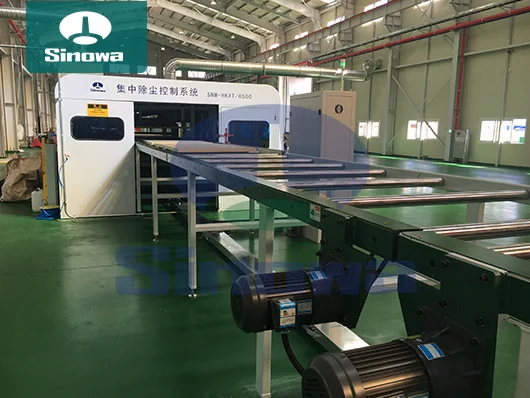
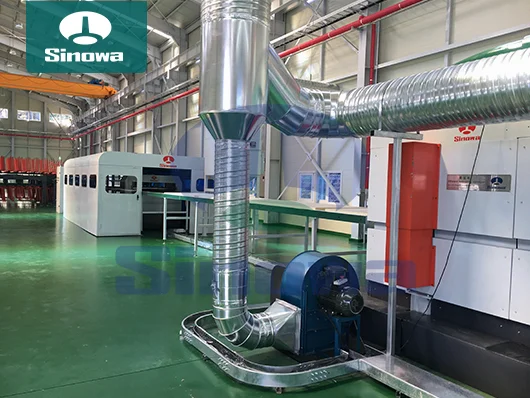
For more than ten years, relying on our innovative manufacturing concept and excellence in quality, reliable and trustworthy service to customers, we cooperate with customers all over the world, exported products to Canada, South Korea, Israel, Australia, the Middle East and other more than 20 countries and regions. contributed to building energy conservation and low-carbon production and have won widespread praise.
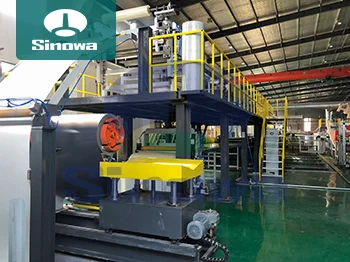
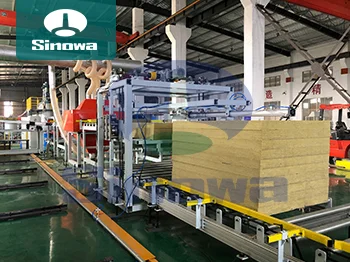
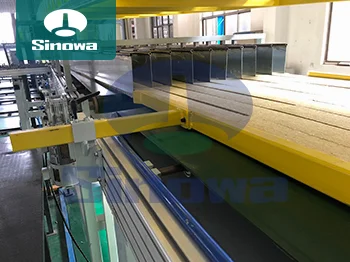
Sinowa has invested outstanding efforts in continuous pu sandwich panel line, this is why our products are more efficiency, quality, automatic control technology, environmental protection, energy consumption indicators and the appearance and safety protection are comprehensively leading, some subversive design changes in many major technical points, these major innovations make our products excellent in price/performance and user experience.
In the evolving landscape of the construction industry, the demand for efficient, high-performance, and sustainable building materials has driven significant advancements in manufacturing technologies. Among these innovations, the continuous PU (polyurethane) sandwich panel line stands out as a cornerstone of modern construction material production, enabling the mass fabrication of composite panels that balance structural integrity, thermal insulation, and versatility. These panels, composed of two outer facings and a polyurethane foam core, have become indispensable in a wide range of building applications, from industrial warehouses and logistics centers to public facilities and modular housing. The continuous production line that manufactures these panels represents a synergy of precision engineering, automated control systems, and material science, addressing the industry’s need for consistency, speed, and cost-effectiveness while adhering to the evolving standards of energy efficiency and environmental sustainability.
The fundamental operation of a continuous PU sandwich panel line revolves around a sequential integration of specialized equipment, each designed to handle a specific stage of the manufacturing process while maintaining a constant production flow. Unlike discontinuous or batch production methods, which are limited by intermittent processing and longer cycle times, continuous lines enable uninterrupted fabrication, significantly increasing output volume and reducing production costs per unit. The process begins with the handling of the outer facing materials, which typically include galvanized steel, aluminum, fiberglass mats, or non-woven fabrics, depending on the intended application of the panels. These facing materials are supplied in large rolls and fed into the line through unwinding units equipped with tension control systems to prevent misalignment or wrinkling. Tension control is critical at this stage, as uneven feeding can lead to defects in the final panel, such as uneven bonding or surface irregularities. Many modern lines feature dual unwinding units for both upper and lower facings, allowing for simultaneous processing and ensuring precise alignment between the two layers.
Following the unwinding stage, the facing materials undergo preheating, a step that plays a vital role in optimizing the bonding process with the polyurethane core. Preheating is typically achieved using roller-based heating systems or hot air blowers, which raise the temperature of the facings to a specific range—usually between 40°C and 80°C—depending on the material properties and the type of polyurethane formulation being used. This thermal preparation enhances the adhesion between the facing materials and the foam core by activating the surface properties of the facings and promoting better wetting of the polyurethane mixture. Additionally, preheating helps to accelerate the curing process of the polyurethane foam, ensuring that the composite structure achieves its desired mechanical properties more efficiently. The preheating units are equipped with temperature control systems to maintain consistent heat distribution, preventing overheating which could degrade the facing materials or underheating which would compromise bond strength.
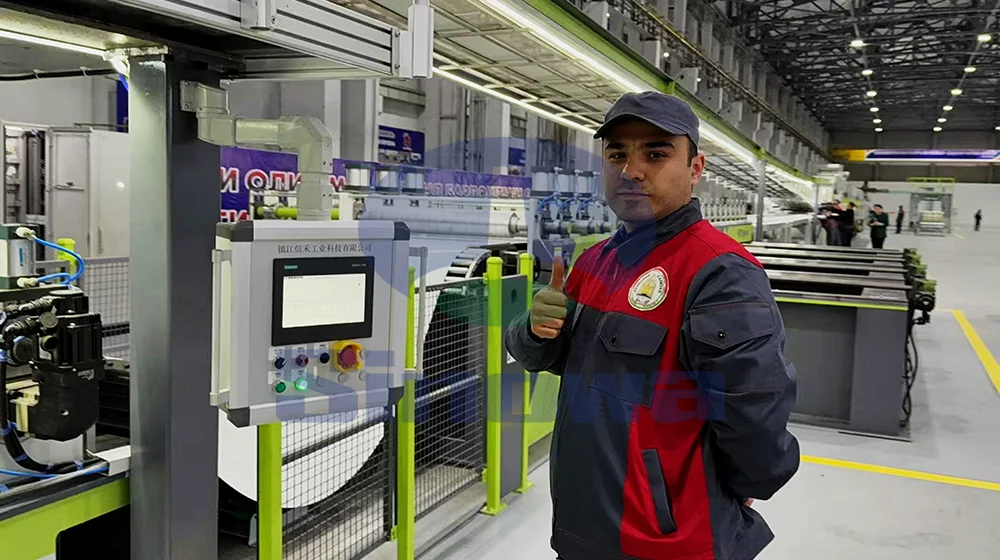
The core of the continuous production process lies in the metering, mixing, and application of the polyurethane foam. Polyurethane foam is formed by the reaction of two main components: polyol and isocyanate, along with additives such as catalysts, blowing agents, and flame retardants. These components are stored in separate tanks and delivered to a high-pressure or low-pressure mixing unit via precision metering pumps. The metering pumps are controlled by variable frequency drives, allowing for precise adjustment of the flow rate of each component to ensure the correct mixing ratio—a critical factor in determining the density, thermal conductivity, and structural properties of the foam core. Any deviation from the optimal ratio can result in foam with inconsistent density, poor insulation performance, or reduced mechanical strength. Once the components are metered accurately, they are injected into a high-speed mixing head, where they are homogenized through intense mechanical agitation. The mixing head ensures that the components react uniformly, producing a foam mixture that expands consistently when applied between the facing materials.
The application of the polyurethane mixture is carried out by a movable distribution system, often referred to as a pouring or spreading unit, which deposits the foam onto the preheated lower facing material as it moves continuously through the line. The distribution system is designed to ensure uniform coverage of the foam across the entire width of the facing material, with adjustable parameters to control the thickness of the foam core—typically ranging from 20mm to 120mm, depending on the insulation and structural requirements of the final panel. As the lower facing with the deposited foam mixture moves forward, the upper facing material is fed onto the foam layer, forming a three-layer sandwich structure. This assembly then enters a dual-belt lamination system, which is the key component responsible for shaping and curing the panel. The dual-belt system consists of two parallel, endless steel belts that apply consistent pressure to the sandwich structure as it passes through a heated chamber. The pressure ensures that the foam core expands uniformly and bonds tightly to both facing materials, while the controlled temperature within the chamber—usually between 60°C and 80°C—accelerates the curing process of the polyurethane foam.
The length of the dual-belt lamination system is a critical factor in the production process, as it determines the residence time of the panel within the curing zone. Typical belt lengths range from 20 meters to 30 meters, allowing sufficient time for the polyurethane foam to complete its expansion and curing reactions before exiting the system. During the curing process, the foam undergoes a chemical transformation from a liquid mixture to a rigid, closed-cell structure, providing the panel with its characteristic thermal insulation properties and structural stability. The dual-belt system also ensures that the panel maintains a flat, uniform surface and consistent thickness, as the belts are precision-aligned and equipped with adjustable pressure controls. Some advanced lines feature hydraulic lifting mechanisms for the upper belt, allowing for quick adjustments to accommodate different panel thicknesses without interrupting the production process.
Upon exiting the dual-belt lamination system, the cured sandwich panel moves to the trimming and cutting stage, where it is processed to meet the required dimensions. The first step in this stage is edge trimming, where specialized cutting tools remove the excess material from the sides of the panel to achieve a precise width—typically between 1000mm and 1200mm, although custom widths can be accommodated by adjusting the trimming equipment. Edge trimming not only ensures dimensional accuracy but also removes any irregularities in the foam core or facing materials that may have occurred during the lamination process. Following edge trimming, the panel is fed into a flying cut-off saw, which makes precise, transverse cuts to produce panels of the desired length. The flying saw is synchronized with the speed of the production line, allowing it to cut the moving panel without causing damage or creating uneven edges. This synchronization is achieved through advanced control systems that use position sensors to track the movement of the panel and adjust the saw’s speed accordingly. The cut-off length can be easily programmed into the system, with typical lengths ranging from 2 meters to 12 meters, depending on the application and customer requirements.
After cutting, the finished panels are conveyed to a cooling and handling area, where they are allowed to cool to ambient temperature to ensure dimensional stability. Cooling is typically achieved using ambient air or forced air cooling systems, depending on the production rate and environmental conditions. Once cooled, the panels are stacked using automated stacking equipment, which arranges the panels in neat bundles for storage or transportation. Some advanced production lines integrate additional post-processing units, such as packaging systems that wrap the bundles in protective film to prevent damage during shipping, or quality inspection stations that use visual sensors or ultrasonic testing to detect any defects in the panels, such as delamination, foam irregularities, or surface damage. These quality control measures ensure that only panels meeting the required standards are released for delivery, reducing waste and enhancing customer satisfaction.
The technical advancements in continuous PU sandwich panel lines have significantly improved their performance, versatility, and efficiency over the years. One of the key innovations in modern lines is the integration of advanced automation and control systems, which have replaced many manual operations and improved process consistency. These control systems typically feature programmable logic controllers (PLCs) and human-machine interfaces (HMIs) that allow operators to monitor and adjust all aspects of the production process in real-time. Operators can set parameters such as material flow rates, temperature settings, belt speed, and cutting dimensions through the HMI, with the PLC ensuring that these parameters are maintained consistently. Additionally, many lines are equipped with sensors and monitoring devices that provide continuous feedback on key process variables, such as foam density, panel thickness, and bond strength. This real-time data allows for immediate adjustments to be made if deviations are detected, minimizing the production of defective panels and reducing material waste.
Another significant advancement is the development of energy-efficient and environmentally friendly production technologies. As the construction industry moves toward more sustainable practices, manufacturers have focused on reducing the energy consumption of continuous PU sandwich panel lines and minimizing their environmental impact. Energy-saving measures include the use of high-efficiency motors in the unwinding, lamination, and cutting units, as well as the integration of heat recovery systems that capture waste heat from the curing process and reuse it for preheating the facing materials. In terms of environmental sustainability, there has been a shift toward using low-global-warming-potential (GWP) blowing agents in the polyurethane formulation, replacing traditional blowing agents that contribute to climate change. Additionally, many lines are designed to minimize material waste by optimizing the cutting process and recycling any excess foam or facing material back into the production process where possible.
The versatility of continuous PU sandwich panel lines is another factor that has contributed to their widespread adoption in the construction industry. These lines are capable of producing a wide range of panel types by adjusting the facing materials, foam formulation, and production parameters. For example, panels with metal facings are commonly used for industrial and commercial building envelopes, providing excellent structural strength and weather resistance, while panels with fiberglass or non-woven facings are ideal for applications such as HVAC ductwork or interior partitions, where lightweight and acoustic insulation properties are prioritized. Additionally, the lines can be configured to produce panels with specialized properties, such as fire-resistant panels that incorporate flame-retardant additives in the foam core, or moisture-resistant panels that feature waterproof coatings on the facing materials. This versatility allows manufacturers to cater to the diverse needs of the construction industry, from standard industrial applications to specialized projects such as cold storage facilities, cleanrooms, and modular housing.
The application of continuous PU sandwich panel lines in the construction industry has had a profound impact on building practices, offering numerous benefits over traditional construction materials and methods. One of the most significant benefits is the improved energy efficiency of buildings constructed with PU sandwich panels. The closed-cell structure of the polyurethane foam core provides excellent thermal insulation, with a thermal conductivity significantly lower than that of traditional insulation materials such as brick, concrete, or fiberglass. This thermal efficiency reduces the energy consumption of heating and cooling systems, leading to lower operating costs for building owners and a reduced carbon footprint for the building. In fact, buildings using PU sandwich panels can achieve energy savings of up to 40% compared to those constructed with traditional materials, making them a key component in the development of sustainable, low-energy buildings.
Another major advantage is the speed and efficiency of construction. PU sandwich panels are prefabricated in a controlled factory environment using continuous production lines, ensuring consistent quality and dimensional accuracy. This prefabrication eliminates the need for on-site mixing, curing, or cutting of materials, significantly reducing the construction time. Panels can be easily transported to the construction site and installed quickly using simple fastening systems, allowing for the rapid erection of building envelopes. This speed of construction is particularly beneficial for large-scale projects such as industrial warehouses or logistics centers, where minimizing downtime is critical, as well as for modular housing projects, where units can be fabricated off-site and assembled quickly on-site. The reduced construction time also translates to lower labor costs, as fewer workers are required on-site, and the risk of delays due to weather or on-site errors is minimized.
The structural performance of PU sandwich panels is another key benefit that has contributed to their popularity. Despite their lightweight nature, these panels offer excellent structural strength and load-bearing capacity, making them suitable for use as both wall and roof cladding in a wide range of building types. The composite structure of the panels—combining the rigidity of the outer facings with the compressive strength of the polyurethane core—provides resistance to wind loads, seismic activity, and impact damage. This structural integrity allows for the design of lighter, more efficient building frames, as the panels can carry some of the structural load, reducing the need for heavy steel or concrete support members. Additionally, the panels are resistant to moisture, corrosion, and UV radiation, ensuring long-term durability and minimizing maintenance requirements. This durability is particularly important in harsh environments, such as coastal areas or industrial zones, where traditional materials may degrade quickly.
The use of continuous PU sandwich panel lines also offers significant cost benefits for both manufacturers and construction companies. For manufacturers, the continuous production process enables high-volume production with lower per-unit costs, as fixed costs are spread over a larger number of units. The automation of key processes reduces labor costs and minimizes the risk of human error, further improving efficiency. For construction companies, the prefabricated nature of the panels reduces on-site labor costs and construction time, leading to overall project cost savings. Additionally, the energy efficiency of the panels reduces the long-term operating costs of the building, making them a cost-effective choice for building owners. The versatility of the panels also means that a single type of panel can be used for multiple applications—such as walls, roofs, and partitions—reducing the number of different materials that need to be sourced and stored, further streamlining the construction process and reducing costs.
Looking toward the future, the continuous PU sandwich panel line is poised to undergo further advancements as the construction industry continues to prioritize sustainability, efficiency, and digitalization. One area of development is the integration of digital technologies, such as the Internet of Things (IoT) and artificial intelligence (AI), into the production process. IoT sensors can be used to collect real-time data on every aspect of the production line, from material flow and temperature to energy consumption and equipment performance. This data can be analyzed using AI algorithms to identify patterns, predict potential equipment failures, and optimize production parameters for maximum efficiency. Predictive maintenance, enabled by this data, can reduce downtime by allowing manufacturers to address equipment issues before they escalate into major problems. Additionally, digital twin technology—creating a virtual replica of the production line—can be used to simulate different production scenarios, test new processes, and train operators without disrupting actual production.
Another area of focus is the development of more sustainable materials and processes. Researchers are exploring the use of bio-based polyols derived from renewable resources, such as vegetable oils or agricultural waste, as a replacement for petroleum-based polyols in the polyurethane formulation. This would reduce the carbon footprint of the panels and make them more environmentally friendly. Additionally, efforts are being made to improve the recyclability of PU sandwich panels, addressing one of the current challenges in the industry. New recycling technologies, such as chemical depolymerization, are being developed to break down the polyurethane foam into its constituent components, which can then be reused to produce new foam or other materials. These advancements in sustainable materials and recycling will help to further align the production of PU sandwich panels with global efforts to reduce carbon emissions and promote a circular economy.
The growing demand for modular and off-site construction is also expected to drive the development of continuous PU sandwich panel lines. Modular construction, which involves the fabrication of building units in a factory and their assembly on-site, offers numerous advantages, including faster construction times, better quality control, and reduced environmental impact. PU sandwich panels are an ideal material for modular construction due to their lightweight, prefabricated nature, and excellent thermal and structural properties. As the demand for modular housing and commercial buildings increases, manufacturers will need to adapt their continuous production lines to produce panels that are specifically designed for modular applications, such as panels with integrated connectors or specialized dimensions. This may involve the integration of additional processing units into the line, such as punching or profiling equipment, to create custom features on the panels.
In conclusion, the continuous PU sandwich panel line has revolutionized the production of construction materials, enabling the mass fabrication of high-performance, energy-efficient composite panels that are widely used in a diverse range of building applications. The integration of precision engineering, automated control systems, and advanced material science has made these lines highly efficient, versatile, and cost-effective, addressing the evolving needs of the construction industry. From the sequential processing of raw materials to the final cutting and handling of finished panels, every stage of the production process is designed to ensure consistency, quality, and speed. As the industry continues to prioritize sustainability, digitalization, and modular construction, the continuous PU sandwich panel line will undoubtedly undergo further advancements, solidifying its role as a key enabler of modern, efficient, and sustainable building practices. Whether in industrial warehouses, public facilities, or modular homes, the panels produced by these lines will continue to play a vital role in shaping the future of construction, offering a balance of performance, efficiency, and sustainability that is essential in today’s built environment.
« Continuous PU Sandwich Panel Line For Construction » Update Date: 2026/1/12
- PIR Sandwich Panel Line
- PU Sandwich Panel Line Price
- High-quality PU Board Production Line
- PU Sandwich Panel Making Machine Factory
- Polyurethane Sandwich Panel Machine Factory
- High Quality Sandwich Panel Production Line
- Continuous Sandwich Panel Production Line Design
- PU Insulation Panel Production Line Factory
- Metal Sandwich Panel Production Line On Sales
- PU Insulation Board Production Line Manufacturer
- Continuous Sandwich Panel Line On Sales
- Sandwich Panel Production Line Price
- PUR Sandwich Panel Line On Sales
- Custom Corrugated Sandwich Panel Production Line
- Glass Wool Sandwich Panel Line Price
- PUF Panel Manufacturing Machine Design
- Sandwich Panel Production Line For Sale
- High-quality PIR Insulation Panel Production Line
- Custom PIR Insulated Panel Production Line
- Customized PIR Wall Panel Production Line
- Links:
- Sandwich Panel Continuous Production Line
- Automatic and Continuous Sandwich Panel Production Line
- Cheap and Low Price Sandwich Panel Production Line
- China Sandwich Panel Production Line Factory
- Color Steel Sandwich Panel Production Line For Cold Storage
- Continuous Composite Foam Sandwich Panel Production Line
- Continuous Production Line For Rockwool and Mineral Wool Sandwich Panels
- Continuous PU Phenolic Insulation Panel Production Line
- Continuous PU PIR Sandwich Panel Production Line
- Continuous PUF PUR Sandwich Panel Production Line
- Continuous Sandwich Panel Production Line For Roof and Wall
- Customized and Design Sandwich Panel Production Line
- Decorative Sandwich Panel Production Line For Glass Wool Boards
- High Quality Sandwich Panel Production Line For Sale
- Polyurethane(PU) Sandwich Panel Production Line
- Sandwich Panel Production Line Manufacturer and Supplier