
High-tech PIR Sandwich Panel Line
Sinowa is a well-known manufacturer and technical service provider of high-end pir sandwich panel line, learn more about high-tech pir sandwich panel line, please contact Sinowa's technical engineer, tell us what you need, we will contact you as soon as possible!
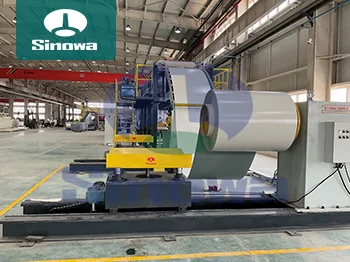
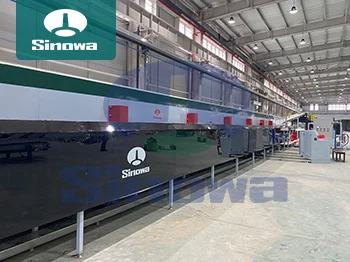
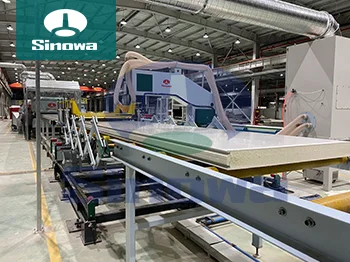
Sinowa is committed to the development and manufacturing of high-end and high-efficiency pir sandwich panel line. Our pir sandwich panel line are leading the way in efficiency, automatic control, human-computer interaction, environmental protection and energy consumption. Using system integration and bus control technology, it realizes the automatic integrated linkage control of the entire pir sandwich panel line, and can achieve remote interactive communication, which has the world-class level and a comprehensive leading high-performance pir sandwich panel line in the market.
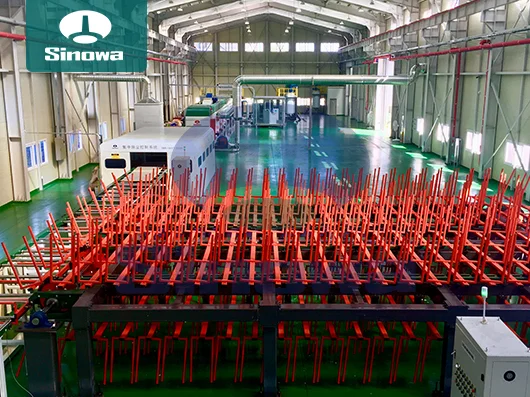
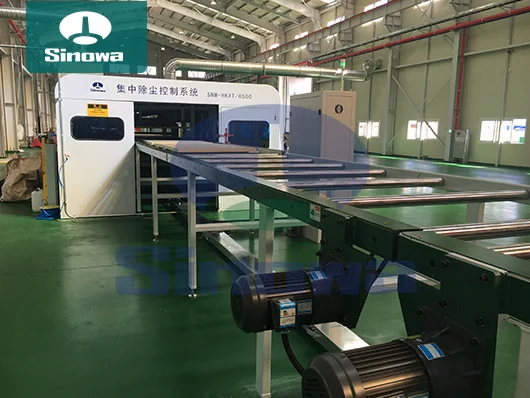
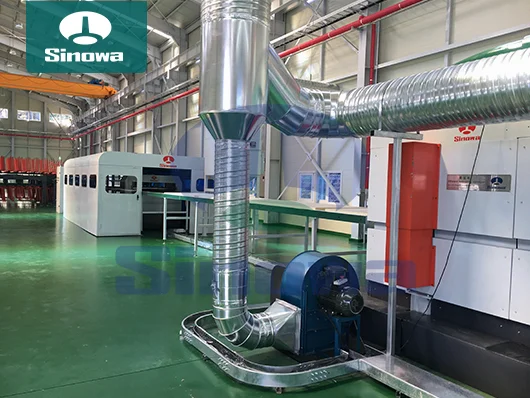
For more than ten years, relying on our innovative manufacturing concept and excellence in quality, reliable and trustworthy service to customers, we cooperate with customers all over the world, exported products to Canada, South Korea, Israel, Australia, the Middle East and other more than 20 countries and regions. contributed to building energy conservation and low-carbon production and have won widespread praise.
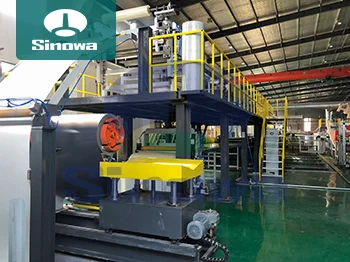
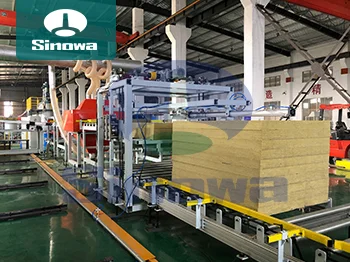
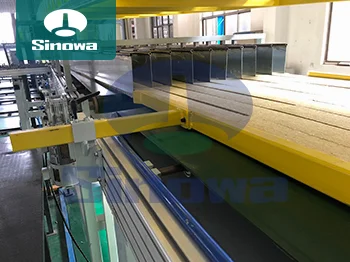
Sinowa has invested outstanding efforts in pir sandwich panel line, this is why our products are more efficiency, quality, automatic control technology, environmental protection, energy consumption indicators and the appearance and safety protection are comprehensively leading, some subversive design changes in many major technical points, these major innovations make our products excellent in price/performance and user experience.
In the evolving landscape of modern manufacturing, the demand for efficient, versatile, and sustainable production solutions has driven significant innovations in building material production equipment. Among these advancements, the high-tech PIR sandwich panel line stands out as a pivotal development, revolutionizing the way polyisocyanurate (PIR) sandwich panels are manufactured. PIR sandwich panels, renowned for their exceptional thermal insulation, fire resistance, and structural stability, have become indispensable in various industries, including construction, cold chain logistics, and industrial facility development. The high-tech production lines designed for these panels integrate cutting-edge technologies to enhance production efficiency, product quality, and operational flexibility, while also addressing the growing emphasis on energy conservation and environmental protection.
The core advantage of high-tech PIR sandwich panel lines lies in their advanced automation and integration capabilities. Unlike traditional production systems that rely heavily on manual intervention, modern lines employ a fully integrated control system that centralizes all operational parameters into a single control center. This integration encompasses mechanical, electrical, and chemical process control, enabling seamless coordination between different stages of production. Digital servo technology and frequency conversion vector technology are key components of this automated system, ensuring precise control over motor speeds, material feeding rates, and processing temperatures. The result is a production process that minimizes human error, maintains consistent product quality, and significantly reduces labor requirements. In fact, a fully optimized high-tech PIR sandwich panel line can operate efficiently with just 7 to 8 operators, a stark contrast to the larger teams needed for conventional production lines.
Modular design is another defining feature of high-tech PIR sandwich panel lines, offering unparalleled flexibility and adaptability to diverse production needs. The entire line is constructed from standardized, interchangeable modules that can be easily combined, reconfigured, or upgraded according to specific production requirements. This modular approach allows manufacturers to switch between different product types with minimal downtime—for example, transitioning from roof panels to wall panels or cold storage panels by adjusting module configurations. Additionally, the core material can be varied to include not only PIR but also polyurethane (PU), rock wool, or glass wool, expanding the range of end products without the need for complete line overhauls. The modular components are precision-manufactured in processing centers, eliminating the need for on-site welding or manual assembly. This "building block" assembly method not only accelerates production line setup and commissioning but also ensures consistent quality across all components, as the manufacturing process is less susceptible to human factors.
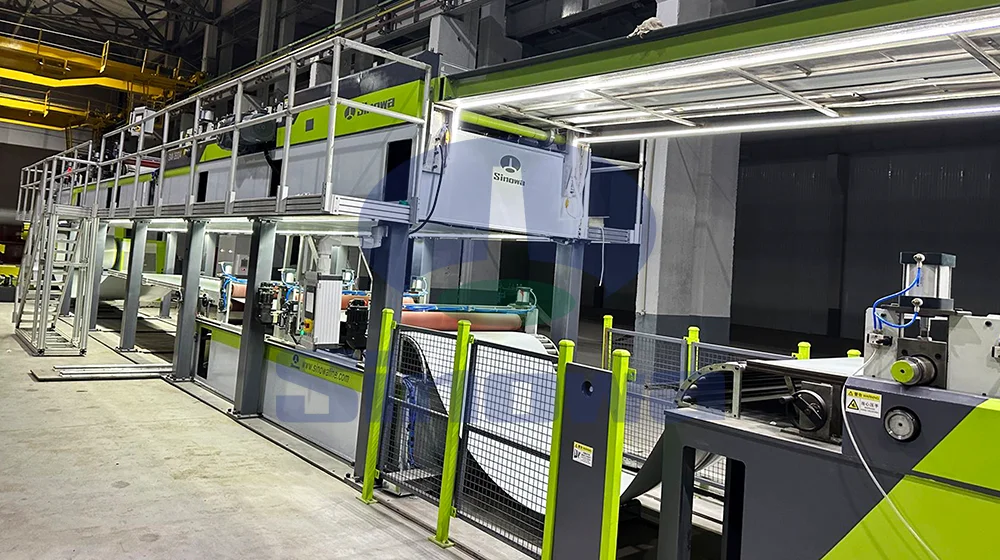
The working principle of a high-tech PIR sandwich panel line involves a continuous, synchronized sequence of operations that transforms raw materials into finished panels. The process begins with the unwinding and feeding of facing materials, which typically include color steel sheets, aluminum-zinc coated sheets, aluminum sheets, or stainless steel sheets. These facing materials are fed into the line at a controlled speed, with surface treatment processes such as cleaning and corona treatment applied to enhance adhesion with the core material. Next, adhesive is applied to the inner surface of the lower facing material using a precision coating system. A key innovation in modern lines is the use of a rotating brush mechanism that transfers a portion of the adhesive from the lower sheet to the upper facing material, ensuring strong bonding between the core and both facing layers. This mechanism, often driven by a pneumatic motor to avoid explosion risks in potentially hazardous areas, distributes 40% to 60% of the adhesive from the lower sheet to the upper sheet, resulting in balanced adhesion strength on both sides.
Following the adhesive application, the PIR core material is prepared through a high-pressure foaming process. Two components of the PIR foam are precisely metered and mixed in a mixing head before being uniformly distributed onto the lower facing material. The upper and lower facing materials, with the foam mixture in between, are then fed into a double-track laminating conveyor. This conveyor consists of two parallel tracks that apply uniform pressure to the sandwich structure as the foam expands and cures. The laminating conveyor is equipped with an advanced insulation system that maintains optimal curing temperatures, ensuring the foam achieves its full structural and thermal properties. High-tech lines often feature servo-controlled lifting mechanisms for the upper track, allowing for precise adjustment of panel thickness. Unlike hydraulic systems, these servo mechanisms eliminate issues such as oil leakage, maintenance complexity, and imprecise thickness control, enabling manufacturers to produce panels of varying thicknesses with ease.
After curing, the continuous sandwich panel is cut to the required length using a precision cutting system that operates without stopping the line. This non-stop cutting technology ensures a smooth production flow, maximizing efficiency and reducing material waste. The finished panels are then automatically stacked using a robotic stacking system, which arranges the panels in neat, stable piles for storage or transportation. Throughout the entire process, the integrated control system monitors key parameters such as line speed, foam temperature, adhesive application rate, and panel thickness, with real-time data displayed on a human-machine interface (HMI). The system also includes advanced fault diagnosis capabilities, which detect anomalies such as material shortages, temperature fluctuations, or mechanical malfunctions, and alert operators with specific error messages. Remote control functionality further enhances operational convenience, allowing operators to monitor and adjust the production process from a safe distance or even off-site.
Energy efficiency and environmental protection are central considerations in the design of high-tech PIR sandwich panel lines. Modern lines incorporate a range of energy-saving technologies to minimize power consumption and reduce carbon emissions. For example, the laminating conveyor and other key components are equipped with full enclosed insulation systems, reducing heat loss and lowering the energy required to maintain processing temperatures. The motors used in the line are high-power, low-energy consumption models, with some components such as the laminating conveyor motor consuming only 3.0kW, half the power of conventional motors. Overall, the energy consumption of a high-tech PIR sandwich panel line can be as low as 40% of that of traditional lines. Additionally, the lines are designed to operate in a wide range of environmental conditions, with built-in heating and insulation systems that allow for year-round production without the need for additional climate-controlled facilities. This not only saves energy but also reduces the capital investment required for factory construction.
The environmental performance of high-tech PIR sandwich panel lines is further enhanced through the adoption of eco-friendly foaming technologies. Many modern lines use cyclopentane-based foaming agents, which have a low global warming potential (GWP) and do not deplete the ozone layer, replacing traditional HCFC-based agents that are harmful to the environment. The precision metering systems in these lines ensure accurate mixing of foam components, reducing material waste and minimizing the release of unreacted chemicals. Additionally, the modular design facilitates easy maintenance and repair, extending the service life of the equipment and reducing the environmental impact of equipment disposal.
The application of high-tech PIR sandwich panel lines has far-reaching implications for various industries. In the construction sector, the efficient production of high-quality PIR sandwich panels supports the development of energy-efficient buildings, reducing heating and cooling costs and lowering carbon footprints. These panels are widely used as exterior walls, interior partitions, and roof cladding in industrial plants, commercial buildings, and residential complexes. In the cold chain logistics industry, PIR sandwich panels produced by these lines are essential for the construction of cold storage facilities, as their excellent thermal insulation properties help maintain stable low temperatures, ensuring the quality and safety of perishable goods. The panels are also used in the construction of subway stations, pipeline insulation systems, and prefabricated buildings, where their light weight, high strength, and quick installation characteristics offer significant advantages.
The versatility of high-tech PIR sandwich panel lines is further demonstrated by their ability to produce panels with different surface materials and core thicknesses. Surface materials can include not only metal sheets but also aluminum foil, cement-based cloth, kraft paper, and non-woven fabrics, catering to specific application requirements such as corrosion resistance, moisture resistance, or decorative appeal. Core thickness can be adjusted from 20mm to 200mm or more, allowing for customization according to thermal insulation needs. This flexibility makes high-tech lines suitable for small-batch, custom production as well as large-scale, mass production, meeting the diverse needs of manufacturers and end-users.
Maintenance and reliability are critical factors in the long-term operation of any production line, and high-tech PIR sandwich panel lines are designed with these considerations in mind. The modular design simplifies maintenance, as individual components can be easily removed and replaced without disrupting the entire line. Precision-manufactured parts and strict quality control during production ensure minimal wear and tear, reducing the frequency of maintenance and repair. Additionally, the integrated fault diagnosis system allows for early detection of potential issues, enabling proactive maintenance and minimizing unplanned downtime. The use of high-quality components and advanced lubrication systems further extends the service life of the equipment, ensuring consistent performance over many years of operation.
Looking to the future, the development of high-tech PIR sandwich panel lines is likely to focus on further improvements in automation, energy efficiency, and smart manufacturing capabilities. The integration of artificial intelligence (AI) and machine learning technologies could enable predictive maintenance, where the system analyzes operational data to predict potential failures before they occur. Advanced sensors and Internet of Things (IoT) connectivity could provide real-time monitoring of production parameters, allowing for more precise process control and optimization. Additionally, ongoing research into eco-friendly materials and processes is expected to lead to further reductions in environmental impact, with the development of bio-based foaming agents and recyclable facing materials.
Another area of potential innovation is the integration of 3D scanning and quality inspection technologies into the production line. These technologies could enable real-time inspection of panel dimensions, surface quality, and core density, ensuring that every product meets the required specifications. The data collected from these inspections could also be used to optimize the production process, identifying areas for improvement in material usage, energy consumption, and process efficiency.
In conclusion, high-tech PIR sandwich panel lines represent a significant advancement in building material manufacturing, combining advanced automation, modular design, energy efficiency, and environmental sustainability. These lines have transformed the production of PIR sandwich panels, making it more efficient, consistent, and flexible, while also reducing costs and environmental impact. The versatility of these lines allows for the production of a wide range of panels suitable for diverse applications, supporting the growth of energy-efficient construction, cold chain logistics, and other key industries. As technology continues to evolve, high-tech PIR sandwich panel lines are poised to become even more intelligent, efficient, and eco-friendly, playing a crucial role in the transition to a more sustainable and low-carbon manufacturing future. The ongoing innovation in these production lines not only benefits manufacturers by improving productivity and profitability but also contributes to global efforts to reduce energy consumption and mitigate climate change, making them a vital component of the modern manufacturing landscape.
« High-tech PIR Sandwich Panel Line » Update Date: 2026/1/9
Tags: PIR Sandwich Panel Line ,
- High-end Sandwich Panel Production Line
- High-quality Decorative Sandwich Panel Line
- Sandwich Panel Production Machinery For Sale
- Cold Room Sandwich Panel Production Line
- Cold Storage Sandwich Panel Production Line In China
- Sandwich Foam Panel Making Machine Price
- PU Sandwich Panel Making Machine Price
- Glass Wool Production Line Price
- Isolation PU Sandwich Panel Line Price
- High-tech PU Insulated Panel Production Line
- PU Insulation Board Production Line Supplier
- Cheap Glass Wool Sandwich Panel Machine
- Sandwich Panel Machine
- Decorative PU Sandwich Panel Production Line For Sale
- PUF Panel Making Machine For Sale
- High Efficiency Glass Wool Sandwich Panel Line
- Cheap PUF Panel Manufacturing Machine
- Fully Automatic PU Sandwich Panel Production Line On Sales
- PUF Sandwich Panel Production Line
- Customized Polyurethane Sandwich Panel Line
- Links:
- Sandwich Panel Continuous Production Line
- Automatic and Continuous Sandwich Panel Production Line
- Cheap and Low Price Sandwich Panel Production Line
- China Sandwich Panel Production Line Factory
- Color Steel Sandwich Panel Production Line For Cold Storage
- Continuous Composite Foam Sandwich Panel Production Line
- Continuous Production Line For Rockwool and Mineral Wool Sandwich Panels
- Continuous PU Phenolic Insulation Panel Production Line
- Continuous PU PIR Sandwich Panel Production Line
- Continuous PUF PUR Sandwich Panel Production Line
- Continuous Sandwich Panel Production Line For Roof and Wall
- Customized and Design Sandwich Panel Production Line
- Decorative Sandwich Panel Production Line For Glass Wool Boards
- High Quality Sandwich Panel Production Line For Sale
- Polyurethane(PU) Sandwich Panel Production Line
- Sandwich Panel Production Line Manufacturer and Supplier