
Low Price Mineral Wool Sandwich Panel Production Line
Sinowa is a well-known manufacturer and technical service provider of high-end mineral wool sandwich panel production line, learn more about low price mineral wool sandwich panel production line, please contact Sinowa's technical engineer, tell us what you need, we will contact you as soon as possible!
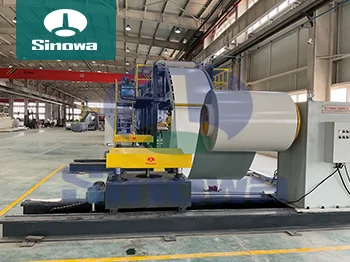
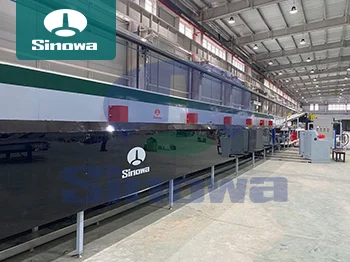
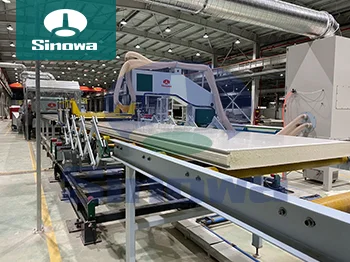
Sinowa is committed to the development and manufacturing of high-end and high-efficiency mineral wool sandwich panel production line. Our mineral wool sandwich panel production line are leading the way in efficiency, automatic control, human-computer interaction, environmental protection and energy consumption. Using system integration and bus control technology, it realizes the automatic integrated linkage control of the entire mineral wool sandwich panel production line, and can achieve remote interactive communication, which has the world-class level and a comprehensive leading high-performance mineral wool sandwich panel production line in the market.
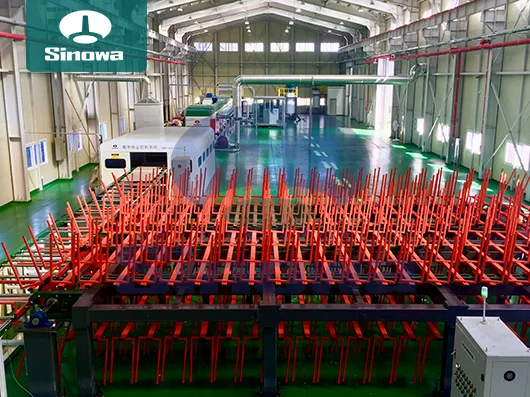
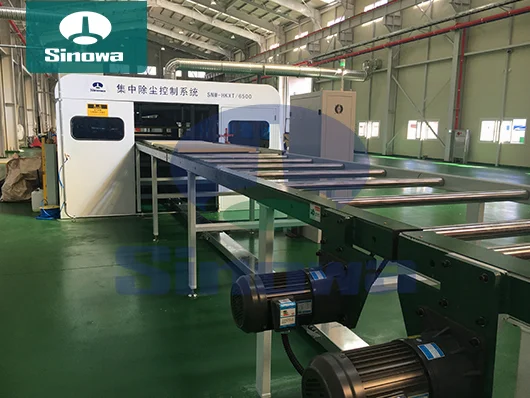
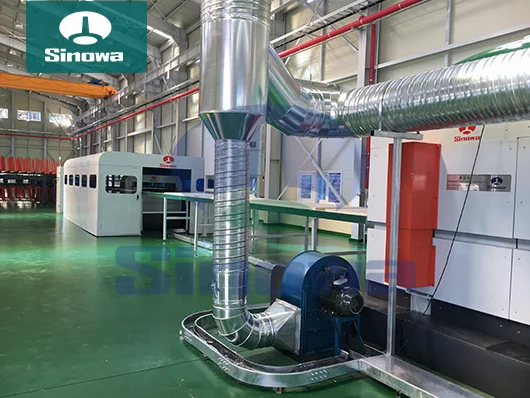
For more than ten years, relying on our innovative manufacturing concept and excellence in quality, reliable and trustworthy service to customers, we cooperate with customers all over the world, exported products to Canada, South Korea, Israel, Australia, the Middle East and other more than 20 countries and regions. contributed to building energy conservation and low-carbon production and have won widespread praise.
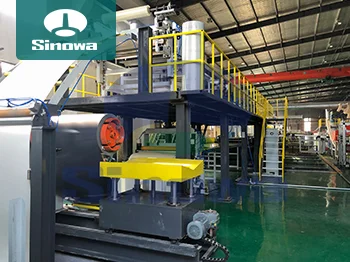
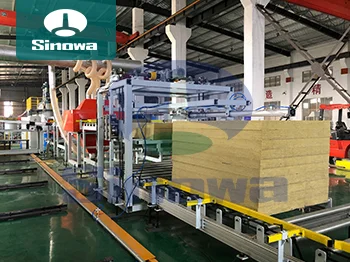
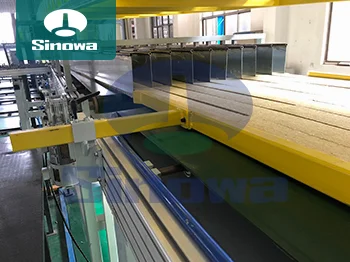
Sinowa has invested outstanding efforts in mineral wool sandwich panel production line, this is why our products are more efficiency, quality, automatic control technology, environmental protection, energy consumption indicators and the appearance and safety protection are comprehensively leading, some subversive design changes in many major technical points, these major innovations make our products excellent in price/performance and user experience.
The low price mineral wool sandwich panel production line represents a practical manufacturing solution designed for small and medium-scale producers entering the insulated building panel sector. Many new manufacturers face pressure to control capital investment while still maintaining reliable continuous production capacity, and this type of equipment fills the gap between simple semi-manual machines and large-scale fully integrated production systems. Instead of overloading the system with unnecessary high-end auxiliary devices that push up overall expenditure, this line focuses on core functional modules to complete the whole panel forming workflow. It handles metal coil unwinding, surface profiling, mineral wool core cutting and positioning, adhesive coating, composite pressing, heating curing, fixed-length cutting and finished product discharging in one connected process. Each unit is built with robust yet cost-effective mechanical components, avoiding excessive precision parts that are not essential for regular panel fabrication. Operators can adjust running speed, panel thickness and width settings according to different project requirements, which gives flexibility to produce wall and roof panels for prefabricated construction. The design philosophy prioritizes usability, so operators do not need advanced technical backgrounds to master basic operation after simple training. Even with a lower upfront investment, the line retains the fundamental ability to keep stable material feeding and composite bonding, preventing frequent shutdowns caused by structural weakness. This balance of cost control and practical functionality makes it appealing for investors who want to launch panel production without heavy financial burden at the initial stage of business development.
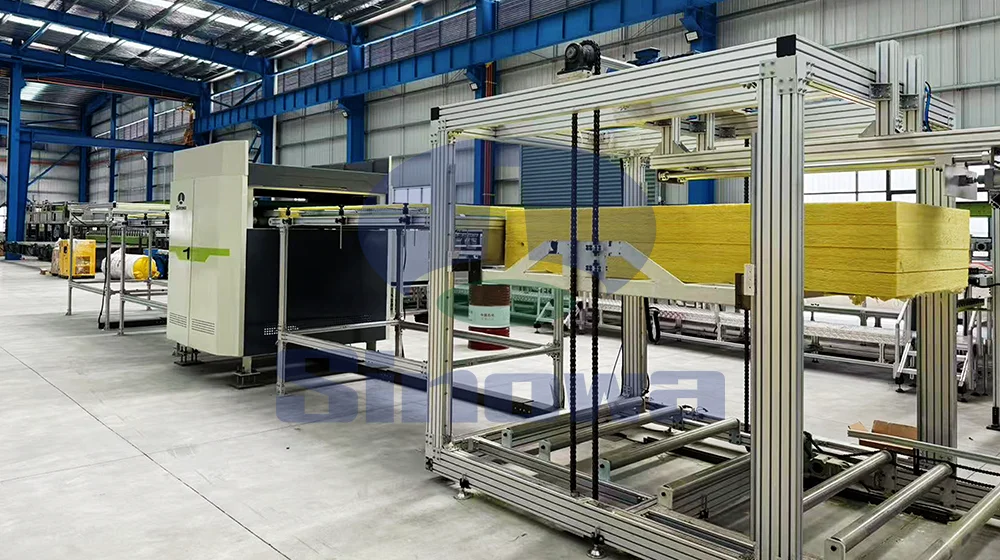
Raw material handling is the first critical stage within the low price mineral wool sandwich panel production line, and careful design in this section helps reduce material waste and stabilize finished panel quality. The system starts with metal coil unwinding equipment that releases upper and lower metal face sheets steadily, and simple surface cleaning devices remove dust and oil contaminants before the metal enters the roll forming section. The roll forming unit shapes flat metal strips into different profile shapes, creating the outer skin of sandwich panels. Meanwhile, mineral wool blocks are delivered to the core processing station, where cutting equipment slices the wool into strips of matched width and rotates the fiber direction to improve compressive performance. Uniform fiber orientation is essential because it helps the core material bear pressure evenly after composite forming. The adhesive application system sprays or rolls bonding compound on both metal inner surfaces and mineral wool surfaces, with adjustable flow control to avoid excessive glue consumption. Too much adhesive not only raises material cost but also leads to overflow and messy panel edges, while insufficient coating will cause delamination between metal skins and mineral wool cores. This economical line adopts a simplified metering structure that achieves reasonably even glue distribution without expensive high-precision pumping systems. All raw material conveying mechanisms work synchronously, so metal sheets and mineral wool cores move into the pressing station at matched speed, reducing misalignment and scrap generation during continuous operation.
Composite pressing and thermal curing form the heart of the low price mineral wool sandwich panel production line, where separate raw materials turn into solid integrated panels. After mineral wool strips are accurately placed between two profiled metal sheets, the composite assembly enters the double-belt pressing section. The continuous belt structure applies consistent pressure across the whole panel surface, flattening the composite material and eliminating gaps between the core and face sheets. The pressure level can be fine-tuned to fit different mineral wool densities and panel thickness specifications, ensuring the bonding layers stay tightly combined through long-term use. Following pressing, the composite material moves through a heating channel to activate the adhesive and complete curing. The heating system uses energy-saving heating elements instead of over-sized heating chambers, which helps cut power consumption during daily operation and lower running expenses. Temperature distribution inside the curing area remains relatively uniform, so adhesive cures steadily from panel edge to center. Once curing finishes, the composite panel gains stable structural strength and maintains flat geometry without obvious warping. This stage demands synchronized speed control; if the conveyor runs too fast, adhesive cannot fully react, and slow speed wastes energy and limits output. The control system of this economical line adopts frequency conversion adjustment, allowing operators to match line speed with curing conditions simply. Proper control in pressing and curing directly reduces defective products and improves overall production yield for manufacturers with limited operating budgets.
The cutting, discharging and sorting modules of the low price mineral wool sandwich panel production line complete the final forming steps after thermal curing. The continuous long panel travels to the flying saw cutting station, which cuts the panel into preset lengths according to customer order requirements. The cutting tool moves synchronously with the running panel during cutting, so the material does not need to stop, maintaining uninterrupted continuous production. The cutting mechanism uses durable cutting blades, and the mechanical structure is simplified to reduce maintenance difficulty and replacement cost of wearing parts. After cutting, finished panels slide onto the output conveyor platform, and operators can inspect surface quality, check bonding edges and remove minor burrs manually. Some optional auxiliary sorting devices can be added later if production volume grows, but the basic configuration skips expensive automatic stacking robots to keep total investment low. Panels are then moved to storage areas for temporary placement before packaging and shipment. This section is designed to save workshop space, as the whole layout is compact and suitable for factories with limited floor area. Operators can quickly stop the cutting unit in case of abnormal panel quality, preventing large batches of defective products from being processed. The streamlined finishing workflow reduces the number of workers required at the discharging end, cutting ongoing labor expenditure for the production plant. This practical design makes the complete line suitable for small-scale workshops that produce customized mineral wool sandwich panels in variable batch sizes.
Operational control and safety arrangements of the low price mineral wool sandwich panel production line focus on stable daily running and risk prevention, without complicated industrial control platforms that increase procurement costs. The central control cabinet uses a user-friendly interface to display core operating parameters including conveyor speed, heating temperature, glue flow and cutting length. All key parameters can be modified directly on the control panel, and abnormal working states trigger simple warning signals to remind operators of malfunctions in feeding, pressure or temperature. The electrical circuit uses standard protective components to avoid overload and short circuit damage, extending the service life of motors and transmission parts. Safety protective covers are installed on rotating rollers, cutting tools and high-temperature sections to prevent accidental contact during operation. Emergency stop buttons are distributed at multiple positions along the whole line, so any staff on site can halt the equipment immediately once dangerous situations appear. Although the control system does not support advanced remote monitoring and big data analysis functions found on premium lines, it delivers all necessary control functions required for regular panel manufacturing. Training for operators mainly covers parameter adjustment, alarm identification and daily shutdown procedures. The simple control logic lowers the learning curve and reduces dependence on professional automation engineers, which greatly helps manufacturers keep long-term operating costs under control after equipment installation.
Maintenance and service features of the low price mineral wool sandwich panel production line are developed to reduce downtime and spare part expenditure throughout the equipment lifecycle. Mechanical parts are designed for easy disassembly and inspection, and common wearing components such as conveyor belts, cutting blades and glue sealing rings use standard specifications that are easy to source locally. Regular maintenance tasks include cleaning residual adhesive from rollers, checking belt tension, lubricating transmission bearings and verifying temperature sensor accuracy. Maintenance schedules are straightforward, and factory technicians can complete routine checks without hiring specialized service engineers. The equipment structure avoids highly integrated sealed assemblies, so when individual modules break down, faulty parts can be replaced separately instead of changing whole units. This modular design cuts repair cost and shortens equipment downtime. Operators are advised to carry out daily cleaning to prevent accumulated mineral wool debris and cured glue from interfering with moving parts. Simple preventive maintenance can effectively extend the service cycle of the whole line and avoid sudden breakdowns that interrupt order delivery. Compared with high-end production equipment that requires expensive periodic professional servicing, this economical line lowers the threshold of equipment maintenance, making continuous manufacturing more sustainable for businesses with limited technical support resources.
The finished mineral wool sandwich panels produced by this low price production line serve a wide range of construction applications, bringing practical insulation benefits to various building projects. The composite panels combine rigid metal outer skins with porous mineral wool core, delivering reliable thermal insulation performance that helps stabilize indoor temperature and reduce energy consumption for building heating and cooling. The fibrous mineral wool structure also absorbs sound waves, lowering noise transmission between interior spaces or from external environments. These panels can be used for exterior wall enclosures, roof cladding, partition walls and temporary building structures. They are prefabricated in the factory, so on-site installation proceeds rapidly, shortening overall construction schedules and reducing site labor work. The finished panels resist deformation under normal temperature and humidity changes, maintaining stable physical performance over years of service. Different panel thickness and profile options can be produced on the same line to meet different insulation and structural needs of projects. Manufacturers can supply these panels to prefabricated building contractors, warehouse builders, workshop developers and renovation projects. Even though the equipment is priced affordably, the resulting panels retain the core functional properties that end users expect from mineral wool sandwich panels, helping panel producers compete in mid and low-end building material markets and secure steady order demand.
Market positioning and long-term economic benefits make the low price mineral wool sandwich panel production line a worthy investment choice for emerging building material manufacturers. Many new enterprises hesitate to enter insulated panel production because of high entry costs of large automated equipment, and this economical line lowers the capital threshold for market entry. Investors can start production with smaller factory space and fewer workers, testing market response before expanding production capacity. As demand for fast-assembled insulated building components keeps growing, locally manufactured mineral wool sandwich panels can meet regional construction needs efficiently. The production line can be upgraded gradually later; users can add automatic stacking, film covering or improved glue systems step by step when business revenue increases, without replacing the whole base equipment. The predictable operating cost and manageable maintenance requirements help owners calculate return on investment clearly. By controlling initial spending while maintaining stable panel output, manufacturers can offer competitive finished panel prices to customers and expand market share steadily. This equipment does not pursue excessive production speed or ultra-high automation levels that remain unused for small orders, but focuses on practical value, matching the operational scale and business goals of most newly established panel manufacturers. It represents a sensible manufacturing solution that balances upfront investment, running cost and production capability in the mineral wool sandwich panel industry.
« Low Price Mineral Wool Sandwich Panel Production Line » Update Date: 2026/10/16
Tags: Mineral Wool Sandwich Panel Production Line , mineral wool sandwich panel production line, mineral wool sandwich panel production line manufacturer, mineral wool sandwich panel production line supplier, mineral wool sandwich panel production line for sale, customized mineral wool sandwich panel production line, china mineral wool sandwich panel production line
- Mineral Wool Sandwich Panel Machine For Roof
- Mineral Wool Sandwich Panel Machine For Building
- Low Price Mineral Wool Production Line
- Mineral Wool Sandwich Panel Production Line For Cold Room
- Mineral Wool Line Supplier
- Low Price Rock Wool Board Production Line
- Mineral Wool Sandwich Panel Line For Wall
- High-tech Rockwool Sandwich Panel Production Line
- Rockwool Machine Design
- High-end Rock Wool Panel Production Line
- High-tech Rockwool Sandwich Panel Machine
- Mineral Wool Sandwich Panel Machine For Construction
- Rockwool Production Line Price
- High Efficiency Fully Automatic Rock Wool Sandwich Panel Machine
- High-tech Fully Automatic Rock Wool Sandwich Panel Production Line
- Rock Wool Sandwich Panel Production Line For Building
- Custom Mineral Wool Sandwich Panel Machine
- Rockwool Roof Panels Making Machine
- High-quality Fully Automatic Rock Wool Sandwich Panel Machine
- Cheap Fully Automatic Rock Wool Sandwich Panel Production Line
- Links:
- Sandwich Panel Continuous Production Line
- Automatic and Continuous Sandwich Panel Production Line
- Cheap and Low Price Sandwich Panel Production Line
- China Sandwich Panel Production Line Factory
- Color Steel Sandwich Panel Production Line For Cold Storage
- Continuous Composite Foam Sandwich Panel Production Line
- Continuous Production Line For Rockwool and Mineral Wool Sandwich Panels
- Continuous PU Phenolic Insulation Panel Production Line
- Continuous PU PIR Sandwich Panel Production Line
- Continuous PUF PUR Sandwich Panel Production Line
- Continuous Sandwich Panel Production Line For Roof and Wall
- Customized and Design Sandwich Panel Production Line
- Decorative Sandwich Panel Production Line For Glass Wool Boards
- High Quality Sandwich Panel Production Line For Sale
- Polyurethane(PU) Sandwich Panel Production Line
- Sandwich Panel Production Line Manufacturer and Supplier
- Sandwich Panel Production Machinery and Equipment