
Cheap Mineral Wool Sandwich Panel Machine
Sinowa is a well-known manufacturer and technical service provider of high-end mineral wool sandwich panel machine, learn more about cheap mineral wool sandwich panel machine, please contact Sinowa's technical engineer, tell us what you need, we will contact you as soon as possible!
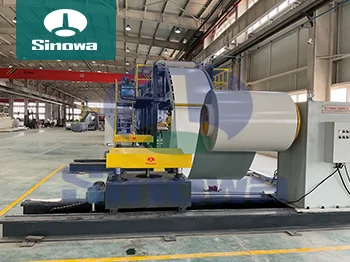
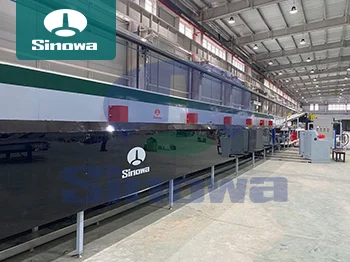
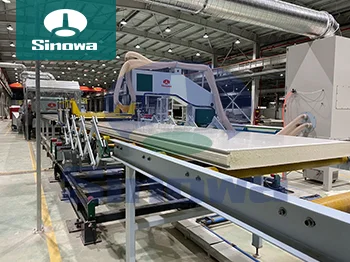
Sinowa is committed to the development and manufacturing of high-end and high-efficiency mineral wool sandwich panel machine. Our mineral wool sandwich panel machine are leading the way in efficiency, automatic control, human-computer interaction, environmental protection and energy consumption. Using system integration and bus control technology, it realizes the automatic integrated linkage control of the entire mineral wool sandwich panel machine, and can achieve remote interactive communication, which has the world-class level and a comprehensive leading high-performance mineral wool sandwich panel machine in the market.
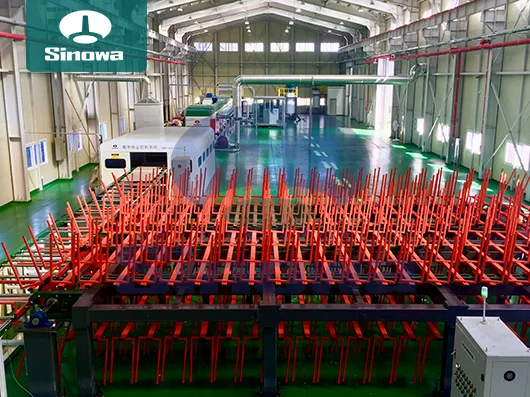
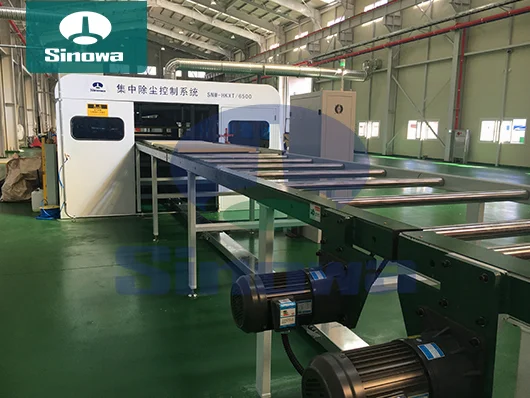
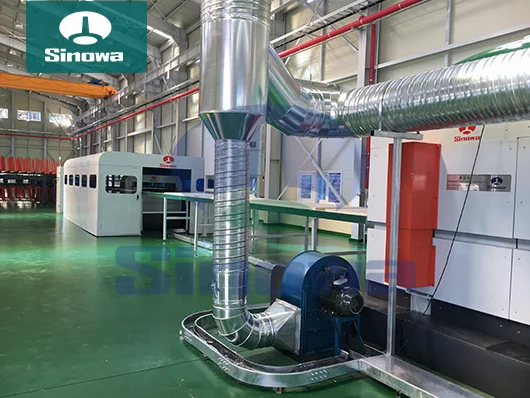
For more than ten years, relying on our innovative manufacturing concept and excellence in quality, reliable and trustworthy service to customers, we cooperate with customers all over the world, exported products to Canada, South Korea, Israel, Australia, the Middle East and other more than 20 countries and regions. contributed to building energy conservation and low-carbon production and have won widespread praise.
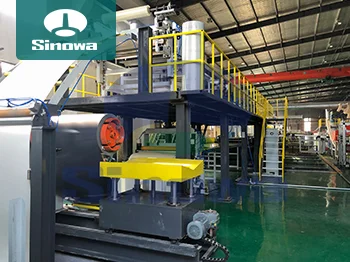
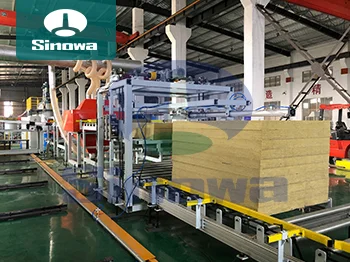
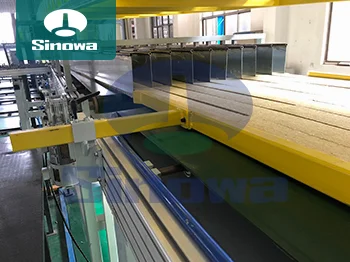
Sinowa has invested outstanding efforts in mineral wool sandwich panel machine, this is why our products are more efficiency, quality, automatic control technology, environmental protection, energy consumption indicators and the appearance and safety protection are comprehensively leading, some subversive design changes in many major technical points, these major innovations make our products excellent in price/performance and user experience.
The market for affordable mineral wool sandwich panel machines has grown steadily as small-scale fabricators and emerging building contractors seek practical ways to enter the insulated panel manufacturing sector. Unlike heavy, fully automated systems built for nonstop high-volume output, these budget-focused machines are engineered to balance basic functionality with controlled upfront investment, removing many overly complex auxiliary modules that add unnecessary complexity to simple production workflows. They are built around the core sequence needed to join metal facings and mineral wool cores, including decoiling, roll forming, mineral wool feeding, glue application, pressing, trimming and final cutting, all arranged in a compact layout that fits inside modest workshop spaces. Many operators choose this type of equipment because they do not need to run production twenty-four hours a day, and they value flexibility more than extreme hourly output capacity. The mechanical structure tends to use mature, proven transmission parts rather than custom high-end components, which helps keep the overall build cost reasonable while still supporting consistent panel forming under normal operating conditions. Even with simplified configurations, these machines retain the essential ability to adjust panel width and thickness within a practical range, so users can produce panels suited for wall cladding, roof enclosures and simple partition assemblies. New buyers often overlook the fact that affordability does not automatically mean poor performance; it means the design prioritizes fundamental panel making tasks and cuts features that only large, specialized factories will ever use, making it a sensible starting point for businesses testing market demand before committing to larger production infrastructure.
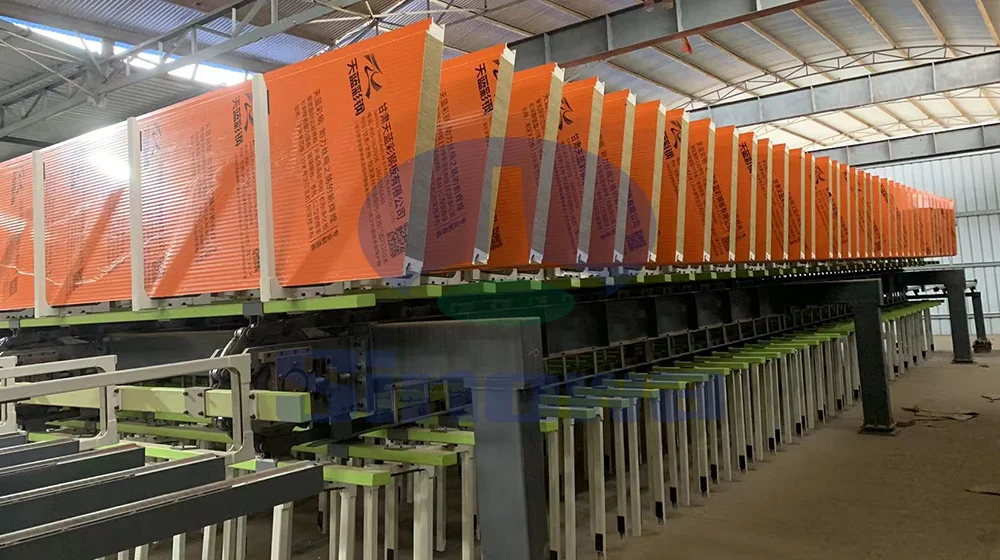
Understanding the workflow of a cheap mineral wool sandwich panel machine helps operators set realistic expectations and avoid common mistakes during daily runs. The process begins with metal coils loaded onto decoilers, which feed flat metal sheets into roll forming stations that shape the outer and inner skins into the required profile. After shaping, the metal surfaces move forward to the gluing section, where adhesive is spread evenly across the inner side of both facings to create a reliable bond with the fibrous mineral wool core. The mineral wool blocks are fed separately, cut to match the target panel dimensions and positioned between the two metal skins; some basic models rely on manual assistance to align the wool strips neatly, while slightly upgraded low-cost versions add simple turning guides to orient fiber direction for better finished panel rigidity. Once the three layers come together, the assembly passes through a continuous pressing section that maintains steady pressure long enough for the adhesive to set and lock the composite layers into a single solid panel. After pressing, the continuous panel travels to the cutting unit, which slices finished panels to preset lengths, and the final output is ready for stacking and packaging. Every stage moves at a moderate, adjustable speed, and the control interface uses straightforward knobs and digital readouts so workers can learn operation without lengthy technical training. Minor inconsistencies can appear if feeding speed and glue flow are not matched carefully, but these issues are easy to correct with small parameter tweaks, and most operators become proficient after a short period of supervised practice.
One of the clearest advantages of choosing a low-cost mineral wool sandwich panel machine lies in its low barrier to entry and reduced ongoing operational burden for small workshops. Large automated lines require substantial floor space, dedicated power supply arrangements and teams of skilled technicians to supervise dozens of interconnected systems, which puts them out of reach for startups and small component suppliers. Budget machines, by contrast, have a smaller footprint and lower total power draw, allowing installation in existing workshops without major renovation work. Spare parts for these models are generally easier to source and replace, because designers rely on widely used bearings, motors, rollers and cutting blades instead of proprietary custom parts that carry long lead times and expensive replacement fees. Maintenance routines are also simplified; operators focus on cleaning glue residue from rollers, lubricating moving chains and gears, checking blade sharpness and tightening loose fasteners at set intervals. Downtime for repairs tends to be shorter, and many routine fixes can be completed by on-site staff rather than waiting for specialized service support. For businesses that receive intermittent orders for insulated panels, this level of practicality is highly valuable, as the equipment can sit idle for days between batches without suffering rapid deterioration. The machine also supports flexible scheduling, letting owners switch between different panel sizes as orders change, rather than being locked into a single high-volume product run that ties up capital and storage space.
Even so, buyers must recognize the inherent limitations that come with a cheap mineral wool sandwich panel machine, to avoid disappointment after purchase. These machines are not built to sustain extremely high production rates over months of continuous operation, and pushing them beyond their designed cycle speed will accelerate wear on rollers, belts and cutting tools, leading to more frequent breakdowns and uneven panel surfaces. The tolerance range for finished dimensions is usually wider than that of premium industrial lines, which means occasional panels may require extra trimming or sorting before delivery. Most basic models lack advanced monitoring sensors that detect misaligned mineral wool cores or uneven glue distribution automatically, so operators must watch the production line closely and intervene quickly when defects start to appear. Noise levels during operation can also be higher because sound-dampening structures are often omitted to cut manufacturing costs, so proper workshop hearing protection and noise control measures become necessary. Additionally, the glue application system on lower-cost units may offer fewer fine adjustment options, which can create bonding issues if working temperature or humidity shifts significantly in the production space. These drawbacks do not make the machine a bad choice, but they define its suitable use cases; it works best for moderate batch production rather than mass output for large construction projects that demand perfectly uniform panels with zero margin for error.
Material selection and preparation directly shape the quality of panels produced on an affordable mineral wool sandwich panel machine, and operators who master raw material handling can offset many of the equipment’s inherent limitations. The mineral wool core itself must be stored in dry conditions before use, because absorbed moisture weakens fiber structure and interferes with adhesive bonding, causing delamination between wool and metal skins after panels are installed. Wool blocks should be inspected for cracks, compression damage and uneven density before feeding, and damaged pieces should be discarded instead of fed into the line, as they create weak spots inside finished panels. Metal coils also need proper storage to prevent surface rust and scratches, and any protective film on the metal should be removed carefully at the right stage to avoid trapping debris between the skin and adhesive layer. Adhesive selection matters equally; users need adhesives formulated to bond firmly with both metal surfaces and mineral wool fibers, and mixing ratios or application rates must follow consistent practices. Variations in glue quantity will create panels that either separate easily or ooze excess glue along the edges, creating messy, hard-to-clean finished products. Taking time to sort and condition raw materials adds a small amount of labor before each run, yet it drastically reduces waste and rework, helping small producers maintain steady product quality even with a simpler production machine.
Training and safe operating practices form another critical part of running a cheap mineral wool sandwich panel machine successfully, especially since many safety features are streamlined to hold down costs. Every person working near the line needs clear guidance on avoiding contact with rotating rollers, sharp cutting blades and moving conveyor sections, as emergency stop functions are usually limited to a few main points rather than distributed across every module. Operators should never reach into the machine to clear jams while power remains active, and lockout procedures should be followed consistently during cleaning or adjustment work. Fine mineral wool dust becomes airborne during the cutting and feeding stages, so adequate ventilation and suitable respiratory protection are essential to protect workers from irritation. New staff should start by observing experienced operators before handling controls, learning how changing feed speed affects alignment and how to spot early signs of jamming or uneven pressing. It is also helpful to keep simple written notes of successful parameter settings for different panel thicknesses and materials, so settings can be recalled quickly for repeat orders. When teams follow stable operating routines, the risk of sudden malfunctions drops, and the machine delivers much more reliable results over its working life. Investing a small amount of time in training delivers returns far greater than trying to save time by rushing operators into unsupervised production.
Comparing low-cost mineral wool sandwich panel machines against alternative manufacturing approaches reveals their unique economic position within the insulated materials sector. Some small producers rely on fully manual assembly, cutting mineral wool and bonding panels by hand, but this method is slow, labor-heavy and struggles to maintain consistent panel thickness and bond strength. High-end continuous lines deliver superior speed and precision but require massive capital outlay and carry high running costs, which only make sense for businesses with guaranteed large order pipelines. The affordable machine sits neatly between these two extremes, automating the core forming and pressing sequence while still allowing human oversight at key stages. It reduces labor demand compared to hand assembly and creates panels with far more consistent shape and adhesion, without locking the buyer into heavy fixed overhead. This balance makes it attractive for regional suppliers, prefabricated building makers and insulation retailers who serve local construction markets with fluctuating order sizes. Many buyers use this equipment to test customer preferences for different panel profiles before deciding whether to upgrade to larger machinery later. Even when future expansion is planned, the basic machine can continue to handle small orders or custom one-off panel jobs, extending its useful life and preserving the original investment value.
Looking ahead, the role of cheap mineral wool sandwich panel machines will continue to expand as demand for practical insulated building solutions spreads across smaller construction markets. Manufacturers of this equipment keep refining basic designs by adding small, low-cost upgrades such as improved glue distribution structures, smoother conveyor tracks and simpler digital speed controllers, steadily lifting output consistency without pushing prices sharply upward. These incremental improvements help the machines stay relevant as buyers grow more knowledgeable about panel performance and production stability. For many entrepreneurs, this category of equipment represents the first step into the composite panel industry, offering a chance to build customer relationships, refine product knowledge and generate steady revenue before scaling operations. Success ultimately depends not only on the machine itself but also on disciplined raw material management, regular maintenance and careful operator training. When used within its intended capacity, the affordable mineral wool sandwich panel machine proves to be a resilient, practical production tool that fills an important gap in the supply chain, delivering functional insulated panels to meet everyday building needs while keeping production accessible for operators with limited starting resources.
« Cheap Mineral Wool Sandwich Panel Machine » Update Date: 2026/10/23
Tags: Mineral Wool Sandwich Panel Machine , mineral wool sandwich panel machine, mineral wool sandwich panel machine manufacturer, mineral wool sandwich panel machine supplier, mineral wool sandwich panel machine for sale, customized mineral wool sandwich panel machine, china mineral wool sandwich panel machine
- Highly Intelligent Mineral Wool Sandwich Panel Production Line
- Cheap Fully Automatic Rock Wool Sandwich Panel Production Line
- Mineral Wool Sandwich Panel Machine For Wall
- High Efficiency Mineral Wool Production Line
- Rock Wool Board Production Line Vendor In China
- Rock Wool Sandwich Panel Production Line For Cold Storage
- Rock Wool Production Line On Sales
- High Efficiency Mineral Wool Sandwich Panel Production Line
- High Efficiency Mineral Wool Line
- Rockwool Sandwich Panel Line Supplier
- Rock Wool Sandwich Panel Machine Price
- Rock Wool Sandwich Panel Production Line On Sales
- High-end Rock Wool Board Production Line
- Mineral Wool Board Production Line For House
- Rock Wool Production Line Design
- Mineral Wool Sandwich Panel Line Factory
- Rockwool Sandwich Panel Line Manufacturer
- Fully Automatic Rock Wool Sandwich Panel Machine Price
- Rock Wool Board Production Line For Roof
- Mineral Wool Sandwich Panel Machine In China
- Links:
- Sandwich Panel Continuous Production Line
- Automatic and Continuous Sandwich Panel Production Line
- Cheap and Low Price Sandwich Panel Production Line
- China Sandwich Panel Production Line Factory
- Color Steel Sandwich Panel Production Line For Cold Storage
- Continuous Composite Foam Sandwich Panel Production Line
- Continuous Production Line For Rockwool and Mineral Wool Sandwich Panels
- Continuous PU Phenolic Insulation Panel Production Line
- Continuous PU PIR Sandwich Panel Production Line
- Continuous PUF PUR Sandwich Panel Production Line
- Continuous Sandwich Panel Production Line For Roof and Wall
- Customized and Design Sandwich Panel Production Line
- Decorative Sandwich Panel Production Line For Glass Wool Boards
- High Quality Sandwich Panel Production Line For Sale
- Polyurethane(PU) Sandwich Panel Production Line
- Sandwich Panel Production Line Manufacturer and Supplier
- Sandwich Panel Production Machinery and Equipment