
Fully Automatic PU Sandwich Panel Machine Manufacturer
Sinowa is a well-known manufacturer and technical service provider of high-end fully automatic pu sandwich panel machine, learn more about fully automatic pu sandwich panel machine manufacturer, please contact Sinowa's technical engineer, tell us what you need, we will contact you as soon as possible!
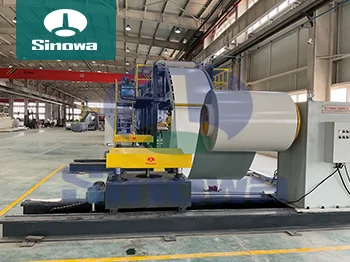
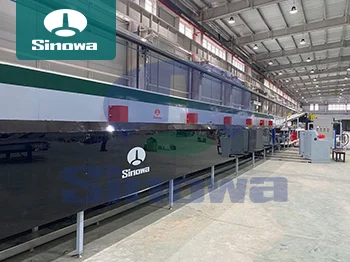
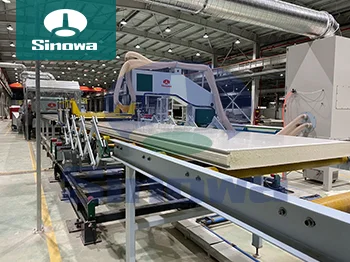
Sinowa is committed to the development and manufacturing of high-end and high-efficiency fully automatic pu sandwich panel machine. Our fully automatic pu sandwich panel machine are leading the way in efficiency, automatic control, human-computer interaction, environmental protection and energy consumption. Using system integration and bus control technology, it realizes the automatic integrated linkage control of the entire fully automatic pu sandwich panel machine, and can achieve remote interactive communication, which has the world-class level and a comprehensive leading high-performance fully automatic pu sandwich panel machine in the market.
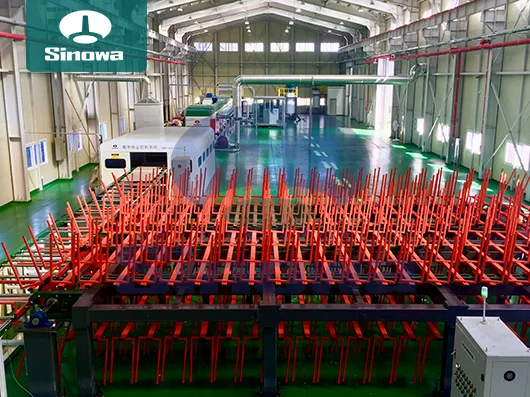
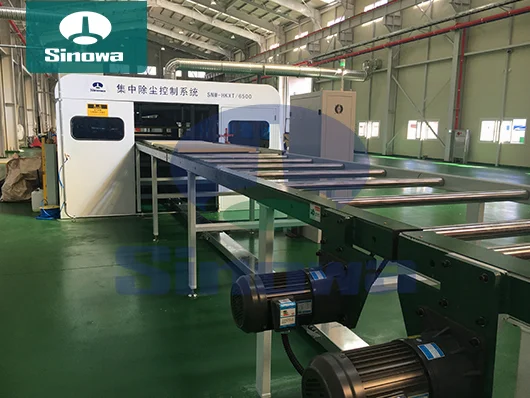
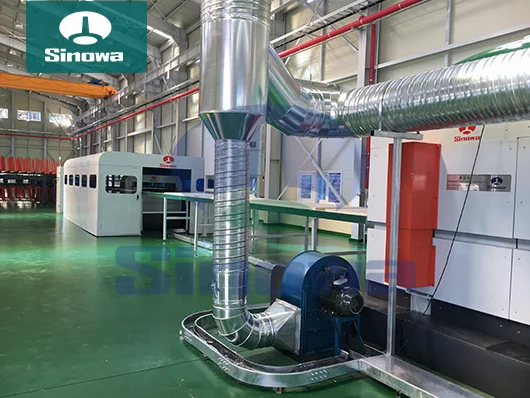
For more than ten years, relying on our innovative manufacturing concept and excellence in quality, reliable and trustworthy service to customers, we cooperate with customers all over the world, exported products to Canada, South Korea, Israel, Australia, the Middle East and other more than 20 countries and regions. contributed to building energy conservation and low-carbon production and have won widespread praise.
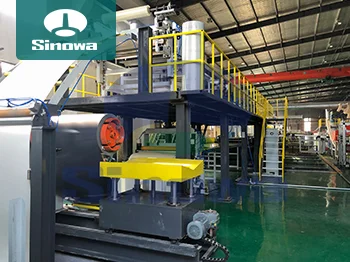
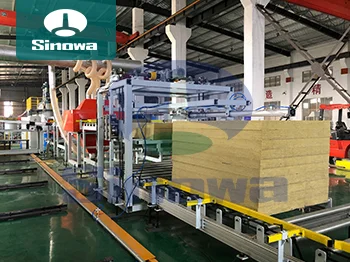
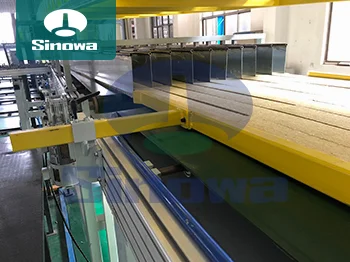
Sinowa has invested outstanding efforts in fully automatic pu sandwich panel machine, this is why our products are more efficiency, quality, automatic control technology, environmental protection, energy consumption indicators and the appearance and safety protection are comprehensively leading, some subversive design changes in many major technical points, these major innovations make our products excellent in price/performance and user experience.
When construction and insulation industries continue to seek efficient, reliable production solutions, fully automatic PU sandwich panel machines stand out as core equipment that reshapes panel manufacturing workflows. These integrated production lines are engineered to handle the whole sequence of PU sandwich panel forming without heavy manual intervention, covering material feeding, continuous foaming, pressing, curing, cutting and stacking in one connected system. Every functional unit is coordinated by centralized control modules, which stabilize the foaming reaction of polyurethane materials and keep consistent bonding strength between surface sheets and foam cores. Operators only need to set basic production parameters on the human-machine interface at the start of operation, and the line will run continuously for long hours with minimal pause. Compared with semi-automatic alternatives, this type of equipment greatly cuts down labor input and reduces errors caused by manual operation, while making the finished panels maintain uniform thickness, flat surface and stable insulation performance. The adaptability of the machine also allows it to work with different facing materials, including metal sheets and other decorative substrates, so the produced panels can fit multiple application scenarios ranging from enclosure structures to thermal insulation compartments. As market demand for high-quality insulated panels rises steadily, more producers choose fully automatic lines to lift overall production capacity and secure stable product consistency in daily batch production.
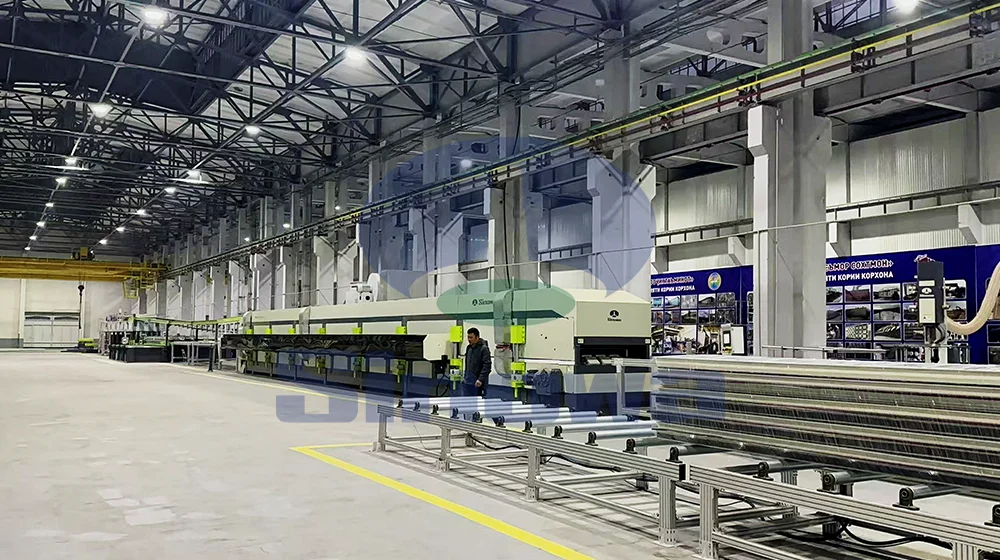
The design logic behind fully automatic PU sandwich panel machines focuses heavily on the matching of foaming system and forming structure, because the quality of polyurethane foam directly decides the heat preservation and mechanical performance of final panels. The foaming delivery system precisely controls the mixing ratio of raw chemical components and the injection speed, ensuring even distribution of foam inside the sandwich layer and avoiding common defects such as hollow spots, uneven density or partial collapse after curing. The continuous pressing section adopts adjustable pressure and temperature control, which creates a stable curing environment for the PU foam while tightly combining the core material with upper and lower face sheets. All transmission rollers and guiding devices are processed with high precision to prevent deviation of sheet materials during high-speed running, which effectively lowers the scrap rate in continuous production. Engineers also reserve adjustable structural parts inside the line, so users can modify panel width and thickness within the designed range according to their own order requirements without replacing major components. This flexible structural layout helps the equipment respond quickly to changing market orders and avoids the limitation of fixed-size production that troubles many older generation machines. Good heat isolation of the pressing frame also reduces energy waste during long-time operation, bringing down the comprehensive running cost for panel factories in the long run.
Stable automatic control systems form the nervous system of the entire PU sandwich panel production line, supporting synchronized operation of every individual working station. The control platform collects real-time data of running speed, material flow, temperature and pressure from sensors installed across the line, and automatically fine-tunes parameters once any index drifts away from the preset range. If abnormal conditions such as material blockage or raw material supply interruption occur, the system will trigger timely alarm signals and take protective actions to stop relevant parts instead of letting faults spread and damage the whole machine. This self-monitoring function greatly reduces the risk of equipment breakdown and shortens the downtime needed for troubleshooting. The operation interface keeps intuitive and easy to learn, so workers can master basic setting and monitoring work after simple training, and professional technical knowledge is not required for daily routine operation. Data recording functions also store production logs automatically, helping factory managers track output trends and analyze the causes of occasional product quality fluctuations. Reliable control hardware is selected to adapt to long-term continuous operation in dusty factory workshops, resisting interference from the complex on-site environment and keeping the line run steadily day after day.
Material feeding and pre-processing sections are often overlooked but play an indispensable role in guaranteeing smooth running of fully automatic PU sandwich panel machines. The sheet unwinding mechanism supports continuous release of coiled facing materials, equipped with tension adjusting devices to keep sheets flat and free from wrinkling or stretching deformation before entering the pressing zone. Some auxiliary pre-processing units can complete surface cleaning and simple pre-treatment work, removing dust and oil stains on sheet surfaces to improve the adhesive effect between sheets and PU foam. Raw polyurethane materials are stored in insulated tanks, with circulation pipelines that keep raw materials at proper temperature to maintain stable chemical activity before mixing. The feeding speed of both surface sheets and foam raw materials is locked to a synchronized rhythm by the main control system, preventing situations where foam supply cannot match sheet moving speed or vice versa. Well-designed feeding structures reduce frequent manual replenishment work, and bulk raw material supply can support non-stop production for a very long cycle. Reasonable layout of feeding areas also reserves enough operating space for raw material replacement, making daily replenishment safer and more convenient for on-site staff.
After the foaming and pressing curing stage, the cutting and automatic stacking unit finishes the final shaping work for PU sandwich panels and completes the automatic collection of finished products. High-speed cutting tools follow the preset length signals from the control system, implementing clean cutting without rough edges or deformation of panel cross-sections. The cutting speed matches the forward speed of the continuous panel belt, so the main production line does not need to stop repeatedly for cutting operations, which maintains high overall production efficiency. After cutting, finished panels are transported to the stacking station through conveyor tracks, and mechanical structures neatly arrange panels layer by layer. Automatic stacking replaces heavy manual carrying and sorting work, lowering the risk of panel surface scratch and worker injury in the production area. The stacking mechanism can adjust stacking quantity and placement mode to fit the packaging and transportation habits of different factories. Once one stack reaches the set quantity, the system will send a prompt for finished product transfer. This back-end automatic configuration forms a closed-loop production flow together with the front foaming and forming sections, and realizes true continuous unmanned running from raw material input to finished panel stacking.
Daily maintenance and service support are important factors that users need to consider when choosing a fully automatic PU sandwich panel machine, as proper upkeep extends service life and retains stable production performance. The whole line is designed with easy access points for regular inspection, and key wearing parts can be disassembled and replaced without tearing down large main structures. Lubrication points for transmission parts are arranged in centralized positions, making regular lubrication simple and convenient for maintenance personnel. Users can arrange routine inspection plans according to the running time of the machine, checking pipeline sealing conditions, sensor sensitivity and cutting tool sharpness periodically to eliminate hidden troubles in advance. Professional guidance covers the judgment of common minor faults and standard maintenance procedures, helping internal factory teams handle most daily issues independently. Spare parts supply channels guarantee that vulnerable components can be obtained when replacement is needed, avoiding long-term production suspension caused by waiting for accessories. Good maintenance habits not only reduce unexpected shutdown loss, but also keep the finished panel quality consistent over years of operation and protect the investment value of the production line.
The application value brought by fully automatic PU sandwich panel machines extends far beyond simple output improvement, and it helps panel manufacturers enhance product competitiveness in a fiercely competitive market. Panels produced on such lines have stable thermal insulation capacity, good airtight performance and reliable bonding performance, and can adapt to various projects that require thermal insulation, sound insulation and enclosure functions. With adjustable production parameters, manufacturers can develop multiple product series to meet different functional preferences from downstream buyers, instead of being restricted to a single panel specification. High automation level helps factories stabilize product quality in large batch orders, which builds steady trust with long-term downstream partners. The optimized energy consumption design of modern automatic lines also supports sustainable production plans, reducing extra resource consumption per square meter of finished panel. Factories equipped with these machines can arrange production schedules more flexibly, shorten order delivery cycles and respond faster to sudden order increases from the market. Gradually, the production advantage supported by automatic equipment becomes a core competitive edge that distinguishes mature panel suppliers from small-scale workshops relying on manual assisted production.
Looking ahead, the evolution of fully automatic PU sandwich panel machines will continue to move toward higher automation, smarter monitoring and wider material compatibility. New generation equipment will integrate more intelligent sensing modules to realize deeper real-time quality feedback, where the system can judge subtle changes of foam density and panel flatness automatically and adjust parameters without human intervention. The equipment structure will keep optimizing to reduce overall space occupation while maintaining high production speed, which suits factories with limited workshop area. R&D work will also focus on expanding the range of usable core materials and surface substrates, so the line can produce more types of composite panels that meet emerging market demands. At the same time, designers keep optimizing energy utilization structures to cut operating expenditure further and create greener production conditions. As the demand for energy-saving building materials and insulated enclosure panels keeps growing, fully automatic PU sandwich panel production lines will remain essential infrastructure for the composite panel manufacturing sector, helping the whole industry move toward higher efficiency, more stable quality and more standardized continuous production mode in the coming years.
« Fully Automatic PU Sandwich Panel Machine Manufacturer » Update Date: 2026/10/21
Tags: Fully Automatic PU Sandwich Panel Machine , fully automatic pu sandwich panel machine, fully automatic pu sandwich panel machine manufacturer, fully automatic pu sandwich panel machine supplier, fully automatic pu sandwich panel machine for sale, customized fully automatic pu sandwich panel machine, china fully automatic pu sandwich panel machine
- PU Sandwich Panel Making Machine For House
- Continuous Sandwich Panel Line In China
- Cheap Continuous Sandwich Panel Production Line
- Custom Isolation Sandwich Panel Production Line
- Sandwich Panel Production Machinery Supplier
- Insulated Sandwhich Panel Production Line Supplier
- Sandwich Panel Line For Sale
- Color Steel Sandwich Panel Production Line Price
- High Efficiency Soundproofing Sandwich Panel Production Line
- Sandwich Panel Integrated Production Line
- PU Foam Production Line For Cold Room
- Foam Core Sandwich Panel Line Manufacturer
- Foam Core Sandwich Panel Line Design
- Sandwich Panel Foam Making Machine
- PIR Sandwich Panel Line For Cold Room
- Polyurethane Sandwich Panel Line Supplier
- High Efficiency Roof Sandwich Panel Production Line
- Color Steel Sandwich Panel Production Line Manufacturer
- PU Insulation Panel Production Line
- PU Sandwich Wall Production Line
- Links:
- Sandwich Panel Continuous Production Line
- Automatic and Continuous Sandwich Panel Production Line
- Cheap and Low Price Sandwich Panel Production Line
- China Sandwich Panel Production Line Factory
- Color Steel Sandwich Panel Production Line For Cold Storage
- Continuous Composite Foam Sandwich Panel Production Line
- Continuous Production Line For Rockwool and Mineral Wool Sandwich Panels
- Continuous PU Phenolic Insulation Panel Production Line
- Continuous PU PIR Sandwich Panel Production Line
- Continuous PUF PUR Sandwich Panel Production Line
- Continuous Sandwich Panel Production Line For Roof and Wall
- Customized and Design Sandwich Panel Production Line
- Decorative Sandwich Panel Production Line For Glass Wool Boards
- High Quality Sandwich Panel Production Line For Sale
- Polyurethane(PU) Sandwich Panel Production Line
- Sandwich Panel Production Line Manufacturer and Supplier
- Sandwich Panel Production Machinery and Equipment