
Polyurethane Sandwich Panel Production Line In China
Sinowa is a well-known manufacturer and technical service provider of high-end polyurethane sandwich panel production line, learn more about polyurethane sandwich panel production line in china, please contact Sinowa's technical engineer, tell us what you need, we will contact you as soon as possible!
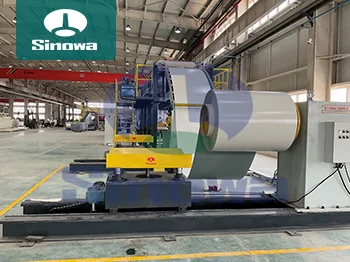
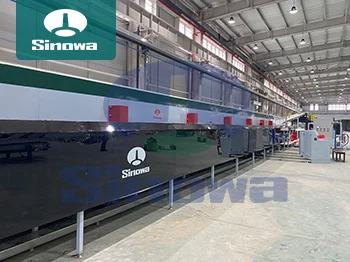
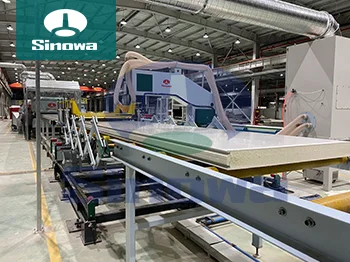
Sinowa is committed to the development and manufacturing of high-end and high-efficiency polyurethane sandwich panel production line. Our polyurethane sandwich panel production line are leading the way in efficiency, automatic control, human-computer interaction, environmental protection and energy consumption. Using system integration and bus control technology, it realizes the automatic integrated linkage control of the entire polyurethane sandwich panel production line, and can achieve remote interactive communication, which has the world-class level and a comprehensive leading high-performance polyurethane sandwich panel production line in the market.
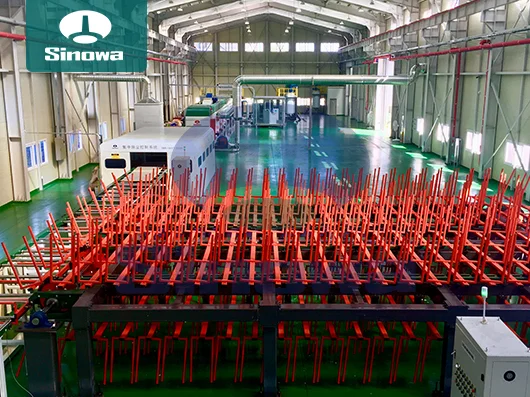
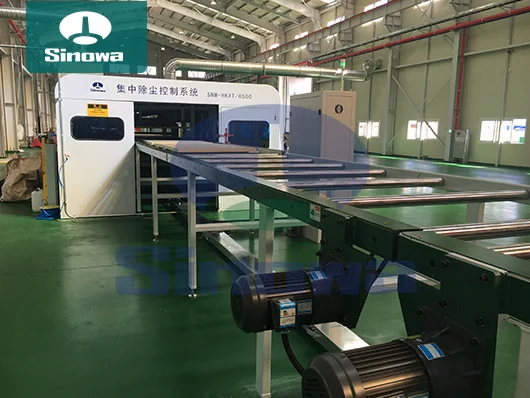
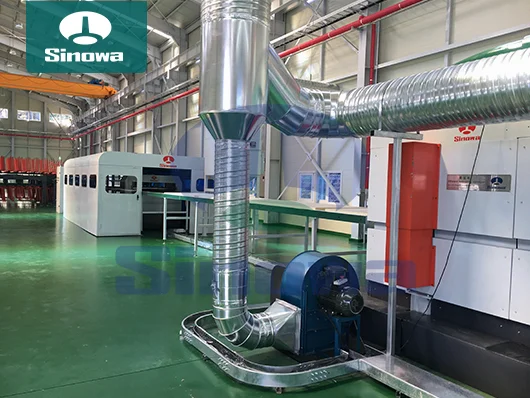
For more than ten years, relying on our innovative manufacturing concept and excellence in quality, reliable and trustworthy service to customers, we cooperate with customers all over the world, exported products to Canada, South Korea, Israel, Australia, the Middle East and other more than 20 countries and regions. contributed to building energy conservation and low-carbon production and have won widespread praise.
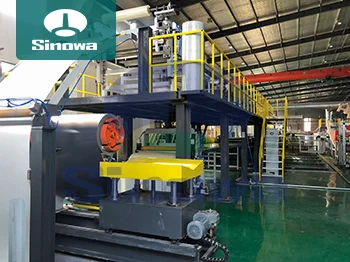
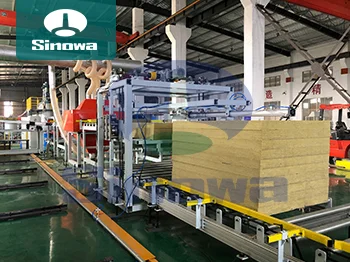
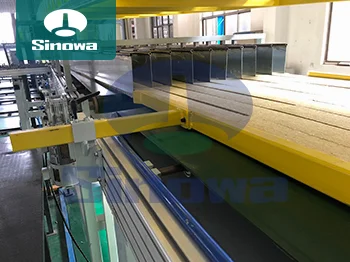
Sinowa has invested outstanding efforts in polyurethane sandwich panel production line, this is why our products are more efficiency, quality, automatic control technology, environmental protection, energy consumption indicators and the appearance and safety protection are comprehensively leading, some subversive design changes in many major technical points, these major innovations make our products excellent in price/performance and user experience.
In the global landscape of construction and industrial manufacturing, polyurethane sandwich panels have emerged as a pivotal material, celebrated for their exceptional combination of thermal insulation, structural strength, light weight, and durability. These panels, consisting of two outer facing layers and a polyurethane foam core, have become indispensable in a wide range of applications, from industrial warehouses and cold storage facilities to commercial buildings and modular housing. At the heart of the mass production of these high-performance panels lies the polyurethane sandwich panel production line, and China has steadily established itself as a global leader in the development, manufacturing, and supply of such advanced production equipment. Over the past few decades, China’s polyurethane sandwich panel production lines have undergone a remarkable evolution, transitioning from relying on imported technology to mastering core manufacturing techniques, and now producing highly automated, intelligent, and customizable systems that meet the diverse needs of both domestic and international markets.
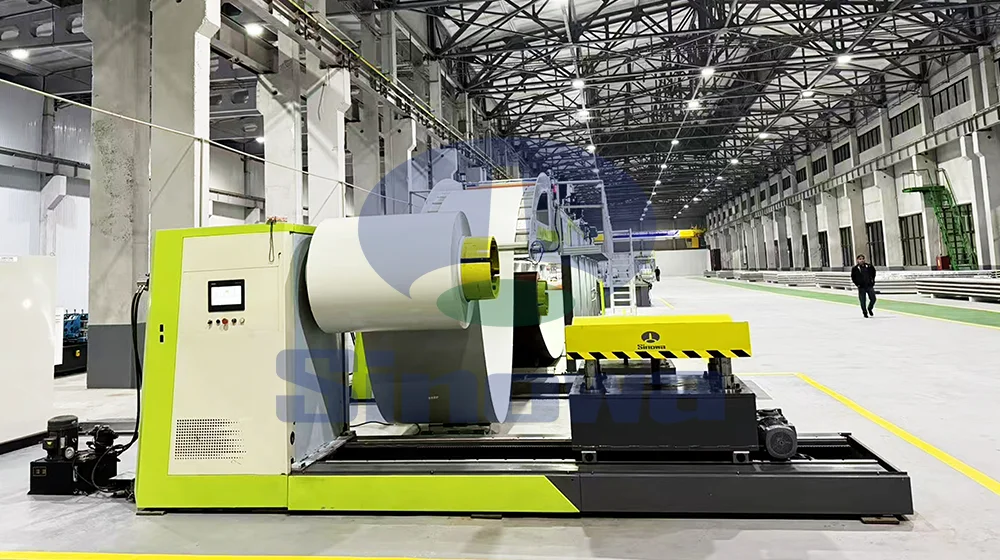
The development journey of polyurethane sandwich panel production lines in China is closely intertwined with the country’s rapid industrialization and urbanization. In the early stages, the industry was heavily dependent on foreign technology and equipment, with limited domestic production capacity and relatively simple manufacturing processes. However, driven by the growing domestic demand for high-quality building materials, supportive government policies for energy conservation and environmental protection, and continuous investment in research and development, Chinese manufacturers have gradually broken through technological bottlenecks. Through reverse engineering, independent innovation, and cooperation with research institutions, they have mastered key technologies such as high-pressure foaming, precise temperature control, and automatic composite forming. Today, China’s production lines are no longer mere imitations of foreign models but have evolved into highly sophisticated systems that integrate advanced automation, intelligent control, and modular design, capable of producing panels with consistent quality and performance.
A typical polyurethane sandwich panel production line in China is a highly integrated electromechanical system that encompasses a series of coordinated processes, from raw material handling to finished product stacking. Each stage of the production process is designed to ensure precision, efficiency, and consistency, with every component playing a critical role in determining the final quality of the panels. The core components of a standard production line include the feeding and uncoiling system, surface treatment equipment, foam mixing and pouring unit, laminating and curing zone, cutting mechanism, and automatic stacking module. These components work in tandem to streamline the manufacturing process, reducing manual intervention and improving production efficiency.
The feeding and uncoiling system is the starting point of the production process, responsible for handling the outer facing materials. The facing materials typically include color-coated steel plates, stainless steel plates, or aluminum plates, which are supplied in coil form. The uncoiling unit uses hydraulic or mechanical methods to unwind the coils, while the leveling device eliminates internal stress in the materials, ensuring that the facing plates are flat and smooth. This step is crucial because any unevenness in the facing materials can affect the bonding between the facing and the core, as well as the overall structural integrity of the final panel. Some advanced production lines are also equipped with surface cleaning devices, which remove oil stains, oxides, and other impurities from the metal surfaces through high-pressure ion air or chemical cleaning. This cleaning process significantly improves the bonding strength between the facing materials and the polyurethane core, ensuring that the panels have long-term durability.
Following the surface treatment, the production process moves to the foam mixing and pouring unit, which is the core of the entire production line. The polyurethane core is made by mixing two main raw materials: isocyanate and polyol, along with various additives such as catalysts, blowing agents, and flame retardants. The high-pressure foaming machine, a key piece of equipment in this unit, uses precision metering pumps to control the mixing ratio of the raw materials with an accuracy of ±1.5%. This precise control ensures that the polyurethane foam has a uniform cell structure, which directly affects the thermal insulation and mechanical properties of the panels. The mixed raw materials are then evenly poured onto the bottom facing layer, which is being conveyed through the production line. The pouring process is carefully controlled to ensure that the foam fills the entire space between the two facing layers, without any gaps or bubbles.
After the foam is poured, the panels enter the laminating and curing zone, where the polyurethane foam undergoes a chemical reaction to expand and solidify. This zone is typically 30 to 50 meters in length, providing sufficient time for the foam to cure completely. The laminating machine is equipped with upper and lower heating pressure plates and circulating steel strips, forming an adjustable height forming channel. The temperature in this zone is precisely regulated through advanced algorithms, ensuring that the foaming reaction proceeds under optimal conditions. The heating pressure plates apply uniform pressure to the panels, ensuring that the facing layers are tightly bonded to the core and that the panels have a flat surface. The curing process is critical because it determines the final density, strength, and thermal insulation performance of the polyurethane core. A well-controlled curing process results in a core with a closed-cell honeycomb structure, which offers excellent thermal insulation, moisture resistance, and mechanical strength.
Once the panels are fully cured, they move to the cutting mechanism, where they are trimmed to the required length and width. The cutting unit is usually equipped with a flying saw cutting machine, which is controlled by a servo system to ensure precise cutting accuracy of ±1 mm. This high precision is essential because it allows the panels to be easily assembled on-site, reducing installation time and improving construction efficiency. The cutting machine can be adjusted to produce panels of different lengths, ranging from a few meters to over 18 meters, depending on the specific requirements of the application. Some advanced production lines also include edge trimming devices, which ensure that the edges of the panels are smooth and straight, further enhancing the quality of the finished product.
The final stage of the production process is the automatic stacking and packaging module. After cutting, the panels are automatically transported to the stacking area, where a robotic arm or vacuum suction cup system stacks them neatly. This automatic stacking not only reduces manual labor but also prevents damage to the panels during handling. The stacked panels are then wrapped in protective film to prevent scratches, moisture, and dust during storage and transportation. This entire process, from raw material feeding to finished product stacking, can be controlled by a centralized control system, which integrates all production processes into a single interface. Operators can monitor and adjust the production parameters in real-time, ensuring that the production line operates efficiently and stably.
One of the most notable features of polyurethane sandwich panel production lines in China is their high level of automation and intelligent control. Modern production lines are equipped with advanced sensors and control systems that monitor every stage of the production process, from the temperature and pressure of the foaming reaction to the cutting accuracy and stacking quality. These systems can detect deviations in real-time and make automatic adjustments, ensuring that the panels meet the required quality standards. Some high-end production lines also incorporate artificial intelligence and machine learning technologies, which can optimize production parameters based on historical data, further improving production efficiency and product quality. This high level of automation not only reduces the need for manual labor but also minimizes human error, resulting in more consistent and reliable products.
Another key advantage of China’s polyurethane sandwich panel production lines is their modular design and customization capabilities. Manufacturers can design and configure production lines according to the specific needs of customers, including the type of facing materials, the density and thickness of the polyurethane core, and the production capacity. For example, production lines can be adjusted to produce panels with different core densities, ranging from 30 to 40 kg/m³, to meet the varying thermal insulation and mechanical requirements of different applications. They can also be configured to handle different types of facing materials, such as color-coated steel, stainless steel, or aluminum, depending on the intended use of the panels. This flexibility allows Chinese manufacturers to cater to a wide range of markets, from low-cost industrial applications to high-end commercial and residential projects.
The performance of the polyurethane sandwich panels produced by these lines is a testament to the advanced technology of China’s production equipment. These panels offer exceptional thermal insulation performance, with a thermal conductivity as low as 0.022 W/(m·K), which is significantly lower than that of traditional insulation materials such as rock wool and glass wool. This high thermal insulation efficiency allows for significant energy savings in buildings, reducing heating and cooling costs. The panels also have excellent fire resistance, with most products reaching a fire rating of B1 (difficult to burn), and some advanced products approaching A-level fire resistance when added with high-efficiency flame retardants. In addition, the closed-cell structure of the polyurethane core provides excellent moisture resistance, with a water absorption rate of ≤1%, making the panels suitable for use in high-humidity environments such as cold storage facilities and basements. The panels are also lightweight yet strong, with a weight of approximately 8-12 kg per square meter, and a bending strength of ≥15 MPa, making them suitable for large-span roofs and wall structures.
The wide range of applications of polyurethane sandwich panels has driven the continuous development of production lines in China. These panels are widely used in industrial fields, including warehouses, factories, and chemical facilities, where they provide excellent insulation and structural support. They are also extensively used in cold storage and cold chain logistics, where their low thermal conductivity and moisture resistance ensure that the internal temperature remains stable, protecting perishable goods such as food and medicine. In the construction sector, polyurethane sandwich panels are used in steel structure buildings, residential buildings, and public facilities such as airports and stadiums, where their quick installation and energy-saving properties help to reduce construction time and costs. Additionally, the panels are used in special environments such as data centers and clean rooms, where their sound insulation and dust-proof properties meet the strict requirements of these facilities.
The development of polyurethane sandwich panel production lines in China has also been driven by the country’s commitment to energy conservation and environmental protection. As the world moves towards a low-carbon economy, there is an increasing demand for energy-efficient building materials. Polyurethane sandwich panels, with their excellent thermal insulation performance, help to reduce energy consumption in buildings, contributing to the reduction of carbon emissions. Chinese manufacturers have also made significant efforts to improve the environmental friendliness of their production lines, adopting energy-saving technologies and using environmentally friendly raw materials. For example, many production lines now use low-VOC (volatile organic compound) raw materials, reducing the environmental impact of the production process. Additionally, the recycling of waste materials from the production process has become more common, further promoting the sustainability of the industry.
The regional distribution of polyurethane sandwich panel production lines in China is closely linked to the country’s industrial and construction development. Most production lines are concentrated in East China, North China, and South China, where industrialization and urbanization are more advanced. These regions have a high demand for polyurethane sandwich panels, driven by the construction of industrial parks, logistics centers, and residential buildings. Provinces such as Jiangsu, Shandong, and Guangdong are major production hubs, with a large number of production lines and manufacturers. In recent years, with the implementation of national strategies such as the Rise of Central China and the Western Land-Sea New Corridor, the demand for polyurethane sandwich panels in central and western regions has been growing rapidly, leading to the establishment of new production lines in these areas. This regional expansion has not only met the local demand but also optimized the overall layout of the industry.
The future of polyurethane sandwich panel production lines in China looks promising, with several key trends shaping the industry. One of the main trends is the continuous improvement of automation and intelligence. Manufacturers are investing in research and development to integrate more advanced technologies, such as Internet of Things (IoT) and big data, into production lines. This will allow for real-time monitoring of production processes, predictive maintenance of equipment, and further optimization of production efficiency. Another trend is the development of high-performance and functional panels. With the increasing demand for energy conservation and safety, manufacturers are developing panels with higher fire resistance, better thermal insulation, and improved durability. For example, composite panels that combine polyurethane with other materials such as rock wool are becoming more popular, offering both excellent thermal insulation and high fire resistance. Additionally, the development of eco-friendly and sustainable production processes will continue to be a focus, as manufacturers strive to reduce their environmental impact and meet global sustainability standards.
In conclusion, China’s polyurethane sandwich panel production lines have undergone a remarkable transformation over the past few decades, evolving from simple, imported systems to advanced, domesticated equipment that leads the global market. These production lines are characterized by their high automation, intelligent control, modular design, and customization capabilities, enabling the production of high-quality polyurethane sandwich panels that meet the diverse needs of various applications. Driven by the country’s industrialization, urbanization, and commitment to energy conservation and environmental protection, the industry is poised for continued growth. With ongoing technological innovation and a focus on sustainability, China’s polyurethane sandwich panel production lines will continue to play a crucial role in the global construction and manufacturing sectors, providing efficient, energy-saving, and durable solutions for the future.
« Polyurethane Sandwich Panel Production Line In China » Update Date: 2026/4/17
- High-quality Polyurethane Sandwich Panel Line
- Fully Automatic PU Sandwich Panel Production Line For Sale
- PIR Wall Panel Production Line On Sales
- PIR Sandwich Panel Machine For Construction
- PU Sandwich Panel Machine Design
- Polyurethane Sandwich Panel Machinery Supplier
- Cold Storage Sandwich Panel Production Line Supplier
- Fully Automatic Sandwich Panel Making Machine Factory
- Polyurethane Sandwich Panel Manufacturing Line Manufacturer
- Sandwich Panel Machine From China
- Machinery For Glass Wool Production
- High-quality Continuous PU Sandwich Panel Line
- High Efficiency Continuous PU Sandwich Panel Production Line
- Cheap Sandwich Panel Making Equipment
- Discontinuous PU Sandwich Panel Machine Supplier
- Sandwich Panel Making Equipment
- Systems For Glass Wool Production
- Foam Core Sandwich Panel Line
- Continuous Sandwich Panel Manufacturing Line Manufacturer
- Sandwich Panel Integrated Production Line On Sales