
PU Sandwich Panel Production Line For Wall
Sinowa is a well-known manufacturer and technical service provider of high-end pu sandwich panel production line, learn more about pu sandwich panel production line for wall, please contact Sinowa's technical engineer, tell us what you need, we will contact you as soon as possible!
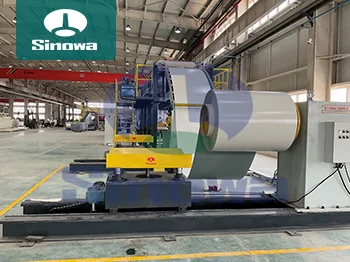
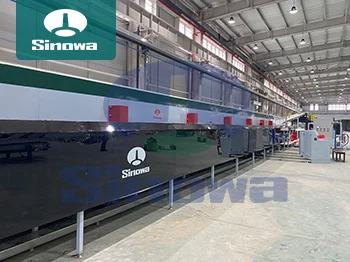
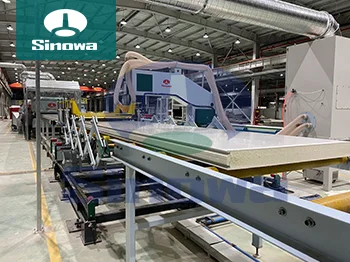
Sinowa is committed to the development and manufacturing of high-end and high-efficiency pu sandwich panel production line. Our pu sandwich panel production line are leading the way in efficiency, automatic control, human-computer interaction, environmental protection and energy consumption. Using system integration and bus control technology, it realizes the automatic integrated linkage control of the entire pu sandwich panel production line, and can achieve remote interactive communication, which has the world-class level and a comprehensive leading high-performance pu sandwich panel production line in the market.
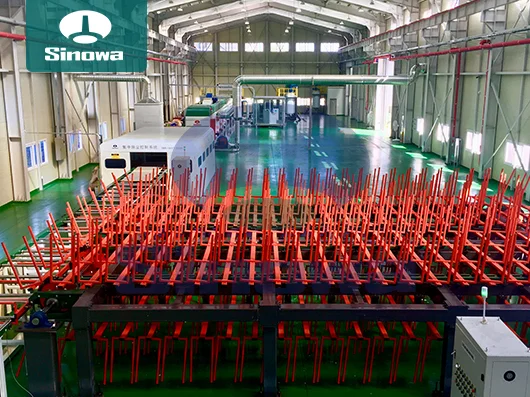
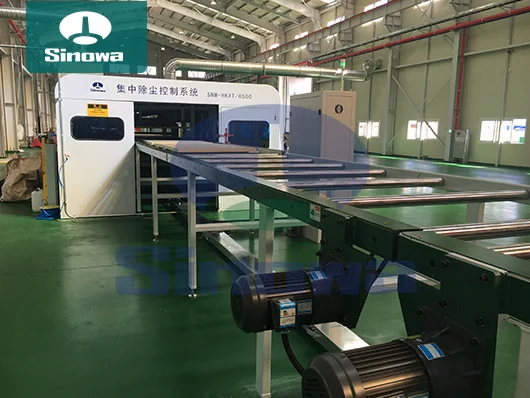
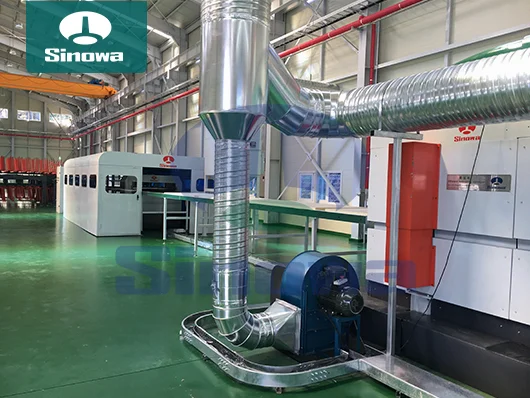
For more than ten years, relying on our innovative manufacturing concept and excellence in quality, reliable and trustworthy service to customers, we cooperate with customers all over the world, exported products to Canada, South Korea, Israel, Australia, the Middle East and other more than 20 countries and regions. contributed to building energy conservation and low-carbon production and have won widespread praise.
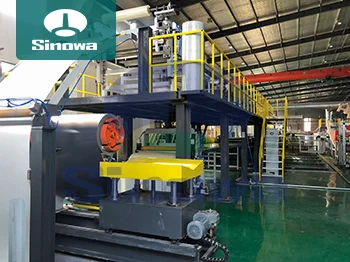
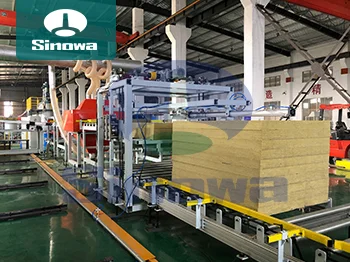
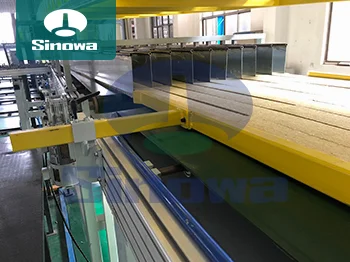
Sinowa has invested outstanding efforts in pu sandwich panel production line, this is why our products are more efficiency, quality, automatic control technology, environmental protection, energy consumption indicators and the appearance and safety protection are comprehensively leading, some subversive design changes in many major technical points, these major innovations make our products excellent in price/performance and user experience.
In the modern construction industry, the demand for efficient, high-performance, and energy-saving building materials has been consistently on the rise, and wall materials, as a core part of building enclosures, play a crucial role in ensuring the stability, thermal insulation, and sound insulation of buildings. Among various wall materials, PU sandwich panels have emerged as a preferred choice due to their exceptional comprehensive performance, and the production of these high-quality panels is largely reliant on advanced manufacturing equipment—the PU sandwich panel production line for wall. This integrated production system not only enhances production efficiency but also ensures the consistency and reliability of product quality, laying a solid foundation for the wide application of PU sandwich panels in diverse construction scenarios. Unlike traditional wall material production methods that are labor-intensive, low-efficiency, and prone to quality inconsistencies, the PU sandwich panel production line for wall realizes a seamless, automated production process from raw material feeding to finished product stacking, minimizing manual intervention and maximizing production continuity, which has gradually become the core equipment in the wall material manufacturing industry.
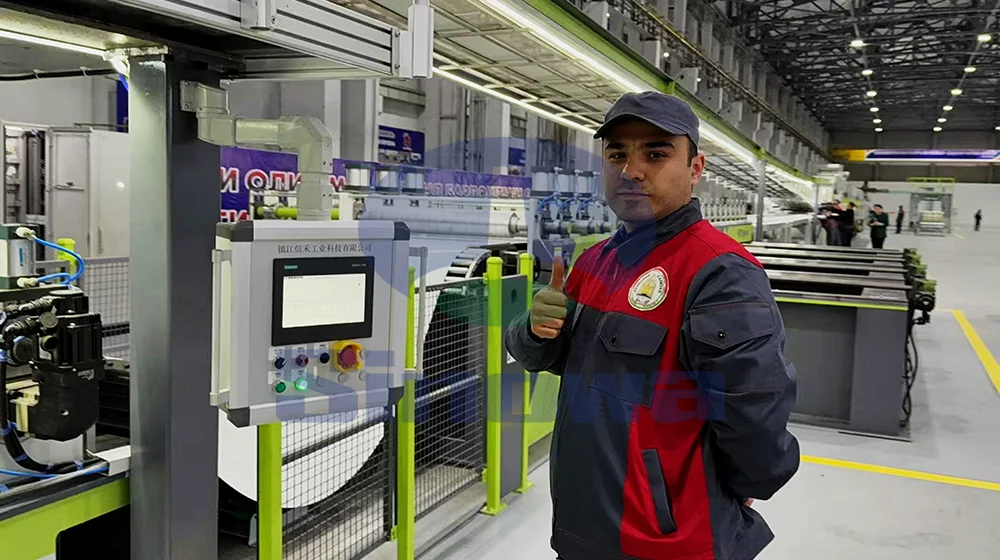
The PU sandwich panel for wall is a composite material with a unique "sandwich" structure, consisting of a polyurethane (PU) core and two surface layers. The PU core, as the core component, has excellent thermal insulation, sound insulation, and lightweight properties, while the surface layers, usually made of metal plates such as galvanized steel, galvalume, or aluminum, or non-metallic materials such as non-woven fabrics and kraft paper, provide good structural strength and weather resistance. The production line is designed to perfectly combine these components through precise mechanical processing and chemical reactions, forming a composite panel that integrates multiple advantages, which is widely used in industrial plants, warehouses, cold storage facilities, prefabricated houses, and other buildings, meeting the diverse needs of modern construction for wall materials. The working principle of the PU sandwich panel production line for wall revolves around the precise coordination of multiple functional modules, including raw material handling, surface material forming, PU foam mixing and pouring, lamination curing, and finished product processing. Each module operates in a synchronized manner under the control of an advanced automated system, ensuring that every stage of the production process is carried out with high precision and efficiency.
Raw material handling is the initial and crucial stage of the production process, which involves the preparation and supply of both surface materials and core PU foam components. The quality of raw materials directly determines the performance of the final PU sandwich panels, so the production line is equipped with a set of strict raw material handling and inspection mechanisms. For surface materials, the production line is usually equipped with multiple uncoiling machines that can handle different types of surface material coils, ensuring a stable and continuous supply. These uncoiling machines are often equipped with tension control systems to prevent surface material deformation during the uncoiling process, which would affect the flatness and bonding effect of the final panels. Before entering the subsequent processing links, the surface materials need to go through a pre-treatment process, including cleaning and preheating. The surface cleaning device removes oil stains and oxides on the surface of metal materials through high-pressure ion air or chemical cleaning, improving the bonding strength between the surface material and the PU core. Preheating is carried out through a preheating oven, which adjusts the temperature of the surface material to an appropriate range, facilitating the subsequent bonding with the PU foam and ensuring a firm combination without delamination. For the core PU foam components, the main raw materials are isocyanates and polyols, which need to be stored in special storage tanks with temperature control functions to ensure their chemical stability. The storage tanks are equipped with stirring devices to prevent the raw materials from precipitating and separating, and the temperature is usually controlled between 20 and 30 degrees Celsius to maintain the optimal reaction activity of the raw materials.
After the raw material pre-treatment is completed, the surface materials enter the forming stage. The roll forming machine is the core equipment of this stage, which processes the flat surface materials into the desired shape through a series of precision rollers. The roll forming machine adopts high-grade steel rollers that have undergone quenching and hard chrome plating treatment, ensuring high wear resistance and forming precision. The forming process is controlled by an automated system, and the roller gap and forming speed can be adjusted according to the thickness and specification requirements of the surface materials, realizing the production of surface materials with different shapes such as corrugated and flat. The quick replacement mechanism of the roll forming machine supports diversified designs, allowing the production line to switch between different surface material specifications quickly, improving production flexibility. After forming, the surface materials are conveyed to the lamination area through a precision conveyor belt, ready for the subsequent PU foam pouring and lamination process.
The PU foam mixing and pouring stage is the core link of the entire production line, which directly affects the density, uniformity, and bonding strength of the PU core. The high-pressure foaming machine is the key equipment in this stage, which uses metering pumps to accurately control the mixing ratio of isocyanates and polyols, with a mixing accuracy that can reach ±0.5% to ±1.5%. The high-pressure foaming machine adopts online mixing technology, which can realize the uniform mixing of raw materials in a short time, ensuring the stability of the foaming reaction. Before pouring, the mixing head of the foaming machine needs to be cleaned regularly to prevent the residual PU foam from solidifying and blocking the mixing head, which would affect the pouring effect. The mixed PU foam is evenly poured onto the bottom surface material through a mobile pouring device, and the pouring amount can be adjusted according to the thickness of the PU core. The mobile pouring device can move synchronously with the conveyor belt, ensuring that the PU foam is evenly distributed on the entire surface of the bottom material, avoiding local gaps or excessive filling. The pouring process is carried out in a closed environment to prevent the PU foam from being affected by external dust and temperature, ensuring the quality of the foaming reaction.
After the PU foam is poured, the bottom surface material carrying the foam and the upper surface material are simultaneously sent to the double-track laminating machine for lamination and curing. The double-track laminating machine is equipped with heating pressure plates and circulating steel strips on the upper and lower sides, forming an adjustable height forming channel. The temperature of the laminating machine is accurately controlled through an intelligent temperature control system, usually between 40 and 120 degrees Celsius, which provides an optimal environment for the foaming and curing of the PU foam. The pressure of the laminating machine is also adjustable, generally maintained at 2kg/cm², ensuring that the upper and lower surface materials are closely bonded with the PU core, and the thickness of the panel is uniform. During the conveying process of the double-track laminating machine, which is usually 30 to 50 meters long, the PU foam undergoes a full foaming and curing reaction, gradually forming a dense and uniform core structure. The curing time is shortened by more than 30% compared with traditional curing methods, greatly improving production efficiency. The circulating steel strips of the laminating machine are made of high-strength materials, which ensure the flatness of the panel surface and prevent the panel from being deformed during the curing process.
After the lamination and curing are completed, the composite panel enters the post-processing and cutting stage. The cured panel is first conveyed to the cooling zone through a conveyor belt for natural cooling or forced cooling, which stabilizes the structure of the panel and reduces internal stress. The cooling process is crucial to avoid the panel from warping or cracking due to rapid temperature changes. After cooling, the panel is conveyed to the cutting machine for precise cutting. The cutting machine usually adopts a flying saw cutting system controlled by a servo motor, which can realize automatic cutting according to the preset length, with a cutting accuracy of ±1mm. The cutting speed can be adjusted according to the production speed of the line, ensuring that the cutting process is synchronized with the overall production rhythm. The cutting blade needs to be replaced regularly to ensure the smoothness of the cutting surface and avoid burrs or uneven cuts. After cutting, the finished panels are conveyed to the stacking area through a conveyor belt, and the automatic stacking machine, which adopts a robotic arm or vacuum suction cup type, realizes the automatic stacking of finished products, reducing manual labor and improving stacking efficiency. Some advanced production lines are also equipped with a packaging system, which can wrap the stacked panels with plastic film or packaging paper to prevent damage during transportation and storage.
The stable operation of the PU sandwich panel production line for wall is inseparable from the advanced automated control system. The control system usually adopts a PLC integrated control system, which realizes real-time monitoring and adjustment of production parameters such as production speed, temperature, pressure, and mixing ratio. The operator can set and adjust the parameters through the touch screen, and the system will automatically synchronize the operation status of each module to ensure the smooth connection of the entire production process. The control system is also equipped with an alarm function. When an abnormality occurs in any link of the production line, such as excessive temperature, insufficient pressure, or material shortage, the system will issue an alarm in time, and the operator can take corresponding measures to avoid production accidents and product quality problems. Some advanced control systems also support remote fault diagnosis, which can help technicians quickly locate and solve faults, reducing production downtime.
Regular maintenance and daily inspection are essential to ensure the long-term stable operation of the production line and the quality of the products. The maintenance work mainly includes regular cleaning, lubrication, and inspection of each equipment module. For the uncoiling machine, it is necessary to clean the surface of the equipment and the work area regularly, check the tension control system, and replenish lubricating oil for the moving parts. For the high-pressure foaming machine, the mixing head needs to be cleaned regularly to prevent the residual PU foam from solidifying, and the metering pump should be calibrated regularly to ensure the accuracy of the mixing ratio. For the double-track laminating machine, it is necessary to check the wear of the steel strips and pressure plates regularly, adjust the temperature control system, and ensure the stability of the heating and pressure systems. For the cutting machine, the cutting blade should be inspected and replaced regularly, and the servo control system should be calibrated to ensure the cutting accuracy. In addition, it is necessary to establish a manual for handling common faults, train operators on basic fault diagnosis skills, and maintain technical communication channels to solve problems in a timely manner when they occur. Regular maintenance can not only extend the service life of the equipment but also reduce the occurrence of faults, ensuring the continuity and stability of production.
In the process of production, it is also necessary to pay attention to the prevention of common production defects to ensure the quality of the PU sandwich panels. Common defects include inconsistent panel thickness, surface waviness, weak adhesion between surface materials and the PU core, foam overflow or insufficient filling, and incorrect cutting length. These defects can be prevented through proper equipment configuration, regular maintenance, and precise process control. For example, to avoid inconsistent panel thickness, it is necessary to synchronize the speed of each part of the production line, calibrate the press system regularly, and inspect the dosing unit periodically. To prevent weak adhesion, it is necessary to control the mixing ratio of raw materials with automatic dosing equipment, maintain a stable production temperature, and adjust the curing time according to the production speed. By taking these preventive measures, the qualified rate of products can be greatly improved, reducing material waste and production costs.
With the advancement of construction industrialization and the increasing demand for energy conservation and environmental protection, the PU sandwich panel production line for wall is constantly upgrading and innovating. The future production line will be more intelligent, with higher automation and precision, and can realize real-time monitoring and adjustment of the entire production process through big data and Internet of Things technology. At the same time, the production line will be more environmentally friendly, adopting energy-saving equipment and environmentally friendly raw materials, reducing energy consumption and environmental pollution. For example, some new production lines adopt energy-saving foaming equipment, which can reduce energy consumption by more than 20% compared with traditional equipment, and the waste gas generated during the production process is recycled and treated to meet environmental protection standards. In addition, the production line will be more flexible, able to produce PU sandwich panels of different specifications, thicknesses, and surface materials to meet the diverse needs of different construction projects.
The wide application of PU sandwich panels for wall has also promoted the development of the production line industry. In industrial plants, PU sandwich panels are used as exterior walls, which can effectively reduce energy consumption and improve the working environment of the plant. In cold storage facilities, the excellent thermal insulation performance of PU sandwich panels can maintain a stable low temperature inside the cold storage, reducing the energy consumption of refrigeration equipment. In prefabricated houses, PU sandwich panels are lightweight and easy to install, which can shorten the construction period and reduce construction costs. With the continuous expansion of the application field, the demand for the PU sandwich panel production line for wall will continue to grow, and the production line will play a more important role in the modern construction industry.
In conclusion, the PU sandwich panel production line for wall is an advanced, efficient, and intelligent production equipment that integrates mechanical processing, chemical reaction, and automated control. It realizes the continuous and automated production of PU sandwich panels, ensuring the stability and consistency of product quality, and improving production efficiency. From raw material handling to finished product stacking, every link of the production line is designed with precision, reflecting the integration of mechanical technology, material science, and intelligent control technology. With the continuous development of the construction industry, the PU sandwich panel production line for wall will continue to upgrade and innovate, providing more efficient, environmentally friendly, and high-quality solutions for the wall material manufacturing industry, and making greater contributions to the development of energy-saving and green construction.
« PU Sandwich Panel Production Line For Wall » Update Date: 2026/4/16
Tags: Fully Automatic PU Sandwich Panel Production Line , Decorative PU Sandwich Panel Production Line , Continuous PU Sandwich Panel Production Line , PU Sandwich Panel Production Line ,
- Fully Automatic PU Sandwich Panel Production Line Price
- PUF Panel Manufacturing Machine Factory
- Sandwich Roof Panel Production Line Factory
- PU Sandwich Panel Production Line For Sale
- Continuous PU Sandwich Panel Line For House
- Fully Automatic Sandwich Panel Making Machine In China
- High-end Cold Storage Sandwich Panel Production Line
- PIR Insulated Panel Production Line Design
- High Efficiency PU Insulation Board Production Line
- Sandwich Panel Production Line Manufacturer
- Sandwich Panel Making Equipment Supplier
- PU Board Production Line Supplier
- High-end PIR Sandwich Panel Production Line
- Low Price Foam Sandwich Panel Production Line
- PU Insulated Panel Production Line On Sales
- Polyurethane Foam Production Line For Wall
- High-end Sandwich Panel Integrated Production Line
- PU Insulation Panel Production Line For Sale
- Polyurethane Insulation Panel Production Line Design
- Low Price Composite Sandwich Panel Production Line
- Links:
- Sandwich Panel Continuous Production Line
- Automatic and Continuous Sandwich Panel Production Line
- Cheap and Low Price Sandwich Panel Production Line
- China Sandwich Panel Production Line Factory
- Color Steel Sandwich Panel Production Line For Cold Storage
- Continuous Composite Foam Sandwich Panel Production Line
- Continuous Production Line For Rockwool and Mineral Wool Sandwich Panels
- Continuous PU Phenolic Insulation Panel Production Line
- Continuous PU PIR Sandwich Panel Production Line
- Continuous PUF PUR Sandwich Panel Production Line
- Continuous Sandwich Panel Production Line For Roof and Wall
- Customized and Design Sandwich Panel Production Line
- Decorative Sandwich Panel Production Line For Glass Wool Boards
- High Quality Sandwich Panel Production Line For Sale
- Polyurethane(PU) Sandwich Panel Production Line
- Sandwich Panel Production Line Manufacturer and Supplier