
PUR Sandwich Panel Machine On Sales
Sinowa is a well-known manufacturer and technical service provider of high-end pur sandwich panel machine, learn more about pur sandwich panel machine on sales, please contact Sinowa's technical engineer, tell us what you need, we will contact you as soon as possible!
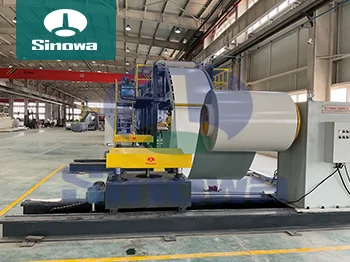
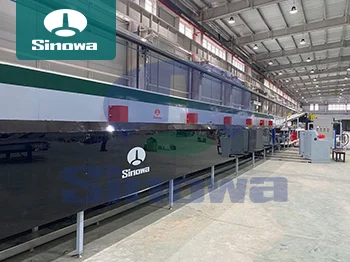
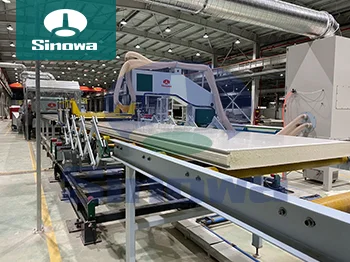
Sinowa is committed to the development and manufacturing of high-end and high-efficiency pur sandwich panel machine. Our pur sandwich panel machine are leading the way in efficiency, automatic control, human-computer interaction, environmental protection and energy consumption. Using system integration and bus control technology, it realizes the automatic integrated linkage control of the entire pur sandwich panel machine, and can achieve remote interactive communication, which has the world-class level and a comprehensive leading high-performance pur sandwich panel machine in the market.
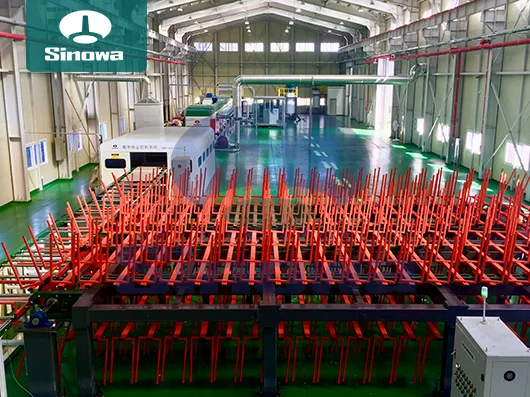
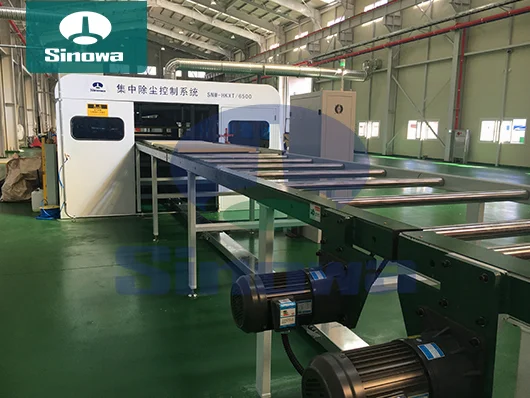
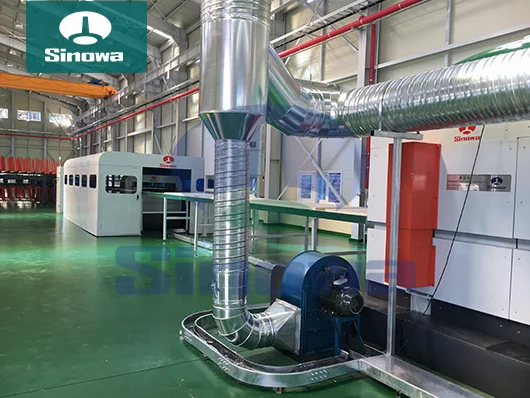
For more than ten years, relying on our innovative manufacturing concept and excellence in quality, reliable and trustworthy service to customers, we cooperate with customers all over the world, exported products to Canada, South Korea, Israel, Australia, the Middle East and other more than 20 countries and regions. contributed to building energy conservation and low-carbon production and have won widespread praise.
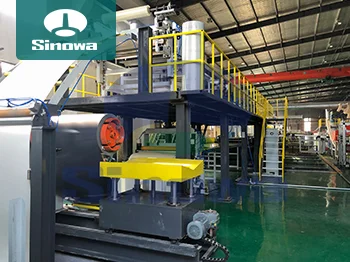
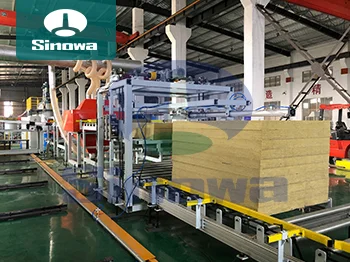
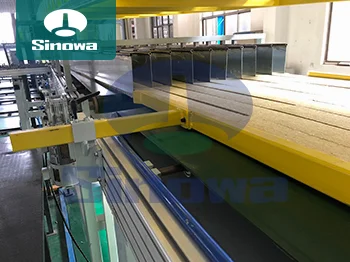
Sinowa has invested outstanding efforts in pur sandwich panel machine, this is why our products are more efficiency, quality, automatic control technology, environmental protection, energy consumption indicators and the appearance and safety protection are comprehensively leading, some subversive design changes in many major technical points, these major innovations make our products excellent in price/performance and user experience.
When looking for reliable equipment to build continuous and discontinuous production lines for composite building boards, many buyers turn their attention to PUR sandwich panel machine on sales, as this type of equipment addresses the core demands of modern panel manufacturing with stable forming technology and flexible configuration options. The machine is designed to bond different surface materials with core insulation layers by using PUR adhesive, which creates a tight, uniform bond line that avoids common issues such as glue overflow, delamination and uneven adhesion seen with older bonding methods. Operators can adjust feeding speed, glue application volume and pressing pressure according to the thickness and material properties of raw boards, so the finished panels maintain consistent flatness across large batch production. The whole workflow runs in a linked sequence from raw material unwinding, glue spreading, laminating, continuous pressing, curing to fixed-length cutting, which greatly reduces manual intervention and cuts down the chance of human error during production. Many production sites choose this machine because it can adapt to multiple combinations of face sheets and core materials, making it suitable for making panels used in enclosure systems, clean space construction and temporary building assembly. Even for manufacturers who are expanding their production capacity for the first time, the operating logic of the equipment is straightforward to master after proper training, and routine maintenance work focuses on checking the glue supply pipeline, pressing rollers and driving components on a regular cycle. Choosing a properly matched machine also helps manufacturers control glue consumption effectively, preventing unnecessary waste while keeping the bonding performance of each panel at a stable level over long running hours.
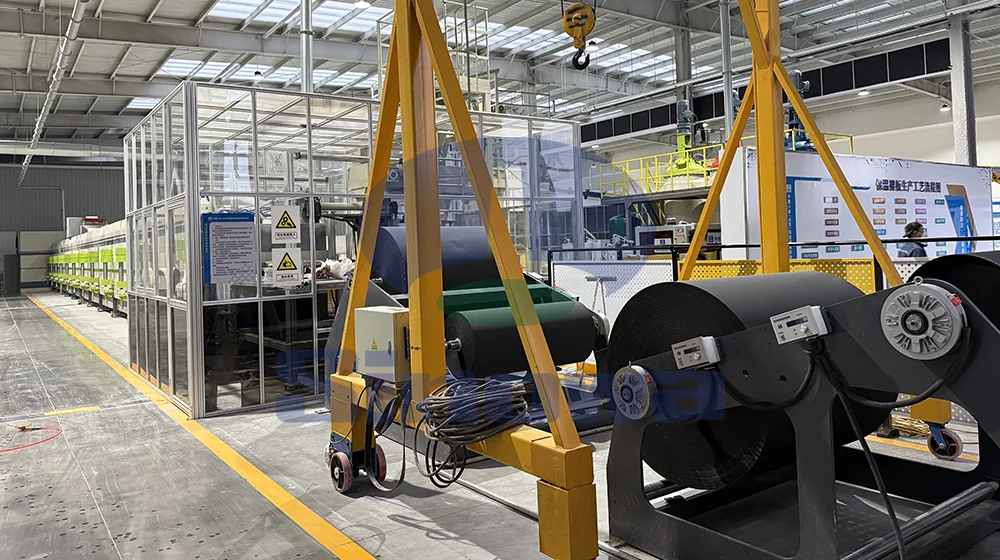
The performance of the PUR adhesive system stands out as one of the most critical parts of the PUR sandwich panel machine on sales, and this system determines the final bonding quality and long-term stability of finished sandwich panels. The glue supply unit keeps PUR materials under stable temperature and pressure conditions all the time, preventing the adhesive from premature curing or viscosity fluctuation before it reaches the laminating station. Precise metering pumps deliver the adhesive in a controlled ratio, so the mixing of two-component raw materials stays consistent without uneven mixing that would weaken bonding strength. The spraying or rolling glue application structure distributes adhesive evenly across the surface of the substrate, and the coverage area can be modified to fit narrow or wide panel sizes without leaving bare spots or building up thick glue layers in local areas. Since PUR adhesive reacts and cures under controlled temperature, the machine’s curing section creates a suitable environment to support complete chemical reaction, so the bonded structure will not separate easily under normal temperature change and load conditions. Compared with equipment relying on other adhesive solutions, this machine’s glue system generates less volatile substance during the production process, which creates a more comfortable working environment for on-site workers and reduces the accumulation of sticky residues on machine surfaces. Operators need to follow correct shutdown procedures to flush the glue channels after daily production, otherwise residual adhesive will solidify inside pipelines and block the circulation path, which will bring extra workload for disassembly and cleaning. A well-maintained glue system can keep the machine running continuously for long shifts, supporting stable output and lowering the frequency of unexpected production shutdowns caused by glue system failures.
The structural design of the pressing and forming section in the PUR sandwich panel machine on sales directly affects the flatness, thickness accuracy and overall compactness of finished sandwich panels. This section consists of upper and lower pressing components that apply balanced pressure across the whole width of the moving board, so the core layer and surface layers are pressed closely together without local bulging or hollow gaps. The clearance between pressing rollers can be finely adjusted to match the target panel thickness, and the locking structure can hold the set position firmly during high-speed operation to avoid thickness deviation among products from the same batch. Heavy-duty frame components absorb vibration generated during continuous running, which helps maintain stable operation even when the machine works at a relatively high production speed. The surface of pressing rollers is treated to resist adhesion with PUR glue, so leftover adhesive will not stick firmly to the roller surface and leave marks on the surface of finished panels. After the pressing process, panels move forward at a steady speed into the curing area instead of being pulled or squeezed unevenly, protecting the unfinished bonding structure before the adhesive finishes curing. For manufacturers who produce panels with relatively thick core materials, the pressing unit can provide enough uniform pressure to ensure the soft core material fits tightly with rigid face sheets without deformation. Regular inspection of roller parallelism and transmission chain tension is necessary, and timely adjustment can prevent gradual deviation in panel thickness that may appear after weeks of continuous operation.
The feeding and cutting auxiliary modules of the PUR sandwich panel machine on sales improve the overall automation level of the production line and reduce the workload for workers handling raw materials and finished products. The unwinding station supports smooth release of coil surface materials, with tension control devices to keep the sheet flat without wrinkling or stretching during feeding. Separate feeding platforms are arranged for rigid plate substrates and block-shaped core materials, and guide structures help align each layer accurately before entering the glue spreading station, avoiding offset between upper and lower face sheets and the middle core. After curing is completed, the automatic cutting unit detects the travel length of panels and executes fixed-length cutting at the preset position, and the cutting tool maintains clean section edges without rough burrs that require secondary trimming. Some configurations also include edge trimming devices to tidy up panel sides, so finished panels can meet the dimensional requirements for direct installation. These auxiliary parts work synchronously with the main host through linked control signals; if abnormal feeding or material blockage occurs, the system can trigger slowdown or alarm prompts to prevent material stacking and equipment damage. Workers only need to replenish raw materials at the feeding position and collect finished panels at the discharging end, instead of moving heavy semi-finished products manually between each processing station. Matching the feeding speed and cutting frequency with the main laminating speed is important, and unreasonable parameter matching will lead to material waste or incomplete cutting, which affects the overall production efficiency of the whole line.
Control system configuration of the PUR sandwich panel machine on sales brings convenient parameter management and real-time running status monitoring for production teams. The human-machine interface gathers all adjustable parameters in one operation panel, including glue flow rate, line speed, pressing pressure, curing zone temperature and cutting length, so operators can check and modify settings without adjusting multiple independent control boxes separately. The system can store parameter groups for different panel specifications, and when switching production from one panel type to another, users can call up saved settings quickly instead of resetting every parameter item from scratch. Real-time data display shows the running speed, cumulative output count and alarm information, helping supervisors understand the production progress and locate abnormal conditions in a short time. Safety interlock functions are embedded in the control logic; when protective covers are opened or foreign objects trigger the sensing parts, the machine will stop relevant actions to protect operators and prevent collision damage to key components. The control hardware is selected to adapt to the environment inside production workshops, where there may be dust and slight temperature fluctuation, and stable signal transmission ensures coordinated movement between different sections of the production line. Staff who operate the machine need to learn the meaning of alarm codes and basic troubleshooting methods, which can shorten the downtime when minor faults appear. The control system also records running logs for a certain period, which helps technical teams analyze the cause of unstable production quality and optimize process parameters for better finished panel consistency.
Maintenance and service support are key factors that buyers should evaluate when selecting a PUR sandwich panel machine on sales, as proper long-term upkeep determines the service life and stable output capacity of the whole production line. Daily maintenance mainly covers cleaning the glue spreading parts, checking the tightness of pipelines, wiping pressing rollers and removing accumulated debris on the guide rails, all of which can be completed by on-site operators following standard operation guidance. Periodic maintenance includes replacing sealing rings inside the glue metering system, checking the wear degree of transmission belts and cutting blades, and adding lubricating oil to rotating bearings and gear sets. Worn parts will gradually affect production quality if left unattended; for example, aging sealing rings may cause glue leakage, and dull cutting blades will create uneven panel sections. Most suppliers provide operation manuals that detail maintenance cycles, lubrication points and disassembly steps for vulnerable components, allowing factories to arrange maintenance plans reasonably between production batches. Timely replacement of wearing parts with matching specifications avoids secondary damage to matched assembly structures caused by mismatched spare parts. Many technical teams also offer remote guidance when users encounter confusing faults, helping them judge whether the problem can be solved on site or requires on-site technical support. Building a stable maintenance habit helps manufacturers avoid sudden long-time shutdowns, and keeps the machine maintaining its designed production capacity year after year.
Application flexibility makes the PUR sandwich panel machine on sales suitable for many different market segments that demand high-performance composite boards. Panels made by this equipment feature reliable bonding strength and good overall structural integrity, so they are widely used for building partition walls, roof cladding and prefabricated building wall units. In spaces requiring controlled internal environments, these panels can form smooth enclosure surfaces that help maintain stable indoor conditions and simplify the installation of internal supporting structures. The ability to combine different core materials allows finished panels to carry different functional characteristics, catering to projects with different performance expectations. The finished panels are also favored because they are convenient for transportation and fast assembly at construction sites, shortening the overall installation cycle compared with traditional on-site building methods. Manufacturers using this machine can continuously launch new panel combinations according to market demand changes, adjusting raw material collocation without replacing the main host equipment. Small and medium-sized producers can start with a moderately sized line to test market response, while larger manufacturers can configure extended units to raise hourly output and meet bulk order requirements. The versatility of the machine reduces the risk of single-product production, helping panel producers adjust their product portfolio as downstream market needs shift over time.
For buyers preparing to invest in a PUR sandwich panel machine on sales, rational evaluation of their own production demands is the foundation to make a suitable selection and gain stable return from the equipment. Buyers need to clarify the main types of panels they plan to produce, the common thickness range, expected daily output and the space available inside their workshop to place the whole production line. The layout of the workshop affects material circulation and operation convenience; enough space should be reserved for raw material storage, machine installation and finished panel stacking. Communication with suppliers about configuration options helps buyers understand what each functional module can achieve, and avoid paying for redundant functions that will never be used in actual production. It is also sensible to confirm the training arrangement for operation and maintenance teams, because even well-built equipment cannot deliver expected performance if operators do not master parameter adjustment and fault handling. Before formal production starts, test runs with the buyer’s own raw materials are helpful to verify whether the machine can achieve satisfactory panel quality under local material conditions. After the equipment is put into use, continuous optimization of process parameters together with strict daily management will help manufacturers steadily improve product quality and control production cost. A properly selected and well-run PUR sandwich panel production machine becomes a core asset for composite panel manufacturers, supporting long-term and sustainable development in the competitive panel supply market.
« PUR Sandwich Panel Machine On Sales » Update Date: 2026/10/26
Tags: PUR Sandwich Panel Machine , pur sandwich panel machine, pur sandwich panel machine manufacturer, pur sandwich panel machine supplier, pur sandwich panel machine for sale, customized pur sandwich panel machine, china pur sandwich panel machine
- Glass Wool Sandwich Panel Production Line
- Foam Core Sandwich Panel Line Supplier
- PIR Sandwich Panel Machine Design
- Decorative Sandwich Panel Line On Sales
- High-tech Sandwich Roof Panel Production Line
- Continuous Sandwich Panel Production Line
- High-end Color Steel Sandwich Panel Production Line
- Cheap Polyurethane Sandwich Panel Machine
- Wall Sandwich Panel Production Line Factory
- Composite Sandwich Panel Production Line
- Insulated Sandwhich Panel Production Line Design
- Cheap Polyurethane Sandwich Panel Manufacturing Line
- Cold Room Sandwich Panel Production Line Manufacturer
- Color Steel Sandwich Panel Production Line
- Isolation Sandwich Panel Production Line Manufacturer
- Continuous PUF Panel Production Line Supplier
- PU Insulation Board Production Line On Sales
- PU Sandwich Panel Machine For Building
- Polyurethane Foam Production Line
- Low Price PU Sandwich Panel Line
- Links:
- Sandwich Panel Continuous Production Line
- Automatic and Continuous Sandwich Panel Production Line
- Cheap and Low Price Sandwich Panel Production Line
- China Sandwich Panel Production Line Factory
- Color Steel Sandwich Panel Production Line For Cold Storage
- Continuous Composite Foam Sandwich Panel Production Line
- Continuous Production Line For Rockwool and Mineral Wool Sandwich Panels
- Continuous PU Phenolic Insulation Panel Production Line
- Continuous PU PIR Sandwich Panel Production Line
- Continuous PUF PUR Sandwich Panel Production Line
- Continuous Sandwich Panel Production Line For Roof and Wall
- Customized and Design Sandwich Panel Production Line
- Decorative Sandwich Panel Production Line For Glass Wool Boards
- High Quality Sandwich Panel Production Line For Sale
- Polyurethane(PU) Sandwich Panel Production Line
- Sandwich Panel Production Line Manufacturer and Supplier
- Sandwich Panel Production Machinery and Equipment