
Rock Wool Board Production Line For Construction
Sinowa is a well-known manufacturer and technical service provider of high-end rock wool board production line, learn more about rock wool board production line for construction, please contact Sinowa's technical engineer, tell us what you need, we will contact you as soon as possible!
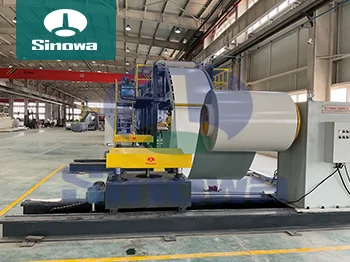
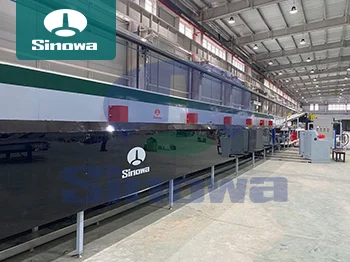
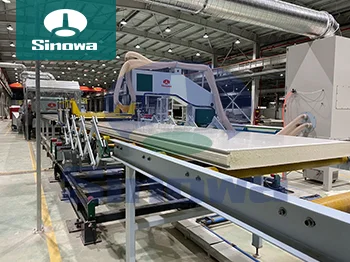
Sinowa is committed to the development and manufacturing of high-end and high-efficiency rock wool board production line. Our rock wool board production line are leading the way in efficiency, automatic control, human-computer interaction, environmental protection and energy consumption. Using system integration and bus control technology, it realizes the automatic integrated linkage control of the entire rock wool board production line, and can achieve remote interactive communication, which has the world-class level and a comprehensive leading high-performance rock wool board production line in the market.
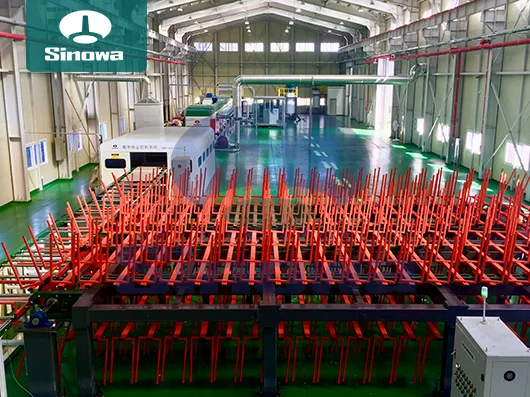
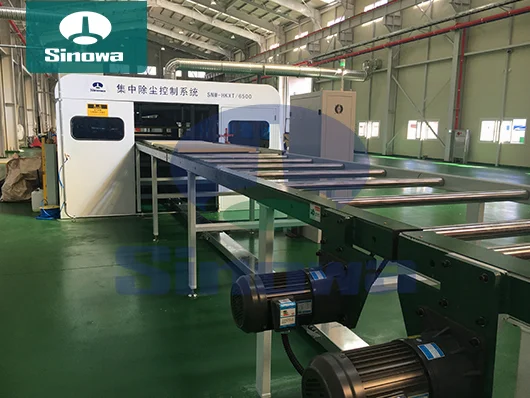
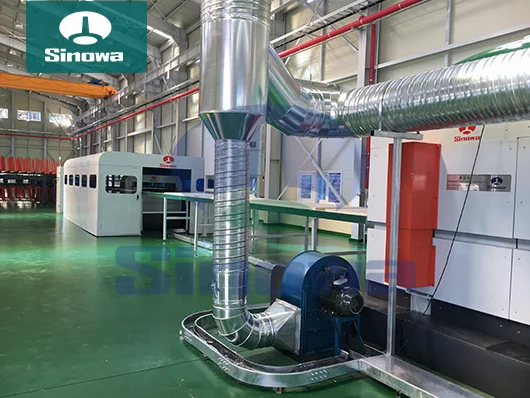
For more than ten years, relying on our innovative manufacturing concept and excellence in quality, reliable and trustworthy service to customers, we cooperate with customers all over the world, exported products to Canada, South Korea, Israel, Australia, the Middle East and other more than 20 countries and regions. contributed to building energy conservation and low-carbon production and have won widespread praise.
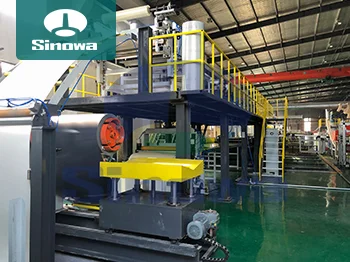
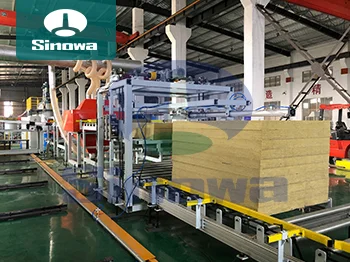
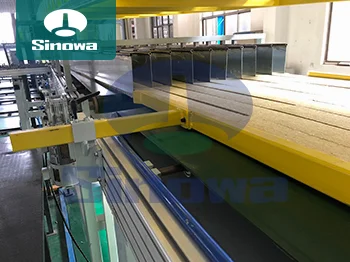
Sinowa has invested outstanding efforts in rock wool board production line, this is why our products are more efficiency, quality, automatic control technology, environmental protection, energy consumption indicators and the appearance and safety protection are comprehensively leading, some subversive design changes in many major technical points, these major innovations make our products excellent in price/performance and user experience.
The rock wool board production line tailored for construction applications represents a comprehensive set of interconnected equipment designed to transform raw basalt and slag materials into stable, functional building boards that serve a wide range of on-site building needs. At the very start of the manufacturing workflow, raw mineral materials are carefully selected and proportioned according to fixed formulation rules, then fed into the melting furnace for high-temperature treatment. The intense heat breaks down the dense mineral structure and turns solid stones into uniform molten liquid, which lays a solid foundation for the subsequent fiber forming process. Strict control over melting temperature and material feeding speed is essential here, as any fluctuation in these parameters will directly affect the fineness and uniformity of the mineral fibers produced later. After the molten stream flows out from the furnace outlet, it meets high-speed spinning wheels that tear the liquid into countless thin, flexible fibers. During this spinning stage, a specific binder solution is evenly sprayed onto the newly formed fibers, so each fiber surface can carry an appropriate amount of adhesive substance that will bond the loose fiber mass together in later procedures. This initial stage focuses entirely on raw material conversion and fiber preparation, aiming to create fiber raw materials with consistent texture and stable performance before the material moves forward along the production line. Every mechanical unit in this section works in coordination, and operators keep observing the running status to avoid uneven melting or insufficient binder spraying that may cause quality defects in the final rock wool boards used in construction projects.
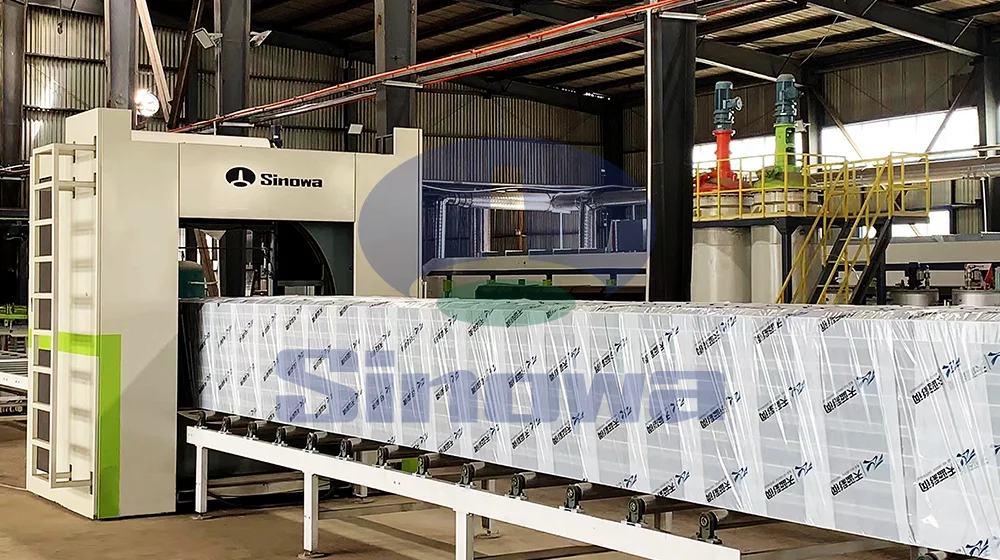
Once the fiber with binder coating is collected, it enters the forming and laying section of the rock wool board production line, where loose fiber clouds are distributed evenly on a moving conveyor belt to build up a thick fiber mat. The laying system can adjust the stacking density and thickness of the fiber layer by changing the conveying speed and fiber falling rate, which directly determines the basic physical features of the finished construction boards. The fiber mat formed at this point is fluffy and low in strength, and it cannot be used directly for building construction, so it needs to go through pre-compression treatment to reduce internal gaps and shape the mat into a continuous flat strip. The pre-compression rollers apply gentle and steady pressure on the fiber mat without breaking the fine fibers, keeping the internal fiber network intact while locking the preliminary shape. As the continuous fiber mat advances, it moves into the curing oven, where stable hot air circulates inside to activate the binder and trigger the curing reaction. Inside the closed curing space, temperature and air circulation are maintained within a suitable range to make the binder fully solidify and connect adjacent fibers firmly. This bonding process turns the loose fiber mat into a rigid, self-supporting rock wool slab, removing the risk of fiber shedding when the product is handled and installed on construction sites. Slight adjustments to curing duration and air flow can accommodate different product specifications required by various building application scenarios, ensuring the cured slab achieves balanced flexibility and structural stability.
After exiting the curing oven, the continuous rock wool slab still has irregular edges and does not match the size requirements commonly adopted in construction work, so the production line transfers the material to the cutting and shaping zone. Multiple sets of cutting devices are arranged in sequence to carry out longitudinal slitting and cross-cutting separately, trimming the uneven side edges first and then cutting the long continuous slab into individual boards of preset dimensions. The cutting tools run at a matched speed with the conveyor to keep cut surfaces neat and reduce fiber debris generated during cutting, which helps maintain a cleaner working environment and lowers waste generation. Some sections of the cutting unit can also make special notches or chamfers on the board edges when such shapes are needed for convenient assembly during building installation. Once cutting is completed, the finished boards pass through an inspection station integrated into the production line, where both mechanical sensors and on-site staff check the surface condition, thickness uniformity and overall integrity of each board. Any pieces with obvious surface cracks, inconsistent thickness or incomplete curing will be separated from qualified products and sent back for reprocessing or proper waste disposal. This screening step prevents unqualified rock wool boards from flowing into construction markets, avoiding potential troubles during building installation and long-term use of the finished building components.
Waste recycling is an indispensable supporting part of a modern rock wool board production line for construction, as fiber scraps and offcuts generated during cutting, trimming and occasional defective product sorting can be collected and reused instead of being discarded directly. Special collection pipelines gather the fiber waste and deliver it to a crushing unit, which breaks larger waste blocks back into loose fiber material that can be mixed with fresh raw fibers at the front laying section. The recycling system is designed to control the mixing ratio of recycled fibers carefully, so that adding recycled material will not undermine the stable performance of the final rock wool boards. Reasonable recycling arrangements cut down the consumption of original mineral raw materials, reduce the overall material cost of production and ease the environmental pressure brought by solid waste discharge from the manufacturing process. The whole recycling subsystem runs synchronously with the main production line, and its feeding speed can be adjusted automatically according to the amount of waste produced in real time. Operators regularly check the status of recycling pipelines and crushing equipment to prevent blockage caused by accumulated fiber scraps, ensuring the recycling loop keeps running smoothly throughout long continuous production shifts. This circular processing mode fits well with the development trend of low-resource consumption manufacturing for building material products.
Automatic control systems run through every functional section of the rock wool board production line for construction, linking melting, fiber spinning, forming, curing, cutting and waste recycling into one coordinated operating system. Central control panels display real-time operating data of all key equipment, including material feed rate, furnace temperature, conveyor speed, curing chamber temperature and cutting dimension parameters. Production technicians can modify setting values on the control interface to switch between different product specifications quickly when construction projects need rock wool boards with different thickness or density. The control system also carries out real-time monitoring of abnormal working conditions; it will send out warning signals and take limited protective actions if equipment overload, temperature deviation or material blockage appears, to protect the production equipment from damage and stop large batches of defective products from being made. Although automation handles most routine parameter adjustments, experienced operators still need to stay on duty to observe subtle changes in material status and make fine manual corrections when automatic control reaches its limitation. A well-calibrated control system greatly stabilizes product consistency and reduces the influence of human operation differences on the quality of rock wool boards supplied to construction sectors. It also records production data continuously, supporting later production analysis and process optimization work.
The rock wool boards produced by this specialized production line have gained wide application opportunities in diverse construction scenarios because of their unique combination of material characteristics. Many building projects use these boards as core components inside exterior wall insulation systems, where they help maintain stable indoor temperature and reduce the energy demand needed for indoor heating and cooling. They can also be installed on partition walls, ceiling structures and roof layers of buildings, bringing extra functional advantages to the building envelope. When installed properly according to construction operation standards, the fiber structure inside rock wool boards can restrain the transmission of sound waves, helping improve the acoustic environment inside buildings such as office spaces, residential buildings and public service buildings. The inorganic nature of the rock wool fiber gives the finished board stable performance under high-temperature conditions, which makes it suitable for parts of buildings that require reliable fire resistance performance. Construction teams favor this type of board for its convenient cutting and handling features on site; workers can adjust board sizes to fit complex structural layouts with simple tools. At the same time, the production line can adjust product performance orientation through process tuning, so the output rock wool boards can adapt to the different functional priorities of various building projects, whether the main demand is thermal insulation, sound absorption or fire protection.
Maintenance and daily management of the rock wool board production line directly determine its continuous operation efficiency and service life, and regular maintenance plans must be followed closely during long-term production cycles. High-temperature components such as the melting furnace and spinning wheels work under harsh thermal conditions, so they need periodic inspection of refractory linings, nozzle channels and rotating bearings. Worn parts are replaced in a planned way before serious failure occurs, avoiding sudden shutdowns that interrupt the supply of rock wool boards to construction markets. Transmission rollers, conveyor belts and cutting blades are exposed to fiber dust and continuous friction every day; regular cleaning, lubrication and sharpening work keep these moving parts running smoothly and guarantee cutting accuracy. Dust removal equipment matched with the production line also needs routine maintenance, because accumulated fine fiber dust will affect equipment heat dissipation and create hidden risks for the production workshop environment. Maintenance work is usually arranged during planned production breaks, with clear checklists for each equipment area to ensure no important inspection item is omitted. Maintenance teams also collect fault records over time, summarizing common failure causes to optimize the production line structure and operation logic gradually. Good maintenance habits lower unexpected downtime and help the production line maintain stable output capacity to meet the steady market demand for construction rock wool boards.
Looking ahead, the development of rock wool board production lines for construction keeps moving toward higher operational efficiency, lower energy consumption and more flexible production capacity. Equipment designers keep optimizing the internal structure of melting furnaces and curing ovens to improve heat utilization efficiency and cut down energy input for each unit of finished rock wool board. Upgraded fiber spinning and laying devices can achieve more precise control over fiber distribution, making the internal structure of rock wool boards more uniform and stable across the whole board surface. New generations of control systems are capable of deeper data analysis, identifying subtle quality variation trends in advance and adjusting process parameters proactively rather than responding after defects emerge. At the same time, production lines are designed with stronger switching flexibility, allowing manufacturers to shift among multiple product types in a shorter time to respond to the changing demands of different construction forms and building design concepts. Environmental supporting facilities connected to the production line are also continuously upgraded to manage dust and gas emissions more effectively, matching the rising environmental requirements for building material manufacturing. As construction industries keep pursuing high-performance and durable building materials, the rock wool board production technology will continue to evolve, supporting the stable supply of high-quality fiber boards that serve as vital functional materials for modern building systems all over the market.
« Rock Wool Board Production Line For Construction » Update Date: 2026/10/26
Tags: Rock Wool Board Production Line , rock wool board production line, rock wool board production line manufacturer, rock wool board production line supplier, rock wool board production line for sale, customized rock wool board production line, china rock wool board production line
- Sandwich Panel Rock Wool Production Line Price
- Mineral Wool Sandwich Panel Production Line
- Highly Intelligent Rockwool Sandwich Panel Line
- Rock Wool Machine Supplier
- Rockwool Panel Production Line On Sales
- Highly Intelligent Rock Wool Board Production Line
- Rock Wool Insulation Panel Production Line In China
- Mineral Wool Line For Sale
- Mineral Wool Board Production Line For Cold Room
- Rock Wool Sandwich Panel Machine Design
- Mineral Wool Sandwich Panel Machine For Roof
- Rock Wool Line On Sales
- Mineral Wool Sandwich Panel Machine For Building
- High-tech Rockwool Machine
- Mineral Wool Sandwich Panel Production Line For Cold Room
- Customized Rockwool Sandwich Panel Machine
- Cheap Sandwich Panel Rock Wool Production Line
- Mineral Wool Production Line Factory
- Fully Automatic Rock Wool Sandwich Panel Machine In China
- Mineral Wool Sandwich Panel Line For Wall
- Links:
- Sandwich Panel Continuous Production Line
- Automatic and Continuous Sandwich Panel Production Line
- Cheap and Low Price Sandwich Panel Production Line
- China Sandwich Panel Production Line Factory
- Color Steel Sandwich Panel Production Line For Cold Storage
- Continuous Composite Foam Sandwich Panel Production Line
- Continuous Production Line For Rockwool and Mineral Wool Sandwich Panels
- Continuous PU Phenolic Insulation Panel Production Line
- Continuous PU PIR Sandwich Panel Production Line
- Continuous PUF PUR Sandwich Panel Production Line
- Continuous Sandwich Panel Production Line For Roof and Wall
- Customized and Design Sandwich Panel Production Line
- Decorative Sandwich Panel Production Line For Glass Wool Boards
- High Quality Sandwich Panel Production Line For Sale
- Polyurethane(PU) Sandwich Panel Production Line
- Sandwich Panel Production Line Manufacturer and Supplier
- Sandwich Panel Production Machinery and Equipment