
Roof Sandwich Panel Production Line In China
Sinowa is a well-known manufacturer and technical service provider of high-end roof sandwich panel production line, learn more about roof sandwich panel production line in china, please contact Sinowa's technical engineer, tell us what you need, we will contact you as soon as possible!
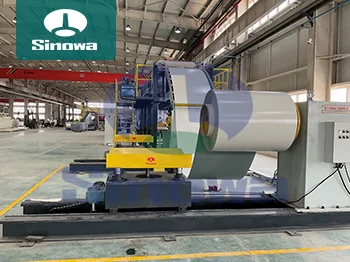
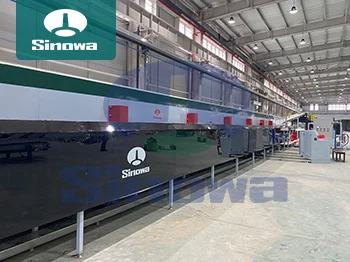
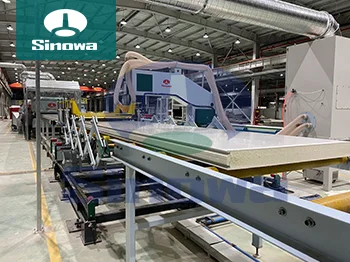
Sinowa is committed to the development and manufacturing of high-end and high-efficiency roof sandwich panel production line. Our roof sandwich panel production line are leading the way in efficiency, automatic control, human-computer interaction, environmental protection and energy consumption. Using system integration and bus control technology, it realizes the automatic integrated linkage control of the entire roof sandwich panel production line, and can achieve remote interactive communication, which has the world-class level and a comprehensive leading high-performance roof sandwich panel production line in the market.
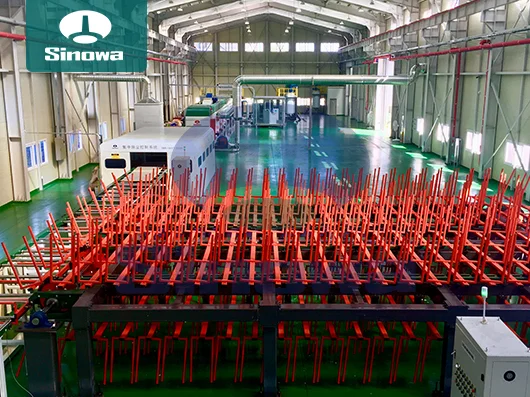
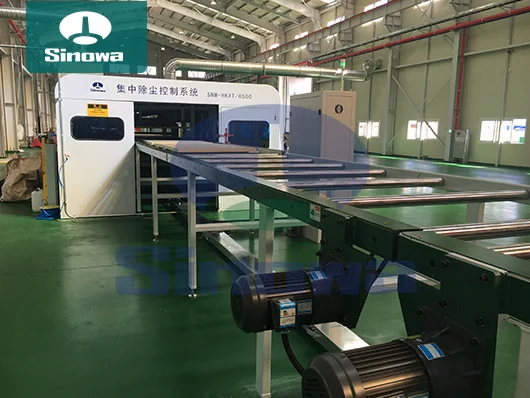
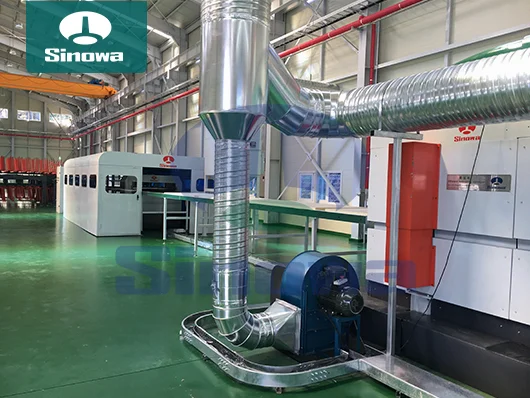
For more than ten years, relying on our innovative manufacturing concept and excellence in quality, reliable and trustworthy service to customers, we cooperate with customers all over the world, exported products to Canada, South Korea, Israel, Australia, the Middle East and other more than 20 countries and regions. contributed to building energy conservation and low-carbon production and have won widespread praise.
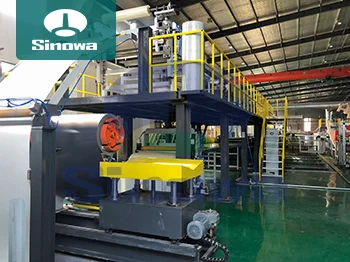
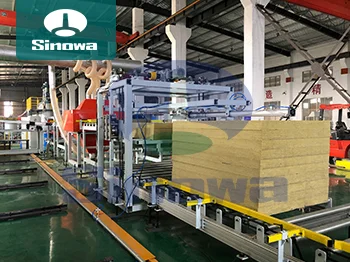
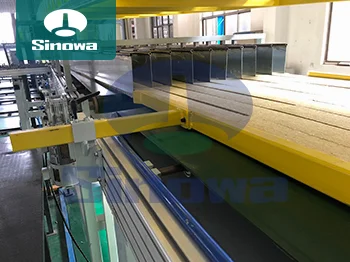
Sinowa has invested outstanding efforts in roof sandwich panel production line, this is why our products are more efficiency, quality, automatic control technology, environmental protection, energy consumption indicators and the appearance and safety protection are comprehensively leading, some subversive design changes in many major technical points, these major innovations make our products excellent in price/performance and user experience.
In recent years, with the accelerated process of urbanization and the continuous upgrading of the construction industry in China, the demand for efficient, environmentally friendly and high-performance building materials has been growing rapidly. Among them, roof sandwich panels, with their excellent thermal insulation, sound insulation, fire resistance and lightweight properties, have become an indispensable key material in industrial plants, warehouses, logistics centers, stadiums and other large-scale construction projects. As the core equipment for the mass production of these high-quality panels, the roof sandwich panel production line has undergone tremendous technological innovations and scale expansions in China, forming a complete industrial chain system that integrates research and development, manufacturing, application and promotion.
The development of roof sandwich panel production lines in China is closely linked to the transformation and upgrading of the national construction industry. In the early stage of reform and opening up, the construction industry was dominated by traditional building materials, and the production of roof sandwich panels was mostly manual or semi-mechanical, with low efficiency, unstable product quality and limited output. With the gradual deepening of industrialization and the continuous improvement of building energy efficiency standards, the market's demand for roof sandwich panels has increased sharply, which has strongly driven the technological transformation of production lines. Since the beginning of the 21st century, China's manufacturing industry has developed by leaps and bounds, and advanced technologies and equipment from home and abroad have been widely introduced and absorbed, promoting the rapid upgrading of roof sandwich panel production lines from semi-automatic to fully automatic, and even intelligent. Today, China has become one of the world's largest producers and consumers of roof sandwich panels, and its production lines are not only able to meet domestic market demand, but also have certain international competitiveness, with their products exported to many countries and regions around the world.
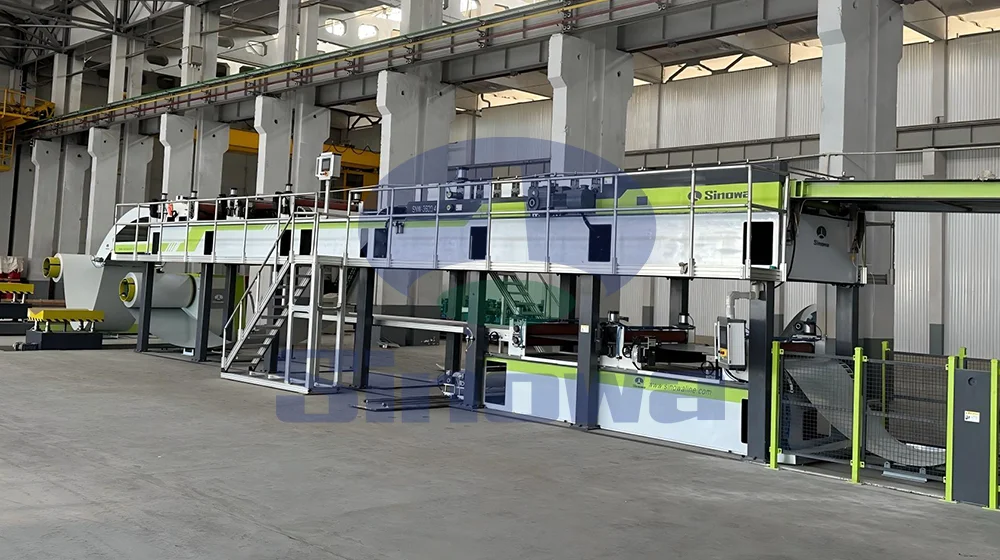
The technical characteristics of China's roof sandwich panel production lines are mainly reflected in high degree of automation, strong adaptability, and excellent production stability. Modern production lines integrate multiple technologies such as mechanical processing, automation control, hydraulic transmission, electronic control, temperature control and pneumatics, realizing the full-process automation from raw material input to finished product output. The core equipment of the production line usually includes uncoiling systems, leveling devices, preheating equipment, foaming systems, laminating conveyors, cutting systems, and stacking systems, each of which is closely coordinated to ensure the smooth progress of the production process. Among them, the uncoiling system is equipped with double-head uncoilers and gas-liquid servo deviation correction systems, which can stably and accurately uncoil the coiled surface materials (such as color steel plates, aluminum plates) and ensure the flatness and alignment of the materials. The leveling device uses power leveling rollers to eliminate the internal stress of the surface materials, making the plates flatter and improving the overall quality of the finished products.
The preheating equipment is an important part of the production line, which preheats the surface materials to a specific temperature according to the type of core material and production process requirements. This not only helps to improve the bonding strength between the surface material and the core material, but also promotes the foaming and curing reaction of the core material. The foaming system is the core of the roof sandwich panel production line, which usually adopts high-pressure foaming machines to accurately mix two-component raw materials (such as polyurethane, phenolic resin) in a certain proportion and evenly distribute them on the bottom surface material. The accuracy of the mixing ratio and the uniformity of the cloth directly affect the thermal insulation performance and structural strength of the sandwich panel. The laminating conveyor, mostly in the form of a double-track laminating conveyor, clamps the upper and lower surface materials and the middle core material, and provides a stable environment for the foaming and curing of the core material. The length of the conveyor is usually designed according to the curing time of the core material, and the temperature of the chain plate can be precisely controlled to ensure that the core material is fully cured. The cutting system adopts automatic tracking cross-cutting saws, which can cut the continuously formed sandwich panels into products of specified lengths according to production needs without stopping the production line, greatly improving production efficiency. The stacking system can automatically stack the cut finished products neatly, reducing manual operation and improving the degree of production automation.
In terms of production processes, China's roof sandwich panel production lines mainly adopt two modes: continuous production and discontinuous production, each of which has its own characteristics and applicable scenarios. Continuous production is the mainstream mode in the current market, which is suitable for enterprises with high output requirements. In this process, the surface materials and core materials are processed at high speed continuously. The core material is continuously injected between the upper and lower surface materials moving at a constant speed, and undergoes a polymerization reaction there to form roof sandwich panels of different specifications. The cutting of the finished products is carried out according to the predetermined length, and the production line does not stop during the cutting process, which has the advantages of high production efficiency, stable product quality and low production cost. Discontinuous production is mainly used for special-shaped products that cannot be produced continuously or for small-batch production. In this process, the surface materials are first formed and cut into the required lengths, then assembled together and sent to the laminating machine, and the core material is injected between the surface materials to form sandwich panels of preset shapes. Although the production efficiency of discontinuous production is lower than that of continuous production, it has strong flexibility and can meet the personalized needs of different customers.
The adaptability of China's roof sandwich panel production lines is also constantly improving, which can produce a variety of roof sandwich panels with different materials and specifications. According to the type of core material, the produced roof sandwich panels mainly include polyurethane (PUR) sandwich panels, phenolic resin (PIR) sandwich panels, rock wool sandwich panels, glass wool sandwich panels and so on. Different core materials give the sandwich panels different performance characteristics. For example, polyurethane and phenolic resin sandwich panels have excellent thermal insulation performance and are widely used in cold storage, workshops and other places with high thermal insulation requirements; rock wool and glass wool sandwich panels have good fire resistance and sound insulation performance, and are suitable for buildings with strict fire safety requirements. The production line can adjust the relevant parameters according to the type of core material, such as adjusting the mixing ratio of the foaming machine, the temperature of the preheating equipment and the speed of the production line, to ensure the quality of the products. In terms of product specifications, the production line can adjust the width and thickness of the sandwich panels according to customer needs. The common width of the panels is 1200mm, and the thickness can be adjusted between 20mm and 120mm. The length can be customized according to the actual needs of the project, which greatly meets the diverse needs of the construction market.
The wide application of roof sandwich panels has further promoted the development of production lines. In China, roof sandwich panels produced by these production lines are widely used in various fields such as industrial buildings, commercial buildings, public buildings and agricultural buildings. In the field of industrial buildings, they are the main roof materials for industrial plants, warehouses and logistics centers. Due to their lightweight properties, they can reduce the load of the building structure, and at the same time, their excellent thermal insulation and sound insulation performance can create a comfortable working environment for the workshop and reduce energy consumption. In commercial buildings, such as supermarkets, shopping malls and exhibition halls, roof sandwich panels are used for roof and interior partition walls, which not only have a beautiful appearance, but also can shorten the construction period and reduce construction costs. In public buildings, such as stadiums, airports and stations, roof sandwich panels are widely used because of their large span, light weight and quick construction, which can meet the requirements of large-space buildings for roof materials. In agricultural buildings, such as greenhouses and farms, roof sandwich panels with good thermal insulation performance can provide a suitable growth environment for crops and livestock, improving the efficiency of agricultural production. In addition, with the development of prefabricated buildings in China, roof sandwich panels, as an important prefabricated component, have been more and more widely used in prefabricated houses and modular buildings, further expanding the market demand for production lines.
The development of China's roof sandwich panel production lines is also facing many opportunities and challenges. On the one hand, with the continuous advancement of national policies such as energy conservation and emission reduction, green and low-carbon development, the demand for environmentally friendly and energy-saving building materials will further increase, which will bring broad market space for the development of roof sandwich panel production lines. At the same time, the acceleration of urbanization and the continuous expansion of infrastructure construction will also drive the steady growth of the market demand for roof sandwich panels. In addition, the development of intelligent manufacturing technology provides new development opportunities for the upgrading of production lines. The integration of technologies such as the Internet of Things, big data and artificial intelligence into the production line can realize real-time monitoring and intelligent adjustment of the production process, further improving production efficiency and product quality. On the other hand, the production line industry also faces challenges such as rising raw material prices, intense market competition and technological innovation pressure. The main raw materials of roof sandwich panels, such as steel plates and chemical raw materials, are greatly affected by the international market price, which increases the production cost of enterprises. In addition, there are a large number of production line manufacturers in the market, and the competition is fierce. Some small and medium-sized enterprises have backward technology and low product quality, which disrupt the market order. At the same time, with the continuous improvement of product performance requirements in the international and domestic markets, enterprises need to continuously increase investment in research and development to improve the technological content of production lines, which puts forward higher requirements for the technological innovation capabilities of enterprises.
Looking forward to the future, the development trend of China's roof sandwich panel production lines will be mainly reflected in the direction of intelligence, environmental protection and high performance. In terms of intelligence, the production line will further integrate intelligent technologies to realize full-process intelligent control from raw material procurement, production processing to finished product delivery. Through the installation of a large number of sensors and monitoring equipment, real-time collection of production process data, and analysis and processing through big data technology, the production line can automatically adjust parameters such as temperature, speed and mixing ratio to ensure the stability and consistency of product quality. At the same time, the application of intelligent robots in the stacking, packaging and other links will further reduce manual intervention and improve production efficiency. In terms of environmental protection, with the strengthening of environmental protection policies, production lines will pay more attention to energy conservation and emission reduction. Enterprises will adopt more environmentally friendly raw materials and production processes, reduce the emission of waste gas, waste water and waste residues, and improve the utilization rate of energy. For example, the use of water-based coatings and environmentally friendly foaming agents can reduce environmental pollution. In terms of high performance, the production line will continue to upgrade to produce roof sandwich panels with higher strength, better thermal insulation performance and longer service life. Through technological innovation, the bonding strength between the surface material and the core material will be further improved, and the product's resistance to wind, corrosion and other properties will be enhanced to meet the needs of more complex construction environments.
In conclusion, China's roof sandwich panel production line industry has achieved considerable development through years of technological accumulation and market cultivation, forming a complete industrial chain and strong production capacity. The production lines have the characteristics of high automation, strong adaptability and stable quality, and can produce a variety of products to meet the needs of different fields. Faced with the opportunities and challenges brought by policy support, market demand and technological innovation, the production line industry will continue to move towards intelligence, environmental protection and high performance. In the future, with the continuous advancement of technology and the continuous expansion of the market, China's roof sandwich panel production lines will not only play an important role in the domestic construction industry, but also make greater contributions to the global building materials industry, showing the strong strength of China's manufacturing industry.
« Roof Sandwich Panel Production Line In China » Update Date: 2026/1/9
- Polyurethane Sandwich Panel Production Line Manufacturer
- Wall Sandwich Panel Production Line Manufacturer
- Polyurethane Foam Production Line Design
- PU Isolation Panel Production Line
- Polyurethane Sandwich Panel Line For Sale
- Polyurethane Insulation Panel Production Line On Sales
- Polyurethane Foam Production Line Factory
- Low Price Continuous PUF Panel Production Line
- PU Foam Production Line Material
- High-tech Continuous PU Sandwich Panel Production Line
- Continuous Sandwich Panel Line Manufacturer
- Sandwich Panel Making Machine Manufacturer
- Polyurethane Sandwich Panel Production Line For Wall
- Insulated Sandwhich Panel Production Line
- Insulated Sandwich Panel Line Price
- Sandwich Panel Manufacturing Line From China
- PU Board Production Line
- Composite Sandwich Panel Production Line On Sales
- Cheap Sandwich Wall Panel Production Line
- Sandwich Panel Line In China
- Links:
- Sandwich Panel Continuous Production Line
- Automatic and Continuous Sandwich Panel Production Line
- Cheap and Low Price Sandwich Panel Production Line
- China Sandwich Panel Production Line Factory
- Color Steel Sandwich Panel Production Line For Cold Storage
- Continuous Composite Foam Sandwich Panel Production Line
- Continuous Production Line For Rockwool and Mineral Wool Sandwich Panels
- Continuous PU Phenolic Insulation Panel Production Line
- Continuous PU PIR Sandwich Panel Production Line
- Continuous PUF PUR Sandwich Panel Production Line
- Continuous Sandwich Panel Production Line For Roof and Wall
- Customized and Design Sandwich Panel Production Line
- Decorative Sandwich Panel Production Line For Glass Wool Boards
- High Quality Sandwich Panel Production Line For Sale
- Polyurethane(PU) Sandwich Panel Production Line
- Sandwich Panel Production Line Manufacturer and Supplier