
Automatic Sandwich Panel Production Line Price
Sinowa is a well-known manufacturer and technical service provider of high-end automatic sandwich panel production line, learn more about automatic sandwich panel production line price, please contact Sinowa's technical engineer, tell us what you need, we will contact you as soon as possible!
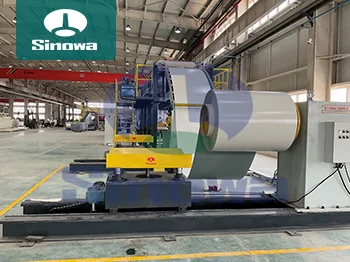
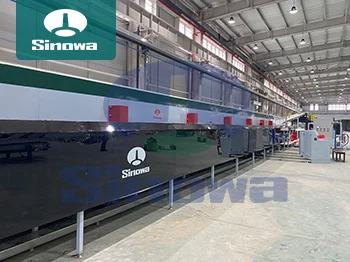
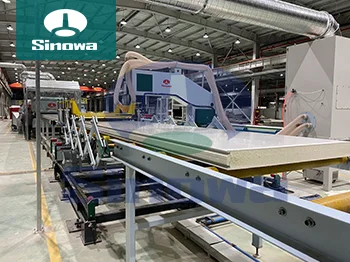
Sinowa is committed to the development and manufacturing of high-end and high-efficiency automatic sandwich panel production line. Our automatic sandwich panel production line are leading the way in efficiency, automatic control, human-computer interaction, environmental protection and energy consumption. Using system integration and bus control technology, it realizes the automatic integrated linkage control of the entire automatic sandwich panel production line, and can achieve remote interactive communication, which has the world-class level and a comprehensive leading high-performance automatic sandwich panel production line in the market.
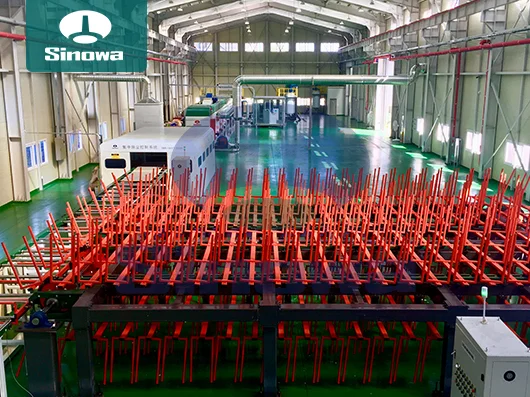
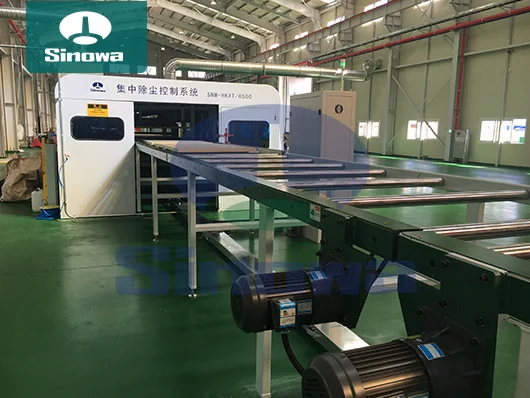
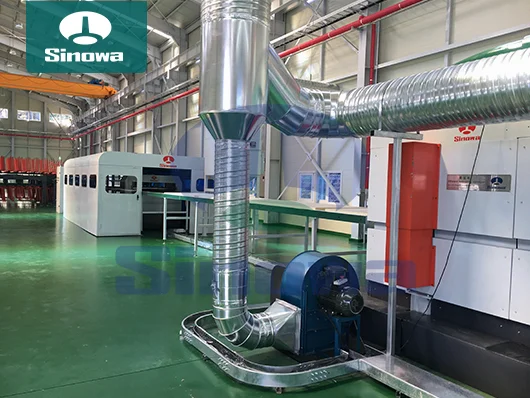
For more than ten years, relying on our innovative manufacturing concept and excellence in quality, reliable and trustworthy service to customers, we cooperate with customers all over the world, exported products to Canada, South Korea, Israel, Australia, the Middle East and other more than 20 countries and regions. contributed to building energy conservation and low-carbon production and have won widespread praise.
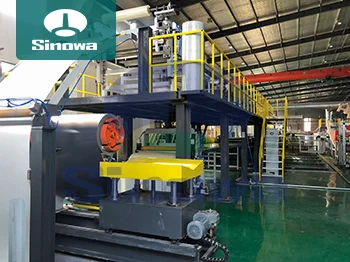
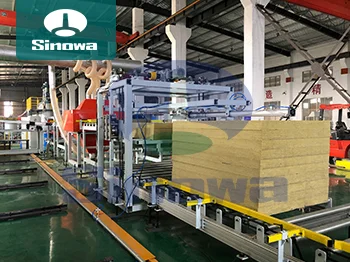
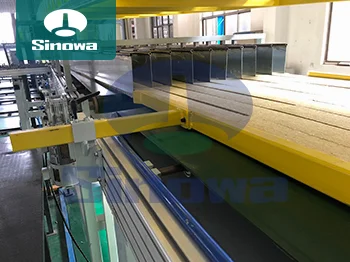
Sinowa has invested outstanding efforts in automatic sandwich panel production line, this is why our products are more efficiency, quality, automatic control technology, environmental protection, energy consumption indicators and the appearance and safety protection are comprehensively leading, some subversive design changes in many major technical points, these major innovations make our products excellent in price/performance and user experience.
In the modern construction and industrial manufacturing fields, the demand for efficient, high-quality, and multi-functional building materials has been steadily rising, and sandwich panels have emerged as a pivotal component due to their excellent thermal insulation, sound insulation, fire resistance, and lightweight properties. These panels, composed of two surface layers and a core material sandwiched in between, are widely used in various scenarios such as industrial workshops, warehouses, cold storage facilities, prefabricated buildings, and curtain walls. The production of these high-performance sandwich panels is no longer reliant on traditional manual or semi-automatic methods; instead, automatic sandwich panel production lines have become the mainstream choice for manufacturers aiming to improve production efficiency, ensure product consistency, and reduce operational costs. The operation and configuration of these automatic lines are closely related to their overall value and operational efficiency, and understanding the key aspects of these production lines is essential for any enterprise looking to invest in or optimize their manufacturing processes.
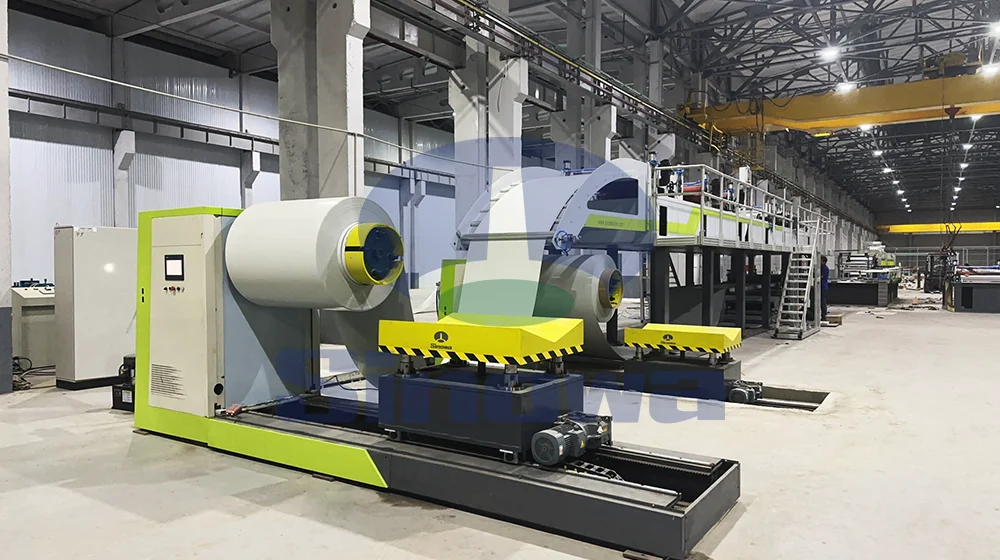
An automatic sandwich panel production line is an integrated system that combines multiple functional modules to achieve a seamless production process from raw material input to finished product output, minimizing manual intervention and maximizing production continuity. Unlike traditional discontinuous production methods that involve intermittent processing and manual handling, modern automatic lines operate in a streamlined manner, enabling the continuous fabrication of sandwich panels with consistent specifications and quality. The core working principle revolves around the precise coordination of various functional units, each designed to perform a specific task in the production chain, ensuring that every stage of the process is carried out with high precision and efficiency. These lines are highly adaptable, capable of producing different types of sandwich panels by adjusting parameters and replacing core components, catering to the diverse needs of different industries and construction projects.
The composition of an automatic sandwich panel production line is complex yet well-coordinated, with each module playing a crucial role in ensuring the smooth operation and high-quality output of the entire system. The initial stage of the production process is the raw material handling module, which is responsible for the preparation and supply of both surface materials and core materials. Surface materials commonly used include galvanized steel, galvalume, aluminum, non-woven fabrics, aluminum foil, and kraft paper, among others. The production line is equipped with multiple automatic uncoiling machines that can handle different types of surface material coils, ensuring a stable and continuous supply. These uncoiling machines are often equipped with tension control systems to prevent surface material deformation during the uncoiling process, which is essential for maintaining the flatness and quality of the final product. Before entering the subsequent processing stages, the surface materials also undergo a cleaning and drying process, which is completely controlled by an intelligent system to ensure a clean and pollution-free surface, providing ideal conditions for the subsequent bonding process.
The core material processing module is another critical component of the automatic production line, as the choice and processing of core materials directly affect the performance of the finished sandwich panels. Common core materials include polyurethane (PU), rock wool, glass wool, and expanded polystyrene (EPS), each with its own unique properties suitable for different application scenarios. The production line is designed to automatically switch between different core materials according to product requirements, with precise measuring devices to ensure quantitative dispensing of the core material. Some advanced lines are also equipped with on-site foaming technology for polyurethane, allowing for on-site foaming and filling, which ensures that the core material is evenly distributed without voids, enhancing the thermal insulation and structural stability of the panels. For fibrous core materials such as rock wool and glass wool, the line is equipped with special feeding and laying devices to ensure uniform thickness and density, preventing uneven distribution that could affect the panel's performance.
The composite and forming module is the heart of the automatic sandwich panel production line, responsible for bonding the surface materials and core material together to form the final sandwich panel. This module includes a glue coating machine, pre-press machine, and hot press machine, each working in coordination to ensure strong bonding and perfect forming. The specially designed double-sided adhesive coating device ensures even distribution of adhesive, which is crucial for maintaining the bonding strength between the surface and core materials. The pre-press machine preliminarily fixes the position relationship between the surface materials and the core material, preventing displacement during the subsequent hot pressing process. The hot press machine adopts zone temperature control technology, with high temperature accuracy and pressure uniformity, ensuring that the adhesive is fully cured and the panel is formed with high flatness and structural integrity. The temperature and pressure parameters of the hot press can be adjusted according to the type of core material and surface material, ensuring optimal bonding results for different product specifications.
After the composite and forming process, the sandwich panel enters the fixed-length cutting module, which is responsible for cutting the continuous panel into specific lengths according to customer requirements. This module is equipped with high-precision servo-controlled flying saws or laser cutting devices, which can achieve extremely high cutting accuracy, ensuring that the length and size of each panel meet the required specifications. The cutting process is fully automated, with the cutting device synchronized with the movement of the continuous panel, ensuring no interruption to the production process and improving overall efficiency. Some advanced lines are also equipped with visual recognition technology to detect any defects or irregularities during the cutting process, allowing for real-time adjustments and reducing waste.
The final stage of the production process is the finished product handling and stacking module, which automates the process of collecting, conveying, and stacking the cut sandwich panels. This module includes a discharge conveyor roller table, cooling bed system, automatic palletizing device, and packaging machine. The cooling bed system cools the newly formed panels to room temperature, ensuring that the structure of the panel is stable and preventing deformation. The automatic palletizing device stacks the panels neatly according to specified quantities and specifications, reducing manual labor and improving stacking efficiency. The packaging machine then wraps the stacked panels with protective film or packaging materials, preventing damage during transportation and storage. This entire process from cutting to packaging is fully automated, minimizing manual intervention and reducing the risk of product damage caused by human error.
One of the most significant advantages of automatic sandwich panel production lines is their high level of automation and intelligence, which brings numerous benefits to manufacturers. The fully automated production process reduces the need for manual labor, lowering labor costs and minimizing the risk of human error. Manual operations are prone to inconsistencies in product quality, such as uneven glue application, inaccurate cutting, or irregular stacking, but automatic lines ensure that every step of the production process is carried out with consistent precision, resulting in uniform product quality. Additionally, automatic lines can operate 24 hours a day without interruption, significantly improving production capacity compared to traditional manual methods. This high efficiency is particularly important for manufacturers facing large-order requirements, as it allows them to meet delivery deadlines and expand their market share.
Another key advantage of automatic sandwich panel production lines is their flexibility and adaptability. Modern lines are designed with a modular structure, allowing manufacturers to adjust the configuration of the line according to their specific production needs. For example, by changing molds and adjusting process parameters, the same line can produce sandwich panels of different thicknesses, widths, and specifications, as well as panels with different core materials and surface materials. This flexibility enables manufacturers to cater to the diverse needs of different customers and industries, from industrial warehouses requiring high-strength panels to cold storage facilities needing excellent thermal insulation. The modular design also makes it easier to maintain and upgrade the production line, as individual modules can be replaced or upgraded without affecting the entire system, extending the service life of the equipment.
Energy conservation and environmental protection are also important features of modern automatic sandwich panel production lines. With the increasing emphasis on green manufacturing and sustainable development, manufacturers are increasingly focusing on reducing energy consumption and environmental pollution. Automatic lines adopt advanced energy-saving technologies, such as energy-saving motors, heat recovery systems, and efficient heating devices, which significantly reduce energy consumption compared to traditional production methods. Additionally, the precise control of raw material usage in automatic lines reduces waste, minimizing the environmental impact of the production process. The use of eco-friendly adhesives and core materials also contributes to the environmental friendliness of the production process, ensuring that the finished panels meet green building standards.
The application scope of automatic sandwich panel production lines is constantly expanding, driven by the growing demand for sandwich panels in various industries. In the construction industry, sandwich panels are widely used for walls, roofs, and partitions in industrial plants, commercial buildings, residential buildings, and prefabricated houses, thanks to their lightweight, high strength, and thermal insulation properties. In the cold chain logistics industry, sandwich panels with excellent thermal insulation performance are used to construct cold storage facilities, refrigerated warehouses, and refrigerated trucks, ensuring the quality and freshness of perishable goods. In the industrial sector, sandwich panels are used for sound insulation and fire protection in factories, power plants, and chemical plants, improving the working environment and ensuring safety. Additionally, sandwich panels are also used in special scenarios such as ship cabins, modular buildings, and clean engineering, further expanding the market demand for automatic production lines.
When considering the investment in an automatic sandwich panel production line, several factors need to be taken into account to ensure that the line meets the specific needs of the enterprise and delivers long-term value. The production capacity of the line is one of the key factors, as it needs to match the enterprise's production scale and market demand. Lines with higher production capacity are suitable for large-scale manufacturers, while smaller lines are more appropriate for small and medium-sized enterprises with lower production requirements. The adaptability of the line is also important, as it should be able to produce different types of sandwich panels to cater to changing market needs. The quality and reliability of the equipment are crucial, as they directly affect the production efficiency and product quality, as well as the maintenance costs of the line. Additionally, the after-sales support and technical service provided for the line are also important considerations, as they ensure that any issues during operation can be resolved quickly, minimizing downtime.
The maintenance and upkeep of automatic sandwich panel production lines are essential to ensure their long-term stable operation and extend their service life. Regular maintenance includes inspecting and cleaning each module, checking for wear and tear of key components, and replacing any damaged parts in a timely manner. The intelligent control system of the line should also be regularly updated and calibrated to ensure its accuracy and reliability. Proper maintenance not only reduces the risk of equipment failure but also improves the efficiency and performance of the line, ensuring consistent product quality. Manufacturers should establish a comprehensive maintenance plan and train professional maintenance personnel to handle routine maintenance and unexpected breakdowns.
With the continuous advancement of technology, automatic sandwich panel production lines are constantly evolving towards higher levels of automation, intelligence, and efficiency. The integration of Internet of Things (IoT) technology and remote monitoring systems allows manufacturers to monitor the operation status of the line in real-time, collect production data, and identify potential issues before they lead to equipment failure. This remote monitoring capability also enables manufacturers to adjust production parameters remotely, improving operational flexibility and reducing the need for on-site personnel. Additionally, the development of artificial intelligence (AI) technology is expected to further optimize the production process, with AI algorithms used to predict maintenance needs, optimize process parameters, and improve production efficiency.
In conclusion, automatic sandwich panel production lines have revolutionized the manufacturing of sandwich panels, offering numerous advantages such as high efficiency, consistent quality, flexibility, and environmental friendliness. These lines are essential for manufacturers looking to meet the growing demand for high-performance sandwich panels in various industries, and their importance will continue to increase as the construction and industrial sectors continue to develop. By understanding the composition, functions, and key factors of automatic sandwich panel production lines, manufacturers can make informed decisions when investing in or optimizing their production equipment, ensuring that they remain competitive in the market. As technology continues to advance, these production lines will become even more advanced and efficient, driving the further development of the sandwich panel industry and contributing to the growth of the global construction and manufacturing sectors.
« Automatic Sandwich Panel Production Line Price » Update Date: 2026/4/20
- PUF Panel Making Machine Design
- Automatic Sandwich Panel Production Line For Sale
- PU Sandwich Panel Making Machine
- Cold Room Sandwich Panel Production Line For Sale
- PUR Sandwich Panel Production Line Price
- High-tech Soundproofing Sandwich Panel Production Line
- Sandwich Panel Foam Making Machine Price
- PU Foam Production Line For Sale
- PU Isolation Panel Production Line Price
- High Efficiency PIR Sandwich Panel Machine
- Customized Foam Core Sandwich Panel Line
- High-tech PU Panel Machine
- PU Sandwich Panel Production Line For Clean Room
- High Efficiency Sandwich Panel Foam Production Line
- PU Insulation Board Production Line From China
- Low Price Polyurethane Sandwich Panel Machinery
- Color Steel Sandwich Panel Production Line Design
- Cheap Polyurethane Insulation Panel Production Line
- Polyurethane Sandwich Panel Machine
- High-end PUF Panel Manufacturing Machine
- Links:
- Sandwich Panel Continuous Production Line
- Automatic and Continuous Sandwich Panel Production Line
- Cheap and Low Price Sandwich Panel Production Line
- China Sandwich Panel Production Line Factory
- Color Steel Sandwich Panel Production Line For Cold Storage
- Continuous Composite Foam Sandwich Panel Production Line
- Continuous Production Line For Rockwool and Mineral Wool Sandwich Panels
- Continuous PU Phenolic Insulation Panel Production Line
- Continuous PU PIR Sandwich Panel Production Line
- Continuous PUF PUR Sandwich Panel Production Line
- Continuous Sandwich Panel Production Line For Roof and Wall
- Customized and Design Sandwich Panel Production Line
- Decorative Sandwich Panel Production Line For Glass Wool Boards
- High Quality Sandwich Panel Production Line For Sale
- Polyurethane(PU) Sandwich Panel Production Line
- Sandwich Panel Production Line Manufacturer and Supplier