
Glass Wool Panel Production Line Supplier
Sinowa is a well-known manufacturer and technical service provider of high-end glass wool panel production line, learn more about glass wool panel production line supplier, please contact Sinowa's technical engineer, tell us what you need, we will contact you as soon as possible!
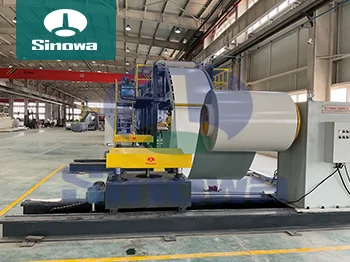
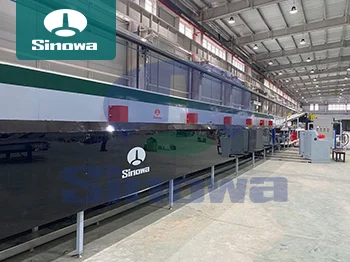
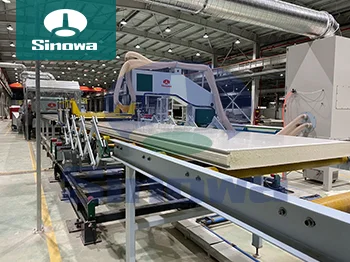
Sinowa is committed to the development and manufacturing of high-end and high-efficiency glass wool panel production line. Our glass wool panel production line are leading the way in efficiency, automatic control, human-computer interaction, environmental protection and energy consumption. Using system integration and bus control technology, it realizes the automatic integrated linkage control of the entire glass wool panel production line, and can achieve remote interactive communication, which has the world-class level and a comprehensive leading high-performance glass wool panel production line in the market.
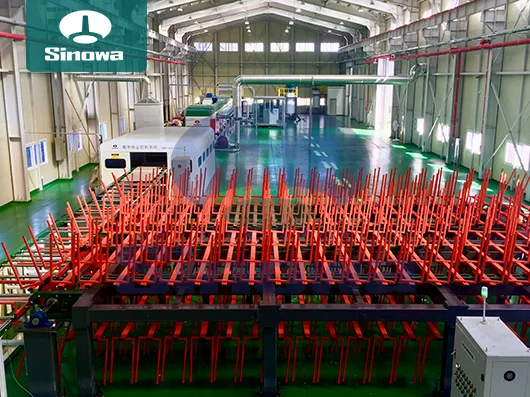
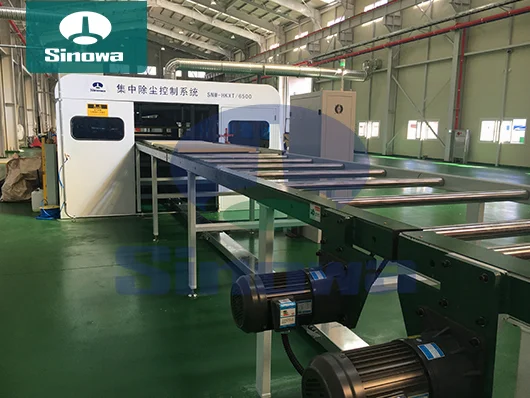
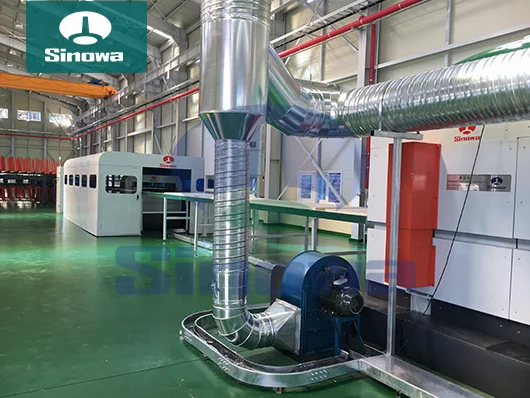
For more than ten years, relying on our innovative manufacturing concept and excellence in quality, reliable and trustworthy service to customers, we cooperate with customers all over the world, exported products to Canada, South Korea, Israel, Australia, the Middle East and other more than 20 countries and regions. contributed to building energy conservation and low-carbon production and have won widespread praise.
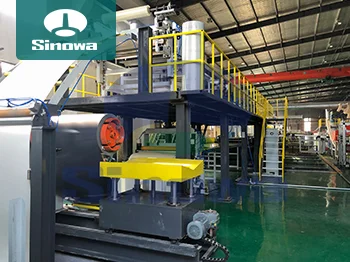
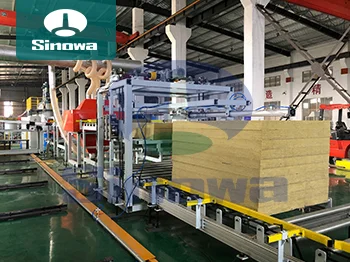
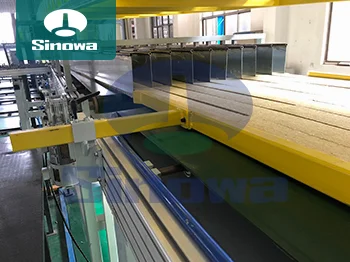
Sinowa has invested outstanding efforts in glass wool panel production line, this is why our products are more efficiency, quality, automatic control technology, environmental protection, energy consumption indicators and the appearance and safety protection are comprehensively leading, some subversive design changes in many major technical points, these major innovations make our products excellent in price/performance and user experience.
The global demand for high-performance thermal and acoustic insulation materials continues to expand as construction, industrial equipment, and HVAC sectors pursue better energy management and comfort control. Glass wool panels stand out among common insulation solutions thanks to their flexible structure, low thermal conductivity, and reliable sound absorption performance, which makes them a preferred choice for a wide range of application scenarios. A glass wool panel production line forms the core foundation for stable, large-scale manufacturing of these finished products, and choosing a capable supplier becomes a critical decision for investors and factory operators. A qualified supplier does not merely assemble machinery parts and deliver equipment; instead, it needs to fully understand the whole production workflow from raw material feeding, melting, fiber forming, binder spraying, curing, trimming to final packaging. Each functional section of the line interacts closely, and minor mismatches in speed, temperature control or air circulation can lead to inconsistent fiber quality, uneven binder distribution, and high rates of defective panels. Experienced suppliers spend years refining equipment configurations to maintain steady running conditions, reduce unexpected downtime, and help new production plants achieve consistent product quality from the very beginning of commissioning. They also consider the space layout of customer workshops, energy consumption characteristics, and maintenance accessibility when designing the line, avoiding rigid, one-size-fits-all designs that fail to match actual production targets.
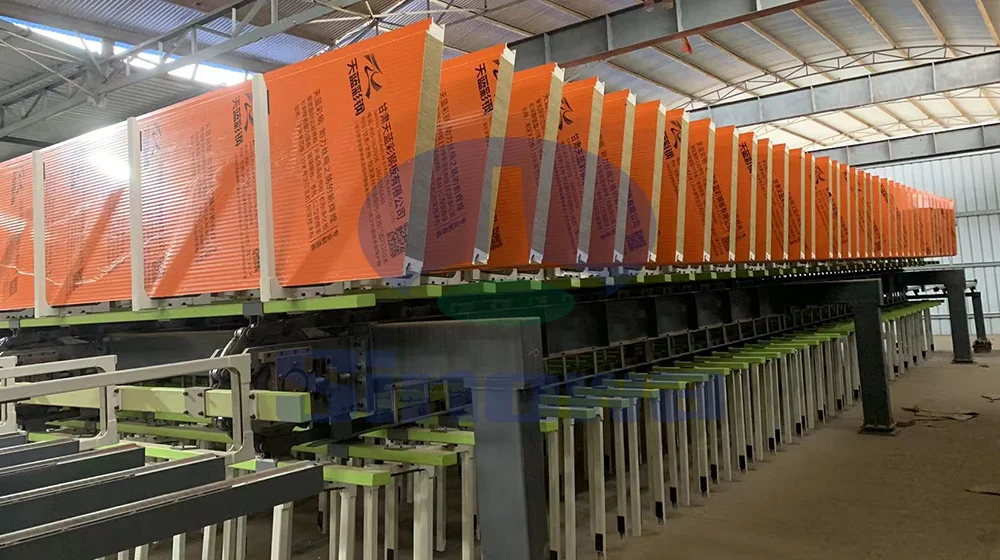
Raw material handling and melting systems represent the starting point that shapes the basic properties of glass wool panels, and reputable glass wool panel production line suppliers devote extensive efforts to optimizing this part of the equipment chain. The system is built to handle carefully proportioned raw materials and send them into the melting furnace under stable feeding rates, keeping the molten glass at a suitable state for subsequent fiberization. Temperature stability inside the melting zone is especially important, as fluctuations can change the viscosity of molten glass and directly affect the thickness and uniformity of glass fibers. Well-designed melting equipment balances output capacity and energy use, helping operators avoid excessive fuel or power waste during long continuous production cycles. Suppliers integrate adjustable control modules into this section so production teams can fine-tune parameters according to different raw material batches and target product specifications. They also add protective structures and monitoring components to reduce wear on key furnace components, extending the service life of high-value core equipment. Beyond hardware design, professional suppliers share practical operational guidance about feeding sequence and routine inspection points, helping on-site operators recognize abnormal signals early and prevent minor issues from evolving into prolonged production stops. This attention to the front-end melting stage lays a solid prerequisite for producing uniform glass wool panels with stable physical performance.
Fiberization and forming sections are where molten glass transforms into fine glass fibers, and this stage determines the softness, density range and structural uniformity of the final glass wool panels. A trusted glass wool panel production line supplier adopts precision-engineered spinning units that draw molten glass streams into countless thin fibers under controlled airflow. The airflow system works in coordination with spinning rotors to disperse fibers evenly inside the forming chamber, preventing fiber agglomeration or uneven stacking that would create weak spots inside finished panels. At this stage, the binder spraying system applies resin binder onto freshly formed glass fibers at a calibrated dosage, ensuring every fiber surface receives an appropriate coating without excessive accumulation that causes brittleness or extra weight. Suppliers design adjustable spray nozzles and closed-loop flow control systems, allowing operators to modify binder dosage to produce glass wool panels with different flexibility and structural strength. The forming conveyor moves the loose fiber mat forward at a synchronized speed, maintaining consistent mat thickness before the mat enters the curing oven. Poor coordination between spinning, spraying and conveying often results in products with inconsistent density across the same batch, so mature suppliers test the matching performance of these modules repeatedly before equipment delivery to guarantee synchronized operation under continuous load.
The curing oven serves as the core thermal processing unit that cures the binder and locks the three-dimensional fiber structure of glass wool panels, and it demands precise temperature and airflow management from the production line supplier. Hot air circulates evenly inside the enclosed oven space to activate the binder and create stable bonding points between intertwined glass fibers, turning the fluffy fiber mat into a self-supporting rigid or semi-rigid panel. Uneven hot air distribution leads to partial under-curing or over-curing; under-cured panels easily deform during later cutting and transportation, while over-cured sections become brittle and lose part of their flexible insulation characteristics. Professional suppliers design internal air duct layouts and circulation fans to eliminate temperature dead zones within the oven chamber, and install distributed temperature sensors to feed real-time data back to the central control interface. Operators can adjust heating power and conveyor speed together to match the required curing cycle for different panel thicknesses and densities. The oven also includes effective heat preservation layers to cut down heat loss outward, lowering the overall energy cost of mass production. Suppliers select durable internal materials that resist long-term exposure to high temperature and volatile substances released during binder curing, reducing cleaning frequency and corrosion-related maintenance work for factory teams.
Post-curing processing covers trimming, slitting, edge finishing and waste recycling, and a thoughtful glass wool panel production line supplier integrates these auxiliary stations seamlessly with the main production flow. After leaving the curing oven, continuous glass wool boards pass through trimming devices that remove irregular edges and cut the wide continuous board into standard widths according to preset dimensions. The cutting mechanism must run smoothly without pulling, compressing or tearing the porous glass wool structure, as rough cutting can create loose edges and reduce the neatness of finished goods. Trimming waste generated in this process is collected through enclosed conveying channels and sent back into the raw material processing loop, supporting efficient material reuse and lowering overall raw material waste rates. Suppliers configure cutting modules with easy parameter adjustment, so production lines can switch between multiple panel sizes without complicated mechanical reconfiguration. They also add dust collection equipment around cutting stations to capture fine glass particles, maintaining a cleaner working environment for on-site staff. All post-processing equipment is synchronized with the main conveyor speed, avoiding bottlenecks where finished panels pile up or move too fast for accurate cutting. Well-organized post-processing sections help factories raise finished product yield and reduce manual intervention in repetitive cutting tasks.
Central control and automation systems act as the nerve center of the whole glass wool panel production line, and capable suppliers build intuitive, reliable control platforms for daily production management. The system collects real-time data from melting, spinning, binder spraying, curing, conveying and cutting units, displaying key operating parameters on a centralized human-machine interface. Authorized operators can monitor production status from one location, adjust process parameters remotely, and view historical production records for batch quality tracking. Automatic alarm functions trigger alerts when parameters drift outside preset safe ranges, giving staff time to respond before large quantities of defective products are made. Suppliers design the control logic to prioritize stable continuous operation, with safety interlock functions that shut down specific units automatically when dangerous conditions arise. The control software is not overly complicated to operate; suppliers provide systematic training for factory technicians to master parameter adjustment, routine system checking and simple troubleshooting. Meanwhile, the system supports flexible production switching, allowing the same line to manufacture glass wool panels with different density, thickness and surface treatment options. A robust automation system reduces reliance on highly experienced on-site workers and keeps production quality more consistent across long operation shifts.
After equipment delivery and installation, after-sales support forms another key part of the value provided by a professional glass wool panel production line supplier, extending far beyond the physical handover of machinery. On-site technical teams arrive to supervise equipment assembly, connect all system modules, and carry out joint commissioning step by step until the whole line runs stably and produces qualified glass wool panels. They guide local operators through startup procedures, daily shutdown sequences, lubrication schedules, and regular inspection checklists for vulnerable wearing parts. Suppliers maintain channels for remote technical consultation, so customers can describe operational anomalies and receive guidance quickly when problems emerge after commissioning. They also maintain a supply chain for spare components of core equipment, shortening waiting time for replacement parts and minimizing production halt duration. As production technology evolves, many suppliers offer feasible upgrade solutions for existing lines, such as enhanced automation modules or improved energy-saving components, helping factories lift production capacity or optimize product performance without replacing the entire line. Good after-sales support builds long-term cooperative relationships, because insulation material manufacturers need stable technical backing to sustain profitable operation year after year.
When evaluating potential partners for a glass wool panel production line, buyers should focus on comprehensive manufacturing capability, system integration experience and long-term service capacity rather than only focusing on single equipment specifications. Each production project carries unique requirements related to planned output range, available workshop space, energy supply conditions and target product portfolio, so the best solution always comes from customized configuration instead of standardized off-the-shelf equipment. A responsible supplier will listen carefully to project goals, assess practical constraints, and propose a matched production layout and process scheme that balances capacity, operating cost and product flexibility. They keep optimizing equipment design based on practical feedback from operating factories, continuously improving stability, energy efficiency and operational friendliness. For insulation product manufacturers, investing in a well-engineered glass wool panel production line from a competent supplier creates a solid foundation to capture market opportunities, deliver consistent insulation products to downstream customers, and maintain stable operation amid changing market demands. The value of the supplier lies in combining mature mechanical design, process know-how, automation technology and reliable after-sales service together, helping investors turn their production plans into a smoothly running and sustainable manufacturing operation.
« Glass Wool Panel Production Line Supplier » Update Date: 2026/10/27
Tags: Glass Wool Panel Production Line , glass wool panel production line, glass wool panel production line manufacturer, glass wool panel production line supplier, glass wool panel production line for sale, customized glass wool panel production line, china glass wool panel production line
- Continuous PU Sandwich Panel Line Manufacturer
- Continuous Sandwich Panel Line For Cold Room
- High-end Cold Room Sandwich Panel Production Line
- Fully Automatic Sandwich Panel Making Machine Design
- High-quality PU Insulation Board Production Line
- Customized Glass Wool Production Line
- Glass Wool Production Line Factory
- PU Isolation Panel Production Line For Sale
- High-tech Sandwich Panel Making Equipment
- PUF Panel Manufacturing Machine On Sales
- High-tech Glass Wool Sandwich Panel Machine
- Glass Wool Sandwich Panel Machine On Sales
- High-tech PU Insulation Board Production Line
- Sandwich Panel Integrated Production Line Factory
- High-quality PIR Insulated Panel Production Line
- PU Sandwich Panel Making Machine For Roof
- PUF Panel Manufacturing Machine Price
- Sandwich Roof Wall Panel Making Machine Supplier
- Custom PIR Sandwich Panel Production Line
- PU Sandwich Panel Line For Roof
- Links:
- Sandwich Panel Continuous Production Line
- Automatic and Continuous Sandwich Panel Production Line
- Cheap and Low Price Sandwich Panel Production Line
- China Sandwich Panel Production Line Factory
- Color Steel Sandwich Panel Production Line For Cold Storage
- Continuous Composite Foam Sandwich Panel Production Line
- Continuous Production Line For Rockwool and Mineral Wool Sandwich Panels
- Continuous PU Phenolic Insulation Panel Production Line
- Continuous PU PIR Sandwich Panel Production Line
- Continuous PUF PUR Sandwich Panel Production Line
- Continuous Sandwich Panel Production Line For Roof and Wall
- Customized and Design Sandwich Panel Production Line
- Decorative Sandwich Panel Production Line For Glass Wool Boards
- High Quality Sandwich Panel Production Line For Sale
- Polyurethane(PU) Sandwich Panel Production Line
- Sandwich Panel Production Line Manufacturer and Supplier
- Sandwich Panel Production Machinery and Equipment