
High Efficiency PU Board Production Line
Sinowa is a well-known manufacturer and technical service provider of high-end pu board production line, learn more about high efficiency pu board production line, please contact Sinowa's technical engineer, tell us what you need, we will contact you as soon as possible!
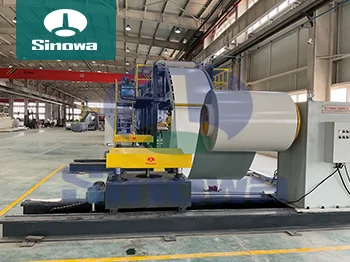
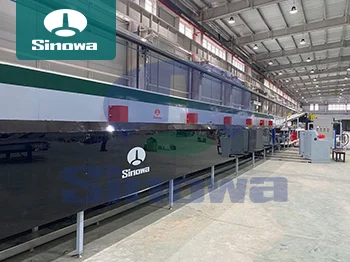
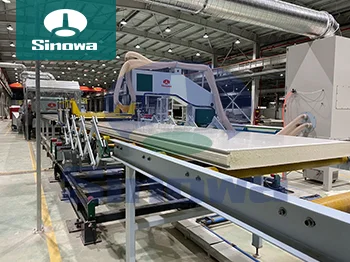
Sinowa is committed to the development and manufacturing of high-end and high-efficiency pu board production line. Our pu board production line are leading the way in efficiency, automatic control, human-computer interaction, environmental protection and energy consumption. Using system integration and bus control technology, it realizes the automatic integrated linkage control of the entire pu board production line, and can achieve remote interactive communication, which has the world-class level and a comprehensive leading high-performance pu board production line in the market.
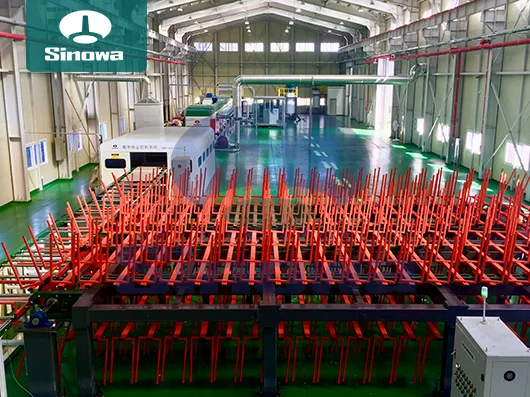
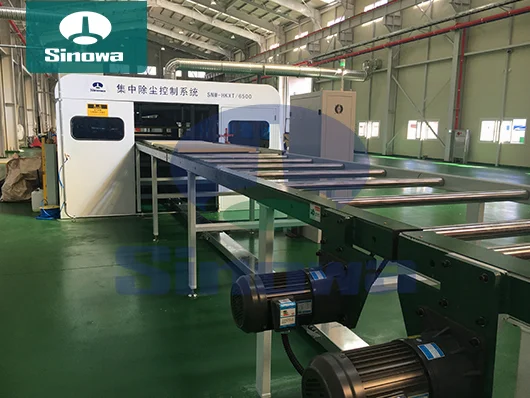
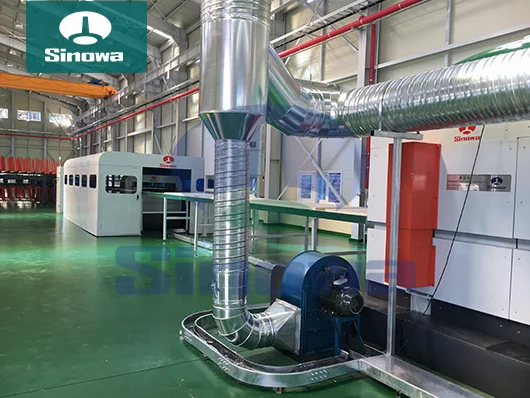
For more than ten years, relying on our innovative manufacturing concept and excellence in quality, reliable and trustworthy service to customers, we cooperate with customers all over the world, exported products to Canada, South Korea, Israel, Australia, the Middle East and other more than 20 countries and regions. contributed to building energy conservation and low-carbon production and have won widespread praise.
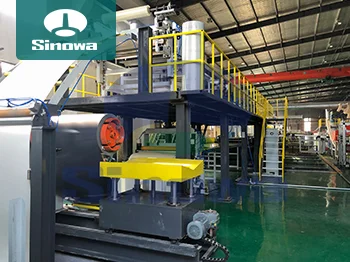
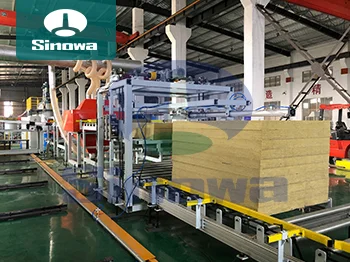
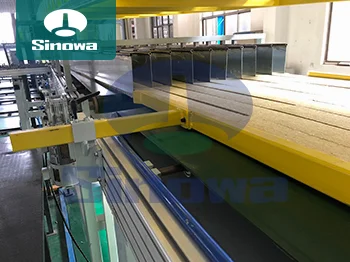
Sinowa has invested outstanding efforts in pu board production line, this is why our products are more efficiency, quality, automatic control technology, environmental protection, energy consumption indicators and the appearance and safety protection are comprehensively leading, some subversive design changes in many major technical points, these major innovations make our products excellent in price/performance and user experience.
The high efficiency PU board production line represents a mature and continuously optimized manufacturing system built to transform raw polyurethane components into finished boards with stable physical performance and consistent surface quality. At the core of this system lies the coordinated matching of feeding, mixing, foaming, forming and curing units, where every functional section is calibrated to reduce material waste and cut down unnecessary waiting time during continuous operation. Raw liquid materials are transported through sealed pipelines under precisely controlled flow conditions, which prevents premature reaction and avoids uneven mixing that would lead to internal defects inside the final boards. Compared with traditional intermittent production setups, this continuous configuration maintains a steady reaction environment, so the density distribution across the whole board remains uniform without obvious deviation between edge and center areas. Operators can adjust the feeding ratio and processing parameters through the central control interface according to the target product specifications, and the system responds quickly to parameter changes without requiring long downtime for resetting. Minor fluctuations in material supply are buffered by built-in stabilizing structures, which protects the continuity of foaming and forming processes. As the basic foundation of efficient production, this integrated layout eliminates many manual transfer links between separate processing stations, lowering the chance of surface scratches, deformation and contamination caused by frequent handling of semi-finished products. The whole working rhythm follows the natural reaction cycle of polyurethane materials, making full use of the foaming and curing time instead of treating these stages as idle periods, and this design logic creates the fundamental condition for lifting overall output capacity while keeping product stability at a reliable level.
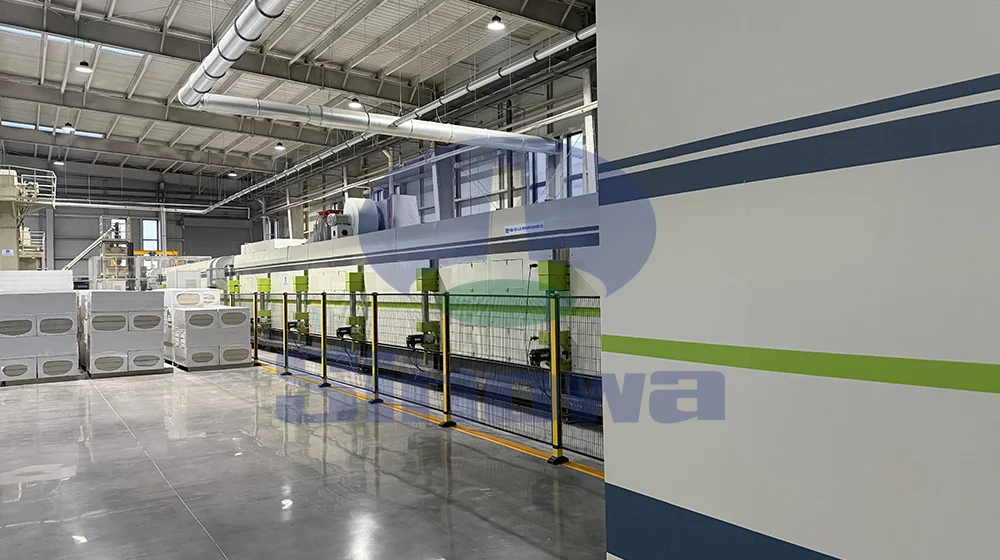
The material mixing station serves as one of the most critical modules within the high efficiency PU board production line, directly deciding the internal structure and long-term performance of the finished boards. Two or more liquid raw materials are delivered into the mixing chamber at controlled flow rates, where high-speed stirring creates a homogeneous mixture in a very short time before the cross-linking reaction begins. The internal structure of the mixing head is refined to avoid dead zones where stagnant material would solidify and block the channel, and automatic cleaning mechanisms work between production batches to keep the mixing state consistent for every cycle. Temperature control wraps around the mixing zone to maintain the proper viscosity of liquid raw materials, because viscosity changes will alter the mixing effect and foaming speed. If the mixture is not blended evenly, some regions will foam too fast while others react slowly, resulting in voids, layered structures and inconsistent mechanical strength inside the board. The flow monitoring modules track the input volume of each component in real time, and subtle deviations trigger automatic fine-tuning instead of stopping the entire line immediately. This real-time adjustment capability greatly reduces the generation of defective semi-finished products. All material contact surfaces adopt wear-resistant and anti-adhesion treatment, which extends the service life of key mixing parts and reduces the frequency of maintenance shutdowns. When the mixed liquid flows out of the mixing head, it has the ideal reaction state to spread evenly on the carrier surface, preparing for the subsequent foaming and forming process without sudden surges or interrupted material supply.
After leaving the mixing station, the mixed liquid material is evenly distributed onto the supporting carrier and enters the continuous forming section of the high efficiency PU board production line, where the initial shape and thickness of the PU board take shape. Upper and lower forming belts move synchronously at a preset speed, clamping the foaming material and limiting its expansion space to lock the target thickness of the board. The tension of the forming belts is kept balanced on both sides to prevent lateral deviation of the board blank during movement, and the surface of the belts is treated to prevent adhesion with the foaming material, so the demolding process happens smoothly without tearing the board surface. The lateral guide structures restrain the expansion width of the foam, ensuring the finished board meets the required dimension range and reducing trimming workload in later procedures. Inside the forming channel, the temperature field is distributed gradually to match the foaming and curing progress of polyurethane. The material first expands rapidly to fill the confined space, then gradually completes the cross-linking reaction and gains structural rigidity. The moving speed of the whole forming section is matched with the reaction rate of the formula used, so the board blank obtains enough supporting strength before it exits the confined forming area. If the line runs too fast, the material will not cure sufficiently and deform after leaving the mold space; if the speed is too slow, production efficiency drops unnecessarily. Operators coordinate the line speed with material formula settings to strike a balanced state, maintaining stable dimensional accuracy for long continuous runs and minimizing the amount of leftover scraps generated during edge trimming.
The curing tunnel extends the reaction process of the PU board blank after it leaves the forming section, allowing the internal chemical reaction to finish steadily and helping the material develop its designed structural characteristics. Unlike rapid surface hardening, the curing process requires a suitable ambient environment so that heat generated by internal foaming can dissipate moderately, avoiding overheating that may cause core scorching, internal cracking or uneven shrinkage. The internal space of the curing tunnel is divided into multiple temperature zones arranged along the material travel direction, and each zone maintains independent temperature adjustment to follow the gradual curing curve of polyurethane foam. Air circulation inside the tunnel keeps the temperature uniform across the upper, lower and side areas of the board stack, preventing partial slow curing caused by local cold spots. The conveying system inside the tunnel continues to move the board blank forward at the same pace as the front forming section, so the whole production flow remains continuous without stacking or pausing. Sufficient curing time helps stabilize the size of the PU board, lowering the possibility of later shrinkage, warping and performance change when the product is stored in ordinary ambient conditions. The design of the curing tunnel also considers heat recycling, collecting part of the waste heat generated during material reaction and reusing it to preheat incoming air, which cuts down extra energy consumption for maintaining working temperature. After passing through the whole curing tunnel, the PU board obtains stable mechanical properties and can move on to cutting and finishing steps without risk of structural damage.
Precision cutting and trimming units are arranged after the curing tunnel in the high efficiency PU board production line, converting continuous long board blanks into finished boards of specified lengths and cleaning irregular edges formed during foaming and forming. The cutting system follows the running speed of the board blank dynamically instead of cutting after stopping the material, which preserves the continuity of the whole production flow and avoids efficiency loss from frequent start-stop actions. Position sensors track the travel distance of the board blank continuously and send trigger signals to the cutting mechanism at the correct moment, ensuring the length tolerance of cut boards stays within a narrow range. Rotary cutting tools run smoothly with low vibration to keep the cut section flat and neat, so extra polishing or secondary processing of the end face is usually unnecessary. Edge trimming devices remove the uneven overflow foam on both sides of the board, and the trimmed scraps are collected through a closed conveying pipeline for centralized processing. The cutting parameters can be modified quickly when switching between different product sizes, and the control system saves common parameter sets to shorten the transition time between production orders. Safety protection structures surround the cutting area to isolate moving blades and flying fragments, while dust and foam debris are extracted by local exhaust equipment to keep the working environment clean. After cutting and trimming, individual PU boards are separated and ready for surface inspection, stacking and packaging, and qualified products maintain consistent appearance and dimension across large production batches.
Online quality inspection modules are integrated into the high efficiency PU board production line to detect visible and implied defects at an early stage, so unqualified products can be sorted out before entering finished product storage. Visual inspection components scan the upper and lower surfaces of each board to spot surface bubbles, cracks, indentations, discoloration and uneven coating marks. Auxiliary detection modules check the thickness of the board at multiple points along the width and length direction, recording any position where thickness deviates beyond the preset range. The inspection system marks problematic boards automatically and sends signals to the sorting station, so staff or automatic sorting equipment can separate these products without disrupting the main conveying line. All inspection data is recorded in the control system, forming production logs that reflect the fluctuation of product quality over time. By analyzing these records, technicians can trace abnormal quality issues back to earlier links such as material mixing ratio, forming speed or curing temperature distribution. This real-time inspection mode is far more efficient than sampling inspection after all products are stacked, because it stops defective items from being packaged and delivered, and reduces the labor cost of rechecking finished goods. The inspection unit works synchronously with the line running speed and does not create bottlenecks for continuous output. It serves as a real-time feedback loop for the whole manufacturing process, helping operators identify subtle changes in production conditions before these changes lead to large batches of defective boards.
Automatic stacking and packaging systems handle the final handling process of qualified PU boards in the high efficiency PU board production line, replacing repeated manual carrying and reducing the risk of surface damage and board breakage. After passing inspection, qualified boards are transported to the stacking station, where positioning mechanisms arrange each board neatly and align the four edges to form stable stacks. The stacking speed matches the output rate of the front cutting and inspection sections, and buffer platforms temporarily hold boards during short interruptions in the packaging process to avoid blocking upstream flow. Adjustable clamping and pressing parts apply gentle pressure on the stacked boards to keep the pile tidy without crushing the foam structure. Once a stack reaches the preset quantity, wrapping equipment wraps protective film around the stack to shield the board surface from dust, moisture and friction during transportation and storage. Labeling modules attach product identification marks on the outside of the packaged stack, carrying production batch information for later tracking. The whole stacking and packaging area occupies a compact space at the end of the line, and it can adapt to different board sizes by adjusting the position of baffles and wrapping parameters. Reducing manual participation in this stage also improves operation consistency, as manual stacking often leads to irregular piles that are prone to tilting during loading. Packaged board stacks are then ready to be moved to storage areas by forklifts or automated transport vehicles, completing the full transformation from liquid raw materials to transportable finished PU board products.
The overall control and maintenance framework of the high efficiency PU board production line supports long-period stable operation and helps users obtain sustained high productivity benefits. A centralized control platform gathers data from feeding, mixing, forming, curing, cutting and inspection units, displaying running speed, temperature, material flow and equipment status on a unified interface. Operators can observe the working state of the whole line at one station and adjust linked parameters conveniently. The system records abnormal alarm information when pressure, temperature or speed exceeds normal ranges, and provides prompt reminders for parts that need routine maintenance. Planned maintenance cycles are set for wearing parts such as mixing heads, cutting blades and forming belts, and regular replacement prevents sudden breakdowns that cause long production stops. Lubrication points on transmission components are designed for easy access, and sealed protective housings reduce foam dust and material residue from entering driving parts. The layout of the whole line reserves enough operation space for daily inspection and part replacement, without requiring large-scale disassembly during routine maintenance. The control logic also includes gradual startup and shutdown procedures to protect key equipment from impact loads, and it supports low-speed test running after formula or configuration adjustment. Properly maintained, this production line can maintain stable output quality for extended continuous runs, and its flexible parameter adjustment capacity allows it to produce PU boards with different structural features to meet diverse application scenarios. The value of this efficient production system lies not only in raising output volume, but also in stabilizing product consistency, controlling material consumption and lowering the comprehensive operation cost of the whole manufacturing process over a long time span.
« High Efficiency PU Board Production Line » Update Date: 2026/10/21
Tags: PU Board Production Line , pu board production line, pu board production line manufacturer, pu board production line supplier, pu board production line for sale, customized pu board production line, china pu board production line
- PIR Sandwich Panel Machine On Sales
- Polyurethane Insulation Panel Production Line For Building
- Fully Automatic Sandwich Panel Making Machine On Sales
- High-quality PUR Sandwich Panel Production Line
- Polyurethane Sandwich Panel Machinery Design
- Continuous Sandwich Panel Production Line Factory
- Custom Sandwich Panel Making Equipment
- High-tech PIR Sandwich Panel Machine
- High Efficiency Foam Sandwich Panel Production Line
- Continuous Sandwich Panel Manufacturing Line Factory
- Continuous PUF Panel Production Line For Cold Storage
- High Efficiency Polyurethane Sandwich Panel Machine
- High-tech Sandwich Panel Integrated Production Line
- Fully Automatic Rock Wool Sandwich Panel Production Line Factory
- Polyurethane Insulation Panel Production Line For Sale
- Composite Sandwich Panel Production Line For Sale
- Continuous PU Sandwich Panel Production Line For Cold Room
- PU Sandwich Panel Production Line In China
- Sandwich Roof Panel Production Line For Sale
- Sandwich Panel Making Machine Supplier
- Links:
- Sandwich Panel Continuous Production Line
- Automatic and Continuous Sandwich Panel Production Line
- Cheap and Low Price Sandwich Panel Production Line
- China Sandwich Panel Production Line Factory
- Color Steel Sandwich Panel Production Line For Cold Storage
- Continuous Composite Foam Sandwich Panel Production Line
- Continuous Production Line For Rockwool and Mineral Wool Sandwich Panels
- Continuous PU Phenolic Insulation Panel Production Line
- Continuous PU PIR Sandwich Panel Production Line
- Continuous PUF PUR Sandwich Panel Production Line
- Continuous Sandwich Panel Production Line For Roof and Wall
- Customized and Design Sandwich Panel Production Line
- Decorative Sandwich Panel Production Line For Glass Wool Boards
- High Quality Sandwich Panel Production Line For Sale
- Polyurethane(PU) Sandwich Panel Production Line
- Sandwich Panel Production Line Manufacturer and Supplier
- Sandwich Panel Production Machinery and Equipment