
PU Sandwich Panel Production Line In China
Sinowa is a well-known manufacturer and technical service provider of high-end pu sandwich panel production line, learn more about pu sandwich panel production line in china, please contact Sinowa's technical engineer, tell us what you need, we will contact you as soon as possible!
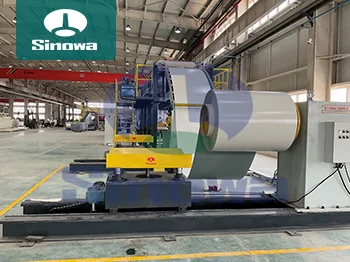
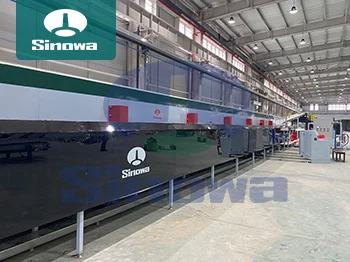
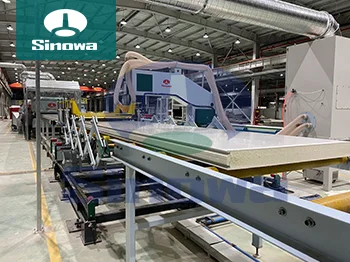
Sinowa is committed to the development and manufacturing of high-end and high-efficiency pu sandwich panel production line. Our pu sandwich panel production line are leading the way in efficiency, automatic control, human-computer interaction, environmental protection and energy consumption. Using system integration and bus control technology, it realizes the automatic integrated linkage control of the entire pu sandwich panel production line, and can achieve remote interactive communication, which has the world-class level and a comprehensive leading high-performance pu sandwich panel production line in the market.
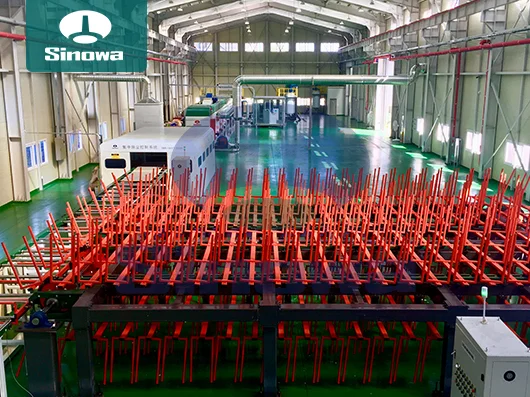
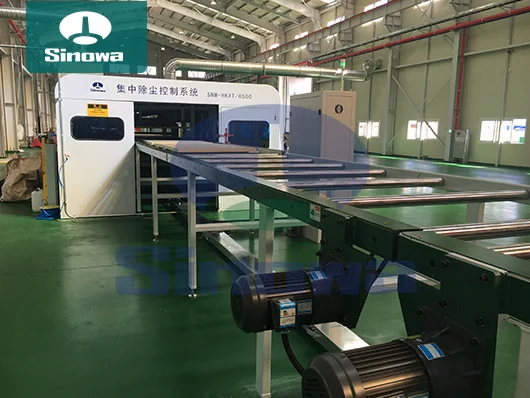
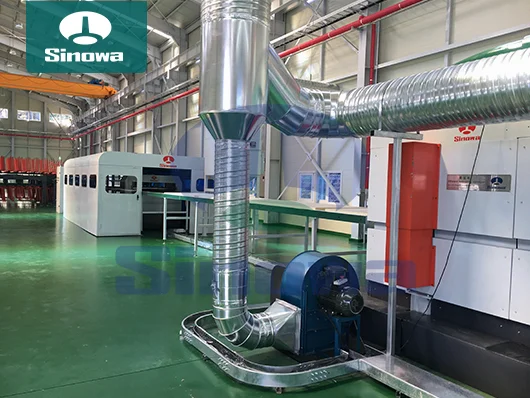
For more than ten years, relying on our innovative manufacturing concept and excellence in quality, reliable and trustworthy service to customers, we cooperate with customers all over the world, exported products to Canada, South Korea, Israel, Australia, the Middle East and other more than 20 countries and regions. contributed to building energy conservation and low-carbon production and have won widespread praise.
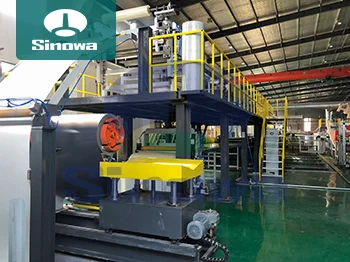
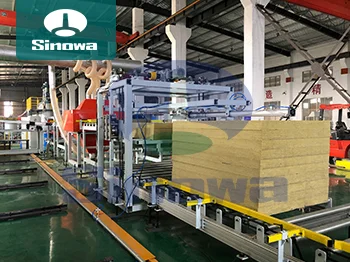
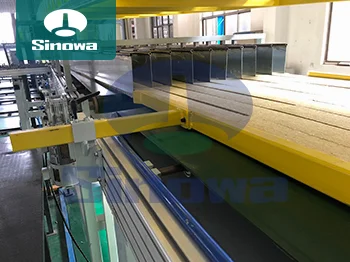
Sinowa has invested outstanding efforts in pu sandwich panel production line, this is why our products are more efficiency, quality, automatic control technology, environmental protection, energy consumption indicators and the appearance and safety protection are comprehensively leading, some subversive design changes in many major technical points, these major innovations make our products excellent in price/performance and user experience.
In recent years, China has emerged as a global leader in the production of PU (polyurethane) sandwich panels, with its production lines evolving rapidly to meet the growing demand for high-performance, energy-efficient building materials. The development of PU sandwich panel production lines in China is driven by a combination of policy guidance, technological innovation, market expansion, and industrial upgrading, making the country a key player in both domestic and international markets. These production lines integrate advanced mechanical equipment, intelligent control systems, and environmentally friendly processes, ensuring the efficient and high-quality production of PU sandwich panels that are widely used in various fields such as industrial workshops, cold chain logistics, prefabricated buildings, and data centers. As the industry continues to mature, Chinese production lines are not only improving in terms of automation and productivity but also focusing on green development and product performance optimization, laying a solid foundation for the sustainable growth of the global PU sandwich panel industry.
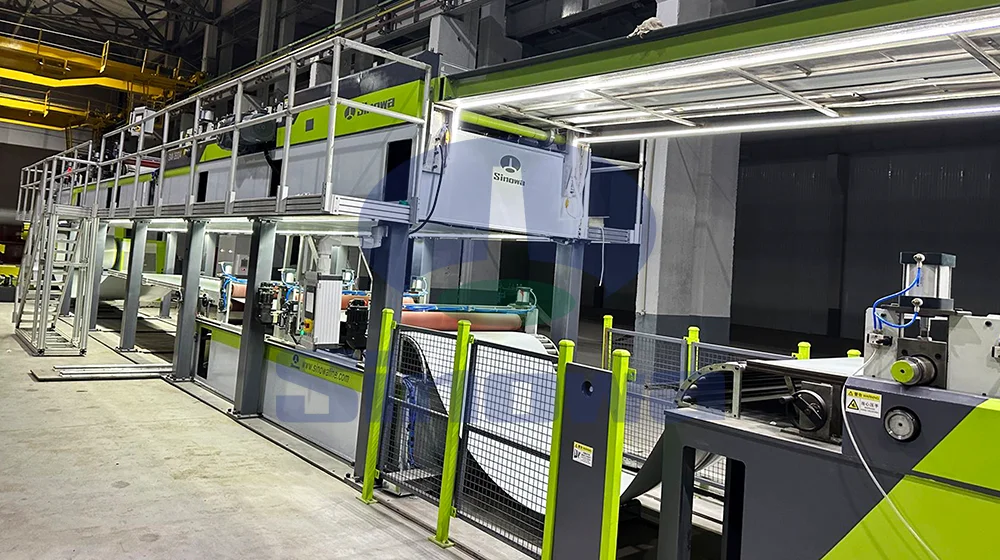
The PU sandwich panel production line in China is a complex and integrated system that covers multiple links from raw material preparation to finished product packaging, with each process strictly controlled to ensure product quality and stability. The entire production process can be divided into several core stages, including raw material processing, core material foaming, panel compounding, shaping, cutting, and finishing. Each stage is equipped with specialized equipment and technologies, and the coordination between different links is crucial to the smooth operation of the entire production line. Unlike traditional production methods that rely heavily on manual operations, modern PU sandwich panel production lines in China have achieved a high degree of automation, reducing human errors and improving production efficiency while ensuring the consistency of product specifications and performance.
Raw material preparation is the first and fundamental step in the production of PU sandwich panels, and the quality of raw materials directly affects the performance of the final products. The main raw materials required for PU sandwich panels include surface materials, core materials, and auxiliary materials. Surface materials commonly used in Chinese production lines include color steel plates, galvanized steel plates, and aluminum alloy plates, which are selected based on the specific application scenarios of the panels. These surface materials need to go through processes such as uncoiling, leveling, and preheating before entering the compounding stage. The uncoiling process is completed by an automatic uncoiler, which uses pneumatic brakes to control tension and ensure the smooth unfolding of the coil, avoiding deviations that may affect subsequent processing accuracy. The preheating process is carried out in a dedicated preheating tunnel, where the surface materials are heated to a suitable temperature to enhance the adhesion between the surface and the core material, ensuring the structural stability of the composite panel.
The core material of PU sandwich panels is polyurethane foam, which is formed by the chemical reaction of isocyanate and polyol, two key raw materials. In Chinese production lines, the mixing and foaming of these two raw materials are completed by high-precision foaming machines, which can accurately control the ratio of the two components to ensure the uniformity and stability of the foam. The foaming process is a critical link that determines the thermal insulation performance, density, and strength of the PU sandwich panel. Modern production lines in China adopt online automatic mixing and pouring technology, which can complete the proportioning and mixing process of raw materials online in one go and adjust the parameters according to the ambient temperature to adapt to different production conditions. During the foaming process, the temperature, pressure, and mixing speed are strictly controlled by an intelligent system to ensure that the polyurethane foam expands fully and adheres tightly to the surface materials, forming a solid and integrated composite structure.
After the foaming of the core material, the surface materials and the foam core enter the compounding and shaping stage, which is completed by a double-track continuous laminating machine. This equipment uses a combination of heating and pressure to bond the surface materials and the foam core firmly together, while controlling the thickness and flatness of the panel. The double-track machine is equipped with a precise temperature control system that can adjust the heating temperature in sections according to the characteristics of the raw materials, ensuring that the polyurethane foam is fully cured during the conveying process. The pressure of the laminating machine is also adjustable, which can be optimized according to the thickness and type of the panel to avoid problems such as uneven thickness or poor adhesion. During the conveying process of the double-track machine, the panel is supported by high-precision chain plates, which ensure the flatness of the panel surface and the consistency of the thickness. The length of the double-track machine is usually designed according to the production speed and curing time of the foam, ensuring that the polyurethane foam can complete the curing reaction and form a stable structure before entering the next stage.
After the compounding and shaping, the PU sandwich panel enters the cutting stage, which is completed by a servo-driven CNC flying saw. This equipment uses a visual recognition positioning system to accurately capture the length signal of the panel and cut it according to the preset specifications. The cutting accuracy of the CNC flying saw can reach within ±0.5 mm, ensuring that the length of each panel meets the requirements of the application scenario. The cutting process is fully automated, and the equipment can automatically adjust the cutting speed according to the production speed of the line, ensuring the continuity of the production process. After cutting, the panels are conveyed to the finishing stage, where they are inspected, trimmed, and cleaned to remove any burrs or defects on the surface. Some advanced production lines also add automatic stacking and packaging equipment, which can stack the finished panels neatly according to the specified height and package them, reducing manual labor and improving the efficiency of product storage and transportation.
The development of PU sandwich panel production lines in China has been greatly promoted by technological innovation, which has continuously improved the automation level, production efficiency, and product quality of the lines. In recent years, with the rapid development of intelligent manufacturing technology, more and more production lines have adopted PLC control systems, industrial robots, and Internet of Things (IoT) technology to realize the intelligent management and control of the entire production process. The PLC control system can integrate the operation parameters of all equipment in the production line, allowing operators to set and adjust parameters such as production speed, panel thickness, and foaming temperature through a touch screen, realizing real-time monitoring and adjustment of the production process. Industrial robots are widely used in links such as stacking, packaging, and loading and unloading, replacing manual operations and improving production efficiency while reducing labor costs and safety risks.
IoT technology has also been integrated into modern PU sandwich panel production lines in China, enabling real-time data collection and analysis of the production process. Sensors installed on various equipment can collect data such as temperature, pressure, and production speed, and transmit the data to a central control system for analysis and processing. This allows operators to timely find and solve potential problems in the production process, ensuring the stable operation of the production line. In addition, some advanced production lines have introduced artificial intelligence (AI) technology for quality inspection, using AI vision systems to detect surface defects, thickness deviations, and other problems of the panels, reducing the error rate of manual inspection and improving the quality of finished products. The application of these intelligent technologies has not only improved the production efficiency and product quality of PU sandwich panel production lines in China but also laid the foundation for the digital transformation of the industry.
The development of PU sandwich panel production lines in China is also closely related to the country's policy guidance and market demand. In recent years, with the deepening of the "dual carbon" strategy and the upgrading of building energy efficiency standards, the demand for energy-efficient and environmentally friendly building materials has been increasing, which has strongly driven the development of the PU sandwich panel industry. Policies such as the "General Code for Building Energy Conservation and Renewable Energy Utilization" have raised the performance threshold for thermal insulation materials, making PU sandwich panels with ultra-low thermal conductivity more competitive than traditional thermal insulation materials. At the same time, the government's support for prefabricated buildings, cold chain logistics, and data center construction has further expanded the application scope of PU sandwich panels, driving the expansion of production capacity and the upgrading of production lines.
From the perspective of regional distribution, the production lines of PU sandwich panels in China are mainly concentrated in the East China region, which accounts for more than 40% of the country's total production capacity. This is mainly due to the high concentration of manufacturing bases, dense cold chain logistics parks, and strong demand for prefabricated buildings in the Yangtze River Delta region. Jiangsu, Zhejiang, and Shandong provinces have formed a complete industrial chain cluster, covering raw material supply, panel production, engineering installation, and recycling. The North China region is the second-largest production base, benefiting from the industrial upgrading projects under the Beijing-Tianjin-Hebei coordinated development and the new demand brought by the construction of Xiong'an New Area. It is worth noting that with the accelerated implementation of the "East-West Data Center Layout Project", the demand for PU sandwich panels in the western region has grown rapidly, and new production lines are constantly being built in Sichuan, Shaanxi, Inner Mongolia, and other places, reflecting the trend of industrial transfer to cost depressions and domestic demand markets.
The application fields of PU sandwich panels produced by Chinese production lines are becoming increasingly diversified, covering industrial workshops, cold chain logistics, prefabricated buildings, data centers, agricultural greenhouses, and other fields. Industrial workshops are still the largest application field, accounting for nearly half of the total consumption, mainly used in clean workshops, food and pharmaceutical factories, and electronic manufacturing workshops that have strict requirements on cleanliness and fire prevention. The cold chain logistics sector is growing most rapidly, driven by the explosion of fresh e-commerce and the construction of national key cold chain logistics bases. The walls and roofs of cold storage have an urgent demand for panels with low thermal conductivity and high airtightness, making PU sandwich panels the preferred material. The prefabricated building field is also developing rapidly, with the support of national policies, PU sandwich panels are widely used in public buildings such as affordable housing, schools, and hospitals, thanks to their advantages of quick installation and short construction period.
In terms of exports, the PU sandwich panels produced by Chinese production lines are increasingly popular in the international market, with exports increasing at a double-digit rate for three consecutive years. These products are mainly exported to Southeast Asia, the Middle East, and Africa, driven by the infrastructure construction of countries along the "Belt and Road". The competitive advantage of Chinese PU sandwich panels lies not only in their high quality and reasonable performance but also in the advanced production lines that can meet the customized needs of different countries and regions. Chinese production lines can flexibly adjust product specifications, such as panel width, thickness, and surface material, according to the needs of overseas customers, adapting to the different climate conditions and application scenarios of various countries.
While the PU sandwich panel production lines in China have achieved remarkable development, they also face some challenges. The core raw materials of PU sandwich panels, such as isocyanate and polyol, account for nearly 70% of the production cost, and their prices are easily affected by fluctuations in the international chemical market, bringing certain pressure to cost control. In addition, the problem of product homogenization still exists in the industry, with more than 60% of production capacity concentrated in the mid-to-low-end market, and the R&D investment intensity is relatively low, which restricts the development of high-end products. Environmental protection pressure is also increasing. With the implementation of stricter environmental protection policies, some production lines that do not have complete waste gas treatment facilities need to be renovated, increasing the environmental protection cost of enterprises.
To address these challenges, Chinese PU sandwich panel production line manufacturers are actively taking measures to promote industrial upgrading. On the one hand, they are increasing R&D investment to develop new raw materials and production technologies, improving product performance and reducing production costs. For example, the development of non-fluorinated foaming agents has not only met environmental protection requirements but also improved the thermal insulation performance of products. On the other hand, manufacturers are accelerating the integration of intelligent manufacturing and green production, promoting the digital transformation of production lines and improving energy utilization efficiency. The heat recovery utilization rate of some advanced production lines has reached more than 60%, and the waste recycling rate has exceeded 90%, realizing the sustainable development of the production process.
Looking to the future, the PU sandwich panel production lines in China will continue to develop in the direction of intelligence, greenization, and high-endization. With the continuous advancement of the "dual carbon" strategy and the expansion of emerging application scenarios, the demand for high-performance PU sandwich panels will continue to grow, driving the further upgrading of production lines. Intelligent technologies such as AI, IoT, and big data will be more widely applied in production lines, realizing full-process intelligent control and management, and further improving production efficiency and product quality. Green production will become the core competitiveness of manufacturers, and more environmentally friendly processes and raw materials will be adopted to reduce the environmental impact of production. At the same time, the industrial chain will be further improved, and the coordination between upstream raw material suppliers, production line manufacturers, and downstream application enterprises will be strengthened, forming a more integrated industrial ecosystem.
In addition, the international competitiveness of Chinese PU sandwich panel production lines will continue to improve. With the continuous optimization of product quality and the expansion of customized services, Chinese production lines will not only meet the domestic market demand but also occupy a larger share in the international market. The export of production line equipment and technology will also become a new growth point, promoting the global promotion and application of Chinese PU sandwich panel production technology. In the process of development, Chinese manufacturers will also actively learn from international advanced experience, strengthen technological exchanges and cooperation with foreign enterprises, and promote the sustainable and healthy development of the global PU sandwich panel industry.
In conclusion, the PU sandwich panel production lines in China have experienced rapid development in recent years, driven by policy, technology, and market demand, forming a complete industrial chain and a mature production system. These production lines have the advantages of high automation, high efficiency, and high quality, and can produce PU sandwich panels that meet the needs of various application scenarios. Although there are still some challenges such as raw material price fluctuations and product homogenization, the future development prospects are broad. With the continuous promotion of technological innovation and industrial upgrading, Chinese PU sandwich panel production lines will surely play a more important role in the global building materials industry, contributing to the development of energy conservation and environmental protection and the realization of the "dual carbon" goal.
« PU Sandwich Panel Production Line In China » Update Date: 2026/4/16
Tags: Fully Automatic PU Sandwich Panel Production Line , Decorative PU Sandwich Panel Production Line , Continuous PU Sandwich Panel Production Line , PU Sandwich Panel Production Line ,
- High Efficiency Sandwich Wall Panel Production Line
- High-end Decorative PU Sandwich Panel Production Line
- Sandwich Panel Foaming Production Line
- Polyurethane Sandwich Panel Line Price
- High-quality Foam Sandwich Panel Machine
- High-end Isolation Sandwich Panel Production Line
- Polyurethane Sandwich Panel Line For Building
- Polyurethane Sandwich Panel Machinery On Sales
- Composite Panel Production Line Manufacturer
- High-quality Glass Wool Production Line
- High Efficiency Wall Sandwich Panel Production Line
- Polyurethane Sandwich Panel Manufacturing Plant
- Highly Intelligent Polyurethane Sandwich Panel Line
- Continuous PU Sandwich Panel Production Line On Sales
- Custom Decorative PU Sandwich Panel Production Line
- Glass Wool Sandwich Panel Machine Supplier
- Glass Wool Sandwich Panel Line For Roof
- PU Sandwich Panel Line For Sale
- Cheap PU Isolation Panel Production Line
- High-quality Continuous Sandwich Panel Manufacturing Line
- Links:
- Sandwich Panel Continuous Production Line
- Automatic and Continuous Sandwich Panel Production Line
- Cheap and Low Price Sandwich Panel Production Line
- China Sandwich Panel Production Line Factory
- Color Steel Sandwich Panel Production Line For Cold Storage
- Continuous Composite Foam Sandwich Panel Production Line
- Continuous Production Line For Rockwool and Mineral Wool Sandwich Panels
- Continuous PU Phenolic Insulation Panel Production Line
- Continuous PU PIR Sandwich Panel Production Line
- Continuous PUF PUR Sandwich Panel Production Line
- Continuous Sandwich Panel Production Line For Roof and Wall
- Customized and Design Sandwich Panel Production Line
- Decorative Sandwich Panel Production Line For Glass Wool Boards
- High Quality Sandwich Panel Production Line For Sale
- Polyurethane(PU) Sandwich Panel Production Line
- Sandwich Panel Production Line Manufacturer and Supplier