
Mineral Wool Sandwich Panel Production Line For Construction
Sinowa is a well-known manufacturer and technical service provider of high-end mineral wool sandwich panel production line, learn more about mineral wool sandwich panel production line for construction, please contact Sinowa's technical engineer, tell us what you need, we will contact you as soon as possible!
Sinowa is committed to the development and manufacturing of high-end and high-efficiency mineral wool sandwich panel production line. Our mineral wool sandwich panel production line are leading the way in efficiency, automatic control, human-computer interaction, environmental protection and energy consumption. Using system integration and bus control technology, it realizes the automatic integrated linkage control of the entire mineral wool sandwich panel production line, and can achieve remote interactive communication, which has the world-class level and a comprehensive leading high-performance mineral wool sandwich panel production line in the market.
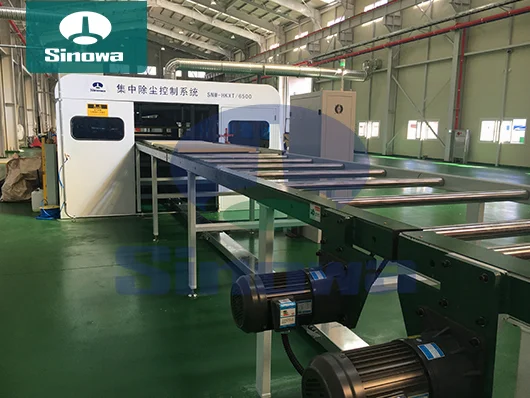
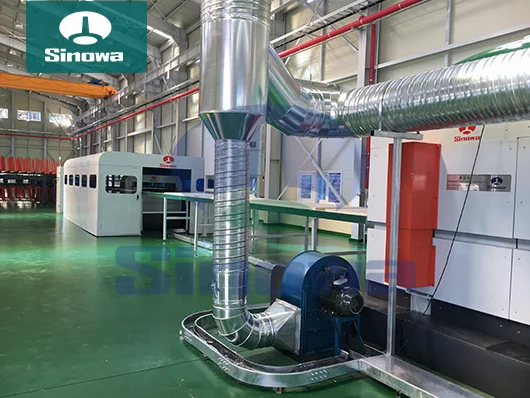
For more than ten years, relying on our innovative manufacturing concept and excellence in quality, reliable and trustworthy service to customers, we cooperate with customers all over the world, exported products to Canada, South Korea, Israel, Australia, the Middle East and other more than 20 countries and regions. contributed to building energy conservation and low-carbon production and have won widespread praise.
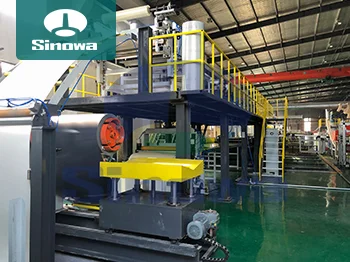
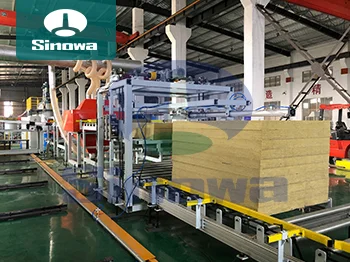
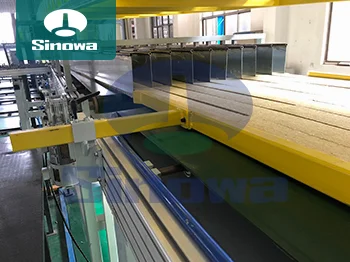
Sinowa has invested outstanding efforts in mineral wool sandwich panel production line, this is why our products are more efficiency, quality, automatic control technology, environmental protection, energy consumption indicators and the appearance and safety protection are comprehensively leading, some subversive design changes in many major technical points, these major innovations make our products excellent in price/performance and user experience.
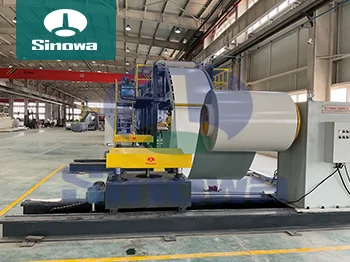
Modern construction continues to seek composite materials that balance structural performance, thermal management and fire safety, and the mineral wool sandwich panel production line has emerged as a reliable manufacturing solution to meet those demands. This continuous production system integrates multiple mechanical and automated stations to transform raw metal coil and mineral wool slabs into finished composite panels used for building walls, roofs and partition assemblies. Unlike discrete batch manufacturing setups, this line maintains a steady flow of materials, reducing interruptions and human error that can compromise panel consistency. The production workflow starts with metal sheet unwinding and roll forming, where flat metal coils are shaped into the required profile to create the outer skins of the sandwich panel. At the same time, mineral wool core slabs are fed into the system, trimmed and oriented so fibers align to deliver optimal mechanical strength and thermal resistance. Adhesive is applied evenly onto the inner face of the formed metal skins, preparing the surfaces to bond securely with the mineral wool core. Every parameter across material feeding, profiling and glue application is monitored in real time to avoid uneven coating, misalignment or dimensional deviation. As construction projects move toward faster site assembly and controlled quality, this automated production approach shifts much of the fabrication work from the building site to the factory floor, lowering on-site labor and waste. Factory-made panels also simplify logistics planning, as components are produced to predictable dimensions that fit modular building layouts. The combined advantages of automated control and continuous operation make the mineral wool sandwich panel line a practical foundation for modern construction material manufacturing.
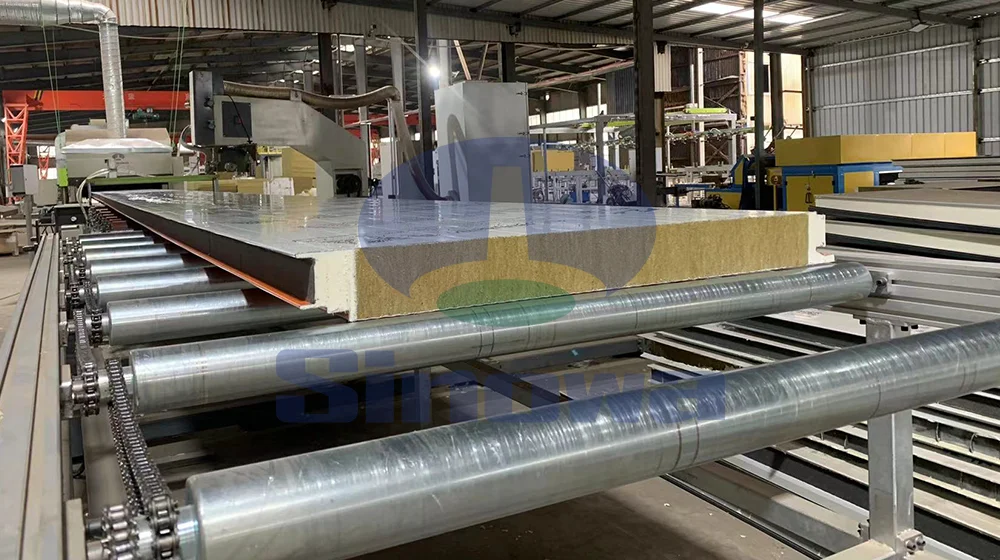
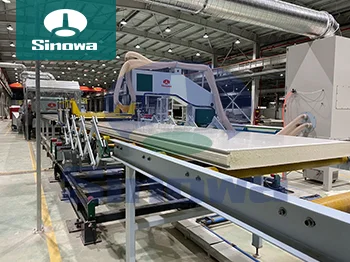
The mechanical layout of the mineral wool sandwich panel production line is built around interconnected functional modules, each performing a defined task while synchronizing speed and timing with adjacent stations. The unwinding station holds large metal coils and feeds sheet material steadily into the roll forming unit, where a series of shaped rollers gradually bend the flat metal into corrugated or flat profiles according to target panel designs. Profiling can be adjusted to create wall panels with shallow profiles or roof panels with deeper rib structures that improve water shedding and load-bearing capacity. Parallel to the metal processing path, the mineral wool handling subsystem receives bulk mineral wool slabs, cuts them to match panel width and rotates the slabs to orient fibers perpendicular to the panel face. This fiber orientation step is critical because it improves compressive performance and bond stability between core and metal skins. Once both metal skins and mineral wool core are ready, the adhesive application unit distributes bonding compound across the inner metal surfaces with carefully controlled thickness. Too little adhesive creates weak bonding points, while excess glue may squeeze out and affect surface flatness or add unnecessary material consumption. After gluing, the mineral wool core is positioned between the two metal facings, and the combined assembly enters the laminating press. The press applies consistent pressure to bring all layers into tight contact and eliminate internal gaps. All these modules communicate through a central control system that matches conveyor speeds, so metal sheets, core slabs and adhesive application advance in perfect coordination without jamming or material overlap. This modular and synchronized architecture gives the line flexibility to switch between panel profiles and thicknesses to suit different building applications.
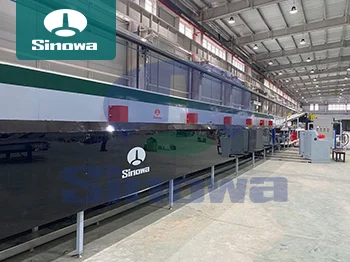
Lamination and curing represent the core forming phase inside the mineral wool sandwich panel production line, where separate raw materials become a unified composite panel. After metal skins and mineral wool core are stacked together in the laminating section, continuous mechanical pressure holds the assembly firmly while the material moves into the enclosed curing tunnel. Temperature within the curing zone is kept uniform across the panel cross-section, supporting stable chemical reaction of the adhesive and forming durable bonds between inorganic mineral wool and metal surfaces. Uneven temperature distribution would cause partial curing, leading to delamination, warping or inconsistent adhesion across the finished panel. The conveyor speed through the curing tunnel is calibrated to match adhesive reaction characteristics, ensuring every segment of the continuous panel receives identical curing time. During this stage, internal stress within the composite structure gradually stabilizes, reducing the risk of deformation after panels leave the production line. Pressure control is equally important; insufficient pressure leaves tiny voids between layers, while excessive pressure may compress the mineral wool core and degrade its insulating performance. Operators monitor real-time data from sensors placed along the curing tunnel to adjust operating conditions when ambient workshop conditions change. Once the composite strip exits the curing section, the bond between metal and mineral wool is fully developed, and the panel has acquired its integrated structural properties. This phase turns loose raw materials into a solid composite product that can withstand handling, transportation and installation loads typical in building construction.
After curing, the continuous long strip of composite material enters trimming and cutting stations, where the production line shapes semi-finished stock into individual panels of defined lengths and clean edge profiles. Edge trimming removes irregular side sections created during lamination, ensuring uniform panel width and straight edges for seamless assembly on building sites. Precision cutting tools separate the endless composite strip into finished panels at preset lengths, with position sensors maintaining dimensional accuracy across every cut. The cutting operation runs inline with the continuous production flow, so there is no need to stop the whole line for manual measurement or sawing. Some configurations also include edge grooving or notching units to create interlocking joint structures that simplify panel connection during wall and roof installation. These interlocking profiles reduce gaps between adjacent panels and support easier sealing at joints, which helps maintain thermal and acoustic performance in completed building envelopes. After cutting and trimming, panels move through inspection stations where surface quality, flatness and edge integrity are checked automatically. Any panels with visible defects are flagged and separated before stacking. This inline finishing sequence eliminates many secondary processing steps that would otherwise take place off-line, saving time and reducing damage risk from repeated handling. By delivering panels with ready-to-install edges and precise dimensions, the production line reduces fitting work and material trimming waste at construction sites.
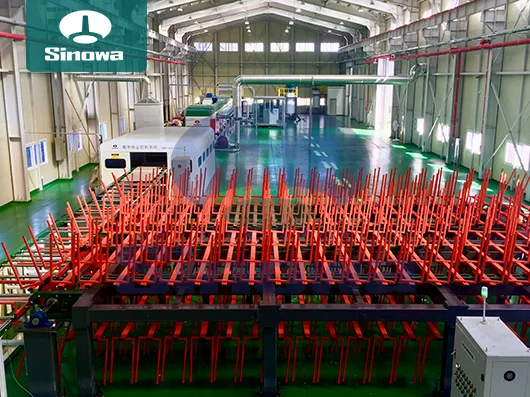
Material handling and automated stacking systems form the final stage of the mineral wool sandwich panel production line, streamlining finished product collection and preparing panels for packaging and shipment. Once panels pass inspection, powered conveyors move individual panels toward stacking platforms, where mechanical arms or transfer devices arrange panels neatly in stacks. The stacking mechanism controls placement speed and pressure to avoid scratching the metal surface or denting panel edges, which is essential because surface damage can compromise weather resistance and visual appearance. Stack height can be adjusted according to transport constraints and warehouse storage limits, and separators may be placed between panels to prevent surface contact marks. After stacking, finished panel bundles move to packaging stations, where protective wrapping secures the stack against dust, moisture and minor impacts during transit. Automated stacking removes heavy manual lifting work, lowering workplace strain and reducing the chance of panel dropping or misalignment. The whole downstream process is designed to match the output rate of the upstream forming and cutting sections, preventing bottlenecks that slow overall line throughput. Efficient end-of-line handling also improves inventory management, as finished panels are grouped and labelled consistently for traceability. By integrating stacking and packaging into the continuous workflow, the production line maintains steady output and preserves finished panel quality all the way from factory to construction site.
Panels produced by this dedicated mineral wool sandwich panel line deliver a unique set of functional attributes that address key requirements of modern building construction. The mineral wool core, made of inorganic fibrous material, provides strong thermal insulation that reduces heat transfer across walls and roofs, helping maintain stable indoor temperatures and lower energy consumption for heating and cooling. Its porous fiber structure also absorbs airborne sound waves, reducing noise transmission between interior spaces and limiting external noise penetration into buildings. Beyond thermal and acoustic benefits, the mineral wool core offers excellent fire resistance, acting as a barrier to slow flame spread and limit heat transfer in fire events. The outer metal skins provide mechanical rigidity, impact resistance and weather protection, shielding the fragile fibrous core from moisture and physical damage. Together, these features make the finished panels suitable for a wide spectrum of construction projects, including industrial facilities, commercial buildings, public spaces and renovation projects. The panels are relatively lightweight compared with traditional masonry or concrete wall assemblies, which reduces dead load on building frames and simplifies structural design. On-site installation is faster because large prefabricated panels cover extensive areas in fewer lifting and fixing operations. These performance advantages explain the growing adoption of mineral wool sandwich panels as an all-in-one building envelope solution, and the production line is engineered to consistently reproduce these functional qualities at scale.
Operating a mineral wool sandwich panel production line demands careful attention to maintenance, raw material consistency and process control to sustain stable output and product quality. Regular inspection of rollers, conveyors, pressing components and cutting tools prevents wear-related defects such as uneven profiling, rough edges or inconsistent pressure during lamination. Moving parts require scheduled lubrication and part replacement, while adhesive delivery systems must be cleaned periodically to avoid blockages that disrupt uniform glue application. Raw material quality directly shapes final panel performance; variations in mineral wool density, fiber structure or metal surface condition can affect bonding strength, insulation capacity and surface finish. Operators monitor incoming material batches and adjust process parameters accordingly to compensate for minor raw material variations. Environmental conditions inside the production workshop also matter, as temperature and humidity influence adhesive behaviour and curing speed. The control system stores production data for each run, supporting review of trends and troubleshooting when quality deviations occur. Training for on-site technicians focuses on understanding interactions between different line modules, recognizing early warning signs and making incremental adjustments without stopping full production unnecessarily. Good operational practices reduce unplanned downtime, extend equipment service life and keep finished panel performance consistent across long production runs. Well-managed operation of the line ensures reliable supply of high-performance panels for construction projects.
Sustainability and adaptability continue to drive innovation in mineral wool sandwich panel production lines, aligning manufacturing operations with evolving expectations for responsible building materials. The mineral wool core can be manufactured from mineral-based raw materials, and the metal facings are recyclable, supporting resource recovery at the end of a building’s service life. Prefabrication in the factory cuts construction waste, because panels are made to exact dimensions and only cut in controlled factory conditions rather than trimmed repeatedly on building sites. Reduced waste lowers material consumption and lessens debris disposal requirements for construction projects. The energy-saving properties of finished panels also deliver long-term environmental benefits by cutting operational energy use in occupied buildings. Modern production line designs also offer flexibility to adjust panel thickness, skin profile and core density, enabling manufacturers to tailor products for different climate conditions and building uses. As construction shifts toward modular and offsite building methods, this type of continuous line fits naturally into supply chains that deliver prefabricated envelope components directly to assembly sites. Further improvements focus on optimizing energy use within the production process, refining adhesive formulations and enhancing automation to reduce resource input per panel. In the broader construction sector, mineral wool sandwich panel production lines represent a mature yet evolving manufacturing technology that combines practical performance, scalable output and sustainable potential for the built environment.
« Mineral Wool Sandwich Panel Production Line For Construction » Update Date: 2026/10/17
Tags: Mineral Wool Sandwich Panel Production Line , mineral wool sandwich panel production line, mineral wool sandwich panel production line manufacturer, mineral wool sandwich panel production line supplier, mineral wool sandwich panel production line for sale, customized mineral wool sandwich panel production line, china mineral wool sandwich panel production line
- High-end Mineral Wool Sandwich Panel Line
- Mineral Wool Production Line Supplier
- Highly Intelligent Rock Wool Panel Production Line
- Rock Wool Machine From China
- High-quality Rockwool Panel Production Line
- Rock Wool Insulation Panel Production Line For Sale
- Mineral Wool Board Production Line Design
- Rock Wool Panel Production Line For Sale
- High Efficiency Automatic Rock Wool Production Line
- Rock Wool Line Supplier
- Rock Wool Production Line For Construction
- Rockwool Machine Manufacturer
- Mineral Wool Sandwich Panel Production Line For House
- Rockwool Sandwich Panel Machine Factory
- Mineral Wool Sandwich Panel Line Supplier
- Mineral Wool Sandwich Panel Line For Roof
- Mineral Wool Production Line On Sales
- High-tech Rock Wool Sandwich Panel Machine
- Low Price Fully Automatic Sandwich Panel Making Machine
- Rockwool Sandwich Panel Production Line For Construction
- Links:
- Sandwich Panel Continuous Production Line
- Automatic and Continuous Sandwich Panel Production Line
- Cheap and Low Price Sandwich Panel Production Line
- China Sandwich Panel Production Line Factory
- Color Steel Sandwich Panel Production Line For Cold Storage
- Continuous Composite Foam Sandwich Panel Production Line
- Continuous Production Line For Rockwool and Mineral Wool Sandwich Panels
- Continuous PU Phenolic Insulation Panel Production Line
- Continuous PU PIR Sandwich Panel Production Line
- Continuous PUF PUR Sandwich Panel Production Line
- Continuous Sandwich Panel Production Line For Roof and Wall
- Customized and Design Sandwich Panel Production Line
- Decorative Sandwich Panel Production Line For Glass Wool Boards
- High Quality Sandwich Panel Production Line For Sale
- Polyurethane(PU) Sandwich Panel Production Line
- Sandwich Panel Production Line Manufacturer and Supplier
- Sandwich Panel Production Machinery and Equipment